Results by title
314 books match the query 'Environmental aspects' and 14 start with r
Radiant Infrastructures
Media, Environment, and Cultures of UncertaintyRahul Mukherjee
Duke University Press, 2020
Rainforest Cowboys
The Rise of Ranching and Cattle Culture in Western AmazoniaBy Jeffrey Hoelle
University of Texas Press, 2015
This ambitious interdisciplinary study is the first to examine the interlinked economic uses and cultural practices and beliefs surrounding cattle in Western Amazonia, where cattle raising is at the center of debates about economic development and environ
Winner, Brazil Section Book Award, Latin American Studies Association, 2016
The opening of the Amazon to colonization in the 1970s brought cattle, land conflict, and widespread deforestation. In the remote state of Acre, Brazil, rubber tappers fought against migrant ranchers to preserve the forest they relied on, and in the process, these “forest guardians” showed the world that it was possible to unite forest livelihoods and environmental preservation. Nowadays, many rubber tappers and their children are turning away from the forest-based lifestyle they once sought to protect and are becoming cattle-raisers or even caubois (cowboys). Rainforest Cowboys is the first book to examine the social and cultural forces driving the expansion of Amazonian cattle raising in all of their complexity.
Drawing on eighteen months of fieldwork, Jeffrey Hoelle shows how cattle raising is about much more than beef production or deforestation in Acre, even among “carnivorous” environmentalists, vilified ranchers, and urbanites with no land or cattle. He contextualizes the rise of ranching in relation to political economic structures and broader meanings to understand the spread of “cattle culture.” This cattle-centered vision of rural life builds on local experiences and influences from across the Americas and even resembles East African cultural practices. Written in a broadly accessible and interdisciplinary style, Rainforest Cowboys is essential reading for a global audience interested in understanding the economic and cultural features of cattle raising, deforestation, and the continuing tensions between conservation and development in the Amazon.
Reckoning with Harm
The Toxic Relations of Oil in AmazoniaAmelia Fiske
University of Texas Press, 2023
2025 Margaret Mead Award, Society for Applied Anthropology (SfAA) and the American Anthropological Association (AAA)
An ethnography of the Ecuadorian Amazon that demonstrates the need for a relational, place-based, contingent understanding of harm and toxicity.
Reckoning with Harm is a striking ethnographic analysis of the harm resulting from oil extraction. Covering fifty years of settler colonization and industrial transformation of the Ecuadorian Amazon, Amelia Fiske interrogates the relations of harm. She moves between forest-courtrooms and oily waste pits, farms and toxic tours, to explore both the ways in which harm from oil is entangled with daily life and the tensions surrounding efforts to verify and redress it in practice. Attempts to address harm from the oil industry in Ecuador have been consistently confounded by narrow, technocratic understandings of evidence, toxicity, and responsibility. Building on collaborators’ work to contest state and oil company insistence that harm is controlled and principally chemical in nature, Fiske shows that it is necessary to refigure harm as relational in order to reckon with unremediated contamination of the past while pushing for broad forms of accountability in the present. She theorizes that harm is both a relationship and an animating feature of relationships in this place, a contingent understanding that is needed to contemplate what comes next when living in a toxic world.
Recycling Land
Understanding the Legal Landscape of Brownfield DevelopmentElizabeth Glass Geltman
University of Michigan Press, 2000
Reimagining Livelihoods
Life beyond Economy, Society, and EnvironmentEthan Miller
University of Minnesota Press, 2019
A provocative reassessment of the concepts underlying the struggle for sustainable development
Much of the debate over sustainable development revolves around how to balance the competing demands of economic development, social well-being, and environmental protection. “Jobs vs. environment” is only one of the many forms that such struggles take. But what if the very terms of this debate are part of the problem? Reimagining Livelihoods argues that the “hegemonic trio” of economy, society, and environment not only fails to describe the actual world around us but poses a tremendous obstacle to enacting a truly sustainable future.
In a rich blend of ethnography and theory, Reimagining Livelihoods engages with questions of development in the state of Maine to trace the dangerous effects of contemporary stories that simplify and domesticate conflict. As in so many other places around the world, the trio of economy, society, and environment in Maine produces a particular space of “common sense” within which struggles over life and livelihood unfold. Yet the terms of engagement embodied by this trio are neither innocent nor inevitable. It is a contingent, historically produced configuration, born from the throes of capitalist industrialism and colonialism. Drawing in part on his own participation in the struggle over the Plum Creek Corporation’s “concept plan” for a major resort development on the shores of Moosehead Lake in northern Maine, Ethan Miller articulates a rich framework for engaging with the ethical and political challenges of building ecological livelihoods among diverse human and nonhuman communities.
In seeking a pathway for transformative thought that is both critical and affirmative, Reimagining Livelihoods provides new frames of reference for living together on an increasingly volatile Earth.
Reparations and the Human
David L. Eng
Duke University Press, 2025
Residual Governance
How South Africa Foretells Planetary FuturesGabrielle Hecht
Duke University Press, 2023
Residues
Thinking Through Chemical EnvironmentsSoraya Boudia
Rutgers University Press, 2022
Winner of the 2023 Merton Award from the Science, Knowledge, and Technology section of the American Sociological Association
Residues offers readers a new approach for conceptualizing the environmental impacts of chemicals production, consumption, disposal, and regulation. Environmental protection regimes tend to be highly segmented according to place, media, substance, and effect; academic scholarship often reflects this same segmented approach. Yet, in chemical substances we encounter phenomena that are at once voluminous and miniscule, singular and ubiquitous, regulated yet unruly. Inspired by recent studies of materiality and infrastructures, we introduce “residual materialism” as a framework for attending to the socio-material properties of chemicals and their world-making powers. Tracking residues through time, space, and understanding helps us see how the past has been built into our present chemical environments and future-oriented regulatory systems, why contaminants seem to always evade control, and why the Anthropocene is as inextricably harnessed to the synthesis of carbon into new molecules as it is driven by carbon’s combustion.
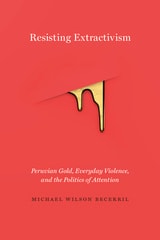
Resisting Extractivism
Peruvian Gold, Everyday Violence, and the Politics of AttentionMichael Wilson Becerril
Vanderbilt University Press, 2021
Peru is classified as one of the deadliest countries in the world for environmental defenders, where activists face many forms of violence. Through an ethnographic and systematic comparison of four gold-mining conflicts in Peru, Resisting Extractivism presents a vivid account of subtle and routine forms of violence, analyzing how meaning-making practices render certain types of damage and suffering noticeable while occluding others. The book thus builds a theory of violence from the ground up—how it is framed, how it impacts people’s lived experiences, and how it can be confronted. By excavating how the everyday interactions that underlie conflicts are discursively concealed and highlighted, this study assists in the prevention and transformation of violence over resource extraction in Latin America.
The book draws on a controlled, qualitative comparison of four case studies, extensive ethnographic research conducted over fourteen months of fieldwork, analysis of over nine hundred archives and documents, and unprecedented access to more than 250 semi-structured interviews with key actors across industry, the state, civil society, and the media. Michael Wilson Becerril identifies, traces, and compares these dynamics to explain how similar cases can lead to contrasting outcomes—insights that may be usefully applied in other contexts to save lives and build better futures.
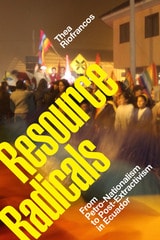
Resource Radicals
From Petro-Nationalism to Post-Extractivism in EcuadorThea Riofrancos
Duke University Press, 2020
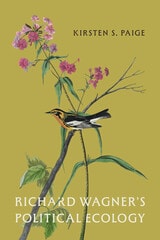
Richard Wagner's Political Ecology
Kirsten S. Paige
University of Chicago Press, 2026
A study of the deep history of the Wagnerian environmental imagination.
Richard Wagner’s operas are bursting with environmental imagery, from tittering birds to flowing rivers to towering trees. In Richard Wagner’s Political Ecology, Kirsten S. Paige asks where Wagner’s environmental imagination came from, how it was received by audience members and reconceived by stage directors, and how it refracts his politics. By tracing the ecological dimensions of the composer’s essays and dramas, Paige reveals how Wagner’s environmental imagination was inextricable from broader political concerns of his time.
The book begins by examining the way Wagner’s political ecology shape-shifted across its rhetorical, musical, scenographic, and technological permutations. Although Wagner’s essays and dramas invite a range of interpretations, for Paige, they point to an all-encompassing image of opera-as-climate. The book then turns to the ways Wagnerian drama—and opera more generally—at once participates in the industrial-technological lineage of climate change and helps spectators grapple with the challenges of living in a warming world. In providing the first close examination of Wagner’s artistic thought, practice, and reception in relation to nineteenth-century climate theory and the early history of environmentalism, Richard Wagner’s Political Ecology considers what it might mean to reimagine opera around ethical mandates of sustainability.
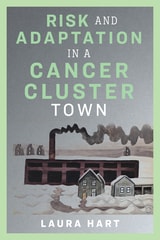
Risk and Adaptation in a Cancer Cluster Town
Laura Hart
Rutgers University Press, 2023
In Risk and Adaptation in a Cancer Cluster Town, Laura Hart examines another understudied dimension of community inaction: the role of emotion and its relationship to community experiences of social belonging and inequality. Using a cancer cluster community in Northwest Ohio as a case study, Hart advances an approach to risk that grapples with the complexities of community belonging, disconnect, and disruption in the wake of suspected industrial pollution. Her research points to a fear driven not only by economic anxiety, but also by a fear of losing security within the community—a sort of pride that is not only about status, but connectedness. Hart reveals the importance of this social form of risk—the desire for belonging and the risk of not belonging—ultimately arguing that this is consequential to how people make judgements and respond to issues. Within this context where the imperative for self-protection is elusive, affected families experience psychosocial and practical conflicts as they adapt to cancer as a way of life. Considering a future where debates about risk and science will inevitably increase, Hart considers possibilities for the democratization of risk management and the need for transformative approaches to environmental justice.
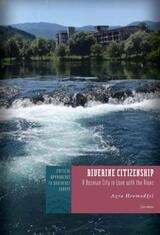
Riverine Citizenship
A Bosnian City in Love with the RiverAzra Hromadžic
Central European University Press, 2024
Water potential is a significant natural wealth of most parts of the Balkans, and it has given rise to a surge in hydropower investments unparalleled across Europe. As part of the process, a dam was planned to be built on the Una River, which runs through the Bosnian town of Bihać. This prospect alarmed the city’s residents, culminating in a protest in 2015. The book begins with this protest, and it explores how the threat of dam construction transformed the seemingly apolitical love of the river into a powerful political force around which thousands of people mobilized: riverine citizenship.
The book is based on interviews with participants, archival research, and over twenty years of ethnographic research. Azra Hromadžić focuses on the tension between ecological sustainability efforts in favor of renewable energy, on the one hand, and citizens’ historically shaped, deeply-felt, love for the river, on the other. She shows how the language and promises of green transition can mask the forces of capitalist accumulation that drive this change — whether in the form of building hydroelectric dams or promoting eco-tourism — and thus set in motion another cycle of environmental degradation, social dispossession, and economic exploitation.
Rock | Water | Life
Ecology and Humanities for a Decolonial South AfricaLesley Green
Duke University Press, 2020