Results by title
425 books match the query 'Ethics' and 9 start with r
Re-Creating Nature
Science, Technology, and Human Values in the Twenty-First CenturyJames T. Bradley
University of Alabama Press, 2019
Many of the ethical issues raised by new technologies have not been widely examined, discussed, or indeed settled. For example, robotics technology challenges the notion of personhood. Should a robot, capable of making what humans would call ethical decisions, be held responsible for those decisions and the resultant actions? Should society reward and punish robots in the same way that it does humans? Likewise, issues of safety, environmental concerns, and distributive justice arise with the increasing acceptance of genetically modified organisms (GMOs) in food production nanotechnology in engineering and medicine, and human gene therapy and enhancement. The problem of dual-use—when a technology can be used both to benefit and to harm—exists with virtually all new technologies but is central in the context of emerging 21st century technologies ranging from artificial intelligence and robotics to human gene-editing and brain-computer interfacing.
In Re-Creating Nature: Science, Technology, and Human Values in the Twenty-First Century, James T. Bradley addresses emerging biotechnologies with prodigious potential to benefit humankind but that are also fraught with ethical consequences. Some actually possess the power to directly alter the evolution of life on earth including human. Specifically, these topics include stem cells, synthetic biology, GMOs in agriculture, nanotechnology, bioterrorism, CRISPR gene-editing technology, three-parent babies, robotics and roboethics, artificial intelligence, and human brain research and neurotechnologies.
Offering clear explanations of these various technologies, a pragmatic presentation of the conundrums involved, and questions that illuminate hypothetical situations, Bradley guides discussions of these and other thorny issues resulting from the development of new biotechnologies. He also highlights the responsibilities of scientists to conduct research in an ethical manner and the responsibilities of nonscientists to become “science literate” in the twenty-first century.
Real American Ethics
Taking Responsibility for Our CountryAlbert Borgmann
University of Chicago Press, 2006
America is a wonderful and magnificent country that affords its citizens the broadest freedoms and the greatest prosperity in the world. But it also has its share of warts. It is embroiled in a war that many of its citizens consider unjust and even illegal. It continues to ravage the natural environment and ignore poverty both at home and abroad, and its culture is increasingly driven by materialism and consumerism. But America, for better or for worse, is still a nation that we have built. So why then, asks Albert Borgmann in this most timely and urgent work, are we failing to take responsibility for it?
In Real American Ethics, Borgmann asks us to reevaluate our role in the making of American values. Taking his cue from Winston Churchill—who once observed that we shape our buildings, and then our buildings shape us—Borgmann considers the power of our most enduring institutions and the condition of our present moral makeup to propose inspired new ways in which we, as ordinary citizens, can act to improve our country. This, he shows, includes everything from where we choose to live and what we spend our money on to daunting tasks like the reshaping of our cities—habits and actions that can guide us to more accomplished and virtuous lives. Using prose that is easy and direct throughout, Borgmann’s position is grounded neither by conservative nor liberal ideology, but in his understanding that he is a devoted citizen among many.
In an age in which the blame game is the only game in town, this patriotic book is an eloquent reminder of the political strength we all wield when we work together.
Reason and Morality
Alan Gewirth
University of Chicago Press, 1982
"This is a fascinating study of an apparently intractable problem. Gewirth has provided plenty of material for further discussion, and his theory deserves serious consideration. He is always aware of possible rejoinders and argues in a rigorous manner, showing a firm grasp of the current state of moral and political philosophy."—Mind
Reclaiming Moral Agency
The Moral Philosophy of Albert the GreatStanley B. Cunningham
Catholic University of America Press, 2008
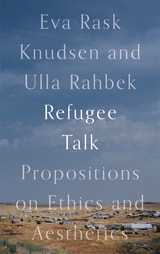
Refugee Talk
Propositions on Ethics and AestheticsEva
Pluto Press, 2022
An innovative approach to the refugee crisis through a focus on language use, discourse and representation
'A wide-ranging, erudite and multi-faceted analyses of the fundamental problem of who gets to be counted as human' - Kate Evans
What does it mean to be a refugee? What political questions do they raise? Through what political rhetoric is their experiences parsed? The ongoing refugee crisis has sparked all these questions and more.
Refugee Talk uses conversation as a research method and ethical practice to approach the representation of and the discourse about and by the refugee. Though refugees who cross borders are routinely registered, filed, and detained, the individual stories they carry are just as routinely overlooked or ignored. When language itself becomes another border that excludes refugees, the need for a new vocabulary that decriminalizes and re-humanizes the refugee experience asserts itself.
The authors engage theoretically with thinkers from Hannah Arendt to Paolo Freire and Kwame A. Appiah and structure the book around conversations with academics, activists, journalists, and refugee artists and writers. The result is a comprehensive humanities approach that places ethics and aesthetics at its core.
Regulating Confusion
Samuel Johnson and the CrowdThomas Reinert
Duke University Press, 1996
Ambivalent about the disruption, confusion, perplexity, and boundless variety apparent in the London of his day, Johnson was committed to the conventions of moral reflection but also troubled by the pressure to adopt the perspective of the crowd and the language of social theory. Regulating Confusion explores the consequences of his ambivalence and his attempt to order the chaos. It discusses his critique of moral generalizations, concept of moral reflection as a symbolic gesture, and account of what happens to the notion of character when individuals, having lost the support of moral convention, become faces in a crowd. Reflecting generally on the relationship between skepticism and political ideology, Reinert also discusses Johnson’s political skepticism and the forms of speculation and action it authorized.
Challenging prevalent psychologizing and humanistic interpretations, Regulating Confusion leaves behind the re-emergent view of Johnson as a reactionary ideologue and presents him in a theoretically sophisticated context. It offers his style of skepticism as a model of poise in the face of confusion about the nature of political truth and personal responsibility and demonstrates his value as a resource for students of culture struggling with contemporary debates about the relationship between literature and politics.
Reuse, Misuse, Abuse
The Ethics of Audiovisual Appropriation in the Digital EraJaimie Baron
Rutgers University Press, 2021
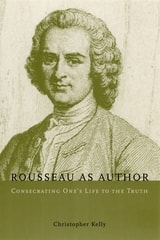
Rousseau as Author
Consecrating One's Life to the TruthChristopher Kelly
University of Chicago Press, 2002
Unlike many other writers of his day, Rousseau refused to publish anonymously, even though he risked persecution for his writings. But Rousseau felt that authors must be self-restrained, as well as bold, and must carefully consider the potential political effects of what they might publish: sometimes seeking the good conflicts with writing the truth. Kelly shows how this understanding of public authorship played a crucial role in Rousseau's conception—and practice—of citizenship and political action.
Rousseau as Author will be a groundbreaking book not just for Rousseau scholars, but for anyone studying Enlightenment ideas about authorship and responsibility.
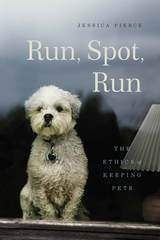
Run, Spot, Run
The Ethics of Keeping PetsJessica Pierce
University of Chicago Press, 2016
That’s the question that animates Jessica Pierce’s powerful Run, Spot, Run. A lover of pets herself (including, over the years, dogs, cats, fish, rats, hermit crabs, and more), Pierce understands the joys that pets bring us. But she also refuses to deny the ambiguous ethics at the heart of the relationship, and through a mix of personal stories, philosophical reflections, and scientifically informed analyses of animal behavior and natural history, she puts pet-keeping to the test. Is it ethical to keep pets at all? Are some species more suited to the relationship than others? Are there species one should never attempt to own? And are there ways that we can improve our pets’ lives, so that we can be confident that we are giving them as much as they give us?
Deeply empathetic, yet rigorous and unflinching in her thinking, Pierce has written a book that is sure to help any pet owner, unsettling assumptions but also giving them the knowledge to build deeper, better relationships with the animals with whom they’ve chosen to share their lives.