Results by title
496 books match the query 'Ethnic identity' and 25 start with r

Race and Ethnicity in Latin America
Peter Wade
Pluto Press, 2010
For over ten years, Race and Ethnicity in Latin America has been an essential text for students studying the region. This second edition adds new material and brings the analysis up to date.
Race and ethnic identities are increasingly salient in Latin America. Peter Wade examines changing perspectives on Black and Indian populations in the region, tracing similarities and differences in the way these peoples have been seen by academics and national elites. Race and ethnicity as analytical concepts are re-examined in order to assess their usefulness.
This book should be the first port of call for anthropologists and sociologists studying identity in Latin America.
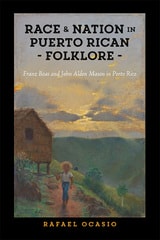
Race and Nation in Puerto Rican Folklore
Franz Boas and John Alden Mason in Porto RicoRafael Ocasio
Rutgers University Press, 2020
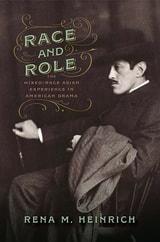
Race and Role
The Mixed-Race Asian Experience in American DramaRena M. Heinrich
Rutgers University Press, 2023
Race and Role: The Mixed-Race Experience in American Drama traces the shifting identities of multiracial Asian figures in theater from the late-nineteenth century to the present day and explores the ways that mixed-race Asian identity transforms our understanding of race. Mixed-Asian playwrights harness theater’s generative power to enact performances of “double liminality” and expose the absurd tenacity with which society clings to a tenuous racial scaffolding.

Racial Feelings
Asian America in a Capitalist Culture of EmotionJeffrey Santa Ana
Temple University Press, 2015
Santa Ana explores various forms of Asian American cultural production, ranging from literature and graphic narratives to film and advertising, to illuminate the connections between global economic relations and the emotions that shape aspirations for the good life. He illustrates his argument with examples including the destitute Filipino immigrant William Paulinha, in Han Ong’s Fixer Chao, who targets his anger on the capitalist forces of objectification that racially exploit him, and Nan and Pingpin in Ha Jin’s A Free Life, who seek happiness and belonging in America.
Racial Feelings addresses how Asian Americans both resist and rely on stereotypes in their writing and art work. In addition, Santa Ana investigates how capitalism shapes and structures an emotional discourse that represents Asians as both economic exemplars and threats.
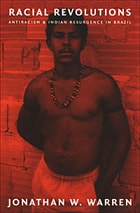
Racial Revolutions
Antiracism and Indian Resurgence in BrazilJonathan W. Warren
Duke University Press, 2001
The growing number of pardos who claim Indian identity represents a radical shift in the direction of Brazilian racial formation. For centuries, the predominant trend had been for Indians to shed tribal identities in favor of non-Indian ones. Warren argues that many factors—including the reduction of state-sponsored anti-Indian violence, intervention from the Catholic church, and shifts in anthropological thinking about ethnicity—have prompted a reversal of racial aspirations and reimaginings of Indianness. Challenging the current emphasis on blackness in Brazilian antiracist scholarship and activism, Warren demonstrates that Indians in Brazil recognize and oppose racism far more than any other ethnic group.
Racial Revolutions fills a number of voids in Latin American scholarship on the politics of race, cultural geography, ethnography, social movements, nation building, and state violence.
Designated a John Hope Franklin Center book by the John Hope Franklin Seminar Group on Race, Religion, and Globalization.
Racist Love
Asian Abstraction and the Pleasures of FantasyLeslie Bow
Duke University Press, 2022
Radical Cartographies
Participatory Mapmaking from Latin AmericaEdited by Bjørn Sletto, Joe Bryan, Alfredo Wagner, and Charles Hale
University of Texas Press, 2020
Cartography has a troubled history as a technology of power. The production and distribution of maps, often understood to be ideological representations that support the interests of their developers, have served as tools of colonization, imperialism, and global development, advancing Western notions of space and place at the expense of Indigenous peoples and other marginalized communities. But over the past two decades, these marginalized populations have increasingly turned to participatory mapping practices to develop new, innovative maps that reassert local concepts of place and space, thus harnessing the power of cartography in their struggles for justice.
In twelve essays written by community leaders, activists, and scholars, Radical Cartographies critically explores the ways in which participatory mapping is being used by Indigenous, Afro-descendant, and other traditional groups in Latin America to preserve their territories and cultural identities. Through this pioneering volume, the authors fundamentally rethink the role of maps, with significant lessons for marginalized communities across the globe, and launch a unique dialogue about the radical edge of a new social cartography.
Reclaiming Basque
Language, Nation, and Cultural ActivismJacqueline Urla
University of Nevada Press, 2015
Reclaiming Diasporic Identity
Transnational Continuity and National Fragmentation in the Hmong DiasporaSangmi Lee
University of Illinois Press, 2024
In-depth and interdisciplinary, Reclaiming Diasporic Identity blends ethnography and history to provide a fresh consideration of Hmong life today.
Recollecting Early Asian America
Essays In Cultural HistoryJosephine Lee
Temple University Press, 2002
Recovering History, Constructing Race
The Indian, Black, and White Roots of Mexican AmericansBy Martha Menchaca
University of Texas Press, 2002
A CHOICE Outstanding Academic Book, 2002
The history of Mexican Americans is a history of the intermingling of races—Indian, White, and Black. This racial history underlies a legacy of racial discrimination against Mexican Americans and their Mexican ancestors that stretches from the Spanish conquest to current battles over ending affirmative action and other assistance programs for ethnic minorities. Asserting the centrality of race in Mexican American history, Martha Menchaca here offers the first interpretive racial history of Mexican Americans, focusing on racial foundations and race relations from prehispanic times to the present.
Menchaca uses the concept of racialization to describe the process through which Spanish, Mexican, and U.S. authorities constructed racial status hierarchies that marginalized Mexicans of color and restricted their rights of land ownership. She traces this process from the Spanish colonial period and the introduction of slavery through racial laws affecting Mexican Americans into the late twentieth-century. This re-viewing of familiar history through the lens of race recovers Blacks as important historical actors, links Indians and the mission system in the Southwest to the Mexican American present, and reveals the legal and illegal means by which Mexican Americans lost their land grants.
Red Land, Red Power
Grounding Knowledge in the American Indian NovelSean Kicummah Teuton
Duke University Press, 2008
While engaging a wide spectrum of Native American writing, Teuton focuses on three of the most canonized and, he contends, most misread novels of the era—N. Scott Momaday’s House Made of Dawn (1968), James Welch’s Winter in the Blood (1974), and Leslie Marmon Silko’s Ceremony (1977). Through his readings, he demonstrates the utility of tribal realism as an interpretive framework to explain social transformations in Indian Country during the Red Power era and today. Such transformations, Teuton maintains, were forged through a process of political awakening that grew from Indians’ rethought experience with tribal lands and oral traditions, the body and imprisonment, in literature and in life.

Redefining Japaneseness
Japanese Americans in the Ancestral HomelandYamashiro, Jane H
Rutgers University Press, 2017

Reflections in Place
Connected Lives of Navajo WomenDonna Deyhle
University of Arizona Press, 2009
As a recognized authority on the subject, qualified by multiple degrees in racial and American Indian studies, Deyhle is able to chronicle the lives and “survivance” of three Navajo women in a way that is simultaneously ethnographic and moving. Her critique of the U.S. education system’s underlying yet very real tendency toward structural discrimination takes shape in elegant prose that moves freely into and out of time and place. The combination of substantive sources and touching personal experience forms a profound and enduring narrative of critical and current importance.
While this book stands as a powerful contribution to American Indian studies, its compelling human elements will extend its appeal to anyone concerned with the ongoing plight of American Indians in the education system.
Reinventing the Lacandón
Subaltern Representations in the Rain Forest of ChiapasBrian Gollnick
University of Arizona Press, 2008
Rekindling the Sacred Fire
Métis Ancestry and Anishinaabe SpiritualityChantal Fiola
University of Manitoba Press, 2015
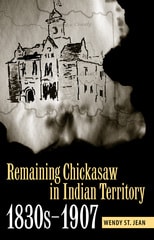
Remaining Chickasaw in Indian Territory, 1830s-1907
Wendy St. Jean
University of Alabama Press, 2011
In the early 1800s, the U.S. government attempted to rid the Southeast of Indians in order to make way for trading networks, American immigration, optimal land use, economic development opportunities, and, ultimately, territorial expansion westward to the Pacific. The difficult removal of the Chickasaw Nation to Indian Territory—later to become part of the state of Oklahoma— was exacerbated by the U.S. government’s unenlightened decision to place the Chickasaws on lands it had previously provided solely for the Choctaw Nation.
This volume deals with the challenges the Chickasaw people had from attacking Texans and Plains Indians, the tribe’s ex-slaves, the influence on the tribe of intermarried white men, and the presence of illegal aliens (U.S. citizens) in their territory. By focusing on the tribal and U.S. government policy conflicts, as well as longstanding attempts of the Chickasaw people to remain culturally unique, St. Jean reveals the successes and failures of the Chickasaw in attaining and maintaining sovereignty as a separate and distinct Chickasaw Nation.
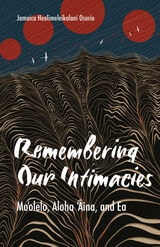
Remembering Our Intimacies
Mo'olelo, Aloha 'Aina, and EaJamaica Heolimeleikalani Osorio
University of Minnesota Press, 2021
Recovering Kānaka Maoli (Native Hawaiian) relationality and belonging in the land, memory, and body of Native Hawai’i
Hawaiian “aloha ʻāina” is often described in Western political terms—nationalism, nationhood, even patriotism. In Remembering Our Intimacies, Jamaica Heolimeleikalani Osorio centers in on the personal and embodied articulations of aloha ʻāina to detangle it from the effects of colonialism and occupation. Working at the intersections of Hawaiian knowledge, Indigenous queer theory, and Indigenous feminisms, Remembering Our Intimacies seeks to recuperate Native Hawaiian concepts and ethics around relationality, desire, and belonging firmly grounded in the land, memory, and the body of Native Hawai’i.
Remembering Our Intimacies argues for the methodology of (re)membering Indigenous forms of intimacies. It does so through the metaphor of a ‘upena—a net of intimacies that incorporates the variety of relationships that exist for Kānaka Maoli. It uses a close reading of the moʻolelo (history and literature) of Hiʻiakaikapoliopele to provide context and interpretation of Hawaiian intimacy and desire by describing its significance in Kānaka Maoli epistemology and why this matters profoundly for Hawaiian (and other Indigenous) futures.
Offering a new approach to understanding one of Native Hawaiians’ most significant values, Remembering Our Intimacies reveals the relationships between the policing of Indigenous bodies, intimacies, and desires; the disembodiment of Indigenous modes of governance; and the ongoing and ensuing displacement of Indigenous people.
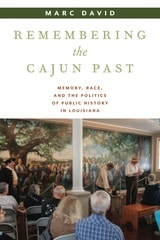
Remembering the Cajun Past
Memory, Race, and the Politics of Public History in LouisianaMarc David
University of Massachusetts Press, 2025
Exploring how public history creates collective memory of this white ethnic group through memorials
Cajuns arrived in southern Louisiana in the 18th century after the British exiled them from eastern Canada. Also known as Acadians, they retain a unique dialect of French, and their distinctive music, food, and other cultural traits characterized them as an ethnic group. Until the 1960s, authorities viewed them as a serious problem, allegedly blocking the state’s progress as they clung to their antiquated ways. Few Cajun residents in the region remembered the remote past of their ancestors, but by the 1970s, organizations ranging from local non-profits to the National Park Service created sites that commemorated their history, such as the Acadian Memorial in St. Martinville, allowing Cajuns to connect their lives to their past and claim it as their own.
In Remembering the Cajun Past, anthropologist Marc David studies the cultural and political dynamics that reconfigured Cajun memory and identity. Focusing on St. Martinville and the Acadian Memorial, he explores how authorities changed their minds about Cajuns and demonstrates how Cajuns’ historical memories took shape. Part ethnography and part history, David examines the racial aspects of the Memorial’s creation in the wake of the Civil Rights movement and the growth of a new Cajun history, one through which individual Cajuns rejected the label’s connotation of “white trash” and embraced belonging within a storied white ethnic group. Based on decades of fieldwork and deep engagement with public history practices, David explores how historical memory and the historic sites that foster it are intertwined with the politics of civic life.
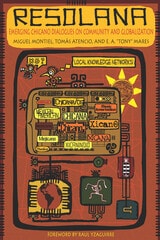
Resolana
Emerging Chicano Dialogues on Community and GlobalizationMiguel Montiel
University of Arizona Press, 2009
Coming from diverse backgrounds in social work, sociology, public administration, literature, history, and education, three modern resolaneros take the twin concepts of resolana and el oro del barrio on a breathtaking journey from their rural roots to their application in an urban setting and on to a holistic view of globalization. The authors offer a humane perspective on transborder cultures and all communities struggling to maintain their cultural and linguistic identities. They share an optimistic view of how ordinary people everywhere can take back control of their own destinies. This book is about uncovering subjugated knowledge—el oro del barrio—through resolana, a dynamic process of thought and action.
Resolana will inspire dialogue and creativity from those interested in sociology, political science, social work, and Chicano studies, as well as public-policy makers and the general public.
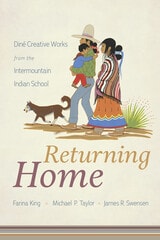
Returning Home
Diné Creative Works from the Intermountain Indian SchoolFarina King, Michael P. Taylor, and James R. Swensen With Contributions by Robert Dodson, Rena Dunn, Terence Wride, and Students of the Intermountain Indian School
University of Arizona Press, 2021
This book works to recover the lived experiences of Native American boarding school students through creative works, student interviews, and scholarly collaboration. It shows the complex agency and ability of Indigenous youth to maintain their Diné culture within the colonial spaces that were designed to alienate them from their communities and customs. Returning Home provides a view into the students’ experiences and their connections to Diné community and land. Despite the initial Intermountain Indian School agenda to send Diné students away and permanently relocate them elsewhere, Diné student artists and writers returned home through their creative works by evoking senses of Diné Bikéyah and the kinship that defined home for them.
Returning Home uses archival materials housed at Utah State University, as well as material donated by surviving Intermountain Indian School students and teachers throughout Utah, Arizona, and New Mexico. Artwork, poems, and other creative materials show a longing for cultural connection and demonstrate cultural resilience. This work was shared with surviving Intermountain Indian School students and their communities in and around the Navajo Nation in the form of a traveling museum exhibit, and now it is available in this thoughtfully crafted volume. By bringing together the archived student arts and writings with the voices of living communities, Returning Home traces, recontextualizes, reconnects, and returns the embodiment and perpetuation of Intermountain Indian School students’ everyday acts of resurgence.

Returning to Ceremony
Spirituality in Manitoba Métis CommunitiesChantal Fiola
University of Manitoba Press, 2021
Revisioning Italy
National Identity and Global CultureBeverly Allen
University of Minnesota Press, 1997
Explores Italian national identity.
More than any other nation, Italy—from its imperial past to its subordinate present, from its colonial forays to its splendid isolation—embodies the myriad and contradictory historical forms of nationhood. This volume covers a range of subjects drawn from Italy and abroad to study the historical and contemporary formations of Italian national identity. In doing so, the work illuminates Italy past and present as well as the local and global dimensions of national identity in general.
Whether considering opera or Ninja Turtles, these essays reveal how cultural identity is constructed and manipulated-an issue made urgent by the influx of African, Indochinese, and Eastern European immigrants into Italy today. Exile, nationalism, and imagined communities are the topics of several essays, including Antonio Negri’s reflection on his own experience of political militancy and exile. Others focus on Italy’s colonial “unconscious,” Mussolini’s adventures in North Africa, and racism from the late nineteenth century to the present. By analyzing Italy’s European and Mediterranean identities, its highly regional character, its north-south economic imbalance, and its ethnic complexity, this truly interdisciplinary volume resists the hierarchizing and monumentalizing of traditional Italian studies in the United States. It will inform and redirect our understanding of what constitutes “Italy.”Contributors: Mohamed Aden; John Agnew, Syracuse U; Ayele Bekerie, Cornell U; Elaine K. Chang, Rutgers U; Antonio Marazzi, U of Padua, Italy; Francesca Miller, U of California, Davis; Antonio Negri, U of Paris VIII, France; Graziella Parati, Dartmouth College; Karen Pinkus, Northwestern U; Paul Robinson, Stanford U; Pasquale Verdicchio, U of California, San Diego; Marguerite R. Waller, U of California, Riverside; and David Ward, Wellesley College.
Riding
Pardis Mahdavi
Duke University Press, 2025
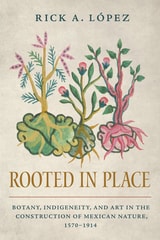
Rooted in Place
Botany, Indigeneity, and Art in the Construction of Mexican Nature, 1570–1914Rick A. López
University of Arizona Press, 2025
Prize for Best Book in Environmental Studies, Latin American Studies Association
Honorable mention for Best Book Prize in Visual Culture, Latin American Studies Association
Honorable mention for Best Book on Mexico, Latin American Studies Association
Since the first moment of conquest, colonizers and the colonized alike in Mexico confronted questions about what it meant to be from this place, what natural resources it offered, and who had the right to control those resources and on what basis.
Focusing on the ways people, environment, and policies have been affected by political boundaries, historian Rick A. López explores the historical connections between political identities and the natural world. López analyzes how scientific intellectuals laid claim to nature within Mexico, first on behalf of the Spanish Empire and then in the name of the republic, during three transformative moments: the Hernández expedition of the late sixteenth century; the Royal Botanical Expedition of the late eighteenth century; and the heyday of scientific societies such as the Sociedad Mexicana de Historia Natural of the late nineteenth century.
This work traces how scientific intellectuals studied and debated what it meant to know and claim the flora that sprang from Mexican soil—ranging from individual plants to forests and vegetated landscapes—and the importance they placed on indigeneity. It also points to the short- and long-term consequences of these efforts. López draws on archival and published sources produced from the sixteenth century through the start of the twentieth century and gives special attention to the use of visual images such as scientific illustrations and landscape art. López employs the term “visualization” in recognition of the degree to which officials, botanists, and draftsmen produced imagery and also how they and others viewed nature.
Rooted in Place reveals how scientific endeavors were not just about cataloging flora but were deeply intertwined with the construction of identity and the political landscape at three pivotal moments in Mexican history.