Results by title
67 books match the query 'Exile' and 2 start with r
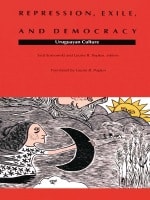
Repression, Exile, and Democracy
Uruguayan CultureSaul Sosnowski and Louise B. Popkin, eds.
Duke University Press, 1992
Repression, Exile, and Democracy, translated from the Spanish, is the first work to examine the impact of dictatorship on Uruguyan culture. Some of Uruguay's best-known poets, writers of fiction, playwrights, literary critics and social scientists participate in this multidisciplinary study, analyzing how varying cultural expressions have been affected by conditions of censorship, exile and "insilio" (internal exile), torture, and death.
The first section provides a context for the volume, with its analyses of the historical, political, and social aspects of the Uruguayan experience. The following chapters explore various aspects of cultural production, including personal experiences of exile and imprisonment, popular music, censorship, literary criticism, return from exile, and the role that culture plays in redemocratization.
This book's appeal extends well beyond the study of Uruguay to scholars and students of the history and culture of other Latin American nations, as well as to fields of comparative literature and politics in general.
Contributors. Hugo Achugar, Alvarro Barros-Lémez, Lisa Block de Behar, Amanda Berenguer, Hiber Conteris, José Pedro Díaz, Eduardo Galeano, Edy Kaufman, Leo Masliah, Carina Perelli, Teresa Porzecanski, Juan Rial, Mauricio Rosencof, Jorge Ruffinelli, Saúl Sosonowski, Martin Weinstein, Ruben Yáñez
[more]
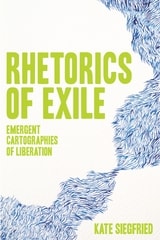
Rhetorics of Exile
Emergent Cartographies of LiberationKate Siegfried
The Ohio State University Press, 2027
Examines how Cold War–era insurgent figures leveraged experiences of exile and containment as powerful rhetorical tools to advocate for anti-colonial liberation and global solidarity.
Rhetorics of Exile forwards the concept of rhetorical cartographies of liberation to offer an alternative history of the Cold War period. Exile, Kate Siegfried argues, is used as a powerful rhetorical practice that reveals alternative maps of power, resistance, and liberation. Drawing on archival research, she reveals how political insurgents from Paul Robeson to Gerry Adams leveraged experiences of exile and containment to advocate for the eradication of colonialism, imperialism, racialization, and global capitalism and to advance a vision of transnational solidarity that defied the hegemonic political and geographic binaries of the time. Examining movements and political figures across the globe, from Cuba to the American Black Belt, through southern Africa’s colonial borders, to China, Ireland, and elsewhere, Rhetorics of Exile reveals how seemingly disparate political ruptures during the second half of the twentieth century shaped an emergent world system. Siegfried not only broadens our view of Cold War–era social movements but also adapts rhetorical cartography to better account for racialized power dynamics—showing its applicability to understanding activism today.
Rhetorics of Exile forwards the concept of rhetorical cartographies of liberation to offer an alternative history of the Cold War period. Exile, Kate Siegfried argues, is used as a powerful rhetorical practice that reveals alternative maps of power, resistance, and liberation. Drawing on archival research, she reveals how political insurgents from Paul Robeson to Gerry Adams leveraged experiences of exile and containment to advocate for the eradication of colonialism, imperialism, racialization, and global capitalism and to advance a vision of transnational solidarity that defied the hegemonic political and geographic binaries of the time. Examining movements and political figures across the globe, from Cuba to the American Black Belt, through southern Africa’s colonial borders, to China, Ireland, and elsewhere, Rhetorics of Exile reveals how seemingly disparate political ruptures during the second half of the twentieth century shaped an emergent world system. Siegfried not only broadens our view of Cold War–era social movements but also adapts rhetorical cartography to better account for racialized power dynamics—showing its applicability to understanding activism today.
[more]