95 books match the query 'Fall' and 5 start with r

cover of Radio Free Boston: The Rise and Fall of WBCN

Radio Free Boston

The Rise and Fall of WBCN

Carter Alan

University Press of New England, 2013

Blaring the Cream anthem “I Feel Free,” WBCN went on the air in March 1968 as an experiment in free-form rock on the fledgling FM radio band. It broadcast its final song, Pink Floyd’s “Shine On You Crazy Diamond,” in August 2009. In between, WBCN became the musical, cultural, and political voice of the young people of Boston and New England, sustaining a vibrant local music scene that launched such artists as the J. Geils Band, Aerosmith, James Taylor, Boston, the Cars, and the Dropkick Murphys, as well as paving the way for Bruce Springsteen, Tom Petty, U2, and many others. Along the way, WBCN both pioneered and defined progressive rock radio, the dominant format for a generation of listeners. Brilliantly told by Carter Alan—and featuring the voices of station insiders and the artists they loved—Radio Free Boston is the story of a city; of artistic freedom, of music and politics and identity; and of the cultural, technological, and financial forces that killed rock radio.
[more]
cover of Radio Man: The remarkable rise and fall of C.O. Stanley

Radio Man

The remarkable rise and fall of C.O. Stanley

Mark Frankland

The Institution of Engineering and Technology, 2002
Radio Man tells the story of C.O. Stanley, the unconventional Irishman who acquired Pye Radio at the beginning of the broadcasting age. Although he started with little experience and even less money, he was to make Pye a major player in the British electronics industry - only to crash it spectacularly forty years later. From the romance of early radio to the birth of the mobile, Stanley and Pye were players in some of the key moments of twentieth century Britain. His obsession with the infant medium of television allowed Pye to provide the equipment that put radar into planes in time for the Battle of Britain. His energy also drove Pye's pioneering work on the proximity fuse - work that would revolutionise antiaircraft warfare - and the company's manufacture of the war's most successful army radios.
[more]
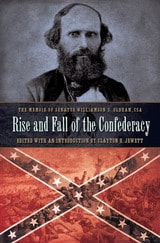
cover of Rise and Fall of the Confederacy: The Memoir of Senator Williamson S. Oldham, CSA

Rise and Fall of the Confederacy

The Memoir of Senator Williamson S. Oldham, CSA

Edited & Intro by Clayton E. Jewett

University of Missouri Press, 2006
Williamson S. Oldham was a shrewd and candid observer of the Civil War scene. Representing the always contrary and suspicious Texans in the Confederate Senate, he was a major opponent of President Jefferson Davis and spoke out vehemently against conscription—which he considered an abusive violation of individual rights—and against military interference in the cotton trade.
Oldham’s memoir provides a firsthand look at the Civil War from the perspective of a government insider. In it, he sheds light on such topics as military strategy, foreign relations, taxes, and conflicts between state officials and the Confederate government. Perhaps more important, his travels between Texas and Richmond—both during and after the war—allowed him to observe the many changes taking place in the South, and he made note of both the general sentiment of citizens and the effect of political and military measures on the country.
Throughout the memoir, Oldham consistently stresses the centrality of politics to a society and the necessity of legislating for the will of the people even in times of war. In assessing the Confederacy’s defeat, he points not to military causes but to Congress’s giving in to the will of the president and military leaders rather than ruling for and representing the people.
Clayton E. Jewett has edited and annotated Oldham’s memoir to produce the only fully edited publication of this important document, significantly expanded here over any version previously published. His introduction helps clarify Oldham’s position on many of the topics he discusses, making the memoir accessible to scholar and Civil War buff alike, while his annotations reflect his deep knowledge of the intrigue of wartime political life in both Texas and Richmond.
Oldham’s memoir offers important new insight into not only political leadership and conflicts in a young nation but also the question of why the South lost the Civil War, dispelling many myths about the defeat and bolstering interpretations of the Confederacy’s decline that point more to political than to military causes. Rise and Fall of the Confederacy is one of the major political and social documents of the Confederacy and will be a boon to all scholars of the Civil War era.
[more]
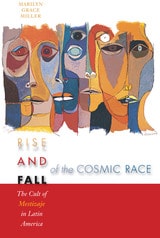
cover of Rise and Fall of the Cosmic Race: The Cult of Mestizaje in Latin America

Rise and Fall of the Cosmic Race

The Cult of Mestizaje in Latin America

By Marilyn Grace Miller

University of Texas Press, 2004

Latin America is characterized by a uniquely rich history of cultural and racial mixtures known collectively as mestizaje. These mixtures reflect the influences of indigenous peoples from Latin America, Europeans, and Africans, and spawn a fascinating and often volatile blend of cultural practices and products. Yet no scholarly study to date has provided an articulate context for fully appreciating and exploring the profound effects of distinct local invocations of syncretism and hybridity. Rise and Fall of the Cosmic Race fills this void by charting the history of Latin America's experience of mestizaje through the prisms of literature, the visual and performing arts, social commentary, and music.

In accessible, jargon-free prose, Marilyn Grace Miller brings to life the varied perspectives of a vast region in a tour that stretches from Mexico and the Caribbean to Brazil, Ecuador and Argentina. She explores the repercussions of mestizo identity in the United States and reveals the key moments in the story of Latin America's cult of synthesis. Rise and Fall of the Cosmic Race examines the inextricable links between aesthetics and politics, and unravels the threads of colonialism woven throughout national narratives in which mestizos serve as primary protagonists.

Illuminating the ways in which regional engagements with mestizaje represent contentious sites of nation building and racial politics, Miller uncovers a rich and multivalent self-portrait of Latin America's diverse populations.
[more]
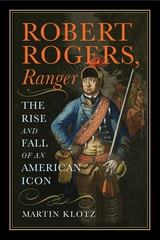
cover of Robert Rogers, Ranger: The Rise and Fall of an American Icon

Robert Rogers, Ranger

The Rise and Fall of an American Icon

Martin Klotz

Westholme Publishing, 2026

Robert Rogers, commander of Rogers’ Rangers during the French and Indian War, was the war’s best-known colonial military hero and, in the ensuing peace, one of the best-known Americans of any description, rivaling Benjamin Franklin in popularity. He was revered in the colonies as an example of the self-made man based on merit, in contrast to the hide-bound, hierarchical British military establishment. Yet this American icon ultimately alienated his peers,fought as a loyalist in the Revolutionary War, ruined himself financially, and died in obscurity in London, estranged from the country of his birth. Rogers is known today for his role in developing the mystique of the modern Ranger, but what explains his meteoric rise and his long, depressing fall?
            Robert Rogers, Ranger: The Rise and Fall of an American Icon by Martin Klotz is a fresh look at the life of this famous, yet highly flawed man. Rogers undeniably had great personal strengths. He was brave nearly to the point of fearlessness. He was physically robust, always the one to cover the retreat, carry the wounded, or go for help when no one else could carry on. He was an intrepid explorer who wrote with eloquence about the splendors of the American frontier. He was bold and unconventional, good at thinking outside the box. He was an outstanding scout and intelligence gatherer who provided invaluable service to a British army inexperienced in woodland warfare. At the same time Rogers had enormous weaknesses that undermined his ability to lead effectively. His boldness was never tempered by judgment, and he was prone to grandiose schemes that came to nothing or, worse, to disaster. His constant self-promotion—including embellishing and lying about his battlefield successes—contributed to his popularity but damaged his reputation with peers and superiors. He succumbed to alcoholism and gambling, was profligate, especially with money—his debts were enormous—and routinely skirted the edges of the law. Rogers never found a comfortable place in America. Instead, his aristocratic patrons in London, who knew him mostly from his own self-description, gave him his most valuable opportunities, including commanding an important military and trading center on the colonial frontier and establishing the Queen’s Rangers to fight alongside Crown forces during the Revolution. But when the British cause failed in America, Rogers became an anathema on both sides of the Atlantic. A fascinating inquiry into an eighteenth-century life, Robert Rogers, Ranger presents this American legend as he lived, crossing the line between fame and misfortune.
[more]