Results by title
520 books match the query 'Family' and 30 start with r
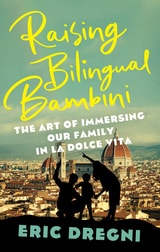
Raising Bilingual Bambini
The Art of Immersing Our Family in the la Dolce VitaEric Dregni
University of Minnesota Press, 2026
A father’s memoir of preparing a dual-language household for a stint living abroad—and all of the ensuing challenges and rewards
After living in Modena, Italy, for three years, Eric Dregni and his wife, Katy, dreamed of returning one day—future children in tow—to give their kids the experience of living abroad. When they become parents, they decide to raise their children with a global perspective in a bilingual household: Katy speaking only English to them and Eric speaking only Italian.
Despite their extended family’s confusion about this experiment, they persist through their three kids’ childhoods, sending them to an immersion language camp and preparing them for life abroad. Eventually, the family packs up and moves to Florence, where the bambini can stop to see Michelangelo’s David on the way home from school, indulge in fresh pasta and gelato, and learn how to argue like real Italians. Sooner than anyone would like, three months of la dolce vita comes to an end, and they head back to Minnesota, trying to bring a taste of Italian culture home with them.
A fast-paced memoir/travelogue, Raising Bilingual Bambini is Dregni’s passionate testament to the value of an international perspective, his loving tribute to the family’s time together in Italy, and a bittersweet reflection on what it meant to return to Minnesota (until their trip to Sicily several years later). Writing with his signature humor and sincerity, Eric Dregni offers a heartfelt story about family and finding a home together in a new place.
Retail e-book files for this title are screen-reader friendly with images accompanied by short alt text and/or extended descriptions.
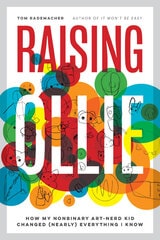
Raising Ollie
How My Nonbinary Art-Nerd Kid Changed (Nearly) Everything I KnowTom Rademacher
University of Minnesota Press, 2021
The account of one radically new school year for a Teacher of the Year and for his nonbinary, art-obsessed, brilliant child
Seven-year-old Ollie was researching local advanced school programs—because every second grader does that, right? Ollie, who used to hate weekends because they meant no school, was crying on the way to school almost every day. Sure, there were the slings and arrows of bullies and bad teachers, but, maybe worse, Ollie, a funny, anxious, smart kid with a thing for choir and an eye for graphic art, was gravely underchallenged and also struggling with identity and how to live totally as themselves. Ollie begged to switch to a new school with “kids like me,” where they wouldn’t feel so alone, or so bored, and so they made the change.
Raising Ollie is dad Tom Rademacher’s story (really, many stories) of that eventful and sometimes painful school year, parenting Ollie and relearning every day what it means to be a father and teacher. As Ollie—who is nonbinary and uses they/them pronouns, and prefers art to athletics, vegetables to cake, and animals to most humans—flourishes in their new school, Rademacher is making an eye-opening adjustment to a new school of his own, one that’s whiter and more suburban than anywhere he has previously taught, with a history of racial tension that he tries to address and navigate.
While Ollie is learning to code, 3D model, animate, speak Japanese, and finally feel comfortable at school, Rademacher increasingly sees how his own educational struggles, anxieties, and childhood upbringing are reflected in his teaching, writing, and parenting, as well as in Ollie’s experience. And with this story of one anything-but-academic year of inquiry and wonder, doubt and revelation, he shows us how raising a kid changes everything—and how much raising a kid like Ollie can teach us about who we are and what we’re doing in the world.

Rara Avis
Blas Falconer
Four Way Books, 2024
Regally bearing its Latin title, Rara Avis captures in sparse, moving verse both the splendor and the loneliness of what it means to be exceptional — a rarified specimen, a strange bird. A son, a husband, and now a father, seasoned poet Blas Falconer explores the relationships among men — between peers, lovers, parents and children — to consider and question existing models of authority and power. Falconer’s lucid but feeling gaze reveals social complexities with searing and graceful imagery, asking what it means to live outside the heteronormative experience while existing as a man, simultaneously a casualty and a participant in the project of masculinity.
These poems carefully delineate the casual cruelties of queer youth and the beautiful and bitter revelations of adulthood. The wisdom propelling Rara Avis is the knowledge that we are each of us that rare bird; we share our singularity. Everyone has a pancreas, but only one organ matters when Falconer learns his father is afflicted. Alchemized by love, one thing, unlike any other, becomes all things. “All day, everything, / no matter how / small, makes me // think of it” … The bee / crawling in / blossoms // scattered on / the glass/tabletop. The sound of // a pitcher fill- / ing slowly / with water.”
Reading Adoption
Family and Difference in Fiction and DramaMarianne Novy
University of Michigan Press, 2005
Marianne Novy is Professor of English and Women's Studies at the University of Pittsburgh. She is author or editor of numerous books, including Imagining Adoption: Essays on Literature and Culture.
Reading History Sideways
The Fallacy and Enduring Impact of the Developmental Paradigm on Family LifeArland Thornton
University of Chicago Press, 2005
In Reading History Sideways, leading family scholar Arland Thornton demonstrates how this approach, though long since discredited, has permeated Western ideas and values about the family. Further, its domination of social science for centuries caused the misinterpretation of Western trends in family structure, marriage, fertility, and parent-child relations. Revisiting the "developmental fallacy," Thornton here traces its central role in changes in the Western world, from marriage to gender roles to adolescent sexuality. Through public policies, aid programs, and colonialism, it continues to reshape families in non-Western societies as well.
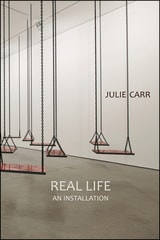
Real Life
An InstallationJulie Carr
Omnidawn, 2018

Rebecca Harding Davis
A Life Among WritersSharon M. Harris
West Virginia University Press, 2019
2018 Choice Outstanding Academic Title
This accessible treatment of Davis’s life, based on deep research in archival sources, provides new perspective on topics ranging from sectional tensions in the border South to the gendered world of nineteenth-century publishing. It promises to be the authoritative treatment of an important figure in the literary history of West Virginia and the wider world.
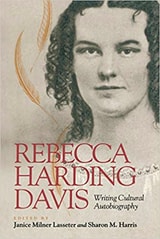
Rebecca Harding Davis
Writing Cultural AutobiographyJanice Milner Lasseter
Vanderbilt University Press, 2001
Rebel Poet
More Stories from a 21st Century IndianLouis V. Clark (Two Shoes)
Wisconsin Historical Society Press, 2019
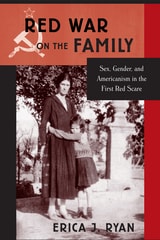
Red War on the Family
Sex, Gender, and Americanism in the First Red ScareErica J Ryan
Temple University Press, 2016
In her probing and engaging book, Red War on the Family, Erica Ryan traces the roots of sexual modernism and the history of antiradicalism and antifeminism. She illuminates how Americans responded to foreign and domestic threats and expressed nationalism by strengthening traditional gender and family roles-especially by imposing them on immigrant groups, workers, women, and young people.
Ryan argues that the environment of political conformity in the 1920s was maintained in part through the quest for cultural and social conformity, exemplified by white, middle-class family life. Red War on the Family charts the ways Americanism both reinforced and was reinforced by these sexual and gender norms in the decades after World War I.
Red Wilderness
Aaron Coleman
Four Way Books, 2025
Refugia
PoemsKyce Bello
University of Nevada Press, 2019
Winner of the inaugural Interim 2018 Test Site Poetry Series Prize
Refugia is a bright and hopeful voice in the current conversation about climate change. Kyce Bello’s stunning debut ponders what it means to inhabit a particular place at a time of enormous disruption, witnessing a beloved landscape as it gives way to, as Bello writes, “something other and unknown, growing beyond us.” Ultimately an exploration of resilience, Refugia brings to life the author’s home ground in Northern New Mexico and carefully observes the seasons in parallel with personal cycles of renewal and loss. These vivid poems touch upon history, inheritance, drought, and most of all, trees—be they Western conifers succumbing to warming temperatures, ramshackle orchards along the Rio Grande, or family trees reaching simultaneously into the past and future.
Like any wilderness, Refugia creates a terrain that is grounded in image and yet many-layered and complex. These poems write us back into an ecological language of place crucial to our survival in this time of environmental crisis.
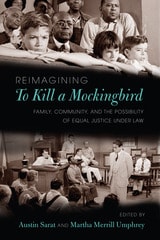
Reimagining "To Kill a Mockingbird"
Family, Community, and the Possibility of Equal Justice under LawAustin Sarat
University of Massachusetts Press, 2013
The readings in this volume peel back the film's visual representation of the many-layered social world of Maycomb, Alabama, offering sometimes counterintuitive insights through the prism of a number of provocative contemporary theoretical and interpretive questions. What, they ask, is the relationship between the subversion of social norms and the doing of justice or injustice? Through what narrative and visual devices are some social hierarchies destabilized while others remain hegemonic? How should we understand the sacrifices characters make in the name of justice, and comprehend their failures in achieving it?
Asking such questions casts light on the film's eccentricities and internal contradictions and suggests the possibility of new interpretations of a culturally iconic text. The book examines the context that gave meaning to the film's representation of race and how debates about family, community, and race are played out and reframed in law.
Contributors include Colin Dayan, Thomas L. Dumm, Susan Sage Heinzelman, Linda Ross Meyer, Naomi Mezey, Imani Perry, and Ravit Reichman.
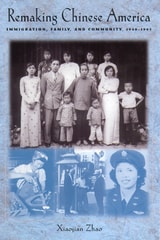
Remaking Chinese America
Immigration, Family, and Community, 1940-1965Zhao, Xiaojian
Rutgers University Press, 2001
In Remaking Chinese America, Xiaojian Zhao explores the myriad forces that changed and unified Chinese Americans during a key period in American history. Prior to 1940, this immigrant community was predominantly male, but between 1940 and 1965 it was transformed into a family-centered American ethnic community. Zhao pays special attention to forces both inside and outside of the country in order to explain these changing demographics. She scrutinizes the repealed exclusion laws and the immigration laws enacted after 1940. Careful attention is also paid to evolving gender roles, since women constituted the majority of newcomers, significantly changing the sex ratio of the Chinese American population.
As members of a minority sharing a common cultural heritage as well as pressures from the larger society, Chinese Americans networked and struggled to gain equal rights during the cold war period. In defining the political circumstances that brought the Chinese together as a cohesive political body, Zhao also delves into the complexities they faced when questioning their personal national allegiances. Remaking Chinese America uses a wealth of primary sources, including oral histories, newspapers, genealogical documents, and immigration files to illuminate what it was like to be Chinese living in the United States during a period that—until now—has been little studied.

Remote
Finding Home in the BitterrootsDJ Lee
Oregon State University Press, 2020
When DJ Lee’s dear friend vanishes in the vast Selway-Bitterroot Wilderness of Idaho and Montana, she travels there to seek answers. The journey unexpectedly brings to an end her fifteen-year quest to uncover the buried history of her family in this remote place. Although Lee doesn’t find all the answers, she comes away with a penetrating memoir that weaves her present-day story with past excursions into the region, wilderness history, and family secrets.
As she grapples with wild animal stand-offs, bush plane flights in dense fog, raging forest fires, and strange characters who have come to the wilderness to seek or hide, Lee learns how she can survive emotionally and how the wilderness survives as an ecosystem. Her growing knowledge of the life cycles of salmon and wolverine, the regenerative role of fire, and Nimíipuu land practices helps her find intimacy in this remote landscape.
Skillfully intertwining history, outdoor adventure, and mystery, Lee’s memoir is an engaging contribution to the growing body of literature on women and wilderness and a lyrical tribute to the spiritual connection between people and the natural world.
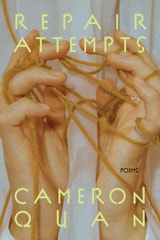
Repair Attempts
PoemsCameron Quan
Northwestern University Press, 2027
A poetic reckoning with personal, political, and historical wounds
The titular “repair attempts” describes the words and actions people use to heal broken connections and de-escalate conflict. In his debut collection, Cameron Quan transforms this concept into a powerful lens for examining moral responsibility in contemporary America. Quan’s Repair Attempts navigates Asian American identity, American exceptionalism, patriarchal violence, grief, and the nature of apologies. The speakers grapple with transgression and healing from unexpected angles, asking what kind of repair is possible in a world marred by atrocities. These poems dance across landscapes—from an imagined American holiday of atonement to the pope’s apology to Indigenous peoples, from a mother preparing to flee domestic violence to an unsettling childhood game boys play with butterflies. A chorus of repair attempts that toggle between the personal and political, this collection invites us into difficult territory where failure, wrongdoing, and shame require a collective reckoning and a collective effort to be better.
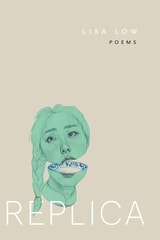
Replica
Lisa Low
University of Wisconsin Press, 2026
Stand-up comedy, a celebrity non-apology, observations of racism, and the slipperiness of nostalgia underpin Replica. In poignant, witty poems, Lisa Low navigates the tensions of solidarity and hostility in white spaces as she sets out to write differently about race.
“The problem of being with a white man is also a problem of writing,” Low says in a prose poem that turns writing about identity on its head. She peers in from outside the poem, as if through an open ceiling. The poem itself becomes a site of investigation—a counterpoint to constricting narratives about Asian American identity—reimagined as a dollhouse, a stage with props, an image the speaker wears like a bodysuit. Replica asks what it means to represent yourself and your experiences in a world where you are indistinguishable from others.
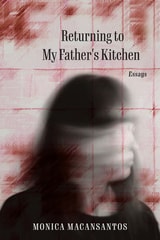
Returning to My Father's Kitchen
EssaysMonica Macansantos
Northwestern University Press, 2025
Feeling untethered after her beloved poet father passes away while she is living abroad, Monica Macansantos decides to return to the Philippines to regain her bearings. But with her father gone and her adult life rooted in the United States and New Zealand, can the land of her birth still serve as a place of healing?
In fifteen richly felt essays, Macansantos considers her family’s history in the Philippines, her own experiences as an exile, and the parent who was the heart of her family’s kitchen, whether standing at the stove to prepare dinner or sitting at the table to scribble in his notebook. Macansantos finds herself remaking her father’s chicken adobo, but also closely rereading his poems. As she reckons with his identity as an artist, she also comes into her own as a writer, and she invites us to consider whether it is possible to carry our homes with us wherever we go.
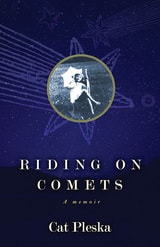
Riding on Comets
A MemoirCat Pleska
West Virginia University Press, 2015
Riding on Comets is the true story of an only child growing up in a working-class family during the 1950s and ‘60s.
As the family storyteller, Cat Pleska whispers and shouts about her life growing up around savvy, strong women and hard-working, hard-drinking men. Unlike many family stories set within Appalachia, this story provides an uncommon glimpse into this region: not coal, but an aluminum plant; not hollers, but small-town America; not hillbillies, but a hard-working family with traditional values.
From the dinner table, to the back porch, to the sprawling countryside, Cat Pleska reveals the sometimes tender, sometimes frightening education of a child who listens at the knees of these giants. She mimics and learns every nuance, every rhythm—how they laugh, smoke, cuss, fight, love, and tell stories—as she unwittingly prepares to carry their tales forward, their words and actions forever etched in her mind. And finally, she discovers a life story of her own.
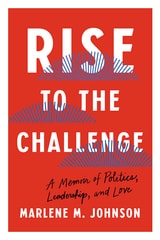
Rise to the Challenge
A Memoir of Politics, Leadership, and LoveJohnson
University of Minnesota Press, 2024
The inspiring life story of Minnesota’s first woman lieutenant governor: breaking political ground, navigating patriarchal tradition, and persevering through great personal loss
Marking a milestone for women in state government, Marlene M. Johnson became Minnesota’s first woman lieutenant governor under Rudy Perpich’s gubernatorial administration in January 1983. That same year, she met her husband, Peter, and their deeply loving relationship profoundly sustained her for twenty-seven years. Rise to the Challenge weaves these personal and professional stories together in a courageous portrait of dedication and leadership.
Growing up in rural Minnesota, Johnson began organizing and advocating for change early, beginning with a campaign to introduce foreign languages into her high school curriculum. Pursuing a deeply felt commitment to improving the lives of others, she continued to sharpen her leadership skills throughout her life, participating in activist work in college, cofounding organizations to support women entrepreneurs and politicians, and eventually running an international education nonprofit.
A stalwart supporter, her husband gave Marlene strength and encouragement to face the challenges of the political landscape and its gender biases. Then, in 2010, he suffered a traumatic brain injury that would change both of their lives. Learning how to be a medical advocate and, eventually, facing the sorrow of Peter’s death, Marlene relied on the hard-fought resilience and belief in herself that Peter had helped her to develop.
A story of learning and leadership in politics, business, and public service, Rise to the Challenge is a moving portrayal of spirit, perseverance, and grace in the face of daunting personal challenges, supported by unwavering faith in the public good.
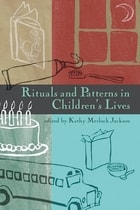
Rituals and Patterns in Children's Lives
Edited by Kathy Merlock Jackson
University of Wisconsin Press, 2005
Trick-or-treating. Flower girls. Bedtime stories. Bar and bat mitvah. In a nation of increasing ethnic, familial, and technological complexity, the patterns of children's lives both persist and evolve. This book considers how such events shape identity and transmit cultural norms, asking such questions as:
* How do immigrant families negotiate between old traditions and new?
* What does it mean when children engage in ritual insults and sick jokes?
* How does playing with dolls reflect and construct feelings of racial identity?
* Whatever happened to the practice of going to the Saturday matinee to see a Western?
* What does it mean for a child to be (in the words of one bride) "flower-girl material"? How does that role
cement a girl's bond to her family and initiate her into society?
* What is the function of masks and costumes, and why do children yearn for these accoutrements of disguise?
Rituals and Patterns in Children's Lives suggests the manifold ways in which America's children come to know their society and themselves.
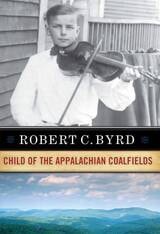
Robert C. Byrd
Child of the Appalachian CoalfieldsRobert C. Byrd
West Virginia University Press, 2010
This autobiography follows United States Senator Robert C. Byrd’s experiences from his boyhood in the early 1920s to his election in 2000, which won him an unprecedented eighth term in the Senate. Along the way, Senator Byrd offers commentary on national and international events that occurred throughout his long life in public service. Senator Byrd’s journey from the hardscrabble coalfields to the marbled halls of Congress has inspired generations of people in West Virginia and throughout the nation. From reading the stories of the Founding Fathers as a young boy by the light of a kerosene lamp to the swearing of an oath for more than a half-century to guard the United States Constitution, Senator Byrd’s life is legendary. Byrd always stands by his principles, earning the affection of the people of his home state and the respect of Americans from all walks of life. With his beloved Erma ever by his side, Robert C. Byrd has never forgotten his roots, harkening back to those early lessons that he learned as a child of the Appalachian coalfields.
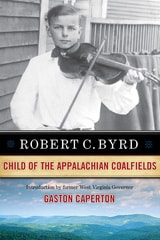
Robert C. Byrd
Child of the Appalachian CoalfieldsROBERT C. BYRD
West Virginia University Press, 2015
This autobiography follows West Virginia senator Robert C. Byrd’s experiences from his boyhood in the early 1920s to his election in 2000, which won him an unprecedented eighth term in the Senate. Within these pages, Senator Byrd offers commentary on national and international events that occurred throughout his long life in public service.
His journey from the hardscrabble coalfields to the marbled halls of Congress has inspired generations of people in West Virginia and throughout the nation. From reading the stories of the Founding Fathers as a young boy by the light of a kerosene lamp to the swearing of an oath for more than a half-century to guard the US Constitution, Senator Byrd’s life is legendary.
Until his death on June 28, 2010, Byrd stood by his principles, earning the affection of the people of his home state and the respect of Americans from all walks of life. With his beloved Erma ever by his side, Robert C. Byrd never forgot his roots, harkening back to those early lessons that he learned as a child of the Appalachian coalfields.
This new paperback edition includes a foreword by Gaston Caperton, governor of West Virginia from 1989–1997.

Robert Lowell in Love
Jeffrey Meyers
University of Massachusetts Press, 2016
Lowell's charismatic personality, compelling poetry, and literary fame attracted lovers and friends who were both frightened and excited by his aura of brilliance and danger. He loved the idea of falling in love, and in his recurring manic episodes he needed women at the center of his emotional and artistic life. Each affair became an intense dramatic episode. Though he idealized his loves and encouraged their talents, his frenetic affairs and tortured marriages were always conducted on his own terms. Robert Lowell in Love tells the story of the poet in the grip of love and gives voice to the women who loved him, inspired his poetry, and suffered along with him.
Romance, Remedies, and Revolution
The Journal of Dr. Elihu Ashley of Deerfield, Massachusetts, 1773-1775Edited by Amelia F. Miller and A. R. Riggs
University of Massachusetts Press, 2007
With flashes of humor and close attention to detail, Ashley describes a broad range of activities and experiences in the small village of Deerfield and the surrounding towns of the Connecticut River valley. Articulate as well as observant, this former schoolteacher conveys a sense of immediacy that brings even the most mundane daily events to life. He discusses medical theory and practice, revolutionary politics, farming, his family, his circle of friends, and amusements ranging from singing and dancing to sleigh riding and bouts of drunkenness. He also writes about his love life, including a dalliance with the older sister of his fiancee, Polly Williams, while the latter is away visiting relatives in the Berkshires.
For Ashley, personal relationships and politics were the prominent issues of 1773 and 1774, as events in Massachusetts drew the province toward rebellion. He discusses the gathering of angry mobs in response to the so-called Intolerable Acts, the stoppage of the courts in Hampshire County, the anarchy that ensued, and the persecution of loyalists, with or without the sanction of law. When the revolution breaks out in April 1775, he describes the departure of companies of minutemen as they set out for Boston to challenge the British Army.
Six months later, in November 1775, the journal abruptly ends. By then, however, Elihu Ashley had already bequeathed to posterity an extraordinary firsthand account of life in rural New England in the years immediately preceding the War of Independence.
Rooted in Place
Family and Belongings in a Southern Black CommunityFalk, William W
Rutgers University Press, 2004
Throughout the twentieth century, millions of African Americans, many from impoverished, historically black counties, left the South to pursue what they thought would be a better life in the North. But not everyone moved away during what scholars have termed the Great Migration. What has life been like for those who stayed? Why would they remain in a place that many outsiders would see as grim, depressed, economically marginal, and where racial prejudice continues to place them at a disadvantage?
Through oral history William Falk tells the story of an extended family in the Georgia-South Carolina lowcountry. Family members talk about schooling, relatives, work, religion, race, and their love of the place where they have lived for generations. This “conversational ethnography” argues that an interconnection between race and place in the area helps explain African Americans’ loyalty to it. In Colonial County, blacks historically enjoyed a numerical majority as well as deep cultural roots and longstanding webs of social connections that, Falk finds, more than outweigh the racism they face and the economic disadvantages they suffer.
Roxana's Children
The Biography of a Nineteenth-Century Vermont FamilyLynn A. Bonfield
University of Massachusetts Press, 1995
Roze & Blud
a poemJayson Iwen
University of Arkansas Press, 2020
Winner, 2020-2021 Northeastern Minnesota Book Award
In this long poem—almost a novel-in-verse—Jayson Iwen examines the intimate thoughts and feelings of two would-be poets: Roze Mertha, a teenage girl growing up in a trailer park, and William Blud, a veteran navigating age and loneliness in an apartment he shares with an Afghan refugee. Deftly crafting distinct voices for these characters in the upper midwestern terrain they inhabit, Iwen explores the quiet heartbreak and tenderly treasured experiences of two apparently unremarkable people using poetry to understand a world that doesn’t make much space for them.

Run in Such a Way
PoemsJustin Danzy
Northwestern University Press, 2027
A poet’s candid and probing exploration of faith, Blackness, and masculinity
With poems that closely examine familial bonds and heritage, biblical teachings, a shifting understanding of home, and the violence of toxic masculinity, Justin Danzy’s Run in Such a Way sits at the crossroads of religion, race, gender, and more. A collection about pursuit, tracking the narrative of its speaker’s journey toward a deeper understanding of himself and of his community as he moves from child to man, the book wrestles with the way an identity is constructed, deconstructed, and reconstructed again throughout one’s life. Playful and sincere in equal measure, Danzy’s command of the line carries us through as we travel with the speaker to the precipice of belief. Danzy’s lyrical voice and fealty to his people pays homage to the world that made him, and considers all that the speaker of this tremendous debut has—both wisely and foolishly—run toward and away from in the search for truth.
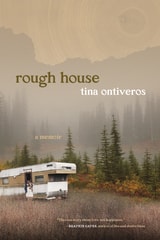
rough house
a memoirTina Ontiveros
Oregon State University Press, 2020
Tina Ontiveros was born into timber on both sides of the family. Her mother spent summers driving logging trucks for her family’s operation, and her father was the son of an itinerant logger, raised in a variety of lumber towns, as Tina herself would be.
A story of growing up in turmoil, rough house recounts a childhood divided between a charming, mercurial, abusive father in the forests of the Pacific Northwest and a mother struggling with small-town poverty. It is also a story of generational trauma, especially for the women—a story of violent men and societal restrictions, of children not always chosen and frequently raised alone.
Ontiveros’s father, Loyd, looms large. Reflecting on his death and long absence from her life, she writes, “I had this ridiculous hope that I would get to enjoy a functional relationship with my father, on my own terms, now that I was an adult.” In searingly honest, straightforward prose, rough house is her attempt to carve out this relationship, to understand her father and her family from an adult perspective.
While some elements of Ontiveros’s story are universal, others are indelibly grounded in the logging camps of the Pacific Northwest at the end of the twentieth century, as the lumber industry shifted and contracted. Tracing her childhood through the working-class towns and forests of Washington and Oregon, Ontiveros explores themes of love and loss, parents and children, and her own journey to a different kind of adulthood.