Results by title
64 books match the query 'Farmers' and 5 start with r
Radical Protest and Social Structure
The Southern Farmers' Alliance and Cotton Tenancy, 1880-1890Michael Schwartz
University of Chicago Press, 1988
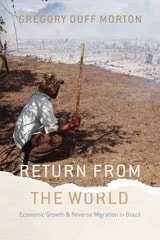
Return from the World
Economic Growth and Reverse Migration in BrazilGregory Duff Morton
University of Chicago Press, 2024
In Return from the World, anthropologist Gregory Duff Morton traces the migrations of Brazilian workers who leave a thriving labor market and return to their home villages to become peasant farmers. Morton seeks to understand what it means to turn one’s back deliberately on the promise of economic growth.
Giving up their positions in factories, at construction sites, and as domestic workers, these migrants travel thousands of miles back to villages without running water or dependable power. There, many take up subsistence farming. Some become activists with the MST, Brazil’s militant movement of landless peasants. Bringing their stories vividly to life, Morton dives into the dreams and disputes at play in finding freedom in the shared rejection of growth.
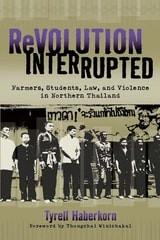
Revolution Interrupted
Farmers, Students, Law, and Violence in Northern ThailandTyrell Haberkorn; Foreword by Thongchai Winichakul
University of Wisconsin Press, 2011
In October 1973 a mass movement forced Thailand’s prime minister to step down and leave the country, ending nearly forty years of dictatorship. Three years later, in a brutal reassertion of authoritarian rule, Thai state and para-state forces quashed a demonstration at Thammasat University in Bangkok. In Revolution Interrupted, Tyrell Haberkorn focuses on this period when political activism briefly opened up the possibility for meaningful social change. Tenant farmers and their student allies fomented revolution, she shows, not by picking up guns but by invoking laws—laws that the Thai state ultimately proved unwilling to enforce.
In choosing the law as their tool to fight unjust tenancy practices, farmers and students departed from the tactics of their ancestors and from the insurgent methods of the Communist Party of Thailand. To first imagine and then create a more just future, they drew on their own lived experience and the writings of Thai Marxian radicals of an earlier generation, as well as New Left, socialist, and other progressive thinkers from around the world. Yet their efforts were quickly met with harassment, intimidation, and assassinations of farmer leaders. More than thirty years later, the assassins remain unnamed.
Drawing on hundreds of newspaper articles, cremation volumes, activist and state documents, and oral histories, Haberkorn reveals the ways in which the established order was undone and then reconsolidated. Examining this turbulent period through a new optic—interrupted revolution—she shows how the still unnameable violence continues to constrict political opportunity and to silence dissent in present-day Thailand.
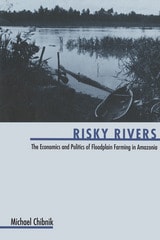
Risky Rivers
The Economics and Politics of Floodplain Farming in AmazoniaMichael Chibnik
University of Arizona Press, 1994
They have, however, suffered greatly from unpredictable crop prices and erratic state agricultural policies. Michael Chibnik here examines the household economies, cultural ecology, grassroots political organizations of ribere¤os living in three floodplain villages near Iquitos, Peru. He describes the villagers' remarkable history, their participation in misconceived development programs, and their longstanding conflicts with regional elites. Chibnik discusses the political ecology of the region in the context of arguments about appropriate development policies in tropical lowlands. Although ribere¤os practice intensive agriculture with low environmental impact, they have not been able to improve their economic circumstances in recent years. Chibnik's study is a significant and timely contribution to current debates about the possibility of sustainable, equitable development in Amazonia.

Roots of Reform
Farmers, Workers, and the American State, 1877-1917Elizabeth Sanders
University of Chicago Press, 1999
Based on new evidence from legislative records and other sources, Sanders shows that this tenuous alliance of "producers versus plutocrats" shaped early regulatory legislation, remained powerful through the populist and progressive eras, and developed a characteristic method of democratic state expansion with continued relevance for subsequent reform movements.
Roots of Reform is essential reading for anyone interested in this crucial period of American political development.