208 books match the query 'Finance' and 10 start with r
cover of Reconstructing Europe's Trade and Payments: The European Payments Union

Reconstructing Europe's Trade and Payments

The European Payments Union

Barry Eichengreen

University of Michigan Press, 1993
This title was formally part of the Studies in International Trade Policy Series, now called Studies in International Economics.
[more]
cover of Regulating Finance: The Political Economy of Spanish Financial Policy from Franco to Democracy

Regulating Finance

The Political Economy of Spanish Financial Policy from Franco to Democracy

Arvid John Lukauskas

University of Michigan Press, 1997
In recent years many countries have liberalized their financial markets as a central element of their efforts to reform their economies and increase their economic growth rates. Financial deregulation leads to a fundamental restructuring of a country's economy and polity, as market forces, not state officials, begin to determine who obtains financial resources and at what cost. A critical question is whether countries can undertake a program of liberalization while undergoing democratic transformation. In this study, Arvid John Lukauskas explores why governments tightly regulate their country's financial system and why they choose to liberalize it. Using a rational choice approach, Lukauskas contends that public officials provide the dynamic behind the evolution of financial regulation as they seek to retain power and generate public revenue. Lukauskas argues that the nature of a country's political institutions shape the incentives facing politicians and influence whether they seek to regulate closely or liberalize financial markets in the pursuit of their goals. Lukauskas then tests his ideas in an in-depth case study of the evolution of financial policy in Spain, a country that transformed its financial system into a mostly market-based system after years of heavy state intervention, while undergoing a transformation from a dictatorship to a democracy. Contrary to the conventional wisdom that leaders will not undertake structural change during periods of democratization, he finds that leaders in Spain undertook financial liberalization despite opposition from powerful groups, because democratization gave Spanish leaders a strong incentive to improve economic performance through financial reform in order to compete for votes. Regulating Finance will be of interest to political scientists and economists interested in studying financial markets and the effects of regime change, including democratization, on economic reform.
[more]
cover of Reinventing Public Education: How Contracting Can Transform America's Schools

Reinventing Public Education

How Contracting Can Transform America's Schools

Paul Hill, Lawrence C. Pierce, and James W. Guthrie

University of Chicago Press, 1997

A heated debate is raging over our nation’s public schools and how they should be reformed, with proposals ranging from imposing national standards to replacing public education altogether with a voucher system for private schools. Combining decades of experience in education, the authors propose an innovative approach to solving the problems of our school system and find a middle ground between these extremes.

Reinventing Public Education shows how contracting would radically change the way we operate our schools, while keeping them public and accessible to all, and making them better able to meet standards of achievement and equity. Using public funds, local school boards would select private providers to operate individual schools under formal contracts specifying the type and quality of instruction.

In a hands-on, concrete fashion, the authors provide a thorough explanation of the pros and cons of school contracting and how it would work in practice. They show how contracting would free local school boards from operating schools so they can focus on improving educational policy; how it would allow parents to choose the best school for their children; and, finally, how it would ensure that schools are held accountable and academic standards are met.

While retaining a strong public role in education, contracting enables schools to be more imaginative, adaptable, and suited to the needs of children and families. In presenting an alternative vision for America’s schools, Reinventing Public Education is too important to be ignored.
[more]
cover of Religion, Politics, and Sugar: The LDS Church, the Federal Government, and the Utah-Idaho Sugar Company, 1907-1927

Religion, Politics, and Sugar

The LDS Church, the Federal Government, and the Utah-Idaho Sugar Company, 1907-1927

Matthew C. Godfrey

Utah State University Press, 2007

Mary Lois Walker Morris was a Mormon woman who challenged both American ideas about marriage and the U.S. legal system. Before the Manifesto provides a glimpse into her world as the polygamous wife of a prominent Salt Lake City businessman, during a time of great transition in Utah. This account of her life as a convert, milliner, active community member, mother, and wife begins in England, where her family joined the Mormon church, details her journey across the plains, and describes life in Utah in the 1880s. Her experiences were unusual as, following her first husband's deathbed request, she married his brother as a plural wife in the Old Testament tradition of levirate marriage.

Mary Morris's memoir frames her 1879 to 1887 diary with both reflections on earlier years and passages that parallel entries in the day book, giving readers a better understanding of how she retrospectively saw her life. The thoroughly annotated diary offers the daily experience of a woman who kept a largely self-sufficient household, had a wide social network, ran her own business, wrote poetry, and was intellectually curious. The years of "the Raid" (federal prosecution of polygamists) led Mary and Elias Morris to hide their marriage on "the underground," and her to perjury during Elias's trial for unlawful cohabitation. The book ends with Mary Lois's arrival at the Salt Lake Depot after three years in exile in Mexico with a polygamist colony.

[more]
cover of Resource Allocation in Higher Education

Resource Allocation in Higher Education

William F. Massy, Editor

University of Michigan Press, 1996
Resource Allocation in Higher Education describes how colleges, universities, and government agencies can use budgeting processes to improve program planning and productivity. Drawn from the contributors' direct experiences as well as research findings, it blends conceptual foundations with practical insights. Many resource allocation processes in higher education need reform, and this volume will stimulate and assist that effort. Beginning with the economic theory of nonprofits, the essays examine current budgeting systems in both theoretical and practical terms. Resource allocation systems from other domains such as health care are explored for relevant insights. Throughout, decentralization remains a major theme. Topics range from the eminently practical--how to establish a global accounting system or choose an endowment spending rate--to the more abstract--the theory of how various nonprofit enterprises balance academic values against market pressures. The volume ends by proposing value responsibility budgeting, which offers institutions a potentially better way of pursuing their academic values while remaining responsive to market pressures. Those within higher education institutions who are responsible for resource allocation, such as provosts, chief financial officers, or budget directors, will find much that speaks to them. While mostly in the domain of higher education economics, management, and planning, the essays are written for any serious reader concerned with the problem of reform in higher education. William F. Massy is Professor of Education and Business Administration at Stanford University.
[more]
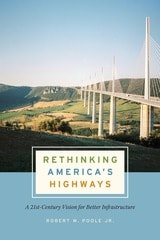
cover of Rethinking America's Highways: A 21st-Century Vision for Better Infrastructure

Rethinking America's Highways

A 21st-Century Vision for Better Infrastructure

Robert W. Poole Jr.

University of Chicago Press, 2018

Americans spend hours every day sitting in traffic. And the roads they idle on are often rough and potholed, their exits, tunnels, guardrails, and bridges in terrible disrepair. According to transportation expert Robert Poole, this congestion and deterioration are outcomes of the way America provides its highways. Our twentieth-century model overly politicizes highway investment decisions, short-changing maintenance and often investing in projects whose costs exceed their benefits.

In Rethinking America’s Highways, Poole examines how our current model of state-owned highways came about and why it is failing to satisfy its customers. He argues for a new model that treats highways themselves as public utilities—like electricity, telephones, and water supply. If highways were provided commercially, Poole argues, people would pay for highways based on how much they used, and the companies would issue revenue bonds to invest in facilities people were willing to pay for. Arguing for highway investments to be motivated by economic rather than political factors, this book makes a carefully-reasoned and well-documented case for a new approach to highways that is sure to inform future decisions and policies for U.S. infrastructure.
[more]
cover of Retrospectives on Public Finance

Retrospectives on Public Finance

Lorraine Eden, ed.

Duke University Press, 1991

Retrospectives on Public Finance contains original analyses by internationally recognized public finance scholars, including Carl Sumner Shoup, one of the discipline’s most famous practitioners. Shoup, along with Richard Musgrave and his students, pioneered the “prescriptive” or “political economy school” of public finance known for its hands-on approach and its commitment to applying theory to real world problems.
Each contributor provides a retrospective on Shoup’s various contributions to the field, reviewing the literature and assessing its relevance to current problems in public finance theory and policy. The essays highlight and analyze fiscal theory and public policy developments from the 1930s to the present in four areas: the Shoup tax missions to Japan, Venezuela, and Liberia; the tax mix; the expenditure mix; and macro public finance.

Contributors. Lorraine Eden, Carl S. Shoup, Malcolm Gillis, Minoru Nakazato, Charles E. McLure Jr., John Bossons, Richard Goode, William Vickery, Wayne Thirsk, John Graham, Stanley Winer, W. Irwin Gillespie, Melville L. McMillan, Cliff Walsh, John G. Head, Enid Slack, Edwin G. West, Richard M. Bird, Peggy B. Musgrave, Douglas A. L. Auld, John B. Burbidge, Jack M. Mintz, John Sargent, Richard A. Musgrave
[more]
cover of Risk Aspects of Investment-Based Social Security Reform

Risk Aspects of Investment-Based Social Security Reform

Edited by John Y. Campbell and Martin Feldstein

University of Chicago Press, 2001
Our current social security system operates on a pay-as-you-go basis; benefits are paid almost entirely out of current revenues. As the ratio of retirees to taxpayers increases, concern about the high costs of providing benefits in a pay-as-you-go system has led economists to explore other options. One involves "prefunding," in which a person's withholdings are invested in financial instruments, such as stocks and bonds, the eventual returns from which would fund his or her retirement. The risks such a system would introduce—such as the volatility in the market prices of investment assets—are the focus of this offering from the NBER. Exploring the issues involved in measuring risk and developing models to reflect the risks of various investment-based systems, economists evaluate the magnitude of the risks that both retirees and taxpayers would assume. The insights that emerge show that the risk is actually moderate relative to the improved return, as well as being balanced by the ability of an investment-based system to adapt to differences in individual preferences and conditions.
[more]
cover of Risk Topography: Systemic Risk and Macro Modeling

Risk Topography

Systemic Risk and Macro Modeling

Edited by Markus Brunnermeier and Arvind Krishnamurthy

University of Chicago Press, 2014

The recent financial crisis and the difficulty of using mainstream macroeconomic models to accurately monitor and assess systemic risk have stimulated new analyses of how we measure economic activity and the development of more sophisticated models in which the financial sector plays a greater role.

Markus Brunnermeier and Arvind Krishnamurthy have assembled contributions from leading academic researchers, central bankers, and other financial-market experts to explore the possibilities for advancing macroeconomic modeling in order to achieve more accurate economic measurement. Essays in this volume focus on the development of models capable of highlighting the vulnerabilities that leave the economy susceptible to adverse feedback loops and liquidity spirals. While these types of vulnerabilities have often been identified, they have not been consistently measured. In a financial world of increasing complexity and uncertainty, this volume is an invaluable resource for policymakers working to improve current measurement systems and for academics concerned with conceptualizing effective measurement.
[more]
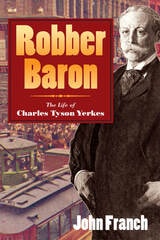
cover of Robber Baron: The Life of Charles Tyson Yerkes

Robber Baron

The Life of Charles Tyson Yerkes

John Franch

University of Illinois Press, 2006

Robber Baron is the first biography of the streetcar magnate Charles Tyson Yerkes (1837-1905), who stands alongside J.P. Morgan and Andrew Carnegie as one of the most colorful and controversial public figures in Gilded Age America. John Franch draws upon every available source to tell the story of the man who was the mastermind behind Chicago’s Loop Elevated and the London Underground, the namesake of the University of Chicago’s observatory, and the inspiration for Frank Cowperwood, the ruthless protagonist of Theodore Dreiser's Trilogy of Desire: The Financier, The Titan, and The Stoic. Despite various philanthropic efforts, Yerkes and his unscrupulous tactics were despised by the press and public, and he left Chicago a bitter man. While Yerkes’s enduring public works testify to his success and desire to leave a lasting impression on his world, Robber Baron also uncovers the cost of this boundless ambition.
[more]