Results by title
775 books match the query 'Germany' and 38 start with r

Rabbi Esriel Hildesheimer and the Creation of a Modern Jewish Orthodoxy
David Ellenson
University of Alabama Press, 1990
Tradition, Modernity, and the Making of Modern Orthodoxy.
For many histories of Modern Orthodox Judaism, Rabbi Samson Raphael Hirsch stands as the primary architect of the movement's encounter with modernity. In Rabbi Esriel Hildesheimer and the Creation of a Modern Jewish Orthodoxy, distinguished scholar David Ellenson expands that narrative by recovering the life, thought, and enduring influence of one of Hirsch's most important contemporaries. Through a careful examination of Rabbi Esriel Hildesheimer's writings, leadership, educational initiatives, and responses to the social and intellectual challenges of nineteenth-century Europe, Ellenson demonstrates how Hildesheimer helped forge a model of Orthodoxy that remained firmly committed to Jewish tradition while engaging constructively with the modern world.
Set against a period of profound cultural, political, and religious transformation, this volume explores the tensions confronting European Jewry as modernization, secular education, religious pluralism, and changing political realities reshaped Jewish communal life. Ellenson shows how Hildesheimer addressed these challenges not through rigid isolation but through a pragmatic and intellectually sophisticated approach that balanced fidelity to halakhah with openness to selected aspects of modern culture and scholarship. His vision helped establish a framework for Modern Orthodoxy that continues to influence contemporary Jewish thought and practice.
Beyond its biographical focus, the study provides broader insights into the emergence of Modern Orthodoxy as a religious and intellectual movement. By illuminating Hildesheimer's efforts to integrate traditional scholarship with contemporary realities, Ellenson offers readers a deeper understanding of how Judaism has negotiated the relationship between heritage and change. The result is both a compelling portrait of an influential rabbinic figure and an important examination of the forces that shaped modern Jewish religious identity.
Rabbi Esriel Hildesheimer and the Creation of a Modern Jewish Orthodoxy is essential reading for scholars and students of Jewish studies, religious studies, theology, European history, intellectual history, and modern Judaism. It will also appeal to rabbis, educators, and general readers seeking to understand the historical roots of contemporary Orthodox Jewish life and the ongoing dialogue between tradition and modernity.
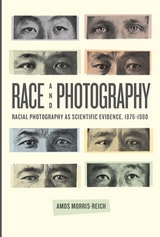
Race and Photography
Racial Photography as Scientific Evidence, 1876-1980Amos Morris-Reich
University of Chicago Press, 2015
Exploring the development of racial photography wherever it took place, including countries like France and England, Morris-Reich pays special attention to the German and Jewish contexts of scientific racism. Through careful reconstruction of individual cases, conceptual genealogies, and patterns of practice, he compares the intended roles of photography with its actual use in scientific argumentation. He examines the diverse ways it was used to establish racial ideologies—as illustrations of types, statistical data, or as self-evident record of racial signs. Altogether, Morris-Reich visits this troubling history to outline important truths about the roles of visual argumentation, imagination, perception, aesthetics, epistemology, and ideology within scientific study.

Re-living the American Frontier
Western Fandoms, Reenactment, and Historical Hobbyists in Germany and America Since 1900Nancy Reagin
University of Iowa Press, 2021
But the Old West (like all visions of the past) proved to be shifting cultural terrain. In both Germany and the U. S., Western narratives of white settlement were once seen as “apolitical” and were widely accepted by white people. But during the Nazi period in Germany and in East Germany after 1945, the American West was reevaluated and politically repurposed. Then, during the late twentieth century, understandings of the West changed in the U. S. as well, while the violence of white settler colonialism and the displacement of Indigenous peoples became a flashpoint in the culture wars between right and left. Reagin shows that the past that fans seek to recreate is shaped by the changing present, as each new generation adapts and relives their own West.
Reasons of Conscience
The Bioethics Debate in GermanyStefan Sperling
University of Chicago Press, 2013
Rebuilding Jewish Life in Germany
Jay Howard Geller
Rutgers University Press, 2020
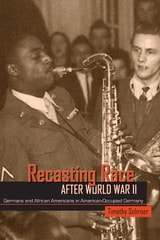
Recasting Race after World War II
Germans and African Americans in American-Occupied GermanyTimothy L. Schroer
University Press of Colorado, 2007
The segregation of U.S. Army forces fed a growing debate in America about whether a Jim Crow army could truly be a democratizing force in postwar Germany. Schroer follows the evolution of that debate and examines the ways in which postwar conditions necessitated reexamination of race relations. He reveals how anxiety about interracial relationships between African American men and German women united white American soldiers and the German populace. He also traces the importation and influence of African American jazz music in Germany, illuminating the subtle ways in which occupied Germany represented a crucible in which to recast the meaning of race in a post-Holocaust world.
Recasting Race after World War II will appeal to historians and scholars of American, African American, and German studies.
Recasting Welfare Capitalism
Economic Adjustment in Contemporary France and GermanyMark I. Vail
Temple University Press, 2009
Vail finds that these respective evolutions involve interrelated changes in social and economic policies and are characterized by political relationships that are continuously renegotiated—often in unpredictable ways. In the process, he presents a compelling reconceptualization of change in both the welfare state and the broader political economy during an age of globalization.
Recovering the Nation's Body
Cultural Memory, Medicine, and the Politics of RedemptionLinda F Hogle
Rutgers University Press, 1999
The body is both a site for medical practice and a source of therapeutic and scientific tools. As such, there are a variety of meanings ascribed to the body which both affect and are affected by cultural, economic, political and legal complexities. In order to access and use body parts, Linda F. Hogle states, transformative scientific and cultural processes are brought into play. Nowhere is this more evident than present-day Germany, where the spectre of Nazi medical experimentation still plays a large role in national policies governing the use of body parts and the way these policies are put into practice. In their efforts to be perceived as not repeating atrocities of the past, German medical practitioners and policy-makers reformulate ideas of bodily violation. To further confuse the issue, the reunification of East and West Germany has engendered new questions about the relationship between individuals’ bodies, science, and the state.
Hogle shows how “universal” medicine is reinterpreted through the lens of national and transnational politics and history, using comparative examples from her research in the United. States. Recovering the Nation’s Body is the first book to analyze the actual practices involved in procuring human tissue, and the first to examine how the German past and the unique present-day situation within the European Union are key in understanding the form that medical practices take within various contexts.
Redeeming Objects
A West German MythologyNatalie Scholz
University of Wisconsin Press, 2023
Postwar advertising, film, and print culture sought to divest mass-produced goods—such as the Volkswagen and modern interiors—of their fascist legacies. But Scholz demonstrates that postwar representations were saturated with unacknowledged references to the Nazi past. Drawing on a vast array of popular and highbrow publications and films, Redeeming Objects adds a new perspective to debates about postwar reconstruction, memory, and consumerism.
Reformation of the Senses
The Paradox of Religious Belief and Practice in GermanyJacob M. Baum
University of Illinois Press, 2018
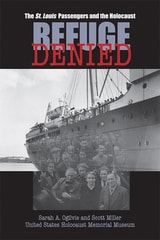
Refuge Denied
The St. Louis Passengers and the HolocaustSarah A. Ogilvie and Scott Miller
University of Wisconsin Press, 2006
Although the episode of the St. Louis is well known, the actual fates of the passengers, once they disembarked, slipped into historical obscurity. Prompted by a former passenger’s curiosity, Sarah Ogilvie and Scott Miller of the United States Holocaust Memorial Museum set out in 1996 to discover what happened to each of the 937 passengers. Their investigation, spanning nine years and half the globe, took them to unexpected places and produced surprising results. Refuge Denied chronicles the unraveling of the mystery, from Los Angeles to Havana and from New York to Jerusalem.
Some of the most memorable stories include the fate of a young toolmaker who survived initial selection at Auschwitz because his glasses had gone flying moments before and a Jewish child whose apprenticeship with a baker in wartime France later translated into the establishment of a successful business in the United States. Unfolding like a compelling detective thriller, Refuge Denied is a must-read for anyone interested in the Holocaust and its impact on the lives of ordinary people.
Religious Crisis and Civic Transformation
How Conflicts over Gender and Sexuality Changed the West German Catholic ChurchKimba Allie Tichenor
Brandeis University Press, 2016
Reluctant Meister
How Germany's Past is Shaping Its European FutureStephen Green
Haus Publishing, 2014
Remapping Black Germany
New Perspectives on Afro-German History, Politics, and CultureSara Lennox
University of Massachusetts Press, 2016
In 1984 at the Free University of Berlin, the African American poet Audre Lorde asked her Black, German-speaking women students about their identities. The women revealed that they had no common term to describe themselves and had until then lacked a way to identify their shared interests and concerns. Out of Lorde's seminar emerged both the term “Afro-German” (or “Black German”) and the 1986 publication of the volume that appeared in English translation as Showing Our Colors: Afro-German Women Speak Out. The book launched a movement that has since catalyzed activism and scholarship in Germany.
Remapping Black Germany collects thirteen pieces that consider the wide array of issues facing Black German groups and individuals across turbulent periods, spanning the German colonial period, National Socialism, divided Germany, and the enormous outpouring of Black German creativity after 1986.
In addition to the editor, the contributors include Robert Bernasconi, Tina Campt, Maria I. Diedrich, Maureen Maisha Eggers, Fatima El-Tayeb, Heide Fehrenbach, Dirk Göttsche, Felicitas Jaima, Katja Kinder, Tobias Nagl, Katharina Oguntoye, Peggy Piesche, Christian Rogowski, and Nicola Lauré al-Samarai.
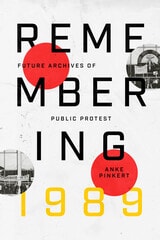
Remembering 1989
Future Archives of Public ProtestAnke Pinkert
University of Chicago Press, 2024
For many, 1989 is an iconic date, one we associate with the fall of the Berlin Wall and the end of the Cold War. The year prompts some to rue the defeat of socialism in the East, while others celebrate a victory for democracy and capitalism in the reunified Germany. Remembering 1989 focuses on a largely forgotten interregnum: the months between the outbreak of protests in the German Democratic Republic in 1989 and its absorption by the West in 1990. Anke Pinkert, who herself participated in those protests, recalls these months as a volatile but joyous “laboratory of radical democracy,” and tells the story of how and why this “time out of joint” has been erased from Germany’s national memory.
Remembering 1989 argues that in order to truly understand Germany’s historic transformation, we must revisit protesters’ actions across a wide range of minor, vernacular, and often transient sources. Drawing on rich archives including videotapes of untelevised protests, illegally printed petitions by Church leaders, audio recordings of dissident meetings, and interview footage with military troops, Pinkert opens the discarded history of East European social uprisings to new interpretations and imagines alternatives to Germany’s neoliberal status quo. The result is a vivid, unexpected contribution to memory studies and European history.
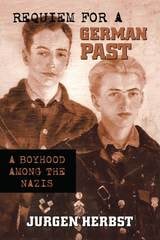
Requiem for a German Past
A Boyhood among the NazisJurgen Herbst
University of Wisconsin Press, 2002
Jurgen Herbst’s account of growing up in Nazi Germany from 1928 to 1948 is a boy’s experience of anti-Semitism and militarism from the inside. Herbst was a middle-class boy in a Lutheran family that saw value in Prussian military ideals and a mythic German past. His memoir is a compelling, understated tale of moral awakening.
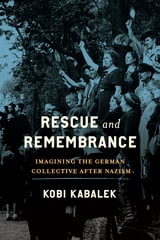
Rescue and Remembrance
Imagining the German Collective after NazismKobi Kabalek
University of Wisconsin Press, 2025
Kabalek argues that such simplistic depictions of the majority versus minority obscure the complex motivations and situations that led people in Nazi Germany to help persecuted Jews. Against the view that the rescuers were “forgotten” after the war, he shows that portrayals and interpretations of helping Jews appeared in various media and social discourses in East, West, and unified Germany and were used to actively debate questions of collective morality. Rescue and Remembrance analyzes the varied and changing depictions of rescue in the distinct German politics from the Nazi period, examining how the very notions of “majority” and “collective” were articulated and reformulated.
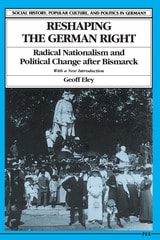
Reshaping the German Right
Radical Nationalism and Political Change after BismarckGeoff Eley
University of Michigan Press, 1991

Resistance against the Third Reich
1933-1990Edited by Michael Geyer and John W. Boyer
University of Chicago Press, 1994
Contributors include Geoffrey Cocks, Werner G. Jeanrond, Tony Judt, Claudia Koonz, Hans Mommsen, and Frank Trommler.
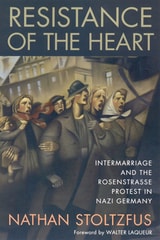
Resistance of the Heart
Intermarriage and the Rosenstrasse Protest in Nazi GermanyNathan Stoltzfus
Rutgers University Press, 2001
In February 1943 the Gestapo arrested approximately 10,000 Jews remaining in Berlin. Most died at Auschwitz. Two thousand of those Jews, however, had non-Jewish partners and were locked into a collection center on a street called Rosenstrasse. As news of the surprise arrest pulsed through the city, hundreds of Gentile spouses, mostly women, hurried to the Rosenstrasse in protest. A chant broke out: "Give us our husbands back."
Over the course of a week protesters vied with the Gestapo for control of the street. Now and again armed SS guards sent the women scrambling for cover with threats that they would shoot. After a week the Gestapo released these Jews, almost all of whom survived the war.
The Rosenstrasse Protest was the triumphant climax of ten years of resistance by intermarried couples to Nazi efforts to destroy their families. In fact, ninety-eight percent of German Jews who did not go into hiding and who survived Nazism lived in mixed marriages. Why did Hitler give in to the protesters? Using interviews with survivors and thousands of Nazi records never before examined in detail, Nathan Stoltzfus identifies the power of a special type of resistance--the determination to risk one's own life for the life of loved ones. A "resistance of the heart..."

Respectability and Deviance
Nineteenth-Century German Women Writers and the Ambiguity of RepresentationRuth-Ellen Boetcher Joeres
University of Chicago Press, 1998
Studying a period of German literary history that has been largely ignored by modern readers, Ruth-Ellen Boetcher Joeres demonstrates that these writings offer intriguing opportunities to examine such critical topics as canon formation; the relationship between gender, class, and popular culture; and women, professionalism, and technology. The writers she explores range from Annette von Droste-Hülshoff, who managed to work her way into the German canon, to the popular serial novelist E. Marlitt, from liberal writers such as Louise Otto and Fanny Lewald, to the virtually unknown novelist and journalist Claire von Glümer. Through this investigation, Boetcher Joeres finds ambiguities, compromises, and subversions in these texts that offer an extensive and informative look at the exciting and transformative epoch that so much shaped our own.
Rethinking Rights
Historical, Political, and Philosophical PerspectivesEdited by Bruce P. Frohnen and Kenneth L. Grasso
University of Missouri Press, 2008
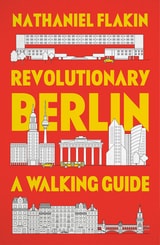
Revolutionary Berlin
A Walking GuideNathaniel Flakin
Pluto Press, 2022
Few European cities can boast a history as storied and tumultuous as that of Berlin. For more than 150 years it has been at the center of revolutionary politics; of era-defining struggles between the Left and the Right. It has been bombed, rebuilt and carved in two.
In Revolutionary Berlin, veteran tour guide Nathaniel Flakin invites you to stand in the places where this history was written, and to follow in the footsteps of those who helped write it. Through nine self-guided tours illustrated with maps and photographs, readers enter the heady world of 19th century anti-colonial struggles, the 1918 November Revolution and the 1987 May Day riots - encountering the city's workers, queer community and radical women along the way.
The first English-language guidebook to tell the story of Berlin's radical history, this is a must-have for Berliners and visitors alike.
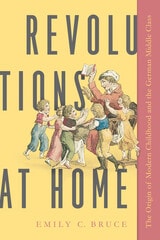
Revolutions at Home
The Origin of Modern Childhood and the German Middle ClassEmily C. Bruce
University of Massachusetts Press, 2021
Revolutions at Home analyzes a rich set of documents created for and by young Germans to show that children were central to reinventing their own education between 1770 and 1850. Through their reading and writing, they helped construct the modern child subject. The active child who emerged at this time was not simply a consequence of expanding literacy but, in fact, a key participant in defining modern life.

Richard Wagner's Political Ecology
Kirsten S. Paige
University of Chicago Press, 2026
A study of the deep history of the Wagnerian environmental imagination.
Richard Wagner’s operas are bursting with environmental imagery, from tittering birds to flowing rivers to towering trees. In Richard Wagner’s Political Ecology, Kirsten S. Paige asks where Wagner’s environmental imagination came from, how it was received by audience members and reconceived by stage directors, and how it refracts his politics. By tracing the ecological dimensions of the composer’s essays and dramas, Paige reveals how Wagner’s environmental imagination was inextricable from broader political concerns of his time.
The book begins by examining the way Wagner’s political ecology shape-shifted across its rhetorical, musical, scenographic, and technological permutations. Although Wagner’s essays and dramas invite a range of interpretations, for Paige, they point to an all-encompassing image of opera-as-climate. The book then turns to the ways Wagnerian drama—and opera more generally—at once participates in the industrial-technological lineage of climate change and helps spectators grapple with the challenges of living in a warming world. In providing the first close examination of Wagner’s artistic thought, practice, and reception in relation to nineteenth-century climate theory and the early history of environmentalism, Richard Wagner’s Political Ecology considers what it might mean to reimagine opera around ethical mandates of sustainability.
Richard Wagner
A Life in MusicMartin Geck
University of Chicago Press, 2013
Wagner has always inspired passionate admirers as well as numerous detractors, with the result that he has achieved a mythical stature nearly equal to that of the Valkyries and Viking heroes he popularized. There are few, if any, scholars today who know more about Wagner and his legacy than Geck, who builds upon his extensive research and considerable knowledge as one of the editors of the Complete Works to offer a distinctive appraisal of the composer and the operas. Using a wide range of sources, from contemporary scholars to the composer’s own words, Geck explores key ideas in Wagner’s life and works, while always keeping the music in the foreground. Geck discusses not only all the major operas, but also several unfinished operas and even the composer’s early attempts at quasi-Shakespearean drama.
Richard Wagner: A Life in Music is a landmark study of one of music’s most important figures, offering something new to opera enthusiasts, Wagnerians, and anti-Wagnerians alike.

Rights Enabled
The Disability Revolution, from the US, to Germany and Japan, to the United NationsKatharina Heyer
University of Michigan Press, 2015

Rimsky-Korsakov's Harmonic Theory
Practical Manual of Harmony, Its Sources, History, and TraditionsLarisa P. Jackson
University of North Texas Press, 2022
Robert Schumann
The Life and Work of a Romantic ComposerMartin Geck
University of Chicago Press, 2012

Robert Walser
A CompanionEdited by Samuel Frederick and Valerie Heffernan
Northwestern University Press, 2018
The Swiss writer Robert Walser (1878-1956) is now recognized as one of the most important European authors of the modernist period, having garnered high praise from such prominent voices as Susan Sontag, W. G. Sebald, and J. M. Coetzee. Robert Walser: A Companion is the first comprehensive guide to Walser’s work in English. The twelve essays in this collection examine Walser’s literary output, historical milieu, and idiosyncratic writing process, addressing aspects of his biography; discussing the various genres in which he wrote (the novel, short prose, drama, lyric poetry, and letters); and analyzing his best-known novels and short stories alongside lesser-known but no less fascinating poems, plays, and prose pieces.
An essential addition to the scholarship about this eccentric, prolific, and influential writer’s work, Robert Walser: A Companion will be of interest both to established scholars and to those coming to Walser for the first time.
Romantic Vision, Ethical Context
Novalis and Artistic AutonomyGeza Molnar
University of Minnesota Press, 1987
Exploring the full range of Novalis's (the pen name of the German poet and philosopher Friedrich von Hardenberg) work, von Molnar shows how he dealt, in theory and practice, with a central issue in Romanticism-the emerging concept of the autonomous self and its relation.
Romanticism
A German AffairRüdiger Safranski Translated from the German by Robert E. Goodwin
Northwestern University Press, 2014
Romanticism: A German Affair is essential reading for anyone interested in the power of art, culture, and ideas in the life of a nation.
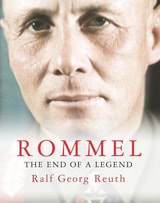
Rommel
The End of a LegendRalf Georg Reuth
Haus Publishing, 2019
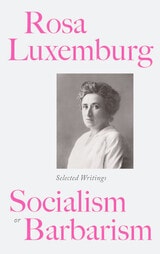
Rosa Luxemburg
Socialism or Barbarism: Selected WritingsRosa Luxemburg
Pluto Press, 2010
Rosa Luxemburg (1871-1919) was one of the most brilliant and passionate minds drawn to the revolutionary socialist movement. An outstanding social and economic theorist of the twentieth century, and a dedicated political activist, she proved willing to go to prison and even give her life for her beliefs.
Providing an extensive overview of her writings, this volume contains a number of items never before anthologised. Her work was broad in scope tackling capitalism and socialism; globalisation and imperialism; history; war and peace; social struggles, trade unions, political parties; class, gender, race; the interconnection of humanity with the natural environment. The editors provide an extensive and informative introduction outlining and evaluating her life and thought.
This is the most comprehensive introduction to the range of Rosa Luxemburg’s thought.

Rubble Films
German Cinema In Shadow Of 3Rd ReichRobert R. Shandley
Temple University Press, 2001
Rubble Films is a close look at German cinema in the immediate postwar era, and a careful examination of its relationship to Allied occupation. Shandley reveals how German film borrowed -- both literally and figuratively -- from its Nazi past, and how the occupied powers (specifically the US) used its position as victor to open Europe to Hollywood movie products and aesthetics.
Incorporating a careful reading of several important postwar films, Shandley also discusses how the German studio system operated immediately after the war, in the east and the west, giving special focus on DEFA, the east German studio that rose during Soviet occupation.
Pathbreaking in its research, Rubble Films sheds new light on a significant moment of German cultural rebirth, and adds a new dimension to the study of the history of film.
Ruderal City
Ecologies of Migration, Race, and Urban Nature in BerlinBettina Stoetzer
Duke University Press, 2022
Ruling Oneself Out
A Theory of Collective AbdicationsIvan Ermakoff
Duke University Press, 2008
Ermakoff distinguishes several mechanisms of alignment in troubled and uncertain times and assesses their significance through a fine-grained examination of actors’ beliefs, shifts in perceptions, and subjective states. To this end, he draws on the analytical and methodological resources of perspectives that usually stand apart: primary historical research, formal decision theory, the phenomenology of group processes, quantitative analyses, and the hermeneutics of testimonies. In elaborating this dialogue across disciplinary boundaries, Ruling Oneself Out restores the complexity and indeterminate character of pivotal collective decisions and demonstrates that an in-depth historical exploration can lay bare processes of crucial importance for understanding the formation of political preferences, the paradox of self-deception, and the makeup of historical events as highly consequential.

Russia Container
Alexander Kluge
Seagull Books, 2022
Not just in light of a contested pipeline during the war in Ukraine but also after centuries of both exchange and rejection, Russia and Germany were and are as far away from each other as they are intrinsically linked. The geopolitical present seems critical, the signs pointing towards conflict and polarity.
In this hot climate, German author Alexander Kluge makes Russia the exclusive subject of his latest book, offering multiple perspectives: from that of the historical German patriots of the Napoleonic Wars of Liberation to the narrative point of view of Franz Kafka and Heiner Müller; from messianic yearning and utopian expectations of the twentieth century to the full-blown or near-miss catastrophes in the atomic age.
Composed in Kluge’s characteristic short-prose vignette style, interspersed with numerous images and often humorous asides, Russia Container is yet another brilliant and thought-provoking work from one of Europe’s most prolific and deeply intellectual literary genius. The volume includes a preface specially written to engage with the current events in Ukraine, making Kluge’s narratives even more timely and topical.