Results by title
1441 books match the query 'Great Britain' and 70 start with r

Race, Resistance, and the Boy Scout Movement in British Colonial Africa
In British Colonial AfricaTimothy H. Parsons
Ohio University Press, 2004
Conceived by General Sir Robert Baden-Powell as a way to reduce class tensions in Edwardian Britain, scouting evolved into an international youth movement. It offered a vision of romantic outdoor life as a cure for disruption caused by industrialization and urbanization. Scouting’s global spread was due to its success in attaching itself to institutions of authority. As a result, scouting has become embroiled in controversies in the civil rights struggle in the American South, in nationalist resistance movements in India, and in the contemporary American debate over gay rights.
In Race, Resistance, and the Boy Scout Movement in British Colonial Africa, Timothy Parsons uses scouting as an analytical tool to explore the tensions in colonial society. Introduced by British officials to strengthen their rule, the movement targeted the students, juvenile delinquents, and urban migrants who threatened the social stability of the regime. Yet Africans themselves used scouting to claim the rights of full imperial citizenship. They invoked the Fourth Scout Law, which declared that a scout was a brother to every other scout, to challenge racial discrimination.
Parsons shows that African scouting was both an instrument of colonial authority and a subversive challenge to the legitimacy of the British Empire. His study of African scouting demonstrates the implications and far-reaching consequences of colonial authority in all its guises.
Racism
A Critical AnalysisMike Cole
Pluto Press, 2015
Mike Cole tackles three countries in-depth: the United Kingdom, the United States and Australia. In the United Kingdom, he focuses on the effects of colonialism as well as looking at non-colour-coded racism, such as anti-Gipsy, Roma, and Traveller racism and xeno-racism directed at Eastern Europeans. Turning to the United States, Cole charts the dual legacies of indigenous genocide and slavery, as well as exploring anti-Latina/o and anti-Asian racism. Finally, in Australia, he interrogates the idea of "Terra Nullius" and its ongoing impact on the indigenous peoples, as well as other forms of racism, such as that experienced by South Sea Islanders, anti-Asian racism, and that which targets migrants. The Pauline Hanson phenomenon is also addressed. Islamophobia, antisemitism and anti-Irish racism are also dealt with in the book, as is that aimed at asylum-seekers.
Cole demonstrates that racism is both endemic and multifaceted. This book will undoubtedly establish itself as required reading for students and other critical readers looking for a comprehensive, critical overview of the study of racism in Anglophone countries.
Radical Science
Plants, Agency, and Nineteenth-Century British NarrativeMary Bowden
The Ohio State University Press, 2026
Radicalism and Reputation
The Career of Bronterre O'BrienMichael J. Turner
Michigan State University Press, 2017

Radio Man
The remarkable rise and fall of C.O. StanleyMark Frankland
The Institution of Engineering and Technology, 2002
Radio, Morality, & Culture
Britain, Canada, and the United States, 1919 - 1945Robert S. Fortner
Southern Illinois University Press, 2005
Radio, Morality, and Culture: Britain, Canada, and the United States, 1919–1945 examines the moral controversies surrounding radio’s development during its formative years. In comparing the fledgling medium in Great Britain, Canada, and the United States, Robert S. Fortner documents how the church failed to participate in radio’s moral development and instead engaged in internecine warfare over issues of legitimacy and orthodoxy.
The church was arguing about theological turf and dealing with internal disputes while radio policy was being developed and communications history was being written. Fortner reveals how the church, doomed to play little more than a bit part in the future of radio, eventually lost its voice altogether in the continuing development of electronic media. Fortner effectively synthesizes cultural history and theory, communication studies, and the role religious organizations played in shaping the content and character of early radio. Geared to scholars of history, communications, and theology, Radio, Morality, and Culture provides a useful resource for research, scholarship, and public policy.
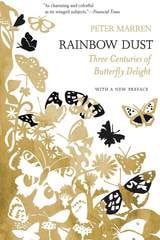
Rainbow Dust
Three Centuries of Butterfly DelightPeter Marren
University of Chicago Press, 2016
At the age of five, Marren had his “Nabokov Moment,” catching his first butterfly and feeling the dust of its colored scales between his fingers. It was a moment that would launch a lifetime’s fascination rivaling that of the famed novelist—a fascination that put both in good company. From the butterfly collecting and rearing craze that consumed North America and Europe for more than two hundred years (a hobby that in some cases bordered on madness), to the potent allure of butterfly iconography in contemporary advertisements and their use in spearheading calls to conserve and restore habitats (even though butterflies are essentially economically worthless), Marren unveils the many ways in which butterflies inspire us as objects of beauty and as symbols both transient and transcendent.
Floating around the globe and through the whole gamut of human thought, from art and literature to religion and science, Rainbow Dust is a cultural history rather than merely a natural one, a tribute to butterflies’ power to surprise, entertain, and obsess us. With a sway that far surpasses their fragile anatomy and gentle beat, butterfly wings draw us into the prismatic wonders of the natural world—and, in the words of Marren, these wonders take flight.

Ramparts of Resistance
Why Workers Lost Their Power, and How to Get It BackSheila Cohen
Pluto Press, 2006
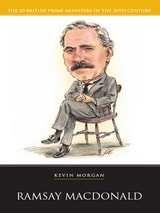
Ramsay Macdonald
Kevin Morgan
Haus Publishing, 2006
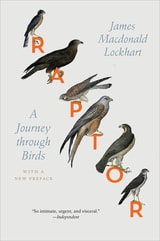
Raptor
A Journey through BirdsJames Macdonald Lockhart
University of Chicago Press, 2017
Taking as his guide the nineteenth-century Scottish naturalist and artist William MacGillivray, Lockhart loosely follows the historical trail forged by MacGillivray as he ventured from Aberdeen to London filling his pockets with plants and writing and illustrating the canonical A History of British Birds. Linking his journey to that of his muse, Lockhart shares his own encounters with raptors ranging from the scarce osprey to the successfully reintroduced red kite, a species once protected by medieval royal statute, revealing with poetic immediacy the extraordinary behaviors of these birds and the extreme environments they call home.
Creatures both worshipped and reviled, raptors have a talon-hold on the human heart and imagination. With his book, Lockhart unravels these complicated ties in a work by turns reverent and euphoric—an interweaving of history, travel, and nature writing at its best. A hymn to wanderers, to the land and to the sky, and especially to the birds, Raptor soars.
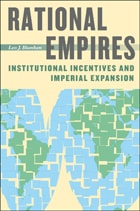
Rational Empires
Institutional Incentives and Imperial ExpansionLeo J. Blanken
University of Chicago Press, 2012
The nineteenth century marked the high point of imperialism, when tsarist Russia expanded to the Pacific and the sun was said never to set on the British Empire. Imperialism remains a perennial issue in international relations today, and nowhere is this more evident than in the intensifying competition for global resources.
Leo J. Blanken explains imperialism through an analysis of the institutions of both the expanding state and its targets of conquest. While democratic states favoring free trade generally resort to imperialism only to preempt aggressive rivals—or when they have reason to believe another state’s political institutions will not hold up when making bargains—authoritarian states tend toward imperialism because they don’t stand to benefit from free trade. The result is three distinct strategies toward imperialism: actors fighting over territory, actors peaceably dividing territory among themselves, and actors refraining from seizing territory altogether. Blanken examines these dynamics through three case studies: the scramble for Africa, the unequal treaties imposed on Qing Dynasty China, and the evolution of Britain’s imperial policy in India. By separating out the different types of imperialism, Blanken provides insight into its sources, as well as the potential implications of increased competition in the current international arena.
Raw Material
Producing Pathology in Victorian CultureErin O'Connor
Duke University Press, 2000
O’Connor focuses on how four particularly troubling physical conditions were represented in a variety of literature. She begins by exploring how Asiatic cholera, which reached epidemic proportions on four separate occasions between 1832 and 1865, was thought to represent the dangers of cultural contamination and dissolution. The next two chapters concentrate on the problems breast cancer and amputation posed for understanding gender. After discussing how breast cancer was believed to be caused by the female body’s intolerance to urban life, O'Connor turns to men’s bodies, examining how new prosthetic technology allowed dismembered soldiers and industrial workers to reconstruct themselves as productive members of society. The final chapter explores how freak shows displayed gross deformity as the stuff of a new and improved individuality. Complicating an understanding of the Victorian body as both a stable and stabilizing structure, she elaborates how Victorians used disease as a messy, often strategically unintelligible way of articulating the uncertainties of chaotic change. Over the course of the century, O’Connor shows, the disfiguring process of disease became a way of symbolically transfiguring the self. While cholera, cancer, limb loss, and deformity incapacitated and even killed people, their dramatic symptoms provided opportunities for imaginatively adapting to a world where it was increasingly difficult to determine not only what it meant to be human but also what it meant to be alive.
Raw Material will interest an audience of students and scholars of Victorian literature, cultural history, and the history of medicine.
Reading Holinshed's Chronicles
Annabel Patterson
University of Chicago Press, 1994
Although we know it by the name of Raphael Holinshed, editor and major compiler of the 1577 edition, the Chronicles was the work of a group, a collaboration between antiquarians, clergymen, members of parliament, poets, publishers, and booksellers. Through a detailed reading, Patterson argues that the Chronicles convey rich insights into the way the Elizabethan middle class understood their society. Responding to the crisis of disunity which resulted from the Reformation, the authors of the Chronicles embodied and encouraged an ideal of justice, what we would now call liberalism, that extended beyond the writing of history into the realms of politics, law, economics, citizenship, class, and gender. Also, since the second edition of 1587 was called in by the Privy Council and revised under supervision, the work constitutes an important test case for the history of early modern censorship.
An essential book for all students of Tudor history and literature, Reading Holinshed's Chronicles brings into full view a long misunderstood masterpiece of sixteenth-century English culture.
Reading Practice
The Pursuit of Natural Knowledge from Manuscript to PrintMelissa Reynolds
University of Chicago Press, 2024
Reading Practice tells the story of how ordinary people grew comfortable learning from commonplace manuscripts and printed books, such as almanacs, medical recipe collections, and herbals. From the turn of the fifteenth century to the close of the sixteenth century, these were the books English people read when they wanted to attend to their health or understand their place in the universe. Before then, these works had largely been the purview of those who could read Latin. Around 1400, however, medical and scientific texts became available in Middle English while manuscripts became less expensive. These vernacular manuscripts invited their readers into a very old and learned conversation: Hippocrates and Galen weren’t distant authorities whose word was law, they were trusted guides, whose advice could be excerpted, rearranged, recombined, and even altered to suit a manuscript compiler’s needs. This conversation continued even after the printing press arrived in England in 1476. Printers mined manuscripts for medical and scientific texts that they would publish throughout the sixteenth century, though the pressures of a commercial printing market encouraged printers to package these old texts in new ways. Without the weight of authority conditioning their reactions and responses to very old knowledge, and with so many editions of practical books to choose from, English readers grew into confident critics and purveyors of natural knowledge in their own right.
Melissa Reynolds reconstructs shifting attitudes toward medicine and science over two centuries of seismic change within English culture, attending especially to the effects of the Reformation on attitudes toward nature and the human body. Her study shows how readers learned to be discerning and selective consumers of knowledge gradually, through everyday interactions with utilitarian books.
Reading Randomised Controlled Trials
Opening the BookRobert Savage, Amy Fox, Anneka Dawson, Helen Gray, and Clare Huxley
University College London, 2025
Reading Randomised Controlled Trials presents an illuminating exploration of how large-scale educational trials unfold in real-world settings, displaying the often-overlooked human decisions that shape their outcomes. Using the Flexible Phonics trial—an ambitious study involving nearly 3,000 children in 118 schools across England—as a case study, the authors examine the practical and ethical problems with conducting randomized controlled trials (RCTs) in education. Unlike pharmaceutical trials, educational RCTs operate in dynamic environments where factors such as teacher decision-making and school culture play a crucial role.
This book depicts the inner workings of education research and also underlines its broader significance, particularly in the wake of school closures during the COVID-19 pandemic. By focusing on early childhood literacy and the long-term impact of evidence-based interventions, Reading Randomised Controlled Trials provides important insights for educators and researchers seeking to bridge the gap between rigorous research and meaningful classroom practice. A must-read for those invested in improving educational outcomes, this book contests assumptions about what works in education—and why.
Reading Victorian Deafness
Signs and Sounds in Victorian Literature and CultureJennifer Esmail
Ohio University Press, 2013
Winner of the 2013 Sonya Rudikoff Award for best first book in Victorian Studies
Short-listed for the 2013 British Society for Literature and Science Book Prize.
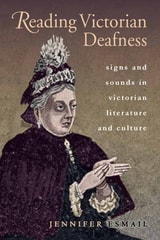
Reading Victorian Deafness is the first book to address the crucial role that deaf people, and their unique language of signs, played in Victorian culture. Drawing on a range of works, from fiction by Charles Dickens and Wilkie Collins, to poetry by deaf poets and life writing by deaf memoirists Harriet Martineau and John Kitto, to scientific treatises by Alexander Graham Bell and Francis Galton, Reading Victorian Deafness argues that deaf people’s language use was a public, influential, and contentious issue in Victorian Britain.
The Victorians understood signed languages in multiple, and often contradictory, ways: they were objects of fascination and revulsion, were of scientific import and literary interest, and were considered both a unique mode of human communication and a vestige of a bestial heritage. Over the course of the nineteenth century, deaf people were increasingly stripped of their linguistic and cultural rights by a widespread pedagogical and cultural movement known as “oralism,” comprising mainly hearing educators, physicians, and parents.
Engaging with a group of human beings who used signs instead of speech challenged the Victorian understanding of humans as “the speaking animal” and the widespread understanding of “language” as a product of the voice. It is here that Reading Victorian Deafness offers substantial contributions to the fields of Victorian studies and disability studies. This book expands current scholarly conversations around orality, textuality, and sound while demonstrating how understandings of disability contributed to Victorian constructions of normalcy. Reading Victorian Deafness argues that deaf people were used as material test subjects for the Victorian process of understanding human language and, by extension, the definition of the human.
Reading for Health
Medical Narratives and the Nineteenth-Century NovelErika Wright
Ohio University Press, 2016
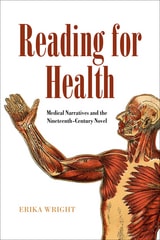
In Reading for Health: Medical Narratives and the Nineteenth-Century Novel, Erika Wright argues that the emphasis in Victorian Studies on disease as the primary source of narrative conflict that must be resolved has obscured the complex reading practices that emerge around the concept of health. By shifting attention to the ways that prevention of illness and the preservation of well-being operate in fiction, both thematically and structurally, Wright offers a new approach to reading character and voice, order and temporality, setting and metaphor. As Wright reveals, while canonical works by Austen, Brontë, Dickens, Martineau, and Gaskell register the pervasiveness of a conventional “therapeutic” form of action and mode of reading, they demonstrate as well an equally powerful investment in the achievement and maintenance of “health”—what Wright refers to as a “hygienic” narrative—both in personal and domestic conduct and in social interaction of the individual within the community.
Reading the Book of Nature
How Eight Best Sellers Reconnected Christianity and the Sciences on the Eve of the Victorian AgeJonathan R. Topham
University of Chicago Press, 2022
When Charles Darwin returned to Britain from the Beagle voyage in 1836, the most talked-about scientific books of the day were the Bridgewater Treatises. This series of eight works was funded by a bequest of the last Earl of Bridgewater and written by leading men of science appointed by the president of the Royal Society to explore "the Power, Wisdom, and Goodness of God, as manifested in the Creation." Securing public attention beyond all expectations, the series offered Darwin’s generation a range of approaches to one of the great questions of the age: how to incorporate the newly emerging disciplinary sciences into Britain’s overwhelmingly Christian culture.
Drawing on a wealth of archival and published sources, including many unexplored by historians, Jonathan R. Topham examines how and to what extent the series contributed to a sense of congruence between Christianity and the sciences in the generation before the fabled Victorian conflict between science and religion. Building on the distinctive insights of book history and paying close attention to the production, circulation, and use of the books, Topham offers new perspectives on early Victorian science and the subject of science and religion as a whole.
Reading with Jane Austen
Elaine Bander
Bucknell University Press, 2026
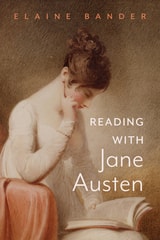
Jane Austen has more readers today than at any time in history. Many of Austen’s legions of fans, however, came to her novels after first seeing films or other adaptations made for twenty-first-century audiences. Austen herself conversely spent her literary career undermining romantic clichés and rethinking novel conventions. Confident that she and her contemporaries shared a common reading culture, Austen deliberately constructed her novels to set readerly expectations, only to disrupt or confound those expectations by challenging her readers’ assumptions and values. In Reading with Jane Austen, Elaine Bander carefully rereads the great author’s novels—beginning with her late work of juvenilia, “Catharine, or The Bower,” and ending with her final fragment, “Sanditon”—against the rich context of late Georgian literary and intellectual culture. In doing so, Bander invites us into the transformative experience that Austen intentionally designed for her earliest readers, adding new layers of appreciation for those who love her work.
Published by Bucknell University Press. Distributed worldwide by Rutgers University Press.
Elaine Bander speaking at the Atwater Library in Quebec (https://youtu.be/UeEjFOfp9cQ?si=Wv2hsLxkGK157WZI)

Reading, Gender and Identity in Seventeenth-Century England
Hannah Jeans
University of London Press, 2025
This ambitious and interdisciplinary book redraws the history of early modern Englishwomen’s reading, exploring the connections between gender, reading habits, and genre throughout the seventeenth century. Reading, Gender and Identity in Seventeenth-Century England challenges accepted historiographical narratives about reading that have privileged male experience and the impact of the Civil War; the book highlights the multiplicity and complexity of women’s reading practices, focusing on how women used reading in constructing their gender identity. Reading was a gendered act in the early modern period; across genres, women were depicted negotiating a range of gendered behavioral norms. From religious texts, romances, and cookbooks, to news, household records, and scientific and medical treatises, Jeans draws on archival sources across a wide range of writing types to offer a more complete picture of women’s reading experiences, ultimately questioning the accepted notion of the woman reader itself.

Real del Monte
A British Silver Mining Venture in MexicoBy Robert W. Randall
University of Texas Press, 1972
To speak of mining in newly independent Mexico is to speak of silver. And silver, historically abundant in the Real del Monte–Pachuca district, was the object of the Company of Adventurers in the Mines of Real del Monte. Organized in response to a plea by Pedro Romero de Terreros for help in rehabilitating his famous family’s once-rich properties, the English Real del Monte was led by men convinced that the application of English capital, management practices, and technology to those ruined mines and mills would reap them a profit and would revitalize the new nation’s most promising industry.
The adventurers were to be disappointed. The story of the English company is one of financial disaster: the loss of more than $5 million between its beginning in 1824 and its dissolution in 1849. Yet this failure was ironic, for upon the foundations of the English company was built a modern concern that yielded great rewards to Mexican and American successors to the hapless Englishmen.
A full account of a single risky venture, this inquiry is a microcosm of early foreign economic penetration into the Mexican mining industry. It offers specific solutions to poorly understood historical problems concerning the wave of capital that flowed from Great Britain into Latin America upon the disruption of the Spanish Empire, problems hitherto treated only in generalizations.
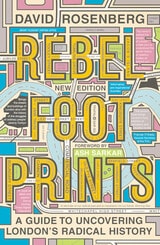
Rebel Footprints
A Guide to Uncovering London's Radical HistoryDavid Rosenberg
Pluto Press, 2019
If you visit London, and you’ve only experienced Buckingham Palace, The Tower of London, and The Millennium Wheel, you’ve missed the true essence of London, and its politically-charged, rebellious history. A truly radical response to conservative heritage tours and banal day trips, Rebel Footprints brings to life the history of social movements in England's capital by providing lively commentary, maps, and walking tours you will not find anywhere else.
David Rosenberg transports readers from well-known landmarks to history-making hidden corners, while telling the story of protest and struggle in London from the early nineteenth to the mid-twentieth century.
From the suffragettes to the socialists, from the chartists to the trade unionists: Rosenberg invites us to step into the footprints of a diverse cast of dedicated fighters for social justice. Individual chapters highlight particular struggles and their participants, from famous faces to lesser-known luminaries. Chapters include:
*Writers and Rioters in the Fleet Street Precinct
*Trailblazers for Democracy in Clerkenwell Green
*The Spark of Rebellion in Bow
*Coming in from the Cold: Immigrant Agitators and Radicals in Spitalfields
*No Gods, No Masters: Radical Bloomsbury
*Life on the Boundary: Fighting for Housing in Bethnal Green and Shoreditch
*Stirrings from the South: The Battersea Four
*peaking Truth to Power: Suffragettes and Westminster
*Not Afraid of the Prison Walls: Rebel Women and Men of Poplar
*People's Power in Bermondsey
Rebel Footprints sets London's radical campaigners against the backdrop of the city's multi-faceted development. Self-directed walks pair with narratives that seamlessly blend history, politics, and geography, while specially commissioned maps and illustrations immerse the reader in the story of the city.
Whether you're visiting London for the first time, or born and raised there, Rosenberg invites you to see London as you never have before—the radical center of the English-speaking world.
Rebel Women
Feminism, Modernism and the Edwardian NovelJane Eldridge Miller
University of Chicago Press, 1996
"Miller's is the best account we have, not only of Edwardian women novelists, but of early 20th-century women novelists; the measure of her achievement is that the distinction no longer seems workable." —David Trotter, The London Review of Books
Recipes and Everyday Knowledge
Medicine, Science, and the Household in Early Modern EnglandElaine Leong
University of Chicago Press, 2018
In Recipes and Everyday Knowledge, Elaine Leong situates recipe knowledge and practices among larger questions of gender and cultural history, the history of the printed word, and the history of science, medicine, and technology. The production of recipes and recipe books, she argues, were at the heart of quotidian investigations of the natural world or “household science”. She shows how English homes acted as vibrant spaces for knowledge making and transmission, and explores how recipe trials allowed householders to gain deeper understandings of sickness and health, of the human body, and of natural and human-built processes. By recovering this story, Leong extends the parameters of natural inquiry and productively widens the cast of historical characters participating in and contributing to early modern science.
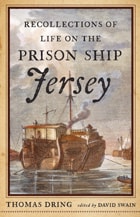
Recollections of Life on the Prison Ship Jersey
Thomas Dring
Westholme Publishing, 2010
“Among the many events which took place during the Revolutionary War from its commencement to its termination [are] the cruelties inflicted upon that unfortunate class of men who had the misfortune to be numbered among the prisoners [of the British] and more particularly those whom the dreadful chance of war had placed on board their prison ships at New York.” So begins the remarkable narrative of Thomas Dring. In 1824, Dring was an aging man of 65, retired in his native state of Rhode Island. Forty-two years before, he, like thousands of other young men, had been caught up in the American cause. In 1782, he had been captured by the British and sentenced to the infamous prison ship Jersey, a demasted hulk anchored in the East River off New York City. It is estimated that more than 11,000 men perished on the British prison ships over the course of the war, and their bones regularly washed up on the shore long after hostilities ceased. Dring survived to tell the tale, and in 1824, he decided to do just that. He was motivated partly because the fate of the prisoners was beginning to be doubted, that their hardships were thought to have been grossly exaggerated, and even that the entire experience had never occurred.
This book publishes for the first time the complete text of Dring’s handwritten manuscript, a major primary-source document, in which he describes the horrible conditions, treatment by guards, and experiences that he and others endured during captivity. Recollections of Life on the Prison Ship Jersey is a plea not to forget but instead to remember the inhumanity of the captors and the sacrifices of the captives—a message that continues to resonate today. Editor David Swain has provided an introductory essay and extensive notes that contain background information and historical documentation to accompany and illuminate the original manuscript.
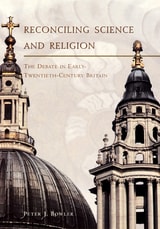
Reconciling Science and Religion
The Debate in Early-Twentieth-Century BritainPeter J. Bowler
University of Chicago Press, 2001
Peter J. Bowler argues that unlike the United States, where a strong fundamentalist opposition to evolutionism developed in the 1920s (most famously expressed in the Scopes "monkey trial" of 1925), in Britain there was a concerted effort to reconcile science and religion. Intellectually conservative scientists championed the reconciliation and were supported by liberal theologians in the Free Churches and the Church of England, especially the Anglican "Modernists." Popular writers such as Julian Huxley and George Bernard Shaw sought to create a non-Christian religion similar in some respects to the Modernist position. Younger scientists and secularists—including Rationalists such as H. G. Wells and the Marxists—tended to oppose these efforts, as did conservative Christians, who saw the liberal position as a betrayal of the true spirit of their religion. With the increased social tensions of the 1930s, as the churches moved toward a neo-orthodoxy unfriendly to natural theology and biologists adopted the "Modern Synthesis" of genetics and evolutionary theory, the proposed reconciliation fell apart.
Because the tensions between science and religion—and efforts at reconciling the two—are still very much with us today, Bowler's book will be important for everyone interested in these issues.
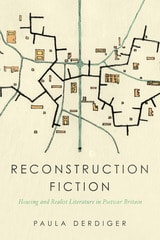
Reconstruction Fiction
Housing and Realist Literature in Postwar BritainPaula Derdiger
The Ohio State University Press, 2020
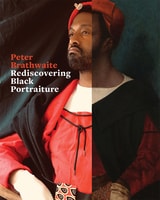
Rediscovering Black Portraiture
Peter Brathwaite
J. Paul Getty Trust, The, 0
“These mirror images with their uncanny resemblances traverse space and time, spotlighting the black lives that have been silenced by the canon of western art, while also inviting us to interrogate the present.” —Times (UK)
Since the beginning of the COVID-19 pandemic, Peter Brathwaite has thoughtfully researched and reimagined more than one hundred artworks featuring portraits of Black sitters—all posted to social media with the caption “Rediscovering #blackportraiture through #gettymuseumchallenge.”
Rediscovering Black Portraiture collects more than fifty of Brathwaite’s most intriguing re-creations. Introduced by the author and framed by contributions from experts in art history and visual culture, this fascinating book offers a nuanced look at the complexities and challenges of building identity within the African diaspora and how such forces have informed Black portraits over time. Artworks featured include The Adoration of the Magi by Georges Trubert, Portrait of an Unknown Man by Jan Mostaert, Rice n Peas by Sonia Boyce, Barack Obama by Kehinde Wiley, and many more. This volume also invites readers behind the scenes, offering a glimpse of the elegant artifice of Brathwaite’s props, setup, and process.
An urgent and compelling exploration of embodiment, representation, and agency, Rediscovering Black Portraiture serves to remind us that Black subjects have been portrayed in art for nearly a millennium and that their stories demand to be told.
An exhibition of Brathwaite’s re-creations is on view at the Bristol Museum & Art Gallery in Bristol, UK from April 14 to September 3, 2023.
Reflections
Conversations with PoliticiansPeter Hennessy and Robert Shepherd
Haus Publishing, 2016
Reflections collects transcripts of the best interviews from the BBC Radio 4 series Reflections with Peter Hennessy, a show on which the British political elite have spoken candidly about their careers and the moments that came to define their political lives. Supplementing the interviews are short biographies and profiles of the interviewees, allowing readers a fuller picture of each speaker’s background and professional trajectory. This revealing book includes conversations with political heavyweights such as former prime minister John Major; former foreign secretaries Margaret Beckett, David Owen, and Jack Straw; Labour Party leader Neil Kinnock; Liberal Party leader David Steel; and chancellor of exchequer Nigel Lawson. In addition, Reflections presents interviews with leading women, including Shirley Williams and Clare Short, who spent years at the forefront of their parties in Westminster.
The latest volume in the popular Haus Curiosities series, Reflections offers valuable insights from some of today’s most influential political figures.
Reflections
Conversations with Politicians Volume IIPeter Hennessy and Robert Shepherd
Haus Publishing, 2019
Reform and Revolt in the City of Dreaming Spires
Radical, Socialist and Communist Politics in the City of Oxford 1830–1980Duncan Bowie
University of Westminster Press, 2018
Reforming Empire
Protestant Colonialism and Conscience in British LiteratureChristopher Hodgkins
University of Missouri Press, 2002
“The strength of Empire,” wrote Ben Jonson, “is in religion.” In Reforming Empire, Christopher Hodgkins takes Jonson’s dictum as his point of departure, showing how for more than four centuries the Protestant imagination gave the British Empire its main paradigms for dominion and also, ironically, its chief languages of anti-imperial dissent. From Edmund Spenser’s Faerie Queene to Rudyard Kipling’s “The Man Who Would Be King,” English literature about empire has turned with strange constancy to themes of worship and idolatry, atrocity and deliverance, slavery and service, conversion, prophecy, apostasy, and doom.
Focusing on the work of the Protestant imagination from the Renaissance origins of English overseas colonization through the modern end of England’s colonial enterprise, Hodgkins organizes his study around three kinds of religious binding—unification, subjugation, and self-restraint. He shows how early modern Protestants like Hakluyt and Spenser reformed the Arthurian chronicles and claimed to inherit Rome’s empire from the Caesars: how Ralegh and later Cromwell imagined a counterconquest of Spanish America, and how Milton’s Satan came to resemble Cortés; how Drake and the fictional Crusoe established their status as worthy colonial masters by refusing to be worshiped as gods; and how seventeenth-century preachers, poets, and colonists moved haltingly toward a racist metaphysics—as Virginia began by celebrating the mixed marriage of Pocahontas but soon imposed the draconian separation of the Color Line.
Yet Hodgkins reveals that Tudor-Stuart times also saw the revival of Augustinian anti-expansionism and the genesis of Protestant imperial guilt. From the start, British Protestant colonialism contained its own opposite: a religion of self-restraint. Though this conscience often was co-opted or conscripted to legitimize conquests and pacify the conquered, it frequently found memorable and even fierce literary expression in writers such as Shakespeare, Daniel, Herbert, Swift, Johnson, Burke, Blake, Austen, Browning, Tennyson, Conrad, Forster, and finally the anti-Protestant Waugh. Written in a lively and accessible style, Reforming Empire will be of interest to all scholars and students of English literature.

Regicide
The Trials of Henry MartenJohn Worthen
Haus Publishing, 2022
Henry Marten—soldier, member of parliament, organizer of the trial of Charles I, and signatory of the King’s death warrant—is today a neglected figure of the seventeenth century. Yet his life was both extraordinary and emblematic: he was at the fulcrum of English history during the turbulent years of the civil war, the protectorate, and the restoration. Imprisoned in the Tower of London and tried at the Old Bailey, Marten was found guilty of high treason, only to be held captive for years on the equivalent of death row. While he was in prison, his letters to his mistress Mary Ward were stolen and published in an attempt to destroy his reputation. Witty, clever, loving, sardonic, and never despairing, the letters offer a rare and extraordinary insight into the everyday life of a man in the Tower awaiting a sentence of death. The attempt to expose him as immoral revealed him instead as a tender and brave man. In John Worthen’s revelatory biography, Marten emerges from the shadows as a brilliantly clever, lively-minded man, free of the fundamentalist zeal so common in many of his republican contemporaries. Marten never abandoned his beliefs in equality, in a representative parliament under a constitution (which he had helped to write) without a monarch or a House of Lords, and in that way can be seen as a very modern man.
Regimens of the Mind
Boyle, Locke, and the Early Modern Cultura Animi TraditionSorana Corneanu
University of Chicago Press, 2011
Regulating Football
Commodification, Consumption and the LawSteve Greenfield and Guy Osborn
Pluto Press, 2001
Regulating the Press
Tom O'Malley and Clive Soley
Pluto Press, 2000
Reimaging Britain
500 Years of Black and Asian HistoryRon Ramdin
Pluto Press, 1999
Blacks and Asians have a long history in the British Isles. Ramdin illustrates this by covering a 500-year period, from 1500 to the present day. He recounts the major historical episodes and covers all the major figures, including Ottobah Cugoano, William Cuffay, William Davidson, George Padmore, Mary Seacole, C.L.R. James, V.S. Naipaul, Sam Selvon, Walter Tull, Shirley Bassey, Bill Morris, Salman Rushdie, Hanif Kureshi and Bernie Grant.
In bringing the largely hidden histories of these immigrant communities to the fore, Ron Ramdin’s wide-ranging study challenges conventional histories of the British Isles. Reimaging Britain will lead to a reappraisal of how ‘British’ history is written in the future.
Reinventing the Welfare State
Digital Platforms and Public PoliciesUrsula Huws
Pluto Press, 2020
The Covid-19 pandemic has tragically exposed how today’s welfare state cannot properly protect its citizens. Despite the valiant efforts of public sector workers, from under-resourced hospitals to a shortage of housing and affordable social care, the pandemic has tragically shown how decades of neglect has caused hundreds to die. In this bold new book, leading policy analyst Ursula Huws shows how we can create a welfare state that is fair, affordable, and offers security for all.
Huws focuses on some of the key issues of our time – the gig economy, universal, free healthcare, and social care, to criticize the current state of welfare provision. Drawing on a lifetime of research on these topics, she clearly explains why we need to radically rethink how it could change. With positivity and rigor, she proposes new and original policy ideas, including critical discussions of Universal Basic Income and new legislation for universal workers' rights.
She also outlines a 'digital welfare state' for the 21st century. This would involve a repurposing of online platform technologies under public control to modernize and expand public services, and improve accessibility.
Representing Modernist Texts
Editing as InterpretationGeorge Bornstein, Editor
University of Michigan Press, 1991
In Representing Modernist Texts, thirteen internationally known scholars provide major explorations of the topic in the work of particular writers. The issues they raise include the construction of a writer’s canon and the effect of newly available “uncanonical” manuscript materials on existing works and orderings; the replacement of the older idea of a fixed, stable text by a more contemporary notion of the text as process; and the interrogation by advanced textual theory of many of the same notions of “author,” “intention,” and “stability of the text” questioned by advanced literary theory.

Representing the French Revolution
Literature, Historiography, and ArtEdited by James A. W. Heffernan
Brandeis University Press, 1992
Reproduction by Design
Sex, Robots, Trees, and Test-Tube Babies in Interwar BritainAngus McLaren
University of Chicago Press, 2012
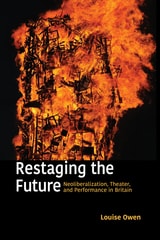
Restaging the Future
Neoliberalization, Theater, and Performance in BritainLouise Owen
Northwestern University Press, 2023
Post-Thatcher, British cultural politics were shaped by the government’s use of the arts in service of its own social and economic agenda. Restaging the Future: Neoliberalization, Theater, and Performance in Britain interrogates how arts practices and cultural institutions were enmeshed with the particular processes of neoliberalization mobilized at the end of the twentieth century and into the twenty-first.
Louise Owen traces the uneasy entanglement of performance with neoliberalism's marketization of social life. Focusing on this political moment, Owen guides readers through a wide range of performance works crossing multiple forms, genres, and spaces—from European dance tours, to Brazilian favelas, to the streets of Liverpool—attending to their distinct implications for the reenvisioned future in whose wake we now live.
Analyzing this array of participatory dance, film, music, public art, and theater projects, Owen uncovers unexpected affinities between community-based, experimental, and avant-garde movements. Restaging the Future provides key historical context for these performances, their negotiations of their political moment, and their themes of insecurity, identity, and inequality, created in a period of profound ideological and socioeconomic change.
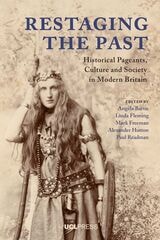
Restaging the Past
Historical Pageants, Culture and Society in Modern BritainEdited by Angela Bartie, Linda Fleming, Mark Freeman, and Alexander Hutton
University College London, 2020
Pageants were community events, bringing people together in a shared celebration and performance of the past; they also involved many prominent novelists, professional historians, and other writers, and as a result were featured repeatedly in popular and highbrow literature. Although the pageant tradition has largely died out, the contributors argue that it deserves to be acknowledged as a key aspect of community history during a period of great social and political change—and, they show, because of its former prominence, some lingering signs of “pageant fever” can still be seen in Britain today.

Restoring Baird's Image
Donald F. McLean
The Institution of Engineering and Technology, 2000
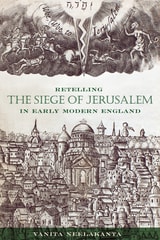
Retelling the Siege of Jerusalem in Early Modern England
Vanita Neelakanta
University of Delaware Press, 2019
Published by University of Delaware Press. Distributed worldwide by Rutgers University Press.
Rethinking Evidence
Exploratory EssaysWilliam Twining
Northwestern University Press, 1994

Rethinking the Youth Question
Education, Labour, and Cultural StudiesPhil Cohen
Duke University Press, 1999
With a preface that contextualizes Cohen’s essays for an American audience, Rethinking the Youth Question reflects his tenure as a community organizer and activist in inner-city London and includes ethnographic, theoretical, and historical studies of Britain’s urban youth. Cohen offers an enlightening analysis of British educational policy, develops historical and structural accounts of generational and gendered divisions of labor, and discusses such topics as racism and the rise of the New Right. Also exploring broader questions such as the theoretical and sociological significance of youth as a category, this book is a model of useful methodology and engaged cultural reflection.
With empirical research that combines biographical, autobiographical, critical, cultural, and social elements, Rethinking the Youth Question is sure to impact debates surrounding the pedagogical value of cultural studies and the nature and future of this field in both the United States and Britain. This collection will be informative reading for students and scholars of cultural studies, sociologists, and others interested in the category of youth.

Reverberations across Small-Scale British Theatre
Politics, Aesthetics and FormsEdited by Patrick Duggan and Victor Ukaegbu
Intellect Books, 2013
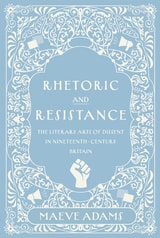
Rhetoric and Resistance
The Literary Arts of Dissent in Nineteenth-Century BritainMaeve Adams
Ohio University Press, 2025
A fresh perspective on the enduring relationship between literature, democracy, and dissent
Rhetoric and Resistance explores the transformative role of nineteenth-century literature in shaping modern concepts and practices of democratic dissent. By examining the works of Romantic and Victorian novelists, poets, and journalists, Maeve Adams identifies origins of modern theories and practices of resistance in nineteenth-century literary forms. Offering a literary history of dissent, the book recovers the intertwined development of democracy and aesthetics, revealing how narrative form became a potent tool for challenging authority.
Tracing the lineage of dissent from the radical fiction and journalism of the 1800s to contemporary movements like #MeToo, Adams offers a genealogy that highlights how literary texts experimented with political power, granting new and consequential voices to working-class individuals, women, colonized peoples, and other marginalized groups.
Adams takes an interdisciplinary approach, weaving together close readings of works by Thomas De Quincey, Walter Scott, Elizabeth Gaskell, and H. G. Wells, as well as lesser-known journalists, with insights from modern moral and political philosophy. Drawing on theories of democratic ethics and justice from scholars such as Miranda Fricker, Sharon Krause, Martha Nussbaum, and Philip Pettit, the book bridges literary history and contemporary debates about political agency and expression.

Rheumatic Fever in America and Britain
A Biological, Epidemiological, and Medical HistoryPeter C. English
Rutgers University Press, 1999
Rheumatic Fever in America and Britain is the first book to examine comprehensively a disease that has been a moving target for physicians and health care workers. A disease of skin, brain, heart, connective tissue, blood, tonsils, and joints bound to a member of the streptococcus family of bacteria, this illness has practically disappeared from the present-day scene. Yet in 1940 more than one million Americans suffered from the heart disease that followed the ravages of rheumatic fever. It struck nearly 2 percent of all school-aged children, filling hospitals, convalescent homes, and special schools.
Rheumatic fever rose in prevalence throughout the nineteenth century, reaching its peak in that century's last decades, and then steadily declined-both in occurrence and severity-throughout the twentieth century. In the nineteenth century, acute rheumatic fever was largely a disease of children and young adults. Another remarkable epidemiological change occurred during the twentieth century; rheumatic fever shifted its character, became milder, and in doing so allowed its victims to live longer, if disabled lives. As this disease so altered, adults increasingly became its victims.
Dr. Peter C. English explores both the shifting biological nature of this disease and the experiences of physicians and patients who fought its ravages. Using insights from biology, epidemiology, and social history, Dr. English-both a physician and medical historian-is uniquely suited to unravel this disease's epidemiological and cultural complexities.