Results by title
149 books match the query 'Group identity' and 7 start with r
Race, Nature, and the Politics of Difference
Donald S. Moore, Jake Kosek, and Anand Pandian, eds.
Duke University Press, 2003
Synthesizing a number of fields—anthropology, cultural studies, and critical race, feminist, and postcolonial theory—this collection analyzes diverse historical, cultural, and spatial locations. Contributors draw on thinkers such as Fanon, Foucault, and Gramsci to investigate themes ranging from exclusionary notions of whiteness and wilderness in North America to linguistic purity in Germany. Some essayists focus on the racialized violence of imperial rule and evolutionary science and the biopolitics of race and class in the Guatemalan civil war. Others examine how race and nature are fused in biogenetic discourse—in the emergence of “racial diseases” such as sickle cell anemia, in a case of mistaken in vitro fertilization in which a white couple gave birth to a black child, and even in the world of North American dog breeding. Several essays tackle the politics of representation surrounding environmental justice movements, transnational sex tourism, and indigenous struggles for land and resource rights in Indonesia and Brazil.
Contributors. Bruce Braun, Giovanna Di Chiro, Paul Gilroy, Steven Gregory, Donna Haraway, Jake Kosek, Tania Murray Li, Uli Linke, Zine Magubane, Donald S. Moore, Diane Nelson, Anand Pandian, Alcida Rita Ramos, Keith Wailoo, Robyn Wiegman
Rancheros in Chicagoacán
Language and Identity in a Transnational CommunityBy Marcia Farr
University of Texas Press, 2006
Rancheros hold a distinct place in the culture and social hierarchy of Mexico, falling between the indigenous (Indian) rural Mexicans and the more educated city-dwelling Mexicans. In addition to making up an estimated twenty percent of the population of Mexico, rancheros may comprise the majority of Mexican immigrants to the United States. Although often mestizo (mixed race), rancheros generally identify as non-indigenous, and many identify primarily with the Spanish side of their heritage. They are active seekers of opportunity, and hence very mobile. Rancheros emphasize progress and a self-assertive individualism that contrasts starkly with the common portrayal of rural Mexicans as communal and publicly deferential to social superiors.
Marcia Farr studied, over the course of fifteen years, a transnational community of Mexican ranchero families living both in Chicago and in their village-of-origin in Michoacán, Mexico. For this ethnolinguistic portrait, she focuses on three culturally salient styles of speaking that characterize rancheros: franqueza (candid, frank speech); respeto (respectful speech); and relajo (humorous, disruptive language that allows artful verbal critique of the social order maintained through respeto). She studies the construction of local identity through a community's daily talk, and provides the first book-length examination of language and identity in transnational Mexicans.
In addition, Farr includes information on the history of rancheros in Mexico, available for the first time in English, as well as an analysis of the racial discourse of rancheros within the context of the history of race and ethnicity in Mexico and the United States. This work provides groundbreaking insight into the lives of rancheros, particularly as seen from their own perspectives.
Rebels
Youth and the Cold War Origins of IdentityLeerom Medovoi
Duke University Press, 2005
Alongside the young rebel, the contemporary concept of identity emerged in the 1950s. It was in that decade that “identity” was first used to define collective selves in the politicized manner that is recognizable today: in terms such as “national identity” and “racial identity.” Medovoi traces the rapid absorption of identity themes across many facets of postwar American culture, including beat literature, the young adult novel, the Hollywood teen film, early rock ‘n’ roll, black drama, and “bad girl” narratives. He demonstrates that youth culture especially began to exhibit telltale motifs of teen, racial, sexual, gender, and generational revolt that would burst into political prominence during the ensuing decades, bequeathing to the progressive wing of contemporary American political culture a potent but ambiguous legacy of identity politics.
Redefining Race
Asian American Panethnicity and Shifting Ethnic BoundariesDina G. Okamoto is associate professor of sociology and director of the Center for Research on Race and Ethnicity in Society at Indiana University.
Russell Sage Foundation, 2014

Refracted Visions
Popular Photography and National Modernity in JavaKaren Strassler
Duke University Press, 2010
Oriented to projects of selfhood, memory, and social affiliation, popular photographs recast national iconographies in an intimate register. They convey the longings of Indonesian national modernity: nostalgia for rural idylls and “tradition,” desires for the trappings of modernity and affluence, dreams of historical agency, and hopes for political authenticity. Yet photography also brings people into contact with ideas and images that transcend and at times undermine a strictly national frame. Photography’s primary practitioners in the postcolonial era have been Chinese Indonesians. Acting as cultural brokers who translate global and colonial imageries into national idioms, these members of a transnational minority have helped shape the visual contours of Indonesian belonging even as their own place within the nation remains tenuous. Refracted Visions illuminates the ways that everyday photographic practices generate visual habits that in turn give rise to political subjects and communities.
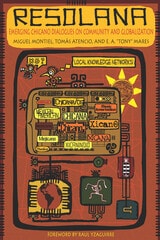
Resolana
Emerging Chicano Dialogues on Community and GlobalizationMiguel Montiel
University of Arizona Press, 2009
Coming from diverse backgrounds in social work, sociology, public administration, literature, history, and education, three modern resolaneros take the twin concepts of resolana and el oro del barrio on a breathtaking journey from their rural roots to their application in an urban setting and on to a holistic view of globalization. The authors offer a humane perspective on transborder cultures and all communities struggling to maintain their cultural and linguistic identities. They share an optimistic view of how ordinary people everywhere can take back control of their own destinies. This book is about uncovering subjugated knowledge—el oro del barrio—through resolana, a dynamic process of thought and action.
Resolana will inspire dialogue and creativity from those interested in sociology, political science, social work, and Chicano studies, as well as public-policy makers and the general public.

River of Hope
Forging Identity and Nation in the Rio Grande BorderlandsOmar S. Valerio-Jiménez
Duke University Press, 2012
Diverse influences transformed the borderlands as Spain, Mexico, and the United States competed for control of the region. Indian slaves joined Spanish society; Mexicans allied with Indians to defend river communities; Anglo Americans and Mexicans intermarried and collaborated; and women sued to confront spousal abuse and to secure divorces. Drawn into multiple conflicts along the border, Mexican nationals and Mexican Texans (tejanos) took advantage of their transnational social relations and ambiguous citizenship to escape criminal prosecution, secure political refuge, and obtain economic opportunities. To confront the racialization of their cultural practices and their increasing criminalization, tejanos claimed citizenship rights within the United States and, in the process, created a new identity.
Published in cooperation with the William P. Clements Center for Southwest Studies, Southern Methodist University.