Results by title
32 books match the query 'Missionaries'
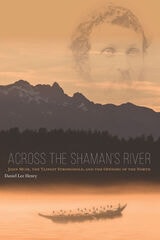
Across the Shaman's River
John Muir, the Tlingit Stronghold, and the Opening of the NorthDaniel Lee Henry
University of Alaska Press, 2017
Tucked in the corner of Southeast Alaska, the Tlingits had successfully warded off the Anglo influences that had swept into other corners of the territory. This tribe was viewed by European and American outsiders as the last wild tribe and a frustrating impediment to access. Missionaries and prospectors alike had widely failed to bring the Tlingit into their power. Yet, when John Muir arrived in 1879, accompanied by a fiery preacher, it only took a speech about “brotherhood”—and some encouragement from the revered local shaman Skandoo’o—to finally transform these “hostile heathens.”
Using Muir’s original journal entries, as well as historic writings of explorers juxtaposed with insights from contemporary tribal descendants, Across the Shaman’s River reveals how Muir’s famous canoe journey changed the course of history and had profound consequences on the region’s Native Americans.
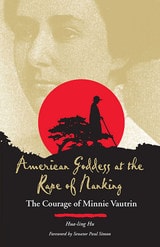
American Goddess at the Rape of Nanking
The Courage of Minnie VautrinHua-ling Hu
Southern Illinois University Press, 2001
The Japanese army’s brutal four-month occupation of the city of Nanking during the 1937 Sino-Japanese War is known, for good reason, as “the rape of Nanking.” As they slaughtered an estimated three hundred thousand people, the invading soldiers raped more than twenty thousand women—some estimates run as high as eighty thousand. Hua-ling Hu presents here the amazing untold story of the American missionary Minnie Vautrin, whose unswerving defiance of the Japanese protected ten thousand Chinese women and children and made her a legend among the Chinese people she served.
Vautrin, who came to be known in China as the “Living Goddess” or the “Goddess of Mercy,” joined the Foreign Christian Missionary Society and went to China during the Chinese Nationalist Revolution in 1912. As dean of studies at Ginling College in Nanking, she devoted her life to promoting Chinese women’s education and to helping the poor.
At the outbreak of the war in July 1937, Vautrin defied the American embassy’s order to evacuate the city. After the fall of Nanking in December, Japanese soldiers went on a rampage of killing, burning, looting, rape, and torture, rapidly reducing the city to a hell on earth. On the fourth day of the occupation, Minnie Vautrin wrote in her diary: “There probably is no crime that has not been committed in this city today. . . . Oh, God, control the cruel beastliness of the soldiers in Nanking.”
When the Japanese soldiers ordered Vautrin to leave the campus, she replied: “This is my home. I cannot leave.” Facing down the blood-stained bayonets constantly waved in her face, Vautrin shielded the desperate Chinese who sought asylum behind the gates of the college. Vautrin exhausted herself defying the Japanese army and caring for the refugees after the siege ended in March 1938. She even helped the women locate husbands and sons who had been taken away by the Japanese soldiers. She taught destitute widows the skills required to make a meager living and provided the best education her limited sources would allow to the children in desecrated Nanking.
Finally suffering a nervous breakdown in 1940, Vautrin returned to the United States for medical treatment. One year later, she ended her own life. She considered herself a failure.
Hu bases her biography on Vautrin’s correspondence between 1919 and 1941 and on her diary, maintained during the entire siege, as well as on Chinese, Japanese, and American eyewitness accounts, government documents, and interviews with Vautrin’s family.
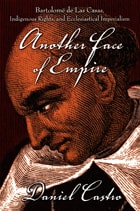
Another Face of Empire
Bartolomé de Las Casas, Indigenous Rights, and Ecclesiastical ImperialismDaniel Castro
Duke University Press, 2007
Separating historical reality from myth, Daniel Castro provides a nuanced, revisionist assessment of the friar’s career, writings, and political activities. Castro argues that Las Casas was very much an imperialist. Intent on converting the Indians to Christianity, the religion of the colonizers, Las Casas simply offered the natives another face of empire: a paternalistic, ecclesiastical imperialism. Castro contends that while the friar was a skilled political manipulator, influential at what was arguably the world’s most powerful sixteenth-century imperial court, his advocacy on behalf of the natives had little impact on their lives. Analyzing Las Casas’s extensive writings, Castro points out that in his many years in the Americas, Las Casas spent very little time among the indigenous people he professed to love, and he made virtually no effort to learn their languages. He saw himself as an emissary from a superior culture with a divine mandate to impose a set of ideas and beliefs on the colonized. He differed from his compatriots primarily in his antipathy to violence as the means for achieving conversion.

Arctic Madness
The Anthropology of a DelusionPierre Déléage
HAU, 2020
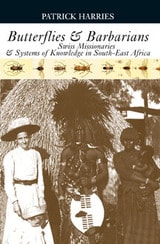
Butterflies & Barbarians
Swiss Missionaries and Systems of Knowledge in South-East AfricaPatrick Harries
Ohio University Press, 2007
Central to this group was Junod, who became a pioneering collector in the fields of entomology and botany. He would later examine African society with the methodology, theories, and confidence of the natural sciences. On the way he came to depend on the skills of African observers and collectors. Out of this work emerged, in three stages between 1898 and 1927, an influential classic in the field of South African anthropology, Life of a South African Tribe.
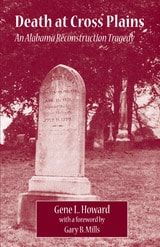
Death at Cross Plains
An Alabama Reconstruction TragedyGene L. Howard with a foreword by Gary B. Mills
University of Alabama Press, 1984
Reconstruction in the South is a much studied and yet little understood period in the region’s history. In many areas it was marked by such violence as to have been guerrilla warfare in all but name. Death at Cross Plains is the gripping story of one local incident that illuminates the aftermath of the Civil War throughout the region.

Defining Métis
Catholic Missionaries and the Idea of Civilization in Northwestern Saskatchewan, 1845–1898Timothy P. Foran
University of Manitoba Press, 2017
Divine Expectations
An American Woman In Nineteenth-Century PalestineBarbara Kreiger
Ohio University Press, 1999
Barbara Kreiger’s intriguing narrative presents the account of Clorinda Minor, a charismatic American Christian woman whose belief in the Second Coming prompted her to leave a comfortable life in Philadelphia in 1851 and take up agriculture in Palestine.
After her disappointment in a failed prophecy that the End of Days would take place in October 1844, Mrs. Minor determined that the Holy Land was not yet adequately prepared for such an event and decided that it would be her mission to teach the poverty-stricken Jews of Palestine to work the soil. In this very American story, Mrs. Minor, like so many other pioneers of her day, looked to the land as her future.
Even as her mission was distinctly religious, her daily efforts were in the social realm. And although her work brought Jews and Arabs together, and her small farm was a unique settlement where Christians, Muslims, and Jews labored alongside one another, the events detailed in Divine Expectations had dramatic and tragic diplomatic and international repercussions.
With the deft touch of a novelist, Barbara Kreiger weaves the little-known story of Clorinda Minor into the larger context of the region and its history, presenting it in its charming eccentricity and its gripping reality.
Entanglements of Empire
Missionaries, Maori, and the Question of the BodyTony Ballantyne
Duke University Press, 2015

Faithful Unto Death
Becky Thacker
University of Michigan Press, 2011
Benzonia, Michigan, 1894: a sleepy Congregationalist community, dedicated to the education of hardworking and virtuous young people of both sexes and all races. Anna Spencer Thacker is the daughter of missionaries, a faithful wife, and mother of five, pious to a fault. She is suddenly stricken with a mysterious ailment that soon proves fatal. Was it truly an unfortunate illness? Or was it murder—or suicide?
Taking a true story of a murder in her own family, Becky Thacker has crafted a historical mystery novel whose cast of characters rapidly builds, including William Henry Thacker as deputy sheriff, deacon in his church, a kind man . . . but perhaps just a trifle too fond of the attractive young housekeeper; and Charlotte Spencer, the pretty missionary sister, almost saintly in her efforts to bring Jesus to the Armenians in the mountains of Turkey, though a bit prone to exaggeration. She could be a suspect—or the next target.
The children are Roy, 19: musical, a good student, but a little too wild for Benzonia; Ralph, 17: trying to shoulder the responsibilities of farm and family; and Lottie, 14: a talented young artist trying to take care of young Will and Josie. Faithful Unto Death provides a window into the daily lives of small-town Michiganders at the turn of the century wrapped up in a riveting whodunit.
Cover image by Hemera/Thinkstock
Hawaiian Music in Motion
Mariners, Missionaries, and MinstrelsJames Revell Carr
University of Illinois Press, 2014
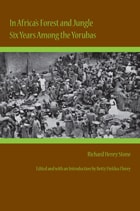
In Africa's Forest and Jungle
Six Years Among the YorubasRichard Henry Stone, edited by Betty Finklea Florey
University of Alabama Press, 2009
Stone served in Africa with his wife and successfully learned the Yoruba language. He was an intelligent, self-reflective, and reliable observer, making his works important sources of information on Yoruba society before the intervention of European colonialism. In Africa's Forest and Jungle is a rare account of West African culture, made all the more complete by the additional journal entries, letters, and photographs collected in this edition.
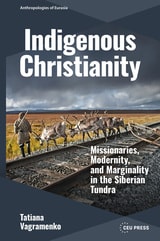
Indigenous Christianity
Missionaries, Modernity, and Marginality in the Siberian TundraTatiana Vagramenko
Central European University Press, 2026
Nenets nomads, long shaped by Russian colonialism and Soviet modernization, experienced sweeping conversions in the mid-1990s, culminating in the creation of a tundra church tied to a radical evangelical movement. Amid Putin’s tightening control—when indigenous peoples and minority faiths faced renewed surveillance and harassment—the book follows Nenets and missionaries whose encounters across the tundra sparked tensions between converts and non-converts, faith and state. Through stories of hope, loss, and resilience, it reveals how global evangelical Christianity intersects with local traditions, reshaping kinship, belonging, and modernity in the Siberian tundra.

Korea Letters in the William Elliot Griffis Collection
An Annotated SelectionYoung-mee Yu Cho
Rutgers University Press, 2024
The Korean materials in the Griffis Collection at Rutgers University consist of journals, correspondence, articles, maps, prints, photos, postcards, manuscripts, scrapbooks, and ephemera. These papers reflect Griffis's interests and activities in relation to Korea as a historian, scholar, and theologian. They provide a rare window into the turbulent period of late nineteenth- and twentieth-century Korea, witnessed and evaluated by Griffis and early American missionaries in East Asia. The Korea Letters in the William Elliot Griffis Collection are divided into two parts: letters from missionaries and letters from Japanese and Korean political figures. Newly available and accessible through this collection, these letters develop a multifaceted history of early American missionaries in Korea, the Korean independence movement, and Griffis's views on Korean culture.
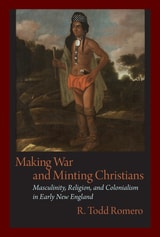
Making War and Minting Christians
Masculinity, Religion, and Colonialism in Early New EnglandR. Todd Romero
University of Massachusetts Press, 2011
In this book, R. Todd Romero traces the interaction of notions of gender, the practice of religion, and the conduct of warfare in colonial America. He shows how Native and Anglo-American ideas of manhood developed in counterpoint, in the context of Christian evangelization, colonial expansion, and recurrent armed conflict.
For the English, the cultivation of manliness became an important aspect of missionary efforts. Conversion demanded that the English “make men” of the Indians before they could “make them Christians,” a process that involved reshaping Native masculinity according to English patriarchal ideals that the colonists themselves rarely matched. For their part, Native Americans held on to older ways of understanding the divine and defining gender even as they entered English “praying towns” and negotiated the steep demands of the missionaries.
Evolving ideas of masculinity resonated with religious significance and shaped the meaning of warfare for Natives and colonists alike. Just as the English believed that their territorial expansion was divinely sanctioned, Indians attributed a string of victories in King Philip's War to “the Great God” and the perception that their enemies “were like women.” Trusting that war and manliness were necessarily linked, both groups engaged in ritual preparations for battle, believed deeply in the efficacy of the supernatural to affect the outcome of combat, and comprehended the meaning of war in distinctly religious ways.
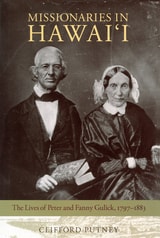
Missionaries in Hawai'i
The Lives of Peter and Fanny Gulick, 1797-1883Clifford Putney
University of Massachusetts Press, 2010
Ever since Protestant missionaries from the United States first reached Hawai'i in 1820, they have inspired conflicting passions. In evangelical circles, the missionaries are praised for Christianizing Hawai'i, transforming Hawaiian into a written language, and inoculating the islanders against smallpox. But this celebratory assessment is rejected by modern-day Hawaiian nationalists, who excoriate the missionaries as advance agents of U.S. imperialism.
In this biography of pioneer missionaries Peter and Fanny Gulick, Clifford Putney offers a balanced view of their contributions. He says the nationalists are right to credit the missionaries with drawing Hawai'i into America's political orbit, but argues that the missionary enterprise helped in some ways to preserve key elements of Hawaiian culture.
Based primarily on letters, journals, and other archival materials, Putney's book provides readers with a detailed portrait of the lives of Peter and Fanny Gulick. Inspired by America's Second Great Awakening to spread the Gospel overseas, the Gulicks voyaged to Hawai'i in 1828 and lived there for the next forty-six years, actively proselytizing and working to change the islands. On Kaua'i, they helped to ensure the success of Hawai'i's first sugar plantation and acquainted Hawaiians with inventions such as the wagon. On Moloka'i (later the site of a leper colony) the couple struggled merely to survive. And on O'ahu, they took up ranching and helped to found Punahou School, the alma mater of President Barack Obama.
While laboring in Hawai'i, the Gulicks interacted with kings, queens, and other historically important figures, and Putney chronicles those relationships. He also explores issues of race and gender, and sheds new light on the democratization of government, the spread of capitalism, and the privatization of land. From these last two developments, a number of missionaries grew immensely rich, but the Gulicks did not, and neither did their descendants. A group that includes influential missionaries, educators, and physical fitness experts, the descendants of Peter and Fanny have had numerous books written about them, but Putney is the first to write extensively about the progenitors of the Gulick clan.
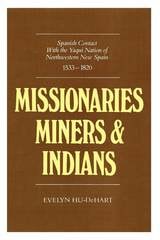
Missionaries, Miners, and Indians
Spanish Contact with the Yaqui Nation of Northwestern New Spain, 1533–1820Evelyn Hu-DeHart
University of Arizona Press, 1981
More than a tale of Yaqui Indian resistance, Missionaries, Miners, and Indians documents the history of the Jesuit missions during a period of encroaching secularization. The Yaqui rebellion of 1740, analyzed here in detail, enabled the Yaqui to work for the mines without repudiating the missions; however, the erosion of the mission system ultimately led to the Jesuits’ expulsion from New Spain in 1767, and through their own perseverance, the Yaqui were able to bring their culture intact into the nineteenth century.
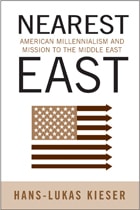
Nearest East
American Millenialism and Mission to the Middle EastAuthored by Hans-Lukas Kieser
Temple University Press, 2012
Long before oil interests shaped American interaction with the Middle East, the U.S. had a strong influence on the late Ottoman and post-Ottoman region. Covering the period from approximately 1800 to the 1970s, Hans-Lukas Kieser’s compelling Nearest East tells the story of this intimate, identity-building relationship between the U.S. and the Near East.
Kieser chronicles how American missionaries worked to implement their belief in Biblical millennialism, enlightened modernity, and a modern Zion-Israel. Millennialism was part of an American identity that constituted itself religiously in the interaction with and the representation of the “cradle of Zion.” As such, "going Near East" was—at least to American evangelical Protestants—in some ways more important than colonizing the American West. However, many Ottoman Muslims felt threatened by the American missionaries perceiving their successful institutions as an estranging challenge from the outside.
Measuring the long twisted road from the missionary Zion-builders of the early 19th century to the privileged US-Israeli partnership in the late 20th century, Nearest East looks carefully on both sides of the relationship. Kieser uses a wide range of Ottoman, Turkish, French, German and other sources, unfamiliar to most Anglophone readers, to tell this story that will appeal to historians of all stripes.

Person and Myth
Maurice Leenhardt in the Melanesian WorldJames Clifford
Duke University Press, 1992
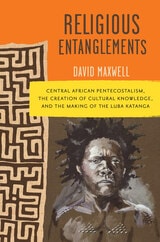
Religious Entanglements
Central African Pentecostalism, the Creation of Cultural Knowledge, and the Making of the Luba KatangaDavid Maxwell
University of Wisconsin Press, 2023
Through the careful reconstruction of knowledge pathways, Maxwell brings into focus the role of Africans in shaping texts, collections, and images as well as in challenging and adapting Western-imported presuppositions and prejudices. Ultimately, Maxwell illustrates the mutually constitutive nature of discourses of identity in colonial Africa and reveals not only how the Luba shaped missionary research but also how these coproducers of knowledge constructed and critiqued custom and convened new ethnic communities.
Making a significant intervention in the study of both the history of African Christianity and the cultural transformations effected by missionary encounters across the globe, Religious Entanglements excavates the subculture of African Pentecostalism, revealing its potentiality for radical sociocultural change.
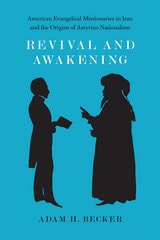
Revival and Awakening
American Evangelical Missionaries in Iran and the Origins of Assyrian NationalismAdam H. Becker
University of Chicago Press, 2015
American evangelicals arrived in Iran in the 1830s. Becker examines how these missionaries, working with the “Nestorian” Church of the East—an Aramaic-speaking Christian community in the borderlands between Qajar Iran and the Ottoman Empire—catalyzed, over the span of sixty years, a new national identity. Instructed at missionary schools in both Protestant piety and Western science, this indigenous group eventually used its newfound scriptural and archaeological knowledge to link itself to the history of the ancient Assyrians, which in time led to demands for national autonomy. Exploring the unintended results of this American attempt to reform the Orient, Becker paints a larger picture of religion, nationalism, and ethnic identity in the modern era.
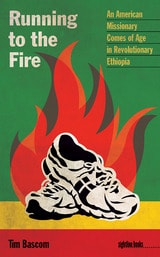
Running to the Fire
An American Missionary Comes of Age in Revolutionary EthiopiaTim Bascom
University of Iowa Press, 2015
Running to the Fire focuses on the turbulent year the Bascom family experienced upon traveling into revolutionary Ethiopia. The teenage Bascom finds a paradoxical exhilaration in living so close to constant danger. At boarding school in Addis Ababa, where dorm parents demand morning devotions and forbid dancing, Bascom bonds with other youth due to a shared sense of threat. He falls in love for the first time, but the young couple is soon separated by the politics that affect all their lives. Across the country, missionaries are being held under house arrest while communist cadres seize their hospitals and schools. A friend’s father is imprisoned as a suspected CIA agent; another is killed by raiding Somalis.
Throughout, the teenaged Bascom struggles with his faith and his role within the conflict as a white American Christian missionary’s child. Reflecting back as an adult, he explores the historical, cultural, and religious contexts that led to this conflict, even though in doing so he is forced to ask himself questions that are easier left alone. Why, he wonders, did he find such strange fulfillment in being young and idealistic in the middle of what was essentially a kind of holy war?
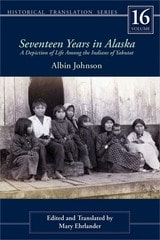
Seventeen Years in Alaska
A Depiction of Life Among the Indians of YakutatAlbin Johnson
University of Alaska Press, 2014
Seventeen Years in Alaska is Johnson’s eyewitness account of this tumultuous time. It is a captivating narrative of an ancient people facing rapid change and of the missionaries working to stem a corrupting tide. His journals offer a candid look at the beliefs and lives of missionaries, and they ultimately reveal the profound effect that he and other missionaries had on the Tlingit. Tracing nearly two decades of spiritual hopes and earthbound failures, Johnson’s memoir is a fascinating portrait of a rapidly changing world in one of the most far-flung areas of the globe.
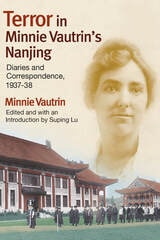
Terror in Minnie Vautrin's Nanjing
Diaries and Correspondence, 1937-38Minnie Vautrin. Edited and with an Introduction by Suping Lu
University of Illinois Press, 2007
In December of 1937, the Japanese Imperial Army marched into China's capital city of Nanjing and launched six weeks of carnage that would become known as the Rape of Nanjing. In addition to the deaths of Chinese POWs and civilians, tens of thousands of women were raped, tortured, and killed by Japanese soldiers. In this traumatic environment, both native and foreign-born inhabitants of Nanjing struggled to carry on with their lives.
This volume collects the diaries and correspondence of Minnie Vautrin, a farmgirl from Illinois who had dedicated herself to the education of Chinese women at Ginling College in Nanjing. Faced with the impending Japanese attack, she turned the school into a sanctuary for ten thousand women and girls. Vautrin's firsthand accounts of daily life in Nanjing and the intensifying threat of Japanese invasion reveal the courage of the occupants under siege--Chinese nationals as well as Western missionaries, teachers, surgeons and business people--and the personal costs of violence in wartime.
Thanks to Vautrin's painstaking effort in keeping a day-to-day account, present-day readers are able to examine this episode of history at close range through her eyes. With detailed maps, photographs, and carefully researched in-depth annotations, Terror in Minnie Vautrin's Nanjing: Diaries and Correspondence, 1937-38 presents a comprehensive and detailed daily account of the events and of life during the horror-stricken days within the city walls and in particular on the Ginling campus. Through chronologically arranged diaries, letters, reports, documents, and telegrams, Vautrin bears witness to those terrible events and to the magnitude of trauma that the Nanjing Massacre exacted on the populace.

The Apostle of Tennessee
The Indefatigable Life and Ministry of Father Aloysius OrengoJoe Pagetta
Vanderbilt University Press, 2026
When Nashville became a Catholic diocese in 1837, it was mostly an aspirational exercise. The few Catholics scattered throughout the state were ministered to only occasionally by missionary priests who traveled by horseback from Kentucky. It is believed that Hugh Rogan, who arrived in Middle Tennessee in 1780 after working as a surveyor for the Continental Army, did not see a priest for fifty years.
That all changed when the Italian-born Father Aloysius “Luigi” Orengo arrived in Nashville in 1848. He traveled all over the state, sleeping in the woods, using his saddle for a pillow, and eating cheese and crackers. He’s credited with building churches in Franklin, Columbia, Pulaski, East Nashville, Tracy City, Gallatin, Humboldt, Brownsville, Grand Junction, Covington, Jackson, and McEwen.
But as influential as he was, Father Orengo’s story remained untold—until now.
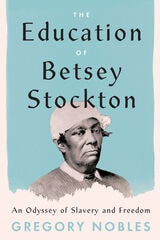
The Education of Betsey Stockton
An Odyssey of Slavery and FreedomGregory Nobles
University of Chicago Press, 2022
The life of Betsey Stockton (ca. 1798–1865) is a remarkable story of a Black woman’s journey from slavery to emancipation, from antebellum New Jersey to the Hawai‘ian Islands, and from her own self-education to a lifetime of teaching others—all told against the backdrop of the early United States’ pervasive racism. It’s a compelling chronicle of a critical time in American history and a testament to the courage and commitment of a woman whose persistence grew into a potent form of resistance.
When Betsey Stockton was a child, she was “given, as a slave” to the household of Rev. Ashbel Green, a prominent pastor and later the president of what is now Princeton University. Although she never went to school, she devoured the books in Green’s library. After being emancipated, she used that education to benefit other people of color, first in Hawai‘i as a missionary, then Philadelphia, and, for the last three decades of her life, Princeton—a college town with a genteel veneer that never fully hid its racial hostility. Betsey Stockton became a revered figure in Princeton’s sizeable Black population, a founder of religious and educational institutions, and a leader engaged in the day-to-day business of building communities.
In this first book-length telling of Betsey Stockton’s story, Gregory Nobles illuminates both a woman and her world, following her around the globe, and showing how a determined individual could challenge her society’s racial obstacles from the ground up. It’s at once a revealing lesson on the struggles of Stockton’s times and a fresh inspiration for our own.
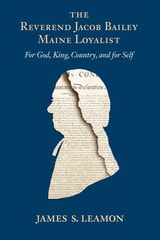
The Reverend Jacob Bailey, Maine Loyalist
For God, King, Country, and for SelfJames S. Leamon
University of Massachusetts Press, 2012
Reverend Bailey's persistence in praying for the king and his refusal to publicize the Declaration of Independence from his Pownalborough pulpit aroused hostilities that drove him and his family to the safety of Nova Scotia. There, in exile, Bailey devoted himself to assisting fellow refugees while defending himself from others. During this time, he wrote almost obsessively: poems, dramas, novels, histories. Though few were ever completed, and even fewer published, in one way or another most of his writings depicted the trauma he underwent as a loyalist.
Leamon's study of the Reverend Jacob Bailey depicts the complex nature and burdens of one person's loyalism while revealing much about eighteenth-century American life and culture.
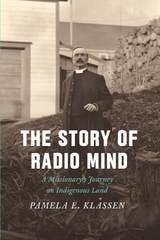
The Story of Radio Mind
A Missionary's Journey on Indigenous LandPamela E. Klassen
University of Chicago Press, 2018
Following Du Vernet’s journey westward from Toronto to Ojibwe territory and across the young nation of Canada, Pamela Klassen examines how contests over the mediation of stories—via photography, maps, printing presses, and radio—lucidly reveal the spiritual work of colonial settlement. A city builder who bargained away Indigenous land to make way for the railroad, Du Vernet knew that he lived on the territory of Ts’msyen, Nisga’a, and Haida nations who had never ceded their land to the onrush of Canadian settlers. He condemned the devastating effects on Indigenous families of the residential schools run by his church while still serving that church. Testifying to the power of radio mind with evidence from the apostle Paul and the philosopher Henri Bergson, Du Vernet found a way to explain the world that he, his church and his country made.
Expanding approaches to religion and media studies to ask how sovereignty is made through stories, Klassen shows how the spiritual invention of colonial nations takes place at the same time that Indigenous peoples—including Indigenous Christians—resist colonial dispossession through stories and spirits of their own.
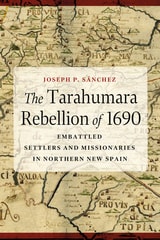
The Tarahumara Rebellion of 1690
Embattled Settlers and Missionaries in Northern New SpainJoseph P. Sánchez
University of Arizona Press, 2025
Previous histories have interpreted this revolt, and other borderlands uprisings, as localized and spontaneous events aimed at rectifying specific grievances. Historian Joseph P. Sánchez argues that the revolts of the Tepehuanes and the Tarahumaras in northern New Spain, or Nueva Vizcaya, were well-planned, inspired by outside events, and drew in multiple communities and ethnicities. Drawing on a wealth of primary sources, including Jesuit accounts and archival documents, Sánchez offers a comprehensive narrative that challenges conventional interpretations of colonial Mexican uprisings.
Far from localized, the Indigenous rebellions in the northern Mexican borderlands during the colonial period were part of the overall Indigenous struggle for defense of homeland throughout the Americas. The Tarahumara Rebellion of 1690 brings together a rich history of localized events and broader historical trends and offers a compelling narrative that enriches our understanding of the colonial experience in northern New Spain.
The Turk in America
The Creation of an Enduring PrejudiceJustin McCarthy
University of Utah Press, 2010
Utah Series in Middle East Studies
In The Turk in America, historian Justin McCarthy seeks to explain the historical basis for American prejudice towards Turks in the nineteenth and early twentieth centuries. The volume focuses on fraudulent characterizations of Turks, mostly stemming from an antipathy in Europe and America toward non-Christians, and especially Muslims. Spanning one hundred and fifty years, this history explores the misinformation largely responsible for the negative stereotypes of Turks during this period.

The Tutor'd Mind
Indian Missionary-Writers in Antebellum AmericaBernd C. Peyer
University of Massachusetts Press, 1997
In the view of the English colonists and their descendants, Indian converts to Christianity were expected to repudiate native traditions and affirm the superiority of European civilization, to serve as role models, and to spread the gospel far into the wilderness. Yet as Bernd C. Peyer shows, Indian missionaries did not always fulfill the expectations of those who trained them. Once the Indians recognized that conversion alone did not guarantee protection from discrimination, they devised a variety of strategies, theological as well as practical, to resist assimilation into the dominant white culture. Making effective use of their literacy and education, they called attention to the discrepancy between the Protestant ideals they had been taught and the Anglo-American practices to which native people were subjected.
By uncovering this subtext of dissent and resistance, Peyer at once alters and enriches our understanding of the evolution of the American Indian literary tradition.
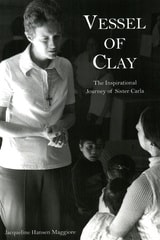
Vessel of Clay
The Inspirational Journey of Sister CarlaJacqueline Hansen Maggiore
University of Scranton Press, 2010
Jacqueline Hansen Maggiore presents in this volume the biography of her lifelong friend Carol Piette, known throughout Chile and El Salvador as Sister Carla. Drawing from the memories of those who knew her and excerpts from her letters and diaries, Vessel of Clay chronicles Sister Carla’s extraordinary life, highlighting her dedication to the poor of Latin America but also revealing her struggles with self-doubt and emotional frailty. Vessel of Clay will appeal to both lay and religious readers interested in peace and social justice, spiritual formation and development, women’s issues, liberation theology, and mission service.