Results by title
112 books match the query 'Immigration' and 9 start with r
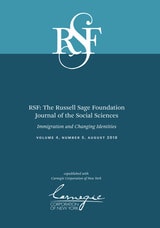
RSF
The Russell Sage Foundation Journal of the Social Sciences: Immigration and Changing IdentitiesKay Deaux
Russell Sage Foundation, 2018
Several articles explore how immigrants negotiate their positions in the racial hierarchy and how they perceive themselves in relation to native-born groups. Michael Jones-Correa and coauthors find that while Mexican immigrants are more likely to identify as Americans the more they report positive interactions with both native-born whites and blacks, Indian immigrants’ identification with being American is largely shaped by positive interactions just with whites. Prema Kurien shows that in response to the wave of hate crimes after 9/11, Sikh Americans sought to be recognized as an American religious minority, as well as an ethnic group distinct from Indian Americans. In their study of the children of immigrants in middle adulthood, Cynthia Feliciano and Rubén G. Rumbaut find that some second-generation immigrants retain a strong attachment to an ethnic identity into their late thirties, but that ethnic identification for others wanes as their social identities as parents, workers, or spouses become more important.
Other contributors investigate the extent to which longer-established Americans respond to increased immigration. Maureen Craig and Jennifer Richeson show that whites living in areas with large or increasing racial minority populations are more likely to believe that anti-white discrimination is on the rise. Deborah Schildkraut and Satia Morotta similarly find that when millennials—particularly those who identify as white and Republican—are exposed to information on the changing racial makeup of the U.S., they express more conservative political views.
At a time when questions of immigration and national identity are at the forefront of our political and public discourse, understanding how immigrants and their offspring influence—and are influenced by—conceptions of race and identity is critical for social scientists. This issue provides key insights into the challenges of a rapidly changing population.
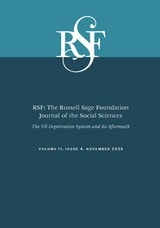
RSF
The Russell Sage Foundation Journal of the Social Sciences: The Deportation System and Its AftermathCaitlin Patler
Russell Sage Foundation, 2025
The United States is home to the largest deportation system in the world: Between 2001 and 2022, U.S. Immigration and Customs Enforcement (ICE) carried out nearly 6.5 million deportations. Deportation is often framed as a singular event that happens to an individual. However, as public policy scholar Caitlin Patler and political scientist Brad Jones argue in this issue of RSF, deportation is a system that encompasses premigration, within-U.S., and post-deportation contexts and outcomes. With Congress recently approving a massive expansion of the US deportation system, understanding its consequences is more important than ever before.
In this issue, an interdisciplinary group of contributors explore the wide range of impacts of the U.S. deportation system. The introductory chapter by Patler and Jones defines the U.S. deportation system and provides a comprehensive historical context for understanding its causes and consequences. Mass deportation is enabled primarily through the merging of U.S. immigration and criminal laws. Ian Peacock explores the proliferation of 287(g) agreements, which deputize local law enforcement to enforce immigration law. He shows that counties with stronger ties to public official associations, such as the National Sheriff’s Association and the Major County Sheriffs of America, were more likely to adopt identical 287(g) agreements, devote more jail space to ICE detainees, and comply with ICE detainer requests at higher rates. The issue also presents empirical analyses of the consequences of the US deportation system. Articles by Youngjin Stephanie Hong and colleagues, Cora Bennett and colleagues, and J. Jacob Kirksey and Carolyn Sattin-Bajaj, link deportation to reduced Head Start enrollment, lower K-12 test scores, and declines in college enrollment, respectively. The remaining articles turn to the aftermath of deportation. Erin R. Hamilton and colleagues show that between 2015 and 2020, 11,000 individuals were de facto deportees—family members who leave the country because another family member has been deported—in Mexico, with a disproportionate number being women and children. Further highlighting the importance of family, Ángel A. Escamilla García and Adriana M. Cerón analyze survey data from recently deported Central Americans and find those who left minor children in the U.S. were more likely to intend to remigrate to the U.S.
This issue of RSF sheds light on various dimensions of the increasingly punitive U.S. deportation system and the many ways it harms individuals and communities. In the current era of mass expansion of immigration law enforcement, it will be a valuable educational tool for students, faculty, policymakers, and many other stakeholders.
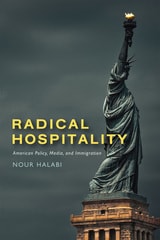
Radical Hospitality
American Policy, Media, and ImmigrationNour Halabi
Rutgers University Press, 2022
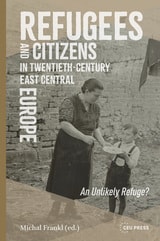
Refugees and Citizens in Twentieth-Century East Central Europe
An Unlikely Refuge?Michal Frankl
Central European University Press, 2026
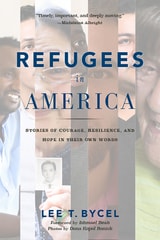
Refugees in America
Stories of Courage, Resilience, and Hope in Their Own WordsLee T Bycel
Rutgers University Press, 2019
Each chapter of Refugees in America focuses on an individual from a different country, from a 93-year-old Polish grandmother who came to the United States after surviving the horrors of Auschwitz to a young undocumented immigrant from El Salvador who became an American college graduate, despite being born impoverished and blind. Some have found it easy to reinvent themselves in the United States, while others have struggled to adjust to America, with its new culture, language, prejudices, and norms.
Each of them speaks candidly about their experiences to author Lee T. Bycel, who provides illuminating background information on the refugee crises in their native countries. Their stories help reveal the real people at the center of political debates about US immigration.
Giving a voice to refugees from such far-flung locations as South Sudan, Guatemala, Syria, and Vietnam, this book weaves together a rich tapestry of human resilience, suffering, and determination.
Profits from the sale of this book will be donated to two organizations that are doing excellent refugee resettlement work and offer many opportunities to support refugees: HIAS (founded as the Hebrew Immigrant Aid Society) hias.org International Rescue Committee (IRC) rescue.org
Regulating Difference
Religious Diversity and Nationhood in the Secular WestMarian Burchardt
Rutgers University Press, 2020
Transnational migration has contributed to the rise of religious diversity and has led to profound changes in the religious make-up of society across the Western world. As a result, societies and nation-states have faced the challenge of crafting ways to bring new religious communities into existing institutions and the legal frameworks. Regulating Difference explores how the state regulates religious diversity and examines the processes whereby religious diversity and expression becomes part of administrative landscapes of nation-states and people’s everyday lives. Arguing that concepts of nationhood are key to understanding the governance of religious diversity, Regulating Difference employs a transatlantic comparison of the Spanish region of Catalonia and the Canadian province of Quebec to show how processes of nation-building, religious heritage-making and the mobilization of divergent interpretations of secularism are co-implicated in shaping religious diversity. It argues that religious diversity has become central for governing national and urban spaces.
This book is also freely available online as an open access digital edition.
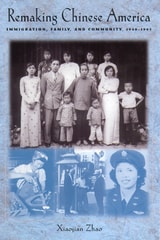
Remaking Chinese America
Immigration, Family, and Community, 1940-1965Zhao, Xiaojian
Rutgers University Press, 2001
In Remaking Chinese America, Xiaojian Zhao explores the myriad forces that changed and unified Chinese Americans during a key period in American history. Prior to 1940, this immigrant community was predominantly male, but between 1940 and 1965 it was transformed into a family-centered American ethnic community. Zhao pays special attention to forces both inside and outside of the country in order to explain these changing demographics. She scrutinizes the repealed exclusion laws and the immigration laws enacted after 1940. Careful attention is also paid to evolving gender roles, since women constituted the majority of newcomers, significantly changing the sex ratio of the Chinese American population.
As members of a minority sharing a common cultural heritage as well as pressures from the larger society, Chinese Americans networked and struggled to gain equal rights during the cold war period. In defining the political circumstances that brought the Chinese together as a cohesive political body, Zhao also delves into the complexities they faced when questioning their personal national allegiances. Remaking Chinese America uses a wealth of primary sources, including oral histories, newspapers, genealogical documents, and immigration files to illuminate what it was like to be Chinese living in the United States during a period that—until now—has been little studied.

Reproducing the French Race
Immigration, Intimacy, and Embodiment in the Early Twentieth CenturyElisa Camiscioli
Duke University Press, 2009
By focusing on telling aspects of the immigration debate, Camiscioli reveals how racial hierarchies were constructed, how gender figured in their creation, and how only white Europeans were cast as assimilable. Delving into pronatalist politics, she describes how potential immigrants were ranked according to their imagined capacity to adapt to the workplace and family life in France. She traces the links between racialized categories and concerns about industrial skills and output, and she examines medico-hygienic texts on interracial sex, connecting those to the crusade against prostitution and the related campaign to abolish “white slavery,” the alleged entrapment of (white) women for sale into prostitution abroad. Camiscioli also explores the debate surrounding the 1927 law that first made it possible for French women who married foreigners to keep their French nationality. She concludes by linking the Third Republic’s impulse to create racial hierarchies to the emergence of the Vichy regime.
Resistance and Abolition in the Borderlands
Confronting Trump's Reign of TerrorEdited by Arturo J. Aldama and Jessica Ordaz; Foreword by Leo R. Chavez; Afterword by Karma R. Chávez
University of Arizona Press, 2024
This volume provides a well-argued look at the Trump era. Insightful contributions delve into the impact of Donald Trump’s rhetoric and policies on migrants detained and returned, immigrant children separated from their parents and placed in detention centers, and migrant women subjected to sexual and reproductive abuses, among other timely topics. The chapter authors document a long list in what the book calls “Trump’s Reign of Terror.”
Organized thematically, the book has four sections: The first gathers histories about the Trump years’ roots in a longer history of anti-migration; the second includes essays on artistic and activist responses on the border during the Trump years; the third critiques the normalization of Trump’s rhetoric and actions in popular media and culture; and the fourth envisions the future.
Resistance and Abolition in the Borderlands is an essential reader for those wishing to understand the extent of the damage caused by the Trump era and its impact on Latinx people.
Contributors
Arturo J. Aldama
Rebecca Avalos
Cynthia Bejarano
Tria Blu Wakpa
Renata Carvalho Barreto
Karma R. Chávez
Leo R. Chavez
Jennifer Cullison
Jasmin Lilian Diab
Allison Glover
Jamila Hammami
Alexandria Herrera
Diana J. Lopez
Sergio A. Macías
Cinthya Martinez
Alexis N. Meza
Roberto A. Mónico
José Enrique Navarro
Jessica Ordaz
Eliseo Ortiz
Kiara Padilla
Leslie Quintanilla
J-M Rivera
Heidy Sarabia
Tina Shull
Nishant Upadhyay
Maria Vargas
Antonio Vásquez