Results by title
46 books match the query 'Where'
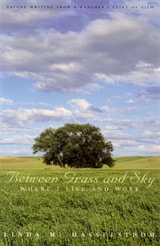
Between Grass And Sky
Where I Live And WorkLinda M. Hasselstrom
University of Nevada Press, 2005
An important collection of personal essays from one of the most widely published American environmental writers addresses the effects of ranching on the environment. Acclaimed nature writer Linda M. Hasselstrom sees herself as a rancher who writes—a definition that shapes the tone and content of her writing. Now owner of the South Dakota cattle ranch where she grew up, Hasselstrom lives in intimate contact with the natural world. "Nature is to me both home and office. Nature is my boss, manager of the branch office—or ranch office—where I toil to convert native grass into meat. . . . If I want to keep my job as well as my home, I pay attention not only to Nature's orders, but to her moods and whims." She writes knowingly of the rancher's toil and of the intelligence and dignity of the wild and domesticated creatures that share the prairie grassland she calls home. As one who knows and loves the land, Hasselstrom appreciates the concerns of environmental activists and understands that responsible ranchers can play a role in nurturing a healthy rural ecosystem. Rich in detail, humor, and pathos, these essays offer wry commentary on the scope of human folly and the even greater human potential for community and empathy. "Only people who live in the country," she writes, "could form a relationship with nature so intimate that they feel concern for one lonely duck. People who live in cities . . . only glimpse nature from high windows or speeding vehicles. Even wilderness lovers who probe deeply are only passing through. We who live on the land truly live within the land, each of our lives only one among the other inhabitants of the place." These are essays to read with wonder and delight, to relish and ponder. Available in hardcover and paperback.
Bkejwanong Dbaajmowinan/Stories of Where the Waters Divide
McGahey, Monty
Michigan State University Press, 2021
Black, Quare, and Then to Where
Theories of Justice and Black Sexual Ethicsjennifer susanne leath
Duke University Press, 2023
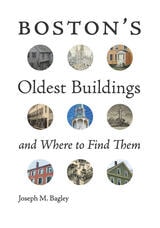
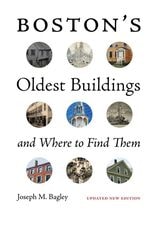
Boston's Oldest Buildings and Where to Find Them
Joseph M. Bagley
Brandeis University Press, 2021
As Boston approaches its four-hundredth anniversary, it is remarkable that it still maintains its historic character despite constant development. The fifty buildings featured in this book all pre-date 1800 and illustrate Boston’s early history. This is the first book to survey Boston’s fifty oldest buildings and does so through an approachable narrative which will appeal to nonarchitects and those new to historic preservation. Beginning with a map of the buildings’ locations and an overview of the historic preservation movement in Boston, the book looks at the fifty buildings in order from oldest to most recent. Geographically, the majority of the buildings are located within the downtown area of Boston along the Freedom Trail and within easy walking distance from the core of the city. This makes the book an ideal guide for tourists, and residents of the city will also find it interesting as it includes numerous properties in the surrounding neighborhoods. The buildings span multiple uses from homes to churches and warehouses to restaurants. Each chapter features a building, a narrative focusing on its historical significance, and the efforts made to preserve it over time. Full color photos and historical drawings illustrate each building and area. Boston’s Oldest Buildings and Where to Find Them presents the ideals of historic preservation in an approachable and easy-to-read manner appropriate for the broadest audience. Perfect for history lovers, architectural enthusiasts, and tourists alike.
Boston's Oldest Buildings and Where to Find Them
Joseph M. Bagley
Brandeis University Press, 2025
As Boston fast approaches its four-hundredth anniversary, the city’s architecture plays an important role in preserving its historic character. This book introduces readers to the city’s early history through fifty buildings, which all pre-date 1800. Employing an approachable narrative that will appeal to non-architects and those new to historic preservation, Joseph M. Bagley guides readers through an overview of the historic preservation movement in Boston before explaining the historical significance of these structures, which include homes, churches, warehouses, and restaurants.
The book begins with a map of the buildings’ locations and organizes entries from the oldest to the most recent. The majority of the properties are located within Boston’s downtown area, along the Freedom Trail, and within easy walking distance from the core of the city. While this makes the book an ideal guide for tourists, Boston residents will also discover buildings in the surrounding neighborhoods. Each chapter features a building, a story about its history, and the efforts made to preserve it over time. Fullcolor photos and historical drawings illustrate each structure and area.
Boston’s Oldest Buildings and Where to Find Them presents the ideals of historic preservation in an easy-to-read manner appropriate for the broadest audience. Perfect for history lovers, architectural enthusiasts, locals, and visitors alike.
This new edition features a foreword by Robert Allison, professor of history, language, and global culture at Suffolk University, and includes three new buildings identified by the author as being amongst the oldest in the city, which illustrates the dynamic nature of archaeology.
College Choices
The Economics of Where to Go, When to Go, and How to Pay for ItEdited by Caroline M. Hoxby
University of Chicago Press, 2004
In College Choices, Caroline Hoxby and a distinguished group of economists show how students and their families really make college decisions—how they respond to financial aid options, how peer relationships figure in the decision-making process, and even whether they need mentoring to get through the admissions process. Students of all sorts are considered—from poor students, who may struggle with applications and whether to continue on to college, to high aptitude students who are offered "free rides" at elite schools. College Choices utilizes the best methods and latest data to analyze the college decision-making process, while explaining how changes in aid and admissions practices inform those decisions as well.

Legal Reference for Librarians
How and Where to Find the AnswersPaul D. Healey
American Library Association, 2014
Minnesota Birds
Where, When, and How ManyJanet Green
University of Minnesota Press, 1980
News from Where I Live
PoemsMartin Lammon
University of Arkansas Press, 1998
Winner of the eighth annual Arkansas Poetry Award, Martin Lammon writes poems that deal fearlessly and directly with their subjects. Tenderness, complexity, compassion, reverence, and condemnation are all within his range.
Writing of love, he can speak broadly and universally of the heart, yet in the same poem, he can intricately describe a woman’s hand, a fire on a beach, or the hollows around a lover’s eye. Even when he works in the voice of a suicide, his precision can be devastating, as in these lines: “When you lie beside me under stars, each needlepoint / of light pricks my bare arms.”
With equal ease, Lammon travels across miles, cultures, and time, writing of kilns and potters in Japan, long-dead Eskimos in Alaska, or Blue Hole Cave in Pennsylvania.
Full of grace and candor, these poems pursue the stories that shimmer behind the day’s headlines, seeking the spirit at stake in the “lives beside [our] own whose secrets are worth loving.”
Ordinary Medicine
Extraordinary Treatments, Longer Lives, and Where to Draw the LineSharon R. Kaufman
Duke University Press, 2015
The American Revolution in New Jersey
Where the Battlefront Meets the Home FrontJames J. Gigantino II
Rutgers University Press, 2015
Battles were fought in many colonies during the American Revolution, but New Jersey was home to more sustained and intense fighting over a longer period of time. The nine essays in The American Revolution in New Jersey, depict the many challenges New Jersey residents faced at the intersection of the front lines and the home front.
Walt Whitman, Where the Future Becomes Present
David Haven Blake
University of Iowa Press, 2008
Walt Whitman, Where the Future Becomes Present invigorates Whitman studies by garnering insights from a diverse group of writers and intellectuals. Writing from the perspectives of art history, political theory, creative writing, and literary criticism, the contributors place Whitman in the center of both world literature and American public life. The volume is especially notable for being the best example yet published of what the editors call the New Textuality in Whitman studies, an emergent mode of criticism that focuses on the different editions of Whitman’s poems as independent works of art.
Written one hundred fifty years after the book’s publication, these timely, innovative responses to Leaves of Grass confirm that the future of Whitman’s poems is vital to our present.
Where I Have Never Been
Migration, Melancholia, and Memory in Asian American Narratives of ReturnPatricia P. Chu
Temple University Press, 2019
In researching accounts of diasporic Chinese offspring who returned to their parents’ ancestral country, author Patricia Chu learned that she was not alone in the experience of growing up in America with an abstract affinity to an ancestral homeland and community. The bittersweet emotions she had are shared in Asian American literature that depicts migration-related melancholia, contests official histories, and portrays Asian American families as flexible and transpacific.
Where I Have Never Been explores the tropes of return, tracing both literal return visits by Asian emigrants and symbolic “returns”: first visits by diasporic offspring. Chu argues that these Asian American narratives seek to remedy widely held anxieties about cultural loss and the erasure of personal and family histories from public memory. In fiction, memoirs, and personal essays, the writers of return narratives—including novelists Lisa See, May-lee Chai, Lydia Minatoya, and Ruth Ozeki, and best-selling author Denise Chong, diplomat Yung Wing, scholar Winberg Chai, essayist Josephine Khu, and many others—register and respond to personal and family losses through acts of remembrance and countermemory.

Where I Must Go
A NovelAngela Jackson
Northwestern University Press, 2009
Lyrical, penetrating, and highly charged, this novel displays a delicately tuned sense of difference and belonging. Poet Angela Jackson brings her superb sense of language and of human possibility to the story of young Magdalena Grace, whose narration takes readers through both privilege and privation at the time of the American civil rights movement.
The novel moves from the privileged yet racially exclusive atmosphere of the fictional Eden University to the black neighborhoods of a Midwestern city and to ancestral Mississippi. Magdalena’s story includes a wide range of characters—black and white, male and female, favored with opportunity or denied it, the young in love and elders wise with hope. With and through each other, they struggle to understand the history they are living and making. With dazzling perceptiveness, Jackson’s narrator Magdalena tells of the complex interactions of people around her who embody the personal and the political at a crucial moment in their own lives and in the making of America.
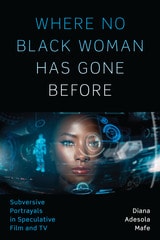
Where No Black Woman Has Gone Before
Subversive Portrayals in Speculative Film and TVBy Diana Adesola Mafe
University of Texas Press, 2018
When Lieutenant Uhura took her place on the bridge of the Starship Enterprise on Star Trek, the actress Nichelle Nichols went where no African American woman had ever gone before. Yet several decades passed before many other black women began playing significant roles in speculative (i.e., science fiction, fantasy, and horror) film and television—a troubling omission, given that these genres offer significant opportunities for reinventing social constructs such as race, gender, and class. Challenging cinema’s history of stereotyping or erasing black women on-screen, Where No Black Woman Has Gone Before showcases twenty-first-century examples that portray them as central figures of action and agency.
Writing for fans as well as scholars, Diana Adesola Mafe looks at representations of black womanhood and girlhood in American and British speculative film and television, including 28 Days Later, AVP: Alien vs. Predator, Children of Men, Beasts of the Southern Wild, Firefly, and Doctor Who: Series 3. Each of these has a subversive black female character in its main cast, and Mafe draws on critical race, postcolonial, and gender theories to explore each film and show, placing the black female characters at the center of the analysis and demonstrating their agency. The first full study of black female characters in speculative film and television, Where No Black Woman Has Gone Before shows why heroines such as Lex in AVP and Zoë in Firefly are inspiring a generation of fans, just as Uhura did.
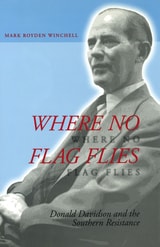
Where No Flag Flies
Donald Davidson and the Southern ResistanceMark Royden Winchell
University of Missouri Press, 2000
Donald Davidson (1893-1968) may well be the most unjustifiably neglected figure in twentieth-century southern literature. One of the most important poets of the Fugitive movement, he also produced a substantial body of literary criticism, the libretto for an American folk opera, a widely used composition textbook, and the recently discovered novel The Big Ballad Jamboree. As a social and political activist, Davidson had significant impact on conservative thought in this century, imfluencing important scholars from Cleanth Brooks to M. E. Bradford.
Despite these accomplishments, Donald Davidson has received little critical attention from either the literary or the southern scholarly community. Where No Flag Flies is Mark Royden Winchell's redress of this critical disservice. A comprehensive intellectual biography of Davidson, this seminal work offers a complete narrative of Davidson's life with all of its triumphs and losses, frustrations and fulfillments.
Winchell provides the reader with more than a simple study of a man and his achievements; he paints a complete portrait of the times in which Davidson published, from the 1930s to the early 1960s. Davidson was more directly involved in political and social activities than most writers of his generation, and Winchell provides the context, both literary and historical, in which Davidson's opinions and works developed. At the same time, Winchell offers detailed evaluations of Davidson's poetry, fiction, historical writings, and essays.
Drawing upon a wealth of previously unpublished archival material, including Davidson's letters and diary, Where No Flag Flies provides unique access to one of the most original minds of the twentieth-century South. Donald Davidson may not have achieved the recognition he deserved, but this remarkable biography finally makes it possible for a considerable literary audience to discover his true achievement.
Where No Gods Came
Sheila O'Connor
University of Michigan Press, 2010
Where No Gods Came is a powerful look at assimilation and resilience and the sacrifices we all make to adapt. It's a potent reminder, too, of the tenacity and courage required of fragile families who endure on the edge. Faina McCoy triumphs as an unlikely—and unforgettable—heroine, a stubborn child who will survive to tell the tale.

Where No One Should Live
A NovelSandra Cavallo Miller
University of Nevada Press, 2021
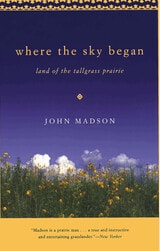
Where The Sky Began
Land of the Tallgrass PrairieJohn Madson
University of Iowa Press, 2004
Originally published in 1982, Where the Sky Began, John Madson’s landmark publication, introduced readers across the nation to the wonders of the tallgrass prairie, sparking the current interest in prairie restoration. Now back in print, this classic tome will serve as inspiration to those just learning about the heartland’s native landscape and rekindle the passion of long-time prairie enthusiasts.
Where the Bird Disappeared
Ghassan Zaqtan
Seagull Books, 2018
Where the Buffalo Roam
Restoring America's Great PlainsAnne Matthews
University of Chicago Press, 2002
This edition includes a new foreword by environmental historian Donald Worster. Matthews's new afterword describes how with growing support from Native Americans and private groups like the Nature Conservancy, the Poppers' dream of a Buffalo Commons is becoming a reality.
"An admirably crafted book, as poignant and entertaining as it is informative."—Seattle Times
"A priceless piece of Americana."—The Boston Globe
"Matthew's delightful account of the Poppers, their proposal and the controversy surrounding it does focus new attention on the region and its problems."—The Philadelphia Inquirer
"Bright, active, effective journalism. . . . An extremely savvy overlook of the dilemmas of the Great Plains."—Wallace Stegner
Where the Crooked River Rises
A High Desert HomeEllen Waterston
Oregon State University Press, 2010
Where the Devil Don't Stay
Traveling the South with the Drive-By TruckersStephen Deusner
University of Texas Press, 2021
In 1996, Patterson Hood recruited friends and fellow musicians in Athens, Georgia, to form his dream band: a group with no set lineup that specialized in rowdy rock and roll. The Drive-By Truckers, as they named themselves, grew into one of the best and most consequential rock bands of the twenty-first century, a great live act whose songs deliver the truth and nuance rarely bestowed on Southerners, so often reduced to stereotypes.
Where the Devil Don’t Stay tells the band’s unlikely story not chronologically but geographically. Seeing the Truckers’ albums as roadmaps through a landscape that is half-real, half-imagined, their fellow Southerner Stephen Deusner travels to the places the band’s members have lived in and written about. Tracking the band from Muscle Shoals, Alabama, to Richmond, Virginia, to the author’s hometown in McNairy County, Tennessee, Deusner explores the Truckers’ complex relationship to the South and the issues of class, race, history, and religion that run through their music. Drawing on new interviews with past and present band members, including Jason Isbell, Where the Devil Don’t Stay is more than the story of a great American band; it’s a reflection on the power of music and how it can frame and shape a larger culture.
Where the Dove Calls
The Political Ecology of a Peasant Corporate Community in Northwestern MexicoThomas E. Sheridan
University of Arizona Press, 1988
Sheridan has written an ethnography of resource control, one that weds the approaches of political economy and cultural ecology in order to focus upon both the external linkages and internal adaptations that shape three peasant corporate communities. He examines the ecological and economic constraints which scarce and necessary resources place upon households in Cucurpe, and then investigates why many such households have formed corporate communities to insure their access to resources beyond their control. Finally, he identifies the class differences that exist within the corporate communities as well as between members of those organizations and the private ranchers who surround them.
Where the Dove Calls (the meaning of "Cucurpe" in the language of the Opata Indians), an important contribution to peasant studies, reveals the household as the basic unit of Cucurpe society. By viewing Cucurpe's corporate communities as organizations of fiercely independent domestic units rather than as expressions of communal solidarity, Sheridan shows that peasants are among the exploiters as well as the exploited. Cucurpe¤os struggle to maintain the autonomy of their households even as they join together to protect corporate grazing lands and irrigation water. Any attempt to weaken or destroy that independence is met with opposition that ranges from passive resistance to violence.
Where the Green Light Shines
A Fifty-Year Odyssey from the Boundary Waters to the Far NorthRyan Rodgers
University of Minnesota Press, 2026
A unique glimpse into the world of arctic canoeing through the travels of one of North America’s most renowned paddlers
A centuries-long story of adventure runs through the Boundary Waters. Stretching from northern Minnesota into the Canadian Shield, this lake-dappled expanse—long an Indigenous homeland and later also a fur trading hub—is the most visited designated wilderness in North America, with more than 200,000 people dipping their paddles into its ancient waterways each year. Bridging the legendary arctic expeditions of the nineteenth century and the making of today’s recreational paddling tradition, Where the Green Light Shines is a fascinating chronicle of canoe exploration, told through the journeys of a true master of the craft, Bob O’Hara.
O’Hara first launched his canoe as a Boy Scout in the 1950s, and he spent every summer for the next sixty-five years venturing further north into the Canadian barrens, a region rarely seen by paddlers. Mentored by a generation of adventurers and by the Inuit who long paddled the northern tundra rivers, O’Hara would become a guiding light for many young canoeists. Passionate yet guarded, O’Hara dedicated his life to the thrill of paddling, and his extraordinary journeys here become a touchstone as Ryan Rodgers tells the story of a nascent canoeing scene that continues to thrive today.
A vivid depiction of the northern wilds traversed by an eclectic roster of paddlers, bush pilots, and historic characters, Where the Green Light Shines illuminates a lost world of arctic canoeing remade in our time. It is bound to transport anyone interested in outdoor adventure—from wilderness canoeists to armchair travelers—and to bring home the eternal allure of the far north.

Where the Hood At?
Fifty Years of Change in Black NeighborhoodsMichael C. Lens
Russell Sage Foundation, 2024
Hip hop music was born out of Black neighborhoods in the 1970s and has evolved alongside them. In Where the Hood At? Lens uses rap’s growth and influence across the country to frame discussions about the development and conditions of Black neighborhoods. Lens finds that social and economic improvement in Black neighborhoods since the 1970s has been slow. However, how well Black neighborhoods are doing varies substantially by region. Overall, Black neighborhoods in the South are doing well and growing quickly. Washington D.C. and Atlanta, in particular, stand out as centers of Black affluence. Black neighborhoods in the Midwest and the Rust Belt, on the other hand, are particularly disadvantaged. The welfare of Black neighborhoods is related not only to factors within neighborhoods, such as the unemployment rate, but also to characteristics of the larger metropolitan area, such as overall income inequality. Lens finds that while gentrification is increasingly prevalent, it is growing slowly, and is not as pressing an issue as public discourse would make it seem. Instead, concentrated disadvantage is by far the most common and pressing problem in Black neighborhoods.
Lens argues that Black neighborhoods represent urban America’s greatest policy failures, and that recent housing policies have only had mild success. He provides several suggestions for policies with the goal of uplifting Black neighborhoods. One radical proposal is enacting policies and programs, such as tax breaks for entrepreneurs or other small business owners, that would encourage Black Americans to move back to the South. Black Americans migrating South would have a better chance at moving to an advantaged Black neighborhood as improving neighborhood location is higher when moving across regions. It would also help Black Americans expand their political and economic power. He also suggests a regional focus for economic development policies, particularly in the Midwest where Black neighborhoods are struggling the most. One way to boost economic development would be to move federal agencies to the area. He also calls for building more affordable housing in Black suburbs. Black poverty is lower in suburbs than in central cities, so increasing housing in Black suburbs would allow Black households to relocate to more advantaged neighborhoods, which research has shown leads to improved life outcomes.
Where the Hood At? is a remarkable and comprehensive account of Black neighborhoods that helps us to better understand the places and conditions that allow them flourish or impedes their advancement.
Where the Land Meets the Sea
Fourteen Millennia of Human History at Huaca Prieta, PeruEdited by Tom D. Dillehay
University of Texas Press, 2017
Huaca Prieta—one the world’s best-known, yet least understood, early maritime mound sites—and other Preceramic sites on the north coast of Peru bear witness to the beginnings of civilization in the Americas. Across more than fourteen millennia of human occupation, the coalescence of maritime, agricultural, and pastoral economies in the north coast settlements set in motion long-term biological and cultural transformations that led to increased social complexity and food production, and later the emergence of preindustrial states and urbanism. These developments make Huaca Prieta a site of global importance in world archaeology.
This landmark volume presents the findings of a major archaeological investigation carried out at Huaca Prieta, the nearby mound Paredones, and several Preceramic domestic sites in the lower Chicama Valley between 2006 and 2013 by an interdisciplinary team of more than fifty international specialists. The book’s contributors report on and analyze the extensive material records from the sites, including data on the architecture and spatial patterns; floral, faunal, and lithic remains; textiles; basketry; and more. Using this rich data, they build new models of the social, economic, and ontological practices of these early peoples, who appear to have favored cooperation and living in harmony with the environment over the accumulation of power and the development of ruling elites. This discovery adds a crucial new dimension to our understanding of emergent social complexity, cosmology, and religion in the Neolithic period.
Where the Moon Stands Still
Revealing the Cosmic Genius of Ohio’s Indigenous EarthworksJames W. Graham
The Ohio State University Press, 2026
How did people two millennia ago achieve the stunning architectural and scientific accomplishment that in 2023 became Ohio’s only UNESCO World Heritage Site? In Where the Moon Stands Still, James W. Graham recounts the inspiring true story of two small-town college professors who, without funds or training in archaeology, helped unlock secrets behind an ancient monumental work of land art—the Hopewell Ceremonial Earthworks—all but hidden in plain sight on a local golf course. Ever since the arrival of Europeans, thousands of Native earthworks east of the Mississippi were neglected, vandalized, bulldozed, and plundered. Their origins and purposes baffled scholars. How did ancient people build monuments of such grand scale and geometric sophistication? Why? Crucial answers emerged in the 1980s when philosopher Bob Horn and astronomer Ray Hively, driven by curiosity and a tireless devotion to truth-seeking, made a decades-long effort to conquer the skepticism of experts and unmask the ??astronomical genius behind the Indigenous earthworks. As he recounts Hively and Horn’s investigation, Graham refutes exploitative mythical interpretations and explains the history around these earthworks and of US treatment of its Indigenous people, including the long quest for tribes to regain authority over stories, ancestors, and places. Where the Moon Stands Still signals a global reawakening to the greatness of Indigenous achievement in America’s heartland.
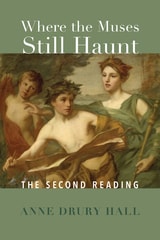
Where the Muses Still Haunt
The Second ReadingAnne Drury Hall
St. Augustine's Press, 2022
After leaving school and becoming lost in adulthood, can one return to these books and revive the quest to be great? For this is why we call such books "great". Yet as Hall says, "few people use the phrase 'great books' any more except ironically, because there is an odd view in the current intellectual fog that there is no such thing as 'greatness'". She is compelled, then, to reexamine the so-called great books and make the case for their eternal importance. It is a task that requires not only swimming against the disenchanted march of the post-modern reader into adulthood, but also asserting the unthinkable––namely, that great books were written by great men who achieved this status through their own labor and endurance.
Hall reintroduces the reader to Plato, Homer, Chaucer, Shakespeare, Milton and Melville and hopes this will expose the fraud of most of contemporary literature, and encourage taste and stamina for the works that promise to exhilarate. And Hall argues well that the thrill of these books draws from one shared feature: "The heart of these books is the drama of choice." If Roger Scruton is famous for showing us that ideas have consequences, Hall provides the reader the vision of himself as standing on the brink and the urgency of taking life seriously again. For many this means taking books seriously again.
This book is an important companion to the works treated therein, for teachers and students alike. Both need encouragement in the laboring of instruction or reading the impressive classics. Particularly apt is Hall's treatment of the difficulty of teaching Shakespeare. For the not-so-recent university graduate, perhaps this book will bring him once again to wander where the Muses still haunt. Indeed, even the well-read will enjoy Hall's keen interpretation of the glory of these stories. This is a book written by a true teacher.
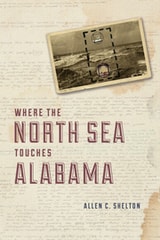
Where the North Sea Touches Alabama
Allen C. Shelton
University of Chicago Press, 2013
A few years later, 180 miles away from Keim’s grave, a bulldozer operator uncovered a pine coffin in an old beaver swamp down the road from Allen C. Shelton’s farm. He quickly reburied it, but Shelton, a friend of Keim’s who had a suitcase of his unfinished projects, became convinced that his friend wasn’t dead and fixed in the ground, but moving between this world and the next in a traveling coffin in search of his incomplete work.
In Where the North Sea Touches Alabama, Shelton ushers us into realms of fantasy, revelation, and reflection, paced with a slow unfurling of magical correspondences. Though he is trained as a sociologist, this is a genre-crossing work of literature, a two-sided ethnography: one from the world of the living and the other from the world of the dead.
What follows isn’t a ghost story but an exciting and extraordinary kind of narrative. The psycho-sociological landscape that Shelton constructs for his reader is as evocative of Kafka, Bataille, and Benjamin as it is of Weber, Foucault, and Marx. Where the North Sea Touches Alabama is a work of sociological fictocriticism that explores not only the author’s relationship to the artist but his physical, historical, and social relationship to northeastern Alabama, in rare style.
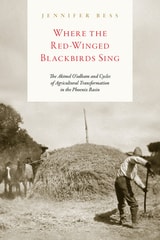
Where the Red-Winged Blackbirds Sing
The Akimel O'odham and Cycles of Agricultural Transformation in the Phoenix BasinJennifer Bess
University Press of Colorado, 2021
Author Jennifer Bess examines the Akimel O’odham’s worldview, which links their origins with a responsibility to farm the Gila River Valley and to honor their history of adaptation and obligations as “world-builders”—co-creators of an evermore life-sustaining environment and participants in flexible networks of economic exchange. Bess considers this worldview in context of the Huhugam–Akimel O’odham agricultural economy over more than a thousand years. Drawing directly on Akimel O’odham traditional ecological knowledge, innovations, and interpretive strategies in archives and interviews, Bess shows how the Akimel O’odham engaged in agricultural economy for the sake of their lifeways, collective identity, enduring future, and actualization of the values modeled in their sacred stories.
Where the Red-Winged Blackbirds Sing highlights the values of adaptation, innovation, and co-creation fundamental to Akimel O’odham lifeways and chronicles the contributions the Akimel O’odham have made to American history and to the history of agriculture. The book will be of interest to scholars of Indigenous, American Southwestern, and agricultural history.
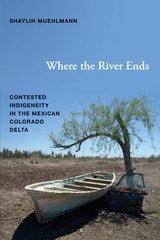
Where the River Ends
Contested Indigeneity in the Mexican Colorado DeltaShaylih Muehlmann
Duke University Press, 2013
Where the Rivers Flow North
Howard Frank Mosher
University Press of New England, 2004
Where the Rivers Flow North
Howard Frank Mosher
Brandeis University Press, 2022
The stories of Where the Rivers Flow North are “superior work, rich in texture and character,” says the Wall Street Journal, and “the novella is brilliantly done.” That novella, the title story of the collection, was also made into a feature film starring Rip Torn and Michael J. Fox. These six stories, available again in this new edition, continue Howard Frank Mosher’s career-long exploration of Kingdom County, Vermont. “Within the borders of his fictional kingdom,” the Providence Journal has noted, “Mosher has created mountains and rivers, timber forests and crossroads villages, history and language. And he has peopled the landscape with some of the truest, most memorable characters in contemporary literature.” This new edition features a new introduction by novelist Peter Orner.
Where the Sky Touched the Earth
The Cosmological Landscapes of the SouthwestDon Lago
University of Nevada Press, 2017
Nowhere else in the world is the link between earth and sky so powerful. Lago witnesses a solar eclipse over the Grand Canyon, climbs primeval volcanos, and sees the universe in tree rings. Through ageless Native American ceremonies, modern telescopes, and even dreams of flying saucers, Lago, who is not only a poet but a true philosopher of science, strives to find order and meaning in the world and brings out the Southwest’s beauty and mystery.
Where the Southern Cross the Yellow Dog
On Writers and WritingLouis D. Rubin, Jr.
University of Missouri Press, 2005
Where the Strange Roads Go Down
Mary del Villar and Fred del Villar; Foreword by Susan Hardy Aiken
University of Arizona Press, 1999
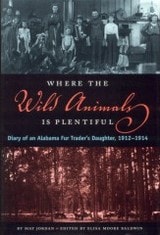
Where the Wild Animals Is Plentiful
Diary of an Alabama Fur Trader's Daughter, 1912-1914May Jordan
University of Alabama Press, 2006
This rare find--a journal of a young backwoods woman--provides a unique picture of rural life in southwestern Alabama early in the 20th century.
"I am a little Alabama girl living on the frontier where the wild animals is plentiful," wrote May Jordan in 1912. During the hunting season her father traveled Washington County buying furs, and May--already 23--accompanied him on two of these trips, cooking meals, helping out with the business, and recording their experiences.
May's diary of these trips from December 1912 to March 1914 describes the routine of the fur trade and provides a vivid portrait of wilderness travel and social customs. Through May's eyes, readers can experience the sights and sounds of pine forests and swamps, the difficulty of wading through waist-deep mud, and the neighborliness of the people living in this isolated area. May also shares both the solace of religious faith and her love of laughter as reflected in the jokes she records.
Elisa Moore Baldwin provides an introduction that traces Jordan family history and describes economic, social, and political conditions during the period. Baldwin also includes annotations based on court records, census rolls, and other primary sources and photographs of many of the characters in May's narrative to provide a vivid picture of the times. Because few first-person accounts exist of the life of poor whites, this diary will be invaluable to students of southern and women's history; no comparable work exists for this part of Alabama during this era. May's journal takes us to another world and teaches us about the lively human spirit in the face of hardship and loneliness.
Where the Wild Books Are
A Field Guide to EcofictionJim Dwyer
University of Nevada Press, 2010
As interest in environmental issues grows, many writers of fiction have embraced themes that explore the connections between humans and the natural world. Ecologically themed fiction ranges from profound philosophical meditations to action-packed entertainments. Where the Wild Books Are offers an overview of nearly 2,000 works of nature-oriented fiction. The author includes a discussion of the precursors and history of the genre, and of its expansion since the 1970s. He also considers its forms and themes, as well as the subgenres into which it has evolved, such as speculative fiction, ecodefense, animal stories, mysteries, ecofeminist novels, cautionary tales, and others. A brief summary and critical commentary of each title is included. Dwyer’s scope is broad and covers fiction by Native American writers as well as ecofiction from writers around the world. Far more than a mere listing of books, Where the Wild Books Are is a lively introduction to a vast universe of engaging, provocative writing. It can be used to develop book collections or curricula. It also serves as an introduction to one of the most fertile areas of contemporary fiction, presenting books that will offer enjoyable reading and new insights into the vexing environmental questions of our time.
Where the Wild Grape Grows
Selected Writings, 1930–1950Dorothy West. Edited by Cynthia Davis and Verner D. Mitchell
University of Massachusetts Press, 2026
When Where the Wild Grape Grows was published in 2005 by the University of Massachusetts Press, it was the first book-length critical study of Dorothy West. Since then, the publication of more volumes on West and her circle testify to popular and academic interest in under-represented artists of the Harlem Renaissance, many of whom appeared first in West’s literary magazine, Challenge (1934-1937). Challenge included poems by West’s cousin Helene Johnson as well as by her friends Lucia Mae Pitts, Waring Cuney, Pauli Murray, Grace Walker, Mae Cowdery, Marcia Prendergast, and Bessie Calhoun Bird. West also published work by her romantic partner Marian Minus and by Juanita DeShields (the first Black Canadian graduate of McGill University) and the Trinidadian author Alfred Mendes. She included artwork by Mildred Jones and journalism by Eslanda Robeson and Dorothy Peterson. In addition to her editorial activities, West corresponded with important African American musicians including Maud Cuney Hare, Alberta Hunter, and Henry T. Burleigh, and with sculptors Augusta Savage and Richmond Barthé. Just as West mentored others, she was encouraged by such academic luminaries as Columbia Professors Blanche Colton Williams and Dorothy Scarborough, and by the controversial novelist Erskine Caldwell.
The new Introduction to Wild Grape will include fresh research on these individuals, many of whom formed part of West’s social and artistic circle. Lucia Pitts, for example, was a poet who served in the famous WAC (Women’s Army Corps) 6888th Battalion. The work of Marian Minus and Mae Cowdery has received critical attention recently and they also merit closer investigation. The Boston writer and musicologist Maud Cuney Hare was an artistic mentor to West; her cousin Waring Cuney was a close friend: both will receive more attention in the paperback edition. The artist Mildred Jones accompanied West and twenty other young African Americans to Russia in 1932 as participants in an ultimately aborted propaganda film on race relations in America; Jones studied with the important Russian Modernist painter Aleksandr Deyneka.
The original edition of Wild Grape cites two stories about West’s Russian experiences (penned under the pseudonym Mary Christopher in 1934), “Room in Red Square” and “Russian Correspondence,” but the volume does not include the actual stories. The stories are interesting because they shed light on West’s unrequited romance with Langston Hughes and her relationships with other members of the group, and they offer a unique perspective on daily life in the U.S.S.R. Both stories will be published in the new edition, along with a detailed discussion of new research about West’s visit to Russia.
A third uncollected story, “Cook” (1934), written by West under the pseudonym Jane Isaac will also be included. This story is extremely important to West’s oeuvre and her artistic development; it includes characters, themes, tropes, and plot lines that she expanded and developed in her two novels, The Living Is Easy (1948) and The Wedding (1995).
Since 2005, new material has been added to the West archive in Harvard’s Schlesinger Library. The section of Wild Grape devoted to West’s correspondence will include additional unpublished letters which underscore West’s dedication to African American art and culture.
The book includes the Benson-West family tree in Appendix II. Several scholars have expressed appreciation for this information which has not been published elsewhere; the chart will be updated to include the birth of several of West’s descendants.

Where the Wild Grape Grows
Selected Writings, 1930–1950Dorothy West
University of Massachusetts Press, 0
When Where the Wild Grape Grows was published in 2005 by the University of Massachusetts Press, it was the first book-length critical study of Dorothy West. Since then, the publication of more volumes on West and her circle testify to popular and academic interest in under-represented artists of the Harlem Renaissance, many of whom appeared first in West’s literary magazine, Challenge (1934-1937). Challenge included poems by West’s cousin Helene Johnson as well as by her friends Lucia Mae Pitts, Waring Cuney, Pauli Murray, Grace Walker, Mae Cowdery, Marcia Prendergast, and Bessie Calhoun Bird. West also published work by her romantic partner Marian Minus and by Juanita DeShields (the first Black Canadian graduate of McGill University) and the Trinidadian author Alfred Mendes. She included artwork by Mildred Jones and journalism by Eslanda Robeson and Dorothy Peterson. In addition to her editorial activities, West corresponded with important African American musicians including Maud Cuney Hare, Alberta Hunter, and Henry T. Burleigh, and with sculptors Augusta Savage and Richmond Barthé. Just as West mentored others, she was encouraged by such academic luminaries as Columbia Professors Blanche Colton Williams and Dorothy Scarborough, and by the controversial novelist Erskine Caldwell.
The new Introduction to Wild Grape will include fresh research on these individuals, many of whom formed part of West’s social and artistic circle. Lucia Pitts, for example, was a poet who served in the famous WAC (Women’s Army Corps) 6888th Battalion. The work of Marian Minus and Mae Cowdery has received critical attention recently and they also merit closer investigation. The Boston writer and musicologist Maud Cuney Hare was an artistic mentor to West; her cousin Waring Cuney was a close friend: both will receive more attention in the paperback edition. The artist Mildred Jones accompanied West and twenty other young African Americans to Russia in 1932 as participants in an ultimately aborted propaganda film on race relations in America; Jones studied with the important Russian Modernist painter Aleksandr Deyneka.
The original edition of Wild Grape cites two stories about West’s Russian experiences (penned under the pseudonym Mary Christopher in 1934), “Room in Red Square” and “Russian Correspondence,” but the volume does not include the actual stories. The stories are interesting because they shed light on West’s unrequited romance with Langston Hughes and her relationships with other members of the group, and they offer a unique perspective on daily life in the U.S.S.R. Both stories will be published in the new edition, along with a detailed discussion of new research about West’s visit to Russia.
A third uncollected story, “Cook” (1934), written by West under the pseudonym Jane Isaac will also be included. This story is extremely important to West’s oeuvre and her artistic development; it includes characters, themes, tropes, and plot lines that she expanded and developed in her two novels, The Living Is Easy (1948) and The Wedding (1995).
Since 2005, new material has been added to the West archive in Harvard’s Schlesinger Library. The section of Wild Grape devoted to West’s correspondence will include additional unpublished letters which underscore West’s dedication to African American art and culture.
The book includes the Benson-West family tree in Appendix II. Several scholars have expressed appreciation for this information which has not been published elsewhere; the chart will be updated to include the birth of several of West’s descendants.
Where the Wind Blows Us
Practicing Critical Community Archaeology in the Canadian NorthNatasha Lyons
University of Arizona Press, 2013
Lyons offers an extended case study of her work with the Inuvialuit community of the Canadian Western Arctic. She documents the development of this longstanding research relationship and presents both the theoretical and practical products of the work to date. Integrating knowledge drawn from archaeology, ethnography, oral history, and community interviews, Lyons utilizes a multivocal approach that actively listens to Inuvialuit speak about their rich and textured history.
The overall significance of this volume lies in outlining a method of practicing archaeology that embraces local ways of knowing with a critically constructed and evolving methodology that is responsive to community needs. It will serve as a handbook to mine for elements of critical practice, a model of community-based archaeology, and a useful set of concepts and examples for classroom study.
Where the Wind Dreams of Staying
Searching for Purpose and Place in the WestEric Dieterle
Oregon State University Press, 2016
Dieterle’s journey leads from the plateau of eastern Washington through the landscapes of seven states, ending in the shadow of the San Francisco peaks in northern Arizona. Readers will find rich, detailed explorations of western landscapes balanced with stories of personal reflection, determination, doubt, and fulfillment.
Where the Wires End
Stories from the Digital DivideChristopher Ali
University of Chicago Press, 0
The stories of those without access to broadband services—and an urgent call for their connection.
The average American will spend years of their lives online. For many, the Internet is life, facilitating employment, education, commerce, and connection. But imagine students who only have online access in the early hours of the morning, when the sun is down, and the Internet traffic is low. Imagine living through a pandemic without Internet access because you can’t afford the monthly subscription. Imagine a first responder unable to find a strong enough signal to seek life-saving services. In this eye-opening book, communications scholar Christopher Ali shares such stories—and calls for policymakers, broadband companies, and governments to connect these communities with meaningful, affordable broadband.
It may seem unthinkable that tens of millions of people across the country are unable to access the Internet because of a lack of infrastructure; a computer; affordable broadband subscription options; or training, support, and skills. These people, some who are still using dial-up connections, are part of what is often called “the digital divide.” Where the Wires End brings them into the broadband policy conversation, incorporating interviews, surveys, focus groups, and field visits with individuals, communities, and organizations across the country, from inner-city Pittsburgh to the Hoopa Valley Indian Reservation in California. Ali focuses on the stories of those without access to broadband and those who work to get them attention and connection. He then links these stories to ongoing policy issues, demonstrating how we all benefit from a more empathetic approach to broadband policy that is digitally equitable, inclusive, and ultimately, more successful.
Where the World Is Not
Cultural Authority and Democratic Desire in Modern American LiteratureKim Savelson
The Ohio State University Press, 2009

Where to Carry the Sound
Nina Sudhakar
University of North Texas Press, 2024