84 books match the query 'In motion pictures' and 4 start with r

cover of Recording Memories from Political Violence: A Film-maker's Journey

Recording Memories from Political Violence

A Film-maker's Journey

Cahal McLaughlin

Intellect Books, 2010

Based on work the author has carried out with survivor groups in Northern Ireland and South Africa, Recording Memories from Political Violence draws on written and audiovisual texts to describe and analyze the use of documentary filmmaking in recording experiences of political conflict. A variety of issues relevant to the genre are addressed at length, including the importance of ethics in the collaboration between the filmmaker and the participant and the effect of location on the accounts of participants. Cahal McLaughlin draws on the diverse fields of film and cultural studies, as well as nearly twenty years of production experience, in this informed and instructive contribution to documentary filmmaking and post-conflict studies.
[more]
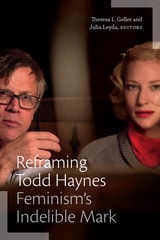
cover of Reframing Todd Haynes: Feminism’s Indelible Mark

Reframing Todd Haynes

Feminism’s Indelible Mark

Theresa L. Geller and Julia Leyda, editors

Duke University Press, 2022

For three decades, award-winning independent filmmaker Todd Haynes, who emerged in the early 1990s as a foundational figure in New Queer Cinema, has gained critical recognition for his outsider perspective. Today, Haynes is widely known for bringing women’s stories to the screen. Analyzing Haynes’s films including Safe (1995), Velvet Goldmine (1998), Far from Heaven (2002), and Carol (2015), as well as his unauthorized Karen Carpenter biopic, Superstar (1987), and the television miniseries Mildred Pierce (2011), the contributors to Reframing Todd Haynes reassess his work in light of his long-standing feminist commitments and his exceptional career as a director of women’s films. They present multiple perspectives on Haynes’s film and television work and on his role as an artist-activist who draws on academic theorizations of gender and cinema. The volume illustrates the influence of feminist theory on Haynes’s aesthetic vision, most evident in his persistent interest in the political and formal possibilities afforded by the genre of the woman’s film. The contributors contend that no consideration of Haynes’s work can afford to ignore the crucial place of feminism within it.

Contributors. Danielle Bouchard, Nick Davis, Jigna Desai, Mary R. Desjardins, Patrick Flanery, Theresa L. Geller, Rebecca M. Gordon, Jess Issacharoff, Lynne Joyrich, Bridget Kies, Julia Leyda, David E. Maynard, Noah A. Tsika, Patricia White, Sharon Willis
[more]
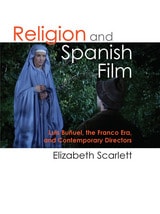
cover of Religion and Spanish Film: Luis Buñuel, the Franco Era, and Contemporary Directors

Religion and Spanish Film

Luis Buñuel, the Franco Era, and Contemporary Directors

Elizabeth Scarlett

University of Michigan Press, 2014
Treatments of religion found in Spanish cinema range from the pious to the anticlerical and atheistic, and every position in between. In a nation with a strong Catholic tradition, resistance to and rebellion against religious norms go back almost as far as the notion of “Sacred Spain.” Religion and Spanish Film provides a sustained study of the religious film genre in Spain practiced by mainstream Francoist film makers, the evolving iconoclasm, parody, and reinvention of the Catholic by internationally renowned Surrealist Luis Buñuel, and the ongoing battle of the secular versus the religious manifested in critically and popularly acclaimed directors Pedro Almodóvar, Julio Medem, Alejandro Amenábar, and many others. The conflicted Catholicism that emerges from examining religious themes in Spanish film history shows no sign of ending, as unresolved issues from the Civil War and Franco dictatorship, as well as the unsettled relationship between Church and State, continue into the present.
  
[more]
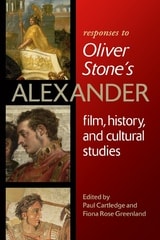
cover of Responses to Oliver Stone’s Alexander: Film, History, and Cultural Studies

Responses to Oliver Stone’s Alexander

Film, History, and Cultural Studies

Edited by Paul Cartledge and Fiona Rose Greenland; Afterword by Oliver Stone

University of Wisconsin Press, 2009

The charismatic Alexander the Great of Macedon (356–323 B.C.E.) was one of the most successful military commanders in history, conquering Asia Minor, Egypt, Persia, central Asia, and the lands beyond as far as Pakistan and India. Alexander has been, over the course of two millennia since his death at the age of thirty-two, the central figure in histories, legends, songs, novels, biographies, and, most recently, films. In 2004 director Oliver Stone’s epic film Alexander generated a renewed interest in Alexander the Great and his companions, surroundings, and accomplishments, but the critical response to the film offers a fascinating lesson in the contentious dialogue between historiography and modern entertainment.
    This volume brings together an intriguing mix of leading scholars in Macedonian and Greek history, Persian culture, film studies, classical literature, and archaeology—including some who were advisors for the film—and includes an afterword by Oliver Stone discussing the challenges he faced in putting Alexander’s life on the big screen. The contributors scrutinize Stone’s project from its inception and design to its production and reception, considering such questions as: Can a film about Alexander (and similar figures from history) be both entertaining and historically sound? How do the goals of screenwriters and directors differ from those of historians? How do Alexander’s personal relationships—with his mother Olympias, his wife Roxane, his lover Hephaistion, and others—affect modern perceptions of Alexander? Several of the contributors also explore reasons behind the film’s tepid response at the box office and subsequent controversies. 
[more]