Results by title
89 books match the query 'Invention' and 2 start with r
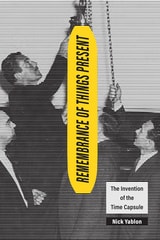
Remembrance of Things Present
The Invention of the Time CapsuleNick Yablon
University of Chicago Press, 2019
Time capsules offer unexpected insights into how people view their own time, place, and culture, as well as their duties to future generations. Remembrance of Things Present traces the birth of this device to the Gilded Age, when growing urban volatility prompted doubts about how the period would be remembered—or if it would be remembered at all. Yablon details how diverse Americans – from presidents and mayors to advocates for the rights of women, blacks, and workers – constructed prospective memories of their present. They did so by contributing not just written testimony to time capsules but also sources that historians and archivists considered illegitimate, such as photographs, phonograph records, films, and everyday artifacts.
By offering a direct line to posterity, time capsules stimulated various hopes for the future. Remembrance of Things Present delves into these treasure chests to unearth those forgotten futures.
By offering a direct line to posterity, time capsules stimulated various hopes for the future. Remembrance of Things Present delves into these treasure chests to unearth those forgotten futures.
[more]
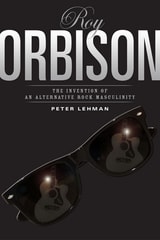
Roy Orbison
Invention Of An Alternative Rock MasculinityPeter Lehman
Temple University Press, 2003
Roy Orbison's music—whether heard in his own recordings or in cover versions of his songs—is a significant part of contemporary American culture despite the fact that he died almost a generation ago. Few of today's listeners know or remember how startlingly unique he seemed at the height of his career in the early 1960s. In this book, Peter Lehman looks at the long span of Orbison's career and probes into the uniqueness of his songs, singing, and performance style, arguing that singer/songwriters no less than filmmakers can be considered as auteurs.Unlike other pop stars, Orbison was a constant presence on the Top 40, but virtually invisible in the media during his heyday. Ignoring the conventions of pop music, he wrote complex songs and sang them with a startling vocal range and power. Wearing black clothes and glasses and standing motionless on stage, he rejected the macho self confidence and strutting that characterized the male rockers of his time. He sang about a man lost in a world of loneliness and fear, one who cried in the dark or escaped into a dream world, the only place his desires could be fulfilled. This was a man who reveled in passivity, pain, and loss.Lehman traces Orbison's development of this alternative masculinity and the use of his music in films by Wim Wenders and David Lynch. Widely admired by fellow musicians from Elvis to Jagger, Springsteen and Bono, Orbison still attracts new listeners. As a devoted fan and insightful scholar, Lehman gives us a fascinating account of "the greatest white singer on the planet," and a new approach to understanding individual singer/songwriters.
[more]