Results by title
105 books match the query 'Iran' and 10 start with r

Racial Blackness and Indian Ocean Slavery
Iran's Cinematic ArchiveParisa Vaziri
University of Minnesota Press, 2023
Rethinking the history of African enslavement in the western Indian Ocean through the lens of Iranian cinema
From the East African and Red Sea coasts to the Persian Gulf ports of Bushihr, Kish, and Hurmuz, sailing and caravan networks supplied Iran and the surrounding regions with African slave labor from antiquity to the nineteenth century. This book reveals how Iranian cinema preserves the legacy of this vast and yet long-overlooked history that has come to be known as Indian Ocean slavery.
How does a focus on blackness complicate traditional understandings of history and culture? Parisa Vaziri addresses this question by looking at residues of the Indian Ocean slave trade in Iranian films from the second half of the twentieth century. Revealing the politicized clash between commercial cinema (fīlmfārsī) and alternative filmmaking (the Iranian New Wave), she pays particular attention to the healing ritual zār, which is both an African slave descendent practice and a constitutive element of Iranian culture, as well as to cinematic sīyāh bāzī (Persian black play). Moving beyond other studies on Indian Ocean and trans-Saharan slavery, Vaziri highlights the crystallization of a singular mode of historicity within these cinematic examples—one of “absence” that reflects the relative dearth of archival information on the facts surrounding Indian Ocean slavery.
Bringing together cinema studies, Middle East studies, Black studies, and postcolonial theory, Racial Blackness and Indian Ocean Slavery explores African enslavement in the Indian Ocean through the revelatory and little-known history of Iranian cinema. It shows that Iranian film reveals a resistance to facticity representative of the history of African enslavement in the Indian Ocean and preserves the legacy of African slavery’s longue durée in ways that resist its overpowering erasure in the popular and historical imagination.
Retail e-book files for this title are screen-reader friendly with images accompanied by short alt text and/or extended descriptions.
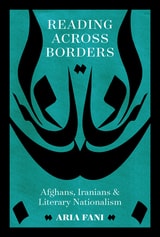
Reading across Borders
Afghans, Iranians, and Literary NationalismAria Fani
University of Texas Press, 2024
2025 René Wellek Prize, Monograph, American Comparative Literature Association
The dynamic and interconnected ways Afghans and Iranians invented their modern selves through literature.
Contrary to the presumption that literary nationalism in the Global South emerged through contact with Europe alone, Reading across Borders demonstrates how the cultural forms of Iran and Afghanistan as nation-states arose from their shared Persian heritage and cross-cultural exchange in the twentieth century. In this book, Aria Fani charts the individuals, institutions, and conversations that made this exchange possible, detailing the dynamic and interconnected ways Afghans and Iranians invented their modern selves through new ideas about literature.
Fani illustrates how voluntary and state-funded associations of readers helped formulate and propagate "literature" as a recognizable notion, adapting and changing Persian concepts to fit this modern idea. Focusing on early twentieth-century periodicals with readers in Afghan and Iranian cities and their diaspora, Fani exposes how nationalism intensified—rather than severed—cultural contact among two Persian-speaking societies amidst the diverging and competing demands of their respective nation-states. This interconnected history was ultimately forgotten, shaping many of the cultural disputes between Iran and Afghanistan today.
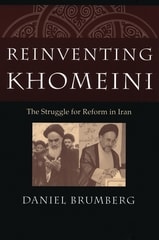
Reinventing Khomeini
The Struggle for Reform in IranDaniel Brumberg
University of Chicago Press, 2001
A complex figure, Khomeini was a fervent champion of Islam, but while he sought a Shi'ite vision of clerical rule under one Supreme Leader, he also strove to mesh that vision with an implicitly Western view of mass participatory politics. The intense magnetism and charisma of the ayatollah obscured this paradox. But reformers in Iran today, while rejecting his autocratic vision, are reviving the constitutional notions of government that he considered, and even casting themselves as the bearers of his legacy. In Reinventing Khomeini, Brumberg proves that the ayatollah is as much the author of modern Iran as he is the symbol of its fundamentalist past.
Religion, Empire, and Torture
The Case of Achaemenian Persia, with a Postscript on Abu GhraibBruce Lincoln
University of Chicago Press, 2007
Lincoln identifies three core components of an imperial theology that have transhistorical and contemporary relevance: dualistic ethics, a theory of divine election, and a sense of salvific mission. Beyond this, he asks, how did the Achaemenians understand their place in the cosmos and their moral status in relation to others? Why did they feel called to intervene in the struggle between good and evil? What was their sense of historic purpose, especially their desire to restore paradise lost? And how did this lead them to deal with enemies and critics as imperial power ran its course? Lincoln shows how these religious ideas shaped Achaemenian practice and brought the Persians unprecedented wealth, power, and territory, but also produced unmanageable contradictions, as in a gruesome case of torture discussed in the book’s final chapter. Close study of that episode leads Lincoln back to the present with a postscript that provides a searing and utterly novel perspective on the photographs from Abu Ghraib.
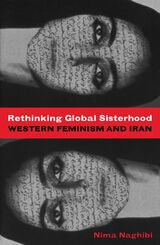
Rethinking Global Sisterhood
Western Feminism and IranNima Naghibi
University of Minnesota Press, 2007
Western women’s involvement in Persia dates from the mid-nineteenth century, when female adventurers and missionaries first encountered their veiled Muslim “sisters.” Twentieth-century Western and state-sponsored Iranian feminists continued to use the image of the veiled woman as the embodiment of backwardness. Yet, following the 1979 revolution, indigenous Iranian feminists became more vocal in their resistance to this characterization.
In Rethinking Global Sisterhood, Nima Naghibi makes powerful connections among feminism, imperialism, and the discourses of global sisterhood. Naghibi investigates topics including the state-sponsored Women’s Organization of Iran and the involvement of feminists such as Betty Friedan and Gloria Steinem in the Iranian feminism movement before and during the 1979 revolution. With a potent analysis of cinema, she examines the veiled woman in the films of Tahmineh Milani, Ziba Mir-Hosseini and Kim Longinotto, and Mahnaz Afzali.
At a time when Western relations with the Muslim world are in crisis, Rethinking Global Sisterhood provides much-needed insights and explores the limitations and possibilities of cross-cultural feminist social and political interventions.
Nima Naghibi is assistant professor of English at Ryerson University in Toronto.
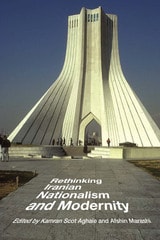
Rethinking Iranian Nationalism and Modernity
Edited by Kamran Scot Aghaie and Afshin Marashi
University of Texas Press, 2014
While recent books have explored Arab and Turkish nationalism, the nuances of Iran have received scant book-length study—until now. Capturing the significant changes in approach that have shaped this specialization, Rethinking Iranian Nationalism and Modernity shares innovative research and charts new areas of analysis from an array of scholars in the field.
Delving into a wide range of theoretical and conceptual perspectives, the essays—all previously unpublished—encompass social history, literary theory, postcolonial studies, and comparative analysis to address such topics as:
- Ethnicity in the Islamic Republic of Iran
- Political Islam and religious nationalism
- The evolution of U.S.-Iranian relations before and after the Cold War
- Comparing Islamic and secular nationalism(s) in Egypt and Iran
- The German counterrevolution and its influence on Iranian political alliances
- The effects of Israel’s image as a Euro-American space
- Sufism
- Geocultural concepts in Azar’s Atashkadeh
Interdisciplinary in essence, the essays also draw from sociology, gender studies, and art and architecture. Posing compelling questions while challenging the conventional historiographical traditions, the authors (many of whom represent a new generation of Iranian studies scholars) give voice to a research approach that embraces the modern era’s complexity while emphasizing Iranian nationalism’s contested, multifaceted, and continuously transformative possibilities.
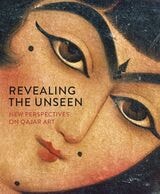
Revealing the Unseen
New Perspectives on Qajar ArtEdited by Melanie Gibson and Gwenaëlle Fellinger
Gingko, 2022
The thirteen articles in this volume were originally given as presentations at the symposium of the same name organized in June 2018 by the Musée du Louvre and the Musée du Louvre-Lens in conjunction with the exhibition The Empire of Roses: Masterpieces of 19th Century Persian Art. The exhibition explored the art of Iran in the nineteenth and early twentieth centuries, while the nation was under the rule of the Qajar dynasty. The symposium set out to present research on previously unknown and unpublished objects from this rich period of art history.
This volume, published with the Louvre Museum in France, is divided into four sections. The first, “Transitions and Transmissions,” is dedicated to the arts of painting, illumination, and lithography. The focus of the second section, entitled “The Image Revealed,” also considers works on paper, looking at new themes and techniques. “The Material World” examines the use of materials such as textiles, carpets, and armor. The articles in the final section discuss the history of two groups of artifacts acquired by their respective museums.

Revival and Awakening
American Evangelical Missionaries in Iran and the Origins of Assyrian NationalismAdam H. Becker
University of Chicago Press, 2015
American evangelicals arrived in Iran in the 1830s. Becker examines how these missionaries, working with the “Nestorian” Church of the East—an Aramaic-speaking Christian community in the borderlands between Qajar Iran and the Ottoman Empire—catalyzed, over the span of sixty years, a new national identity. Instructed at missionary schools in both Protestant piety and Western science, this indigenous group eventually used its newfound scriptural and archaeological knowledge to link itself to the history of the ancient Assyrians, which in time led to demands for national autonomy. Exploring the unintended results of this American attempt to reform the Orient, Becker paints a larger picture of religion, nationalism, and ethnic identity in the modern era.

Riding
Pardis Mahdavi
Duke University Press, 2025

Russia and Iran, 1780-1828
Muriel Atkin
University of Minnesota Press, 1980
Russia and Iran, 1780–1828 was first published in 1980. Minnesota Archive Editions uses digital technology to make long-unavailable books once again accessible, and are published unaltered from the original University of Minnesota Press editions.
Modern Russo-Iranian relations date from the late eighteenth century, when after several centuries of commercial and diplomatic contact, the two nations entered a period of extended warfare for possession of the Caucasian borderlands, disputed territory that eventually fell to Russia. In her history of that struggle, Muriel Atkin reasseses the motives of major figures on both sides and views the Iranians with more sympathy than Western and Russian historians have usually accorded them. Russia embarked on her course in the Caucasus for reasons connected with defense or trade, and with a longterm imperial goal based on uncritical acceptance of prevailing European doctrines of empire. The new dynasty in Iran, on the other hand, had to fend off Russian attack and secure the borderlands in order to justify its basic claim to power. In the end, the wars brought major disruption to the already unstable borderlands, and left Iran with a discredited government and a controversy over reforms and relations with the West that would continue to cause turmoil in subsequent generations.