Results by title
220 books match the query 'Israel' and 6 start with r
REFORMING PARLIAMENTARY COMMITTEES
ISRAEL IN COMPARATIVE PERSPECTIVEREUVEN Y. HAZAN
The Ohio State University Press, 2001

Race, Class, and Affirmative Action
Sigal Alon is an associate professor in the Department of Sociology and Anthropology at Tel-Aviv University.
Russell Sage Foundation, 2015
Alon finds that affirmative action at elite institutions in both countries is a key vehicle of mobility for disenfranchised students, whether they are racial and ethnic minorities or socioeconomically disadvantaged. Affirmative action improves their academic success and graduation rates and leads to better labor market outcomes. The beneficiaries of affirmative action in both countries thrive at elite colleges and in selective fields of study. As Alon demonstrates, they would not be better off attending less selective colleges instead.
Alon finds that Israel’s class-based affirmative action programs have provided much-needed entry slots at the elite universities to students from the geographic periphery, from high-poverty high schools, and from poor families. However, this approach has not generated as much ethnic diversity as a race-based policy would. By contrast, affirmative action policies in the United States have fostered racial and ethnic diversity at a level that cannot be matched with class-based policies. Yet, class-based policies would do a better job at boosting the socioeconomic diversity at these bastions of privilege. The findings from both countries suggest that neither race-based nor class-based models by themselves can generate broad diversity. According to Alon, the best route for promoting both racial and socioeconomic diversity is to embed the consideration of race within class-based affirmative action. Such a hybrid model would maximize the mobility benefits for both socioeconomically disadvantaged and minority students.
Race, Class, and Affirmative Action moves past political talking points to offer an innovative, evidence-based perspective on the merits and feasibility of different designs of affirmative action.
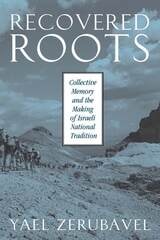
Recovered Roots
Collective Memory and the Making of Israeli National TraditionYael Zerubavel
University of Chicago Press, 1995
In the years leading to the birth of Israel, Zerubavel shows, Zionist settlers in Palestine consciously sought to rewrite Jewish history by reshaping Jewish memory. Zerubavel focuses on the nationalist reinterpretation of the defense of Masada against the Romans in 73 C.E. and the Bar Kokhba revolt of 133-135; and on the transformation of the 1920 defense of a new Jewish settlement in Tel Hai into a national myth. Zerubavel demonstrates how, in each case, Israeli memory transforms events that ended in death and defeat into heroic myths and symbols of national revival.
Drawing on a broad range of official and popular sources and original interviews, Zerubavel shows that the construction of a new national tradition is not necessarily the product of government policy but a creative collaboration between politicans, writers, and educators. Her discussion of the politics of commemoration demonstrates how rival groups can turn the past into an arena of conflict as they posit competing interpretations of history and opposing moral claims on the use of the past. Zerubavel analyzes the emergence of counter-memories within the reality of Israel's frequent wars, the ensuing debates about the future of the occupied territories, and the embattled relations with Palestinians.
A fascinating examination of the interplay between history and memory, this book will appeal to historians, sociologists, anthropologists, political scientists, and folklorists, as well as to scholars of cultural studies, literature, and communication.
Reform, Recovery, and Growth
Latin America and the Middle EastEdited by Rudiger Dornbusch and Sebastian Edwards
University of Chicago Press, 1994
Among the questions addressed are: What are the requirements for a stabilization policy that reduces inflation in a reasonable amount of time at an acceptable cost? What are the effects of structural reforms, especially trade liberalization, deregulation, and privatization, on growth in the short and long runs? How do macroeconomic instability and adjustment policies affect income distribution and poverty? How does the specific design of structural adjustment efforts affect results?
In this companion to Macroeconomics of Populism in Latin America, the authors confirm that macroeconomic stability has a positive effect on income distribution. The volume presents case studies that describe in detail the stabilization experiences in Brazil, Israel, Argentina, and Bolivia, and also includes discussion of Chile, Mexico, Peru, and Turkey.
Religion or Ethnicity?
Jewish Identities in EvolutionGitelman, Zvi
Rutgers University Press, 2009
In Religion or Ethnicity? fifteen leading scholars trace the evolution of Jewish identity. The book examines Judaism from the Greco-Roman age, through medieval times, modern western and eastern Europe, to today. Jewish identity has been defined as an ethnicity, a nation, a culture, and even a race. Religion or Ethnicity? questions what it means to be Jewish. The contributors show how the Jewish people have evolved over time in different ethnic, religious, and political movements. In his closing essay, Gitelman questions the viability of secular Jewishness outside Israel but suggests that the continued interest in exploring the relationship between Judaism's secular and religious forms will keep the heritage alive for generations to come.
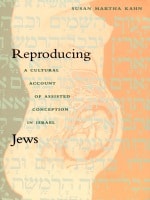
Reproducing Jews
A Cultural Account of Assisted Conception in IsraelSusan Martha Kahn
Duke University Press, 2000
In this ethnographic study of the new reproductive technologies in Israel, Susan Martha Kahn explores the cultural meanings and contemporary rabbinic responses to artificial insemination, in-vitro fertilization, egg donation, and surrogacy. Kahn draws on fieldwork with unmarried Israeli women who are using state-subsidized artificial insemination to get pregnant and on participant-observation in Israeli fertility clinics. Through close readings of traditional Jewish texts and careful analysis of Israeli public discourse, she explains how the Israeli embrace of new reproductive technologies has made Jewish beliefs about kinship startlingly literal. Kahn also reveals how a wide range of contemporary Israelis are using new reproductive technologies to realize their reproductive futures, from ultraorthodox infertile married couples to secular unmarried women.
As the first scholarly account of assisted conception in Israel, this multisited ethnography will contribute to current anthropological debates on kinship studies. It will also interest those involved with Jewish studies.