Results by title
527 books match the query 'Labor' and 27 start with r
RSF
The Russell Sage Foundation Journal of the Social Sciences: Changing Job Quality: Causes, Consequences, and ChallengesDavid R. Howell
Russell Sage Foundation, 2019
As a result of technological changes and outsourcing, unpredictable and uncertain work schedules are now widespread. Contributors Cathy Yang Liu and Luísa Nazareno demonstrate that workers in nonstandard employment arrangements earn less and work fewer hours than full-time workers. Susan Lambert, Julia Henly, and Jaesung Kim demonstrate that in addition to the financial insecurity caused by precarious work schedules, those who experience shortfalls in hours are increasingly distrustful of societal institutions. Other contributors examine job quality for women and people of color. David S. Pedulla and Katariina Mueller-Gastell study the rates at which various groups of workers apply for nonstandard jobs, and find that black and Hispanic workers are overrepresented in such positions. Michael Schultz examines mobility out of low-wage work and finds that women and nonwhites are the most entrenched in such jobs. He shows that there is greater mobility out of low-wage work where unions foster the use of job ladders and pay scales.
The issue recommends a slate of policies for creating better jobs, including increasing the federal minimum wage; strengthening collective and individual bargaining, especially through unions; and widening access to health insurance, paid sick and family leave, and childcare. In the absence of family-friendly policies at the federal level, sociologists Rachel Dwyer and Erik Olin Wright propose investments in the “social and solidarity” economy, including NGOs, nonprofit organizations, social enterprises, and worker cooperatives.
Given the centrality of work to human welfare, enhancing the quality of jobs is of urgent concern to workers, employers, and society at large. This issue of RSF helps us better understand the reasons for and consequences of declining job quality and suggests policies that would protect the most vulnerable workers.
RSF
The Russell Sage Foundation Journal of the Social Sciences: Improving Employment and Earnings in Twenty-First Century Labor MarketsErica L. Groshen
Russell Sage Foundation, 2019
Contributors George Borjas and Richard Freeman analyze how the introduction of industrial robots and the influx of immigrants have affected jobs and earnings in the manufacturing industry. They find that the effects of robots are greater than those of immigrants in terms of depressing earnings and reducing employment, suggesting the need for policies that can help workers adjust to automation. Thomas Kochan and William Kimball note the lower density of unions and their declining impact on wages, even as surveys show strong worker preference for union representation and other forms of “voice” regarding wages, compensation, training, and other working conditions.
Informal work, which includes traditional activities like babysitting as well as newer ones like driving for an online platform, is an important means of helping families make ends meet. Katharine Abraham and Susan Houseman show that over a quarter of the workforce hold jobs aside from their main employment, and a higher share of less-educated, minority, low-income, and unemployed workers rely on informal work. Lawrence Katz and Alan Krueger show a modest upward trend in the share of the U.S. workforce in alternative work arrangements over the last twenty years; they also demonstrate that current survey tools miss many instances of multiple job holding.
David Weil demonstrates how the rise of “the fissured workplace”--where businesses outsource key facets of their operations to staffing agencies and other third-party entities--contributes to wage inequality. Contracted workers have lower earnings and fewer opportunities for upward mobility. The U.S. is the only industrialized country that does not provide paid leave for new parents, and low-income families with children spend 30 percent or more of their incomes on childcare expenses. Elizabeth Doran, Ann Bartel, and Jane Waldfogel propose a payroll tax to support family-friendly policies, such as paid leave and child care, as well as modest employer mandates for scheduling control and flexibility.
Editors Groshen and Holzer provide evidence-based policy recommendations that include greater support for public higher education; adjusting federal wage and hour laws as well as those governing labor relations; limiting the effects of past incarceration on workers; and stronger youth employment programs and policies. American workers face many challenges, but there are many policies analyzed in this issue of RSF that hold promise for improving employment and earnings for American workers.
RSF
The Russell Sage Foundation Journal of the Social Sciences: New Immigrant Labor Market NichesSusan Eckstein
Russell Sage Foundation, 2018
Several articles survey the history of immigrant labor market niches and how they have affected local economies. Siobhan O’Keefe and Sarah Quincy investigate a labor niche—farming—created by Russian Jews in rural New Jersey in the nineteenth century that revitalized local markets and reduced the outmigration of natives from the area. Zai Liang and Bo Zhou study the occupational niches held by Chinese immigrants from the turn of the century to present day. They show that restaurants have historically provided, and continue to provide, a major source of employment for low-skilled Chinese immigrants and that these immigrants tend to use new job-finding services such as employment agencies and internet advertising. These services have also allowed Chinese-owned restaurants to expand into new geographical locations.
Other contributors analyze the divisions between high and low-skill labor market niches. In his ethnographic study of restaurants in Los Angeles, Eli Wilson finds that Mexican immigrants primarily work “back of the house” jobs performing low-wage manual labor with few opportunities for advancement, while English-speaking whites hold higher-paid “front of the house” jobs interacting with customers. However, bilingual second-generation Latinos are often able to bridge these two roles, increasing their chances for promotions and greater job responsibilities. Yasmin Ortiga explores the effects of programs designed to recruit middle-skill nurses from the Philippines. She finds that because the United States only accepts a certain number of nurses, these programs have contributed to an oversupply of trained nurses in the Philippines and increased joblessness and underemployment there.
Together, the studies in this issue contribute to a deeper understanding of how and why new immigrants gravitate to specific lines of work. They also reveal how these labor niches influence markets both within the United States and abroad.
RSF
The Russell Sage Foundation Journal of the Social Sciences: The U.S. Labor Market During and After the Great RecessionArne L. Kalleberg
Russell Sage Foundation, 2017
Contributors explore a number of changes to the labor market and union density during and after the Great Recession. Jesse Rothstein investigates the factors contributing to persistently high unemployment and finds that reduced employer demand for workers was more important than labor mismatch—or unemployed workers lacking the appropriate skills for available jobs. Ruth Milkman and Stephanie Luce find increased hostility to unions among employers and steep job losses in traditionally unionized industries, both of which constricted organized labor during and after the Great Recession.
Other articles examine the effects of job loss on unemployed individuals’ mental health and family lives. Kelsey J. O’Connor finds that declining income and rising unemployment contributed to the lowest level of reported happiness in 2010, particularly for men, older people, and Hispanics. William Dickens and coauthors evaluate families’ ability to weather job losses during the Great Recession by relying on savings and find that most had insufficient wealth to buffer large earnings losses for more than a short period of time. Gokce Basbug and Ofer Sharone explore the extent to which the negative emotional toll of long-term unemployment is shaped by gender and marital status. They find that marriage tends to boost the well-being of both men and women during times of unemployment. Among married men, however, this benefit disappeared when controlling for household income, suggesting that the benefits of marriage are related more to additional income than to other forms of intangible or emotional support.
The duration and severity of the Great Recession sets it apart from earlier economic downturns and, as this issue shows, it has had long-term consequences for workers and their families.
Race and Labor in Western Copper
The Fight for Equality, 1896-1918Philip J. Mellinger
University of Arizona Press, 1995
Mellinger's book is the first regional history of these ordinary working people—miners, muckers, millhands, and smelter workers—who labored in the thousands of mountain and desert mining camps across the western heartland early in this century. These men, largely uneducated, frequently moving from camp to camp, subjected to harsh and dangerous conditions, often poorly paid, nevertheless came together for a common purpose.
They came from Mexico, from the U.S. Hispanic Southwest, and from several European countries, especially from Greece, Italy, the former Yugoslavia, and Spain. They were far from a homogeneous group. Yet, in part because they set aside ethnic differences to pursue cooperative labor action, they were able to make demands, plan strikes, carry them out, and sometimes actually win. They also won the aid of the Western Federation of Miners and the more radical Industrial Workers of the World. After initial rejection, they were eventually accepted by mainstream unionists.
Mellinger discusses towns, mines, camps, companies, and labor unions, but this book is largely about people. In order to reconstruct their mining-community lives, he has used little-known union and company records, personal interviews with old-time workers and their families, and a variety of regional sources that together have enabled him to reveal a complex and significant pattern of social, economic, and political change in the American West.
Race on the Line
Gender, Labor, and Technology in the Bell System, 1880–1980Venus Green
Duke University Press, 2001
More than a simple story of the impact of technology, Race on the Line combines oral history, personal experience, and archival research to weave a complicated history of how skill is constructed and how its meanings change within a rapidly expanding industry. Green discusses how women faced an environment where male union leaders displayed economic as well as gender biases and where racism served as a persistent system of division. Separated into chronological sections, the study moves from the early years when the Bell company gave both male and female workers opportunities to advance; to the era of the “white lady” image of the company, when African American women were excluded from the industry and feminist working-class consciousness among white women was consequently inhibited; to the computer era, a time when black women had waged a successful struggle to integrate the telephone operating system but faced technological displacement and unrewarding work.
An important study of working-class American women during the twentieth century, this book will appeal to a wide audience, particularly students and scholars with interest in women’s history, labor history, African American history, the history of technology, and business history.
Race, Class, and Community in Southern Labor History
Gary M. Fink
University of Alabama Press, 1994
Exploring the intertwined histories of race, labor, and community in the American South.
Under the leadership of Gary M. Fink and Merl E. Reed, Georgia State University hosts the Southern Labor Studies Conferences approximately every two years. The conferences have yielded two previous volumes, published in 1977 and 1981, and this volume, which contains selected papers from the seventh conference held in 1991.
As evidence by the quality of these essays, the field of southern labor history has come into its own. Research interest is peaking: the practitioners are younger scholars, and much of their work emphasizes the new social and political history. While the topics covered in this volume usually reflect that methodology, their chronology ranges from the antebellum period to the 1970s, suggesting the variety of sources and changing research approaches that can be used in rendering new meaning to the past. Although the subject of gender was generally a minor theme in these sessions, work now being done leaves no doubt that at some future conference gender will attract a commanding amount of attention.
In introducing and describing their respective areas, the associate editors, Robert H. Zieger (textile workers), Joe W. Trotter (African Americans), and Clifford Kuhn (labor politics), have provided a rich historiographical background.
The essays in this volume will enlighten the reader on many important aspects of the history of southern labor, and they will also raise new questions to be explained by other scholars and future conferences.
Race, Labor, and Violence in the Delta
Essays to Mark the Centennial of the Elaine MassacreMichael Pierce
University of Arkansas Press, 2022
Railroad Labor Disputes
The Beginnings of Federal Strike PolicyGerald G. Eggert
University of Michigan Press, 1967

Railroaded
A Motorman's Story of the New York City SubwayFred S. Naiden
Rutgers University Press, 0
“A fascinating insider’s view of a vital and dangerous profession.” —The Wall Street Journal
“An instant classic of labor and transportation history.” —Library Journal, starred review
The New York City subway system is one of the largest and oldest in the world, still carrying traces of the transport systems that came before it. Some of its elevated tracks are remnants of steam railroads, and some tunnels run where canoes served as ferries. For passengers, riding the subway can feel like stepping into another world, dark and dank and sometimes dangerous. Now just imagine what it’s like to work there every day.
One of the few subway workers who went on to earn a PhD from Harvard, historian Fred Naiden gives readers a firsthand look at what it was like to work as a subway porter, a motorman, and a locomotive engineer during the 1980s. He recounts the labor activism of his fellow MTA employees, who advocated for better conditions, higher pay, and less institutional racism. He also shares wild stories about the riders he encountered, from a homeless former realtor who worked as a mob frontman to an angry passenger who pulled a gun on him while the train was stuck at a stop signal. Above all, Railroaded will answer many questions about the New York subway system, including how it could be improved.

Rainbow at Midnight
LABOR AND CULTURE IN THE 1940SGeorge Lipsitz
University of Illinois Press, 1994
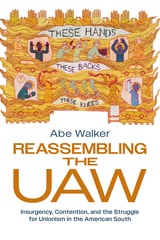
Reassembling the UAW
Insurgency, Contention, and the Struggle for Unionism in the American SouthAbe Walker
Temple University Press, 2026
Abe Walker chronicles the organizing campaign from its origin in 2014 to the union’s breakthrough victory in 2024, illustrating what went wrong—and what went right—along the way. Walker provides a systematic analysis of the strategic challenges and tactical shifts, showing the patterns that persisted across three election cycles while highlighting their differences, from global-level alliances to local labor issues.
Reassembling the UAW also demonstrates how rebel rank-and-file workers ousted the old-guard leadership and transformed the UAW into a militant union to achieve results. Ultimately, Walker offers valuable lessons for organizational strategy, the power of collective action, and the future of the labor movement.
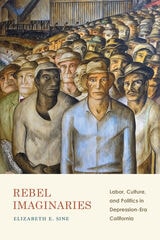
Rebel Imaginaries
Labor, Culture, and Politics in Depression-Era CaliforniaElizabeth E. Sine
Duke University Press, 2021

Reclaiming the Discarded
Life and Labor on Rio's Garbage DumpKathleen M. Millar
Duke University Press, 2018
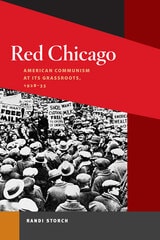
Red Chicago
American Communism at Its Grassroots, 1928-35Randi Storch
University of Illinois Press, 2007
Red Chicago is a social history of American Communism set within the context of Chicago's neighborhoods, industries, and radical traditions. Using local party records, oral histories, union records, party newspapers, and government documents, Randi Storch fills the gap between Leninist principles and the day-to-day activities of Chicago's rank-and-file Communists.
Uncovering rich new evidence from Moscow's former party archive, Storch argues that although the American Communist Party was an international organization strongly influenced by the Soviet Union, at the city level it was a more vibrant and flexible organization responsible to local needs and concerns. Thus, while working for a better welfare system, fairer unions, and racial equality, Chicago's Communists created a movement that at times departed from international party leaders' intentions. By focusing on the experience of Chicago's Communists, who included a large working-class, African American, and ethnic population, this study reexamines party members' actions as an integral part of the communities and industries in which they lived and worked.
Red International and Black Caribbean
Communists in New York City, Mexico and the West Indies, 1919-1939Margaret Stevens
Pluto Press, 2017
Challenging dominant accounts, Red International and Black Caribbean debunks the “great men” narrative, emphasizes the role of women in their capacity as laborers, and paints the true struggles of black peasants and workers in Communist parties.
Reducing Workweeks
Fred Best, foreword by Herbert J. Gans
Temple University Press, 1988
International competition and variable economic conditions have brought the threat of layoffs to the doorsteps of workers and managers in all sectors of our economy. One response to this problem is Unemployment Insurance-Supported Work Sharing. This new and promising program reduces the human and economic costs of layoffs by providing partial unemployment benefits to employees who have their workweeks reduced as an alternative to layoffs. Fred Best provides a balanced and thorough assessment of this policy in the United States, Canada, and Europe.
Unemployment Insurance-Supported Work Sharing maintains the income and fringe benefits of all workers at near full-time levels, enabling firms to maintain the skills and working relations of their employees and preventing undue hardships among those who would otherwise lose their jobs.
Best summarizes the history and effectiveness of these programs in terms of their economic and human impacts on employers, employees, government, and the economy. He presents key insights on how worktime and worker management cooperation can become powerful tools for combating joblessness and increasing economic performance. This definitive account of an important experiment in work hours will be of critical importance to managers, workers, policymakers, economists, and those concerned with employment issues.
In the series Labor and Social Change, edited by Paula Rayman and Carmen Sirianni.

Reinventing the Welfare State
Digital Platforms and Public PoliciesUrsula Huws
Pluto Press, 2020
The Covid-19 pandemic has tragically exposed how today’s welfare state cannot properly protect its citizens. Despite the valiant efforts of public sector workers, from under-resourced hospitals to a shortage of housing and affordable social care, the pandemic has tragically shown how decades of neglect has caused hundreds to die. In this bold new book, leading policy analyst Ursula Huws shows how we can create a welfare state that is fair, affordable, and offers security for all.
Huws focuses on some of the key issues of our time – the gig economy, universal, free healthcare, and social care, to criticize the current state of welfare provision. Drawing on a lifetime of research on these topics, she clearly explains why we need to radically rethink how it could change. With positivity and rigor, she proposes new and original policy ideas, including critical discussions of Universal Basic Income and new legislation for universal workers' rights.
She also outlines a 'digital welfare state' for the 21st century. This would involve a repurposing of online platform technologies under public control to modernize and expand public services, and improve accessibility.
Remembering Lattimer
Labor, Migration, and Race in Pennsylvania Anthracite CountryPaul A. Shackel
University of Illinois Press, 2018
Paul A. Shackel confronts the legacies and lessons of the Lattimer event. Beginning with a dramatic retelling of the incident, Shackel traces how the violence, and the acquittal of the deputies who perpetrated it, spurred membership in the United Mine Workers. By blending archival and archaeological research with interviews, he weighs how the people living in the region remember--and forget--what happened. Now in positions of power, the descendants of the slain miners have themselves become rabidly anti-union and anti-immigrant as Dominicans and other Latinos change the community. Shackel shows how the social, economic, and political circumstances surrounding historic Lattimer connect in profound ways to the riven communities of today.
Compelling and timely, Remembering Lattimer restores an American tragedy to our public memory.

Remembering Ludlow but Forgetting the Columbine
The 1927-1928 Colorado Coal Strikeby Leigh Campbell-Hale
University Press of Colorado, 2025
Remembering Ludlow but Forgetting the Columbine examines the causes, context, and legacies of the 1927 Columbine Massacre in relation to the history of labor organizing and coal mining in both Colorado and the United States. While historians have written prolifically about the 1914 Ludlow Massacre, there has been a lack of attention to the violent event remembered now as the Columbine Massacre in which police shot and killed six striking coal miners and wounded sixty more protestors during the 1927–1928 Colorado Coal Strike, even though its aftermath exerted far more influence upon subsequent national labor policies.
This volume is a comparative biography of three key participants before, during, and after the strike: A. S. Embree, the IWW strike leader; Josephine Roche, the owner of the coal mine property where the Columbine Massacre took place; and Powers Hapgood, who came to work for Roche four months after she signed the 1928 United Mine Worker’s contract. The author demonstrates the significance of this event to national debates about labor during the period, as well as changes and continuities in labor history starting in the progressive era and continuing with 1930s New Deal labor policies and through the 1980s.
This examination of the 1927–1928 Colorado Coal Strike reorients understandings of labor history from the 1920s through the 1960s and the construction of public memory—and forgetting—surrounding those events. Remembering Ludlow but Forgetting the Columbine appeals to academic and general readers interested in Colorado history, labor history, mining history, gender studies, memory, and historiography.
Resisting Work
The Corporatization of Life and Its DiscontentsPeter Fleming
Temple University Press, 2015
A job is no longer something we "do," but instead something we "are." As the boundaries between work and non-work have dissolved, we restructure ourselves and our lives using social ingenuity to get things done and be resourceful outside the official workday.
In his provocative book, Resisting Work Peter Fleming insists that many jobs in the West are now regulated by a new matrix of power-biopower-where "life itself" is put to work through our ability to self-organize around formal rules. This neoliberal system of employment tries to absorb our life attributes--from our consumer tastes, "downtime," and sexuality--into employment so that questions of human capital and resources replace questions of employee, worker, and labor.
Fleming then suggests that the corporation turns to communal life-what he calls "the common"-in order to reproduce itself and reinforce corporate culture. Yet a resistance against this new definition of work is in effect, and Fleming shows how it may already be taking shape.

Resource Allocation in Higher Education
William F. Massy, Editor
University of Michigan Press, 1996
Resource Allocation in Higher Education describes how colleges, universities, and government agencies can use budgeting processes to improve program planning and productivity. Drawn from the contributors' direct experiences as well as research findings, it blends conceptual foundations with practical insights. Many resource allocation processes in higher education need reform, and this volume will stimulate and assist that effort. Beginning with the economic theory of nonprofits, the essays examine current budgeting systems in both theoretical and practical terms. Resource allocation systems from other domains such as health care are explored for relevant insights. Throughout, decentralization remains a major theme. Topics range from the eminently practical—how to establish a global accounting system or choose an endowment spending rate—to the more abstract—the theory of how various nonprofit enterprises balance academic values against market pressures. The volume ends by proposing value responsibility budgeting, which offers institutions a potentially better way of pursuing their academic values while remaining responsive to market pressures. Those within higher education institutions who are responsible for resource allocation, such as provosts, chief financial officers, or budget directors, will find much that speaks to them. While mostly in the domain of higher education economics, management, and planning, the essays are written for any serious reader concerned with the problem of reform in higher education.
Rethinking Workplace Regulation
Beyond the Standard Contract of EmploymentKatherine V.W. Stone
Russell Sage Foundation, 2013
Revitalizing Federal Education Research and Development
Improving the R&D Centers, Regional Educational Laboratories, and the "New" OERIMaris A. Vinovskis
University of Michigan Press, 2001
Maris A. Vinovskis uses the research he has done over the past decade, along with the findings of other policymakers, to argue that the American public school system needs to gain functional reform if research institutions are to conduct more effective studies for policymakers. He examines here both recent reform policies as well as the history behind educational reform.
Vinovskis's vigorous investigation of the process of educational research and development in the United States will be of particular interest to individuals whose careers depend on continued federal funding. This book will also appeal to educators, policymakers, and public policy analysts and will be of unequaled value in understanding the formulation of new educational policies in the twenty-first century.
Maris A. Vinovskis is active on Capitol Hill and lectures throughout the country at such prestigious institutions as the American Academy of Arts and Sciences, the Brookings Institution, and the John F. Kennedy School of Government at Harvard. He is Professor of History, University of Michigan.

Right Across the World
The Global Networking of the Far-Right and the Left ResponseJohn Feffer
Pluto Press, 2021
'John Feffer is our 21st-century Jack London' - Mike Davis
In a post-Trump world, the right is still very much in power. Significantly more than half the world’s population currently lives under some form of right-wing populist or authoritarian rule. Today’s autocrats are, at first glance, a diverse band of brothers. But religious, economic, social and environmental differences aside, there is one thing that unites them - their hatred of the liberal, globalized world. This unity is their strength, and through control of government, civil society and the digital world they are working together across borders to stamp out the left.
In comparison, the liberal left commands only a few disconnected islands - Iceland, Mexico, New Zealand, South Korea, Spain and Uruguay. So far they have been on the defensive, campaigning on local issues in their own countries. This narrow focus underestimates the resilience and global connectivity of the right. In this book, John Feffer speaks to the world’s leading activists to show how international leftist campaigns must come together if they are to combat the rising tide of the right.
A global Green New Deal, progressive trans-European movements, grassroots campaigning on international issues with new and improved language and storytelling are all needed if we are to pull the planet back from the edge of catastrophe. This book is both a warning and an inspiration to activists terrified by the strengthening wall of far-right power.
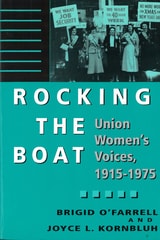
Rocking the Boat
Union Women's Voices, 1915-1975O'Farrell, Brigid
Rutgers University Press, 1996
Rocking the Boat is a celebration of strong, committed women who helped to build the American labor movement. Through the stories of eleven women from a wide range of backgrounds, we experience the turmoil, hardships, and accomplishments of thousands of other union women activists through the period spanning the Great Depression, the New Deal, World War II, the McCarthy era, the civil rights movement, and the women's movement. These women tell powerful stories that highlight and detail women's many roles as workers, trade unionists, and family members. They all faced difficulties in their personal lives, overcame challenges in their unions, and individually and collectively helped improve women's everyday working lives.
Maida Springer-Kemp came from New York City's Harlem, Local 22 of the International Ladies' Garment Workers' Union, to represent the AFL-CIO in Africa. In Chicago, Alice Peurala fought for her job in the steel mill and her place in the steel workers' union. Jessie De La Cruz organized farm workers in California. Esther Peterson, organizer, educator, and lobbyist, became an advisor to four U.S. presidents. In chapters based on oral history interviews, these women and others provide new perspectives and practical advice for today's working women. They share an idealistic and practical commitment to the labor movement. As Dorothy Haener of the United Auto Workers and a founding member of the National Organization of Women said, "You have to take a look at how to rock the boat. You don't want to spill yourself out if you can avoid it, but sometimes you have to rock the boat." From these women we, too, learn how to rock the boat.
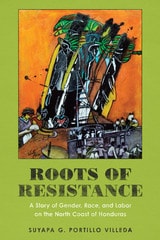
Roots of Resistance
A Story of Gender, Race, and Labor on the North Coast of HondurasSuyapa G. Portillo Villeda
University of Texas Press, 2021
Winner of the 2021 Sara A. Whaley Prize of the National Women’s Studies Association (NWSA)
A first-of-its-kind study of the working-class culture of resistance on the Honduran North Coast and the radical organizing that challenged US capital and foreign intervention at the onset of the Cold War, examining gender, race, and place.
On May 1, 1954, striking banana workers on the North Coast of Honduras brought the regional economy to a standstill, invigorating the Honduran labor movement and placing a series of demands on the US-controlled banana industry. Their actions ultimately galvanized a broader working-class struggle and reawakened long-suppressed leftist ideals. The first account of its kind in English, Roots of Resistance explores contemporary Honduran labor history through the story of the great banana strike of 1954 and centers the role of women in the narrative of the labor movement.
Drawing on extensive firsthand oral history and archival research, Suyapa G. Portillo Villeda examines the radical organizing that challenged US capital and foreign intervention in Honduras at the onset of the Cold War. She reveals the everyday acts of resistance that laid the groundwork for the 1954 strike and argues that these often-overlooked forms of resistance should inform analyses of present-day labor and community organizing. Roots of Resistance highlights the complexities of transnational company hierarchies, gender and race relations, and labor organizing that led to the banana workers' strike and how these dynamics continue to reverberate in Honduras today.