Results by title
642 books match the query 'Linguistics' and 18 start with r
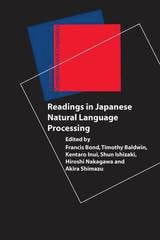
Readings in Japanese Natural Language Processing
Edited by Francis Bond, et al.
CSLI, 2014
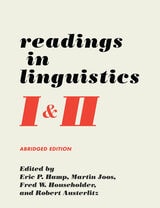
Readings in Linguistics I & II
Edited by Eric P. Hamp, Martin Joos, Fred W. Householder, and Robert Austerlitz
University of Chicago Press, 1995
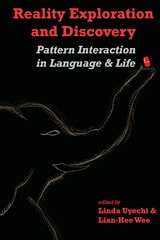
Reality Exploration and Discovery
Pattern Interaction in Language and LifeEdited by Linda Ann Uyechi and Lian-Hee Wee
CSLI, 2009
The twenty-five papers in this volume present current analyses of a variety of data and, more significantly, illustrate the various analytical tools available to linguists in the quest for deeper comprehension of the puzzles, questions, and problems they confront in natural language. The distinguished authors collected here explore interactions between linguistic structure and sound patterns across a diverse set of languages. The integrating theme of the volume is the influence of K. P. Mohanan’s philosophy of inquiry, derived not only from his rich body of diverse work but also from the fresh perspectives and intellectual vitality that he has shared with colleagues and students in a career spanning over three decades.
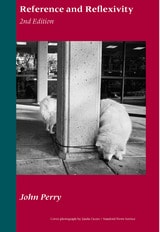
Reference and Reflexivity
2nd EditionJohn Perry
CSLI, 2012
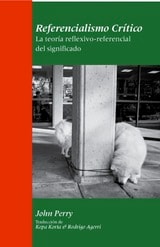
Referencialismo critico
le teoria reflexivo-referencial del significadoJohn Perry
CSLI, 2006
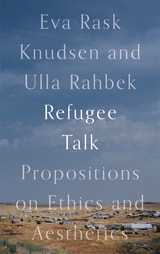
Refugee Talk
Propositions on Ethics and AestheticsEva
Pluto Press, 2022
An innovative approach to the refugee crisis through a focus on language use, discourse and representation
'A wide-ranging, erudite and multi-faceted analyses of the fundamental problem of who gets to be counted as human' - Kate Evans
What does it mean to be a refugee? What political questions do they raise? Through what political rhetoric is their experiences parsed? The ongoing refugee crisis has sparked all these questions and more.
Refugee Talk uses conversation as a research method and ethical practice to approach the representation of and the discourse about and by the refugee. Though refugees who cross borders are routinely registered, filed, and detained, the individual stories they carry are just as routinely overlooked or ignored. When language itself becomes another border that excludes refugees, the need for a new vocabulary that decriminalizes and re-humanizes the refugee experience asserts itself.
The authors engage theoretically with thinkers from Hannah Arendt to Paolo Freire and Kwame A. Appiah and structure the book around conversations with academics, activists, journalists, and refugee artists and writers. The result is a comprehensive humanities approach that places ethics and aesthetics at its core.
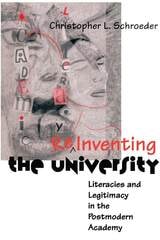
Reinventing The University
Literacies and Legitimacy in the Postmodern AcademyChristopher L. Schroeder
Utah State University Press, 2001
Christopher Schroeder spends almost no time disputing David Bartholomae's famous essay, but throughout ReInventing the University, he elaborates an approach to teaching composition that is at odds with the tradition that essay has come to represent.
On the other hand, his approach is also at odds with elements of the pedagogies of such theorists as Berlin, Bizzell, and Shor. Schroeder argues that, for students, postmodern instability in literacy and meaning has become a question of the legitimacy of current discourse of education. Schroeder is committed, then, to constructing literacies jointly with students and by so doing to bringing students to engage more deeply with education and society.
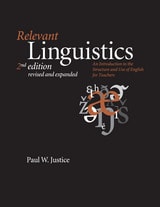
Relevant Linguistics, Second Edition, Revised and Expanded
An Introduction to the Structure and Use of English for TeachersPaul W. Justice
CSLI, 2004
Each chapter of Relevant Linguistics leads students through descriptive analysis, helps them grasp linguistic concepts, and provides them with the reference materials necessary for their own teaching. This second edition contains more exercises as well as expanded and clarified explanations of the issues discussed in the first edition. Also included are more references to areas such as the history of English and semantics.
Relevant Linguistics
An Introduction to the Structure and Use of English for TeachersPaul W. Justice
CSLI, 2001
Representation and Inference for Natural Language
A First Course in Computational SemanticsPatrick Blackburn and Johan Bos
CSLI, 2005
Rereading Aristotle's Rhetoric
Edited by Alan G. Gross and Arthur E. Walzer
Southern Illinois University Press, 2000
In this collection edited by Alan G. Gross and Arthur E. Walzer, scholars in communication, rhetoric and composition, and philosophy seek to “reread” Aristotle’s Rhetoric from a purely rhetorical perspective. So important do these contributors find the Rhetoric, in fact, that a core tenet in this book is that “all subsequent rhetorical theory is but a series of responses to issues raised by the central work.”
The essays reflect on questions basic to rhetoric as a humanistic discipline. Some explore the ways in which the Rhetoric explicates the nature of the art of rhetoric, noting that on this issue, the tensions within the Rhetoric often provide a direct passageway into our own conflicts.
Revealing Structure
Edited by Eugene Buckley, Thera Crane, and Jeff Good
CSLI, 2018

Revisiting the Essential Indexical
John Perry
CSLI, 2020
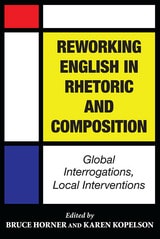
Reworking English in Rhetoric and Composition
Global Interrogations, Local InterventionsEdited by Bruce Horner and Karen Kopelson
Southern Illinois University Press, 2014
In Reworking English in Rhetoric and Composition, editors Bruce Horner and Karen Kopelson gather leading scholars and new voices in the field of rhetoric and composition to offer a dynamic new perspective on English as it is used today. This provocative volume explores the myriad ways in which English is constantly redefined, revised, and redirected through specific, located acts of writing, rhetoric, teaching, and learning. Contributors provide insightful contributions to the study of English from both national and international perspectives, revealing the language as a fluid and constantly changing manner of expression that challenges established notions.
In part one, “Reworking Language,” writers call into question the idea of language as a static, stable entity. In part two, “Locations and Migrations: Global/Local Interrogations,” contributors explore the impact of writing and teaching English in both in the United States and abroad, from Arkansas and Oklahoma to China, Jamaica, and Lebanon. Part three, “Pedagogical/Institutional Interventions,” addresses English in institutional settings and the implications for future pedagogical work. Each essay in this revolutionary volume substantiates two key premises for the rethinking of English: first, that languages are susceptible to constant change through the very acts of writing, teaching, and learning, and second, that this reworking occurs as it moves between various temporal and spatial locations.
Throughout the volume, the variety and flexibility of English across the globe are both advocated and revealed, rejecting dominant Anglophone perspectives and instead placing language in cross-cultural contexts. Brimming with informative and thought-provoking insights, Reworking English in Rhetoric and Composition breathes new life into the field and provides direction for scholars and teachers looking to the future of English.
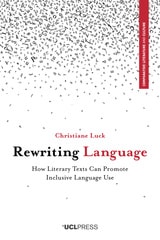
Rewriting Language
How Literary Texts Can Promote Inclusive Language UseChristiane Luck
University College London, 2020
By engaging readers with the issue, novels spread awareness and promote linguistic change. Novels have the power to paint the problems presented with accessibility and spark change. Analyzing five iconic literary texts, including Ursula K. Le Guin’s The Left Hand of Darkness, Verena Stefan’s Häutungen, Marge Piercy’s Woman on the Edge of Time, and June Arnold’s The Cook and the Carpenter, Luck dives into the possibilities and challenges of linguistic neutrality. Rewriting Language illustrates the link between language and imagination. As Luck concludes, novels are valuable tools to embolden inclusive language use.
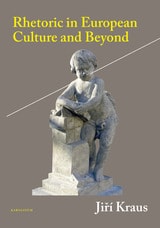
Rhetoric in European Culture and Beyond
Jirí Kraus
Karolinum Press, 2014
Kraus demonstrates that the reputation of rhetoric falls when it is reduced to a refined method for deceiving the public and increases when it is seen as a scientific discipline that is used throughout all of the fields of the humanities. In this sense, the author argues, rhetoric strives for universal recognition and the cultivation of rhetorical expression, spoken and written, including not only its production but also reception and interpretation.
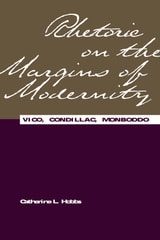
Rhetoric on the Margins of Modernity
Vico, Condillac, MonboddoCatherine L. Hobbs
Southern Illinois University Press, 2002
Changes in English studies today, particularly the rise of cultural studies, have forced reexaminations of historical genealogies. Three complex figures whose places are currently being reassessed include the Neapolitan Giambattista Vico (1668 –1744), the Frenchman Etienne de Condillac (1714 –1780), and the Scotsman James Burnet(t), Lord Monboddo (1714 –1799) in our histories of communication, linguistics, English studies, and now rhetoric.
In Rhetoric on the Margins of Modernity: Vico, Condillac, Monboddo, Catherine L. Hobbs focuses primarily on these three key figures in whose work rhetoric and linguistics intertwine as they respond to emerging attitudes and values of science and philosophy in the eighteenth century. Through her examination of works of Vico, Condillac, Monboddo and other marginal figures, Hobbs presents a different and more nuanced view of the transformation of rhetoric from classical to modern.
In order to redefine each figure’s position, Hobbs brings together the histories of linguistics, literature, rhetoric, and communication, rather than leaving them isolated in separate disciplines. She examines each figure’s theory of language origin and development as it has motivated their rhetorical theories. The result is Rhetoric on the Margins of Modernity: Vico, Condillac, Monboddo, an original and significant account of the formation of modern rhetoric.
Romance in HPSG
Edited by Sergio Balari and Luca Dini
CSLI, 1997