Results by title
97 books match the query 'Louisiana' and 10 start with r
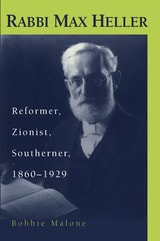
Rabbi Max Heller
Reformer, Zionist, Southerner, 1860-1929Barbara S. Malone
University of Alabama Press, 1997
Max Heller was a man of both passionate conviction and inner contradiction. He sought to be at the center of current affairs, not as a spokesperson of centrist opinion, but as an agitator or mediator, constantly struggling to find an acceptable path as he confronted the major issues of the day--racism and Jewish emancipation in eastern Europe, nationalism and nativism, immigration and assimilation. Heller's life experience provides a distinct vantage point from which to view the complexity of race relations in New Orleans and the South and the confluence of cultures that molded his development as a leader. A Bohemian immigrant and one of the first U.S.-trained rabbis, Max Heller served for 40 years as spiritual leader of a Reform Jewish congregation in New Orleans--at that time the largest city in the South. Far more than a congregational rabbi, Heller assumed an activist role in local affairs, Reform Judaism, and the Zionist movement, maintaining positions often unpopular with his neighbors, congregants, and colleagues. His deep concern for social justice led him to question two basic assumptions that characterized his larger social milieu--segregation and Jewish assimilation.
Heller, a consummate Progressive with clear vision and ideas substantially ahead of their time, led his congregation, his community, Reform Jewish colleagues, and Zionist sympathizers in a difficult era.
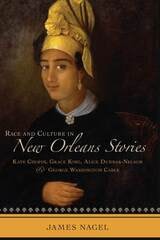
Race and Culture in New Orleans Stories
Kate Chopin, Grace King, Alice Dunbar-Nelson, and George Washington CableJames Nagel
University of Alabama Press, 2013
Race and Culture in New Orleans Stories is a study of four volumes of interrelated short stories set in New Orleans and the surrounding Louisiana bayous: Kate Chopin’s Bayou Folk; George Washington Cable’s Old Creole Days; Grace King’s Balcony Stories; and Alice Dunbar-Nelson’s The Goodness of St. Rocque and Other Stories. James Nagel argues that the conflicts and themes in these stories cannot be understood without a knowledge of the unique historical context of the founding of Louisiana, its four decades of rule by the Spanish, the Louisiana Purchase and the resulting cultural transformations across the region, Napoleonic law, the Code Noir, the plaçage tradition, the immigration of various ethnic and natural groups into the city, and the effects of the Civil War and Reconstruction. All of these historical factors energize and enrich the fiction of this important region.
The literary context of these volumes is also central to understanding their place in literary history. They are short-story cycles—collections of short fiction that contain unifying settings, recurring characters or character types, and central themes and motifs. They are also examples of the “local color” tradition in fiction, a movement that has been much misunderstood. Nagel maintains that regional literature was meant to be the highest form of American writing, not the lowest, and its objective was to capture the locations, folkways, values, dialects, conflicts, and ways of life in the various regions of the country in order to show that the lives of common citizens were sufficiently important to be the subject of serious literature.
Finally, Nagel shows that New Orleans provided a profoundly rich and complex setting for the literary exploration of some of the most crucial social problems in America, including racial stratification, social caste, economic exploitation, and gender roles, all of which were undergoing rapid transformation at the end of the nineteenth century and the beginning of the twentieth.
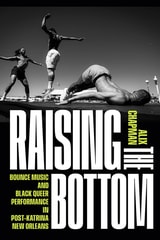
Raising the Bottom
Bounce Music and Black Queer Performance in Post-Katrina New OrleansAlix Chapman
Duke University Press, 2026
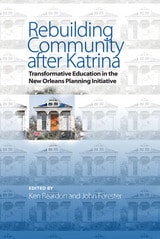
Rebuilding Community after Katrina
Transformative Education in the New Orleans Planning InitiativeKen Reardon
Temple University Press, 2015
Rebuilding Community after Katrina chronicles the innovative and ambitious partnership between Cornell University’s City and Regional Planning department and ACORN Housing, an affiliate of what was the nation’s largest low-income community organization. These unlikely allies came together to begin to rebuild devastated neighborhoods in New Orleans after Hurricane Katrina.
The editors and contributors to this volume allow participants’ voices to show how this partnership integrated careful, technical analysis with aggressive community outreach and organizing. With essays by activists, organizers, community members, and academics on the ground, Rebuilding Community after Katrina presents insights on the challenges involved in changing the way politicians and analysts imagined the future of New Orleans’ Ninth Ward.
What emerges from this complex drama are lessons about community planning, organizational relationships, and team building across multi-cultural lines. The accounts presented in Rebuilding Community after Katrina raise important and sensitive questions about the appropriate roles of outsiders in community-based planning processes.
Recognition Odysseys
Indigeneity, Race, and Federal Tribal Recognition Policy in Three Louisiana Indian CommunitiesBrian Klopotek
Duke University Press, 2011
Klopotek describes the varied effects of the recognition process on the social and political structures, community cohesion, cultural revitalization projects, identity, and economic health of each tribe. He emphasizes that recognition policy is not the only racial project affecting Louisiana tribes. For the Tunica-Biloxis, the Jena Band of Choctaws, and the Clifton-Choctaws, discourses around blackness and whiteness have shaped the boundaries of Indian identity in ways that have only begun to be explored. Klopotek urges scholars and officials from the Bureau of Indian Affairs (BIA) to acknowledge the multiple discourses and viewpoints influencing tribal identities. At the same time, he puts tribal recognition in broader perspective. Indigenous struggles began long before the BIA existed, and they will continue long after it renders any particular recognition decision.

Reimagining the Educated Citizen
Creole Pedagogies in the Transatlantic World, 1685-1896Petra Munro Hendry
University of Michigan Press, 2023
Winner of the 2023 American Educational Research Association (AERA) Division B: Curriculum Studies Outstanding Book Award
Reimagining the Educated Citizen contends that the constructs of public education and citizenship in the struggle to constitute a U.S. national identity are inseparable from the simultaneous emergence of transatlantic constructs of an educated citizen along transnational and transracial lines. The nineteenth century is commonly understood as the age of nationalism and nation formation in which the Anglo-Protestant Common School movement takes center stage in the production of the American democratic citizen. Ironically, the argument for public, Common Schools privileged whiteness instead of equality. This book suggests that an alternative vision of the relationship between education and citizenship emerged from a larger transatlantic history. Given shape by the movement of people, ideas, commodities, and practices across the Caribbean, Africa, Europe, the Gulf of Mexico and the Mississippi Valley, this radical egalitarian vision emerged at the crossroads of the Atlantic-colonial and antebellum Louisiana.
Remaking New Orleans
Beyond Exceptionalism and AuthenticityThomas J. Adams and Matt Sakakeeny, editors
Duke University Press, 2019
Contributors. Thomas Jessen Adams, Vincanne Adams, Vern Baxter, Maria Celeste Casati Allegretti, Shannon Lee Dawdy, Rien Fertel, Megan French-Marcelin, Cedric G. Johnson, Alecia P. Long, Vicki Mayer, Toby Miller, Sue Mobley, Marguerite Nguyen, Aaron Nyerges, Adolph Reed Jr., Helen A. Regis, Matt Sakakeeny, Heidi Schmalbach, Felipe Smith, Bryan Wagner
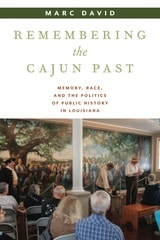
Remembering the Cajun Past
Memory, Race, and the Politics of Public History in LouisianaMarc David
University of Massachusetts Press, 2025
Exploring how public history creates collective memory of this white ethnic group through memorials
Cajuns arrived in southern Louisiana in the 18th century after the British exiled them from eastern Canada. Also known as Acadians, they retain a unique dialect of French, and their distinctive music, food, and other cultural traits characterized them as an ethnic group. Until the 1960s, authorities viewed them as a serious problem, allegedly blocking the state’s progress as they clung to their antiquated ways. Few Cajun residents in the region remembered the remote past of their ancestors, but by the 1970s, organizations ranging from local non-profits to the National Park Service created sites that commemorated their history, such as the Acadian Memorial in St. Martinville, allowing Cajuns to connect their lives to their past and claim it as their own.
In Remembering the Cajun Past, anthropologist Marc David studies the cultural and political dynamics that reconfigured Cajun memory and identity. Focusing on St. Martinville and the Acadian Memorial, he explores how authorities changed their minds about Cajuns and demonstrates how Cajuns’ historical memories took shape. Part ethnography and part history, David examines the racial aspects of the Memorial’s creation in the wake of the Civil Rights movement and the growth of a new Cajun history, one through which individual Cajuns rejected the label’s connotation of “white trash” and embraced belonging within a storied white ethnic group. Based on decades of fieldwork and deep engagement with public history practices, David explores how historical memory and the historic sites that foster it are intertwined with the politics of civic life.
Renew Orleans?
Globalized Development and Worker Resistance after KatrinaAaron Schneider
University of Minnesota Press, 2018
Urban development after disaster, the fading of black political clout, and the onset of gentrification
Like no other American city, New Orleans since Hurricane Katrina offers powerful insight into issues of political economy in urban development and, in particular, how a city’s character changes after a disaster that spurs economic and political transition. In New Orleans, the hurricane upset an existing stalemate among rival factions of economic and political elites, and its aftermath facilitated the rise of a globally oriented faction of local capital.
In Renew Orleans? Aaron Schneider shows how some city leaders were able to access fragmented local institutions and capture areas of public policy vital to their development agenda. Through interviews and surveys with workers and advocates in construction, restaurants, shipyards, and hotel and casino cleaning, Schneider contrasts sectors prioritized during post-Katrina recovery with neglected sectors. The result is a fine-grained view of the way labor markets are structured to the advantage of elites, emphasizing how dual development produces wealth for the few while distributing poverty and exclusion to the many on the basis of race, gender, and ethnicity.
Schneider shows the way exploitation operates both in the workplace and the community, tracing working-class resistance that joins struggles for dignity at home and work. In the process, working classes and popular sectors put forth their own alternative forms of development.
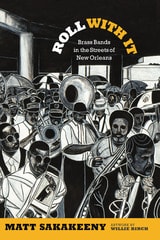
Roll With It
Brass Bands in the Streets of New OrleansMatt Sakakeeny
Duke University Press, 2013