Results by title
534 books match the query 'Making' and 16 start with r
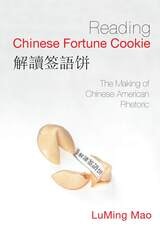
Reading Chinese Fortune Cookie
The Making of Chinese American RhetoricLuMing Mao
Utah State University Press, 2006
ecent scholarship tends to explain such influences as contributing to language hybridity---an advance over the traditional "deficit model." But Mao suggests that the "hybridity" approach is perhaps too arid or sanitized, missing rich nuances of mutual exchange, resistance, or even subversion. Through his concept of "togetherness in difference, Mao suggests that speakers of hybrid discourse may not be attempting the standard (and failing), but instead may be deliberately importing cultural material to create a distance between themselves and the standard. This practice, over time, becomes a process that transforms English, enriching and enlarging it through the infusion of non-Western discourse features, subverting power structures, and even providing unique humorous touches.
Of interest to scholars in composition, cultural studies, and linguistics as well, Reading Chinese Fortune Cookie leads in an important new direction for both our understanding and our teaching of English.
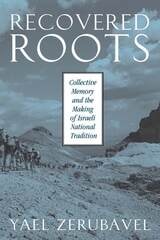
Recovered Roots
Collective Memory and the Making of Israeli National TraditionYael Zerubavel
University of Chicago Press, 1995
In the years leading to the birth of Israel, Zerubavel shows, Zionist settlers in Palestine consciously sought to rewrite Jewish history by reshaping Jewish memory. Zerubavel focuses on the nationalist reinterpretation of the defense of Masada against the Romans in 73 C.E. and the Bar Kokhba revolt of 133-135; and on the transformation of the 1920 defense of a new Jewish settlement in Tel Hai into a national myth. Zerubavel demonstrates how, in each case, Israeli memory transforms events that ended in death and defeat into heroic myths and symbols of national revival.
Drawing on a broad range of official and popular sources and original interviews, Zerubavel shows that the construction of a new national tradition is not necessarily the product of government policy but a creative collaboration between politicans, writers, and educators. Her discussion of the politics of commemoration demonstrates how rival groups can turn the past into an arena of conflict as they posit competing interpretations of history and opposing moral claims on the use of the past. Zerubavel analyzes the emergence of counter-memories within the reality of Israel's frequent wars, the ensuing debates about the future of the occupied territories, and the embattled relations with Palestinians.
A fascinating examination of the interplay between history and memory, this book will appeal to historians, sociologists, anthropologists, political scientists, and folklorists, as well as to scholars of cultural studies, literature, and communication.
Regulatory Rights
Supreme Court Activism, the Public Interest, and the Making of Constitutional LawLarry Yackle
University of Chicago Press, 2007
Traversing a wide range of Supreme Court decisions that established crucial precedents about racial discrimination, the death penalty, and sexual freedom, Yackle contends that the rights we enjoy are neither more nor less than what the justices choose to make of them. Regulatory Rights is a bracing read that will be heatedly debated by all those interested in constitutional law and the judiciary.
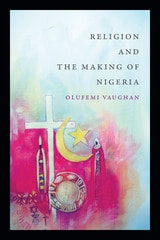
Religion and the Making of Nigeria
Olufemi Vaughan
Duke University Press, 2016
Representing Talent
Hollywood Agents and the Making of MoviesViolaine Roussel
University of Chicago Press, 2017
The book takes readers behind the scenes to observe the day-to-day activities of agents, revealing their influence on artistic careers and the prospects of Hollywood’s forthcoming projects. Agents are crucial to understanding how creative and economic power are intertwined in Hollywood today. They play a key role in the process by which artistic worth and economic value are evaluated and attributed to people and projects. Roussel’s fieldwork examines what “having relationships” really means for agents, and how they perform the relationship work that’s at the heart of their professional existence and success. Representing Talent helps us to understand the players behind the definition of entertainment itself, as well as behind its current transformations.
Revitalization Lexicography
The Making of the New Tunica DictionaryPatricia M. Anderson
University of Arizona Press, 2020
Revitalization Lexicography provides a detailed account of creating a dictionary meant to move a once-sleeping language into a language of active daily use. This unique look under the hood of lexicography in a small community highlights the ways in which the dictionary was intentionally leveraged to shape the Tunica language as it inevitably changes throughout revitalization. Tunica, one of the heritage languages of the Tunica-Biloxi Tribe of Marksville, Louisiana, has been undergoing active revitalization since 2010. The current generation of speakers began learning Tunica, a once-sleeping language, through written documentation. Now enough Tunica speakers to confer amongst themselves when questionable language use arises.
Marrying both the theoretical and the practical aspects that contributed to the Tunica dictionary, this book discusses complex lexicographic tasks in a manner accessible to both academic and community readers. This work is firmly backdropped in a fieldwork approach that centers the community as owners of all aspects of their revitalization project. This book provides concrete and practical considerations for anyone attempting to create a dictionary. Contrasting examples from Tunica and English dictionaries, this book challenges readers to rethink their relationship to dictionaries in general. A must-read for anyone who has ever touched a dictionary.
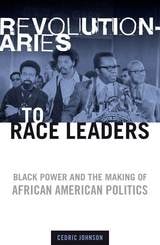
Revolutionaries to Race Leaders
Black Power and the Making of African American PoliticsCedric Johnson
University of Minnesota Press, 2007
The Black Power movement represented a key turning point in American politics. Disenchanted by the hollow progress of federal desegregation during the 1960s, many black citizens and leaders across the United States demanded meaningful self-determination. The popular movement they created was marked by a vigorous artistic renaissance, militant political action, and fierce ideological debate.
Exploring the major political and intellectual currents from the Black Power era to the present, Cedric Johnson reveals how black political life gradually conformed to liberal democratic capitalism and how the movement’s most radical aims—the rejection of white aesthetic standards, redefinition of black identity, solidarity with the Third World, and anticapitalist revolution—were gradually eclipsed by more moderate aspirations. Although Black Power activists transformed the face of American government, Johnson contends that the evolution of the movement as a form of ethnic politics restricted the struggle for social justice to the world of formal politics.
Johnson offers a compelling and theoretically sophisticated critique of the rhetoric and strategies that emerged in this period. Drawing on extensive archival research, he reinterprets the place of key intellectual figures, such as Harold Cruse and Amiri Baraka, and influential organizations, including the African Liberation Support Committee, the National Black Political Assembly, and the National Black Independent Political Party in postsegregation black politics, while at the same time identifying the contradictions of Black Power radicalism itself.
Documenting the historical retreat from radical, democratic struggle, Revolutionaries to Race Leaders ultimately calls for the renewal of popular struggle and class-conscious politics.
Cedric Johnson is assistant professor of political science at Hobart and William Smith Colleges.
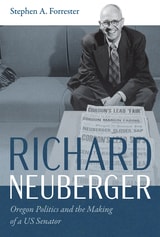
Richard Neuberger
Oregon Politics and the Making of a US SenatorStephen A. Forrester
Oregon State University Press, 2025
Richard L. Neuberger is a consequential but often forgotten figure in Oregon history, largely due to his early death at forty-seven, near the end of his only term in the United States Senate. But his life and legacy continue to inspire Oregonians and influence politicians.
In 1954, Neuberger was the first Democrat elected to the Senate from Oregon in forty years. His election moved Oregon from a solidly Republican state to one where liberal Democrats could control the legislature as well as statewide offices. He was an especially productive freshman, on both Oregon natural resource issues and national matters. Neuberger was also only the second Jewish person elected to the Senate following passage of the 17th Amendment, which required the direct election of senators.
Prior to entering politics, Neuberger was best known as a journalist. He was a prolific freelance writer, publishing 750 magazine articles and six books. In 1933, at the age of twenty-one, he visited Germany and penned the first firsthand account of Brownshirt violence written by an American; his editor at The Nation called it “an epoch-making article.”
Neuberger was ahead of his time in his advocacy of conservation, in his political partnership with his wife Maurine—who successfully ran for his Senate seat after his untimely death in 1960—and in his outspoken liberal advocacy at a time when Oregon was considerably more conservative than it is today. Tom McCall, later one of the most influential governors in the state’s history, considered Neuberger his role model as a conservationist.
In this definitive biography—more than forty years in the making—Stephen Forrester documents Neuberger’s extraordinary life and career, highlighting a legacy that includes shaping Oregon’s renowned conservation policies and developing the state’s modern Democratic party.
Richard Rorty
The Making of an American PhilosopherNeil Gross
University of Chicago Press, 2008
The child of a pair of leftist writers who worried that their precocious son “wasn’t rebellious enough,” Rorty enrolled at the University of Chicago at the age of fifteen. There he came under the tutelage of polymath Richard McKeon, whose catholic approach to philosophical systems would profoundly influence Rorty’s own thought. Doctoral work at Yale led to Rorty’s landing a job at Princeton, where his colleagues were primarily analytic philosophers. With a series of publications in the 1960s, Rorty quickly established himself as a strong thinker in that tradition—but by the late 1970s Rorty had eschewed the idea of objective truth altogether, urging philosophers to take a “relaxed attitude” toward the question of logical rigor. Drawing on the pragmatism of John Dewey, he argued that philosophers should instead open themselves up to multiple methods of thought and sources of knowledge—an approach that would culminate in the publication of Philosophy and the Mirror of Nature, one of the most seminal and controversial philosophical works of our time.
In clear and compelling fashion, Gross sets that surprising shift in Rorty’s thought in the context of his life and social experiences, revealing the many disparate influences that contribute to the making of knowledge. As much a book about the growth of ideas as it is a biography of a philosopher, Richard Rorty will provide readers with a fresh understanding of both the man and the course of twentieth-century thought.
Righteous Revolutionaries
Morality, Mobilization, and Violence in the Making of the Chinese StateJeffrey A. Javed
University of Michigan Press, 2022
Righteous Revolutionaries argues that the Chinese Party-state simultaneously removed perceived threats to its authority at the grassroots and bolstered its legitimacy through a process called moral mobilization. This mobilization process created a moral boundary that designated a virtuous ingroup of “the masses” and a demonized outgroup of “class enemies,” mobilized the masses to participate in violence against this broadly defined outgroup, and strengthened this symbolic boundary by making the masses complicit in state violence. Righteous Revolutionaries shows how we can find traces of moral mobilization in China today under Xi Jinping’s rule. In an era where states and politicians regularly weaponize moral emotions to foment intergroup conflict and violence, understanding the dynamics of violent mobilization and state authority are more relevant than ever before.
Rim Country Exodus
A Story of Conquest, Renewal, and Race in the MakingDaniel J. Herman
University of Arizona Press, 2012
Winner Labriola Center American Indian National Book Award
For thousands of years, humans have lived on the sprawling escarpment in Arizona known as the Mogollon Rim, a stretch that separates the valleys of central Arizona from the mountains of the north. A vast portion of this dramatic landscape is the traditional home of the Dilzhe’e (Tonto Apache) and the Yavapai. Now Daniel Herman offers a compelling narrative of how—from 1864 to 1934—the Dilzhe’e and the Yavapai came to central Arizona, how they were conquered, how they were exiled, how they returned to their homeland, and how, through these events, they found renewal.
Herman examines the complex, contradictory, and very human relations between Indians, settlers, and Federal agents in late nineteenth- and early twentieth-century Arizona—a time that included Arizona’s brutal Indian wars. But while most tribal histories stay within the borders of the reservation, Herman also chronicles how Indians who left the reservation helped build a modern state with dams, hydroelectricity, roads, and bridges. With thoughtful detail and incisive analysis, Herman discusses the complex web of interactions between Apache, Yavapai, and Anglos that surround every aspect of the story.
Rim Country Exodus is part of a new movement in Western history emphasizing survival rather than disappearance. Just as important, this is one of the first in-depth studies of the West that examines race as it was lived. Race was formulated, Herman argues, not only through colonial and scientific discourses, but also through day-to-day interactions between Indians, agents, and settlers. Rim Country Exodus offers an important new perspective on the making of the West.
Riot and Rebellion in Mexico
The Making of a Race War ParadigmAna Sabau
University of Texas Press, 2022
2023 Best Book in the Humanities, Latin American Studies Association Mexico Section
Challenging conventional narratives of Mexican history, this book establishes race-making as a central instrument for the repression of social upheaval in nineteenth-century Mexico rather than a relic of the colonial-era caste system.
Many scholars assert that Mexico’s complex racial hierarchy, inherited from Spanish colonialism, became obsolete by the turn of the nineteenth century as class-based distinctions became more prominent and a largely mestizo population emerged. But the residues of the colonial caste system did not simply dissolve after Mexico gained independence. Rather, Ana Sabau argues, ever-present fears of racial uprising among elites and authorities led to persistent governmental techniques and ideologies designed to separate and control people based on their perceived racial status, as well as to the implementation of projects for development in fringe areas of the country.
Riot and Rebellion in Mexico traces this race-based narrative through three historical flashpoints: the Bajío riots, the Haitian Revolution, and the Yucatán’s caste war. Sabau shows how rebellions were treated as racially motivated events rather than political acts and how the racialization of popular and indigenous sectors coincided with the construction of “whiteness” in Mexico. Drawing on diverse primary sources, Sabau demonstrates how the race war paradigm was mobilized in foreign and domestic affairs and reveals the foundations of a racial state and racially stratified society that persist today.
Robin and the Making of American Adolescence
Lauren R. O'Connor
Rutgers University Press, 2021

Romancing the Sperm
Shifting Biopolitics and the Making of Modern FamiliesDiane Tober
Rutgers University Press, 2019
In Romancing the Sperm, Diane Tober explores the intersections between sperm donation and the broader social and political environment in which “modern families” are created and regulated. Through tangible and intimate stories, this book provides a captivating read for anyone interested in family and kinship, genetics and eugenics, and how ever-expanding assisted reproductive technologies continue to redefine what it means to be human.
Ruins and Rivals
The Making of Southwest ArchaeologyJames E. Snead
University of Arizona Press, 2001
William P. Clements Center for Southwest Studies, Southern Methodist University
Ruins are as central to the image of the American Southwest as are its mountains and deserts, and antiquity is a key element of modern southwestern heritage. Yet prior to the mid-nineteenth century this rich legacy was largely unknown to the outside world. While military expeditions first brought word of enigmatic relics to the eastern United States, the new intellectual frontier was seized by archaeologists, who used the results of their southwestern explorations to build a foundation for the scientific study of the American past.
In Ruins and Rivals, James Snead helps us understand the historical development of archaeology in the Southwest from the 1890s to the 1920s and its relationship with the popular conception of the region. He examines two major research traditions: expeditions dispatched from the major eastern museums and those supported by archaeological societies based in the Southwest itself. By comparing the projects of New York's American Museum of Natural History with those of the Southwest Museum in Los Angeles and the Santa Fe-based School of American Archaeology, he illustrates the way that competition for status and prestige shaped the way that archaeological remains were explored and interpreted. The decades-long competition between institutions and their advocates ultimately created an agenda for Southwest archaeology that has survived into modern times.
Snead takes us back to the days when the field was populated by relic hunters and eastern "museum men" who formed uneasy alliances among themselves and with western boosters who used archaeology to advance their own causes. Richard Wetherill, Frederic Ward Putnam, Charles Lummis, and other colorful characters all promoted their own archaeological endeavors before an audience that included wealthy patrons, museum administrators, and other cultural figures. The resulting competition between scholarly and public interests shifted among museum halls, legislative chambers, and the drawing rooms of Victorian America but always returned to the enigmatic ruins of Chaco Canyon, Bandelier, and Mesa Verde.
Ruins and Rivals contains a wealth of anecdotal material that conveys the flavor of digs and discoveries, scholars and scoundrels, tracing the origins of everything from national monuments to "Santa Fe Style." It rekindles the excitement of discovery, illustrating the role that archaeology played in creating the southwestern "past" and how that image of antiquity continues to exert its influence today.
Rupert García
The Making of an American Artist, a TestimonioMario T. García
Rutgers University Press, 2026
This is the first biography of the renowned American Chicano visual artist and activist Rupert García, drawing on fifty hours of interviews conducted over thirty years and accompanied by eighty images. This in-depth oral history gives an unparalleled look at García’s life and work, tracing his evolution as an artist and the political upheavals that shaped his life and worldview.
Mario T. García’s testimonio places Rupert García’s art in historical perspective, from his beginnings as a working-class Mexican American from California’s Central Valley, his coming of age in the U.S. Air Force during the Vietnam War, his involvement in the antiwar movement during the San Francisco State student strike in 1968-69, and his participation in the Chicano Movement and beyond. Influenced by history and politics, García’s vital works of art represent a changing world through the eyes of an artist, speaking to issues of poverty, racism, capitalism, war, and the role of the artist in society.
His art—from revolutionary silkscreen posters to monumental pastels to portraits of political icons like Frida Kahlo, Che Guevara, and Dolores Huerta—serves to critique history and reassess it. It is work that will endure for generations to come.