Results by title
1106 books match the query 'Memoirs' and 46 start with r

R. F. D.
Charles Allen SmartCharles Allen Smart
Ohio University Press, 1998
“This book,” the author tells us in his preface, “is intended to be a picture of life on a farm in Southern Ohio in the 1930s.” It is a faithful portrait of farm life as thousands of men and women experienced it from one end of the country to the other and from pioneering times to the present century.
Originally published in 1938 to enthusiastic reviews and commercial success, RFD is the story of one couple’s trials with leaving the comforts of city life for a chance to get back to the land.
From his farm near Chillicothe, Ohio, Charles Allen Smart gives a realistic rendering of what it meant to farm in the 1930s. It is part of the book’s intrinsic honesty that it could not be as good as Walden. Thoreau had worked out a philosophy that suited him and that he was ready to recommend to others. Mr. Smart had no prescription for the general ailments, beyond a belief that creating things is important and that owning, buying, and selling things are unimportant.
What he tells us throughout this unusual book is that for him life on this particular farm, in this particular house, with this particular set-up of friends, neighbors, dogs, sheep, hens, cattle, trees, corn, vegetables, grass, and weather, costs less in human values than life in New York City—or in Chillicothe.
Ohio University Press is especially pleased to reissue this midwestern classic with a new foreword by noted farm writer Gene Logsdon.
Race Course Against White Supremacy
Against White SupremacyBill Ayers
Northwestern University Press, 2009
Race, Revolution, and the Struggle for Human Rights in Zanzibar
The Memoirs of Ali Sultan Issa and Seif Sharif HamadG. Thomas Burgess
Ohio University Press, 2009
Zanzibar has had the most turbulent postcolonial history of any part of the United Republic of Tanzania, yet few sources explain the reasons why. The current political impasse in the islands is a contest over the question of whether to revere and sustain the Zanzibari Revolution of 1964, in which thousands of islanders, mostly Arab, lost their lives. It is also about whether Zanzibar’s union with the Tanzanian mainland—cemented only a few months after the revolution—should be strengthened, reformed, or dissolved. Defenders of the revolution claim it was necessary to right a century of wrongs. They speak the language of African nationalism and aspire to unify the majority of Zanzibaris through the politics of race. Their opponents instead deplore the violence of the revolution, espouse the language of human rights, and claim the revolution reversed a century of social and economic development. They reject the politics of race, regarding Islam as a more worthy basis for cultural and political unity.
From a series of personal interviews conducted over several years, Thomas Burgess has produced two highly readable first-person narratives in which two nationalists in Africa describe their conflicts, achievements, failures, and tragedies. Their life stories represent two opposing arguments, for and against the revolution. Ali Sultan Issa traveled widely in the 1950s and helped introduce socialism into the islands. As a minister in the first revolutionary government he became one of Zanzibar’s most controversial figures, responsible for some of the government’s most radical policies. After years of imprisonment, he reemerged in the 1990s as one of Zanzibar’s most successful hotel entrepreneurs. Seif Sharif Hamad came of age during the revolution and became disenchanted with its broken promises and excesses. In the 1980s he emerged as a reformist minister, seeking to roll back socialism and authoritarian rule. After his imprisonment he has ever since served as a leading figure in what has become Tanzania’s largest opposition party
As Burgess demonstrates in his introduction, both memoirs trace Zanzibar’s postindependence trajectory and reveal how Zanzibaris continue to dispute their revolutionary heritage and remain divided over issues of memory, identity, and whether to remain a part of Tanzania. The memoirs explain how conflicts in the islands have become issues of national importance in Tanzania, testing that state’s commitment to democratic pluralism. They engage our most basic assumptions about social justice and human rights and shed light on a host of themes key to understanding Zanzibari history that are also of universal relevance, including the legacies of slavery and colonialism and the origins of racial violence, poverty, and underdevelopment. They also show how a cosmopolitan island society negotiates cultural influences from Africa, the Middle East, Asia, and Europe.
Rachel in the World
A MemoirJane Bernstein
University of Illinois Press, 2010
What happens when love is no longer enough? Jane Bernstein thought that learning to accept her daughter’s disabilities meant her struggles were over. But as Rachel grew up and needed more than a parent’s devotion, both mother and daughter were confronted with formidable obstacles. Rachel in the World, which begins in Rachel’s fifth year and ends when she turns twenty-two, tells of their barriers and successes with the same honesty and humor that made Loving Rachel, Bernstein’s first memoir, a classic in its field. The linked accounts in part 1 center on family issues, social services, experiences with caregivers, and Rachel herself--difficult, charming, hard to fathom, eager for her own independence. The second part of the book chronicles Bernstein’s attempt to find Rachel housing at a time when over 200,000 Americans with mental retardation were on waiting lists for residential services. As Rachel prepares to leave her mother’s constant protection, Bernstein invites the reader to share the frustrations and unexpected pleasures of finding a place for her daughter, first in her family, and then in the world.
Radical Endurance
Growing Old in an Age of Longevitygil
University of Minnesota Press, 2024
A personal guide to the transformations, hard truths, profound pleasures, and infinite possibilities of aging
One May morning shortly before her seventy-fifth birthday, Andrea Gilats awoke to a startling, sudden spike in consciousness that she was about to leap from older to old. Radical Endurance is the story of the reckoning that followed, a candid, clear-eyed journey of discovery through the pitfalls and possibilities of aging. Facing the realities of her age, Gilats explores her fears of failing health and loss of independence while navigating the terrain of an ageist culture. But among such troubling uncertainties, she also encounters the singular pleasures of “growing up again,” of finding fresh and unexpected ways of understanding herself and making meaning during this new era of her life.
Reflecting on moments in midlife, from the painful adjustments of widowhood to life-altering medical diagnoses, Gilats arrives at a valuable insight: the journey toward old age begins sooner and lasts longer than we might imagine. Yet from any moment in this process, old age is the future, brimming with potential. In her account, Gilats combines personal and professional experience, offering firsthand knowledge of a stage of life that we each meet in our own time, in our own way. She also contributes the learning and wisdom of her heroes and mentors, including feminist author Barbara Ehrenreich, poet May Sarton, singer and activist Joan Baez, psychiatrist Gene Cohen, archaeologist Arthur C. Parker, physician Jane Hodgson, and Nobel literature laureate Isaac Bashevis Singer.
Enlightening and deeply moving, alive to the sadness and joy of time passing, Radical Endurance is a guide and a companion through the experience of growing old as well as an unconventional coming-of-age story, celebrating a new stage of life when we need it most.
Retail e-book files for this title are screen-reader friendly.
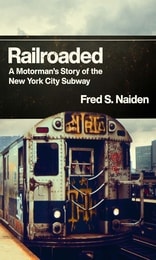
Railroaded
A Motorman's Story of the New York City SubwayFred S. Naiden
Rutgers University Press, 0
“A fascinating insider’s view of a vital and dangerous profession.” —The Wall Street Journal
“An instant classic of labor and transportation history.” —Library Journal, starred review
The New York City subway system is one of the largest and oldest in the world, still carrying traces of the transport systems that came before it. Some of its elevated tracks are remnants of steam railroads, and some tunnels run where canoes served as ferries. For passengers, riding the subway can feel like stepping into another world, dark and dank and sometimes dangerous. Now just imagine what it’s like to work there every day.
One of the few subway workers who went on to earn a PhD from Harvard, historian Fred Naiden gives readers a firsthand look at what it was like to work as a subway porter, a motorman, and a locomotive engineer during the 1980s. He recounts the labor activism of his fellow MTA employees, who advocated for better conditions, higher pay, and less institutional racism. He also shares wild stories about the riders he encountered, from a homeless former realtor who worked as a mob frontman to an angry passenger who pulled a gun on him while the train was stuck at a stop signal. Above all, Railroaded will answer many questions about the New York subway system, including how it could be improved.
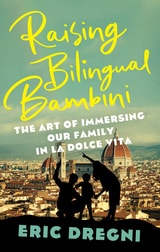
Raising Bilingual Bambini
The Art of Immersing Our Family in the la Dolce VitaEric Dregni
University of Minnesota Press, 2026
A father’s memoir of preparing a dual-language household for a stint living abroad—and all of the ensuing challenges and rewards
After living in Modena, Italy, for three years, Eric Dregni and his wife, Katy, dreamed of returning one day—future children in tow—to give their kids the experience of living abroad. When they become parents, they decide to raise their children with a global perspective in a bilingual household: Katy speaking only English to them and Eric speaking only Italian.
Despite their extended family’s confusion about this experiment, they persist through their three kids’ childhoods, sending them to an immersion language camp and preparing them for life abroad. Eventually, the family packs up and moves to Florence, where the bambini can stop to see Michelangelo’s David on the way home from school, indulge in fresh pasta and gelato, and learn how to argue like real Italians. Sooner than anyone would like, three months of la dolce vita comes to an end, and they head back to Minnesota, trying to bring a taste of Italian culture home with them.
A fast-paced memoir/travelogue, Raising Bilingual Bambini is Dregni’s passionate testament to the value of an international perspective, his loving tribute to the family’s time together in Italy, and a bittersweet reflection on what it meant to return to Minnesota (until their trip to Sicily several years later). Writing with his signature humor and sincerity, Eric Dregni offers a heartfelt story about family and finding a home together in a new place.
Retail e-book files for this title are screen-reader friendly with images accompanied by short alt text and/or extended descriptions.
Raising Ollie
How My Nonbinary Art-Nerd Kid Changed (Nearly) Everything I KnowTom Rademacher
University of Minnesota Press, 2021
The account of one radically new school year for a Teacher of the Year and for his nonbinary, art-obsessed, brilliant child
Seven-year-old Ollie was researching local advanced school programs—because every second grader does that, right? Ollie, who used to hate weekends because they meant no school, was crying on the way to school almost every day. Sure, there were the slings and arrows of bullies and bad teachers, but, maybe worse, Ollie, a funny, anxious, smart kid with a thing for choir and an eye for graphic art, was gravely underchallenged and also struggling with identity and how to live totally as themselves. Ollie begged to switch to a new school with “kids like me,” where they wouldn’t feel so alone, or so bored, and so they made the change.
Raising Ollie is dad Tom Rademacher’s story (really, many stories) of that eventful and sometimes painful school year, parenting Ollie and relearning every day what it means to be a father and teacher. As Ollie—who is nonbinary and uses they/them pronouns, and prefers art to athletics, vegetables to cake, and animals to most humans—flourishes in their new school, Rademacher is making an eye-opening adjustment to a new school of his own, one that’s whiter and more suburban than anywhere he has previously taught, with a history of racial tension that he tries to address and navigate.
While Ollie is learning to code, 3D model, animate, speak Japanese, and finally feel comfortable at school, Rademacher increasingly sees how his own educational struggles, anxieties, and childhood upbringing are reflected in his teaching, writing, and parenting, as well as in Ollie’s experience. And with this story of one anything-but-academic year of inquiry and wonder, doubt and revelation, he shows us how raising a kid changes everything—and how much raising a kid like Ollie can teach us about who we are and what we’re doing in the world.
Raising the Tents
Francis Payne Adler
Calyx, 1993
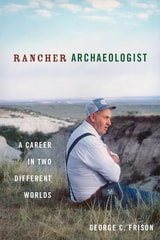
Rancher Archaeologist
A Career in Two Different WorldsGeorge Frison
University of Utah Press, 2014
In this memoir, Frison shares his life’s work and his atypical journey from rancher to professor and archaeologist. Herding cattle, chopping watering holes in sub-zero weather, and guiding hunters in the fall were very different than teaching classes, performing laboratory work, and attending faculty and committee meetings in air-conditioned buildings. But his practical and observational experience around both domestic and wild animals proved a valuable asset to his research. His knowledge of specific animal behaviors gave insight to his studies of the Paleoindians of the northern plains as he sought to understand how their stone tools were used most effectively for hunting and how bison jumps, mammoth kills, and sheep traps actually worked. Frison’s careful research and strong involvement in the scholarly and organizational aspects of archaeology made him influential not only as an authority on the prehistory of the northern plains but also as a leader in Wyoming archaeology and Northern American archaeology at large.
This book will appeal to both the professional and the lay reader with interests in archaeology, anthropology, paleontology, plains history, animal science, hunting, or game management. Frison’s shift from ranching into the academic world of archaeology serves as a reminder that you are never too old to change your life.
Rare and Used
Adventures of a Book Scout's ApprenticeDaniel Dietz
Oregon State University Press, 2026
Coming home to Oregon to reconnect with his aging parents, Daniel Dietz discovers the rhythms and relationships of a changing book world. As the internet pushes bibliophiles away from used bookstores and toward digital commerce, Dietz’s stepfather Michael, now nearing eighty, clings to the precarious trade of scouring thrift stores and library sales for rare books to sell. He explores the stacks, from garage sales in Eugene’s Whiteaker neighborhood to Portland’s Powell’s City of Books, for overlooked first editions and valuable rare books from the past.
With humor and tenderness, Rare and Used introduces us to Michael and to a dedicated and zealous community of book people, each with a grail book that they seek above all others. For Dietz, it’s Beat poet Diane di Prima’s debut collection This Kind of Bird Flies Backward—a book once owned by his stepfather. In his quest for the book, Dietz grapples with larger questions about possession, inheritance, and what we can hold onto. A tribute to books and booksellers as well as to family and place, Rare and Used explores what it means to return home to a community that shaped you.
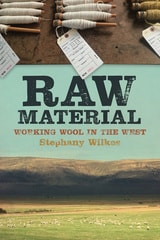
Raw Material
Working Wool in the WestStephany Wilkes
Oregon State University Press, 2018
What begins as a search for local yarn becomes a dirty, unlikely, and irresistible side job. Wilkes leaves her high tech job for a way of life considered long dead in the American West. Along the way, she meets ornery sheep that weigh more than she does, carbon-sequestering ranchers, landless grazing operators, rare breed stewards, and small-batch yarn makers struggling with drought, unfair trade agreements, and faceless bureaucracies as they work to bring eco-friendly fleece to market.
Raw Material demonstrates that the back must break to clothe the body, and that excellence often comes by way of exhaustion. With humor and humility, Wilkes follows wool from the farm to the factory, through the hands of hardworking Americans trying to change the culture of clothing. Her story will appeal to anyone interested in the fiber arts or the textile industry, and especially to environmentally conscious consumers, as it extends the concerns of the sustainable food movement to fleece, fiber, and fashion.

Reading Behind Bars
Alan Tansman
Prickly Paradigm Press, 2027
A reflection on how literature can function as a medium of lived experience rather than intellectual abstraction under conditions of radical constraint.
Drawing on the experience of teaching at Mt. Tam College at the San Quentin Correctional Facility, literary scholar Alan Tansman traces the extraordinary seriousness with which incarcerated students engage literary works form many times and places; Natsume Soseki's Kokoro, Toni Morrison's The Bluest Eye, Jorge Luis Borges's "Funes the Memorious," and Jean Améry's "On Torture." The heart of the book lies not in these canonical works themselves but in the students' responses—writing and discussion that is spare, precise, and emotionally exacting. These students are not merely powerful witnesses to suffering; they are careful, committed readers. Their interpretations are alert to ethical stakes and formal detail, shaped by firsthand knowledge of trauma, isolation, guilt, and the struggle with living in a painful present looking toward a hard future. What kind of refuge can literature offer from pain, guilt, and the weight of the past? Can that refuge also offer a guide for living behind bars?
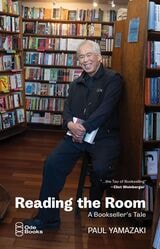
Reading the Room
A Bookseller's TalePaul Yamazaki
Prickly Paradigm Press, 2024
Over twenty-four hours, Paul Yamazaki leads us through the stacks of storied City Lights Booksellers in San Francisco; the care and prowess of his approach to book buying; his upbringing in a Japanese American family in Southern California and moving to San Francisco at the height of revolutionary foment; working with legendary figures in the book publishing industry like Lawrence Ferlinghetti, Sonny Mehta, and others; and his vision for the future of bookselling. Navigating building trust with readers and nurturing relationships across the literary industry, Yamazaki testifies to the value of generosity, sharing knowledge, and dialogue in a life devoted to books.
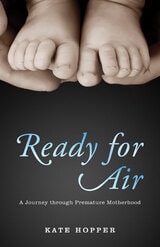
Ready for Air
A Journey through Premature MotherhoodKate Hopper
University of Minnesota Press, 2013
For Kate Hopper, pregnancy is downright unpleasant. She is tired and heavy and worried, and she wants her wine and caffeine back. But then, at a routine checkup, her doctor frowns at her chart and says, “I’m worried about a couple of things”—and unpleasant suddenly seems like paradise. What follows is a harrowing, poignant, and occasionally hysterical journey through premature motherhood, from the starting point of “leaking a little protein” to the early delivery of her tiny daughter because of severe preeclampsia and the beginning of a new chapter of frightful, lifelong love.
Half a million babies are born prematurely in the United States every year—almost one every minute—each with a unique story, and Hopper eloquently gives a voice to what their parents share: the shock, the scares, the lonely nights in the neonatal intensive care unit, the fierce attention to detail that makes for sanity and craziness, the light of faith, the warmth of family, and the terrifying attachment. Through it all runs the power of words to connect us to one another, as Hopper draws on her gifts as a writer first to help her navigate this uncertain territory and then to tell her story. With candor, grace, and a healthy dose of humor, she takes us into the final weeks of her pregnancy, the this-was-not-part-of-the-plan first weeks of little Stella’s life, and the isolated world she and her husband inhabited when they took their daughter home at the onset of a cold Minnesota winter. Finally, frankly, Hopper ventures into the complicated question of whether to have another child. Down-to-earth and honest about the hard realities of having a baby, as well as the true joys, Ready for Air is a testament to the strength of motherhood—and stories—to transform lives.
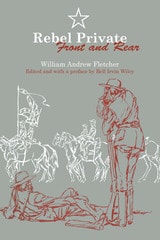
Rebel Private Front and Rear
By William Andrew Fletcher
University of Texas Press, 1954
Rebel Private Front and Rear is a line soldier’s account of the Civil War without heroics. Private Fletcher tells how at Gettysburg he was overcome by a “bad case of cowardly horror” when an order came on the third day to get ready to charge. “I tried to force manhood to the front, but fright would drive it back with a shudder,” he confessed. The attack of jitters lasted about fifteen minutes, and then he fell asleep while awaiting the order to advance.
But Fletcher could be brave to a fault. He was restless and venturesome and during the lulls between fighting would sometimes ask for permission to go on dangerous scouts into enemy territory. Once, just before Fredericksburg, he slipped out to a haystack in the no-man’s-land near the Rappahannock so that he could watch the Yankees build a bridge. And in his last fight at Bentonville he risked his life on a rash and futile impulse to capture a whole squad of Federals. At Second Manassas, Fletcher was struck by a bullet that grazed his bowels and lodged in his hip. His detailed description of his subsequent sensations and experiences is one of the most interesting portions of his narrative. He begged the surgeons to operate, but when they started cutting he howled so profanely that they threatened to abandon him. His reply was: “It don’t hurt as badly when I am cursing.”
Wounded again at Chickamauga, Fletcher was incapacitated for further infantry service and was transferred to Company E, Eighth Texas Cavalry, and served with Terry’s Rangers until the end of the war. In north Georgia he participated in a number of thrilling skirmishes with mounted forces of Sherman’s command, and in one of these encounters he lost his horse. A short time later, in a daring effort to capture a mount from the Yankees, he was taken prisoner. The story of the forming and execution of his plan to escape by jumping from a moving boxcar is full of suspense and excitement.
Rebel Private also reveals Fletcher as something of a philosopher. The narrative is sprinkled with dissertations on unexpected subjects, such as God, justice, and war. He reflects on the rightness and the necessity of “foraging,” in home as well as enemy territory, but he tells with evident relish how he and his “pard” of the occasion “pressed” whiskey, honey, and chickens.
Fletcher set down his experiences some forty years after the close of the Civil War. His story is told with the artlessness of the natural raconteur. Though the style is unpolished, the memoir makes lively reading because of the author’s eye for detail, his straightforward language, and his sense of humor. One of the most frequently cited narratives written by soldiers of Lee’s army, it derives its value as a historical source mainly from Fletcher’s honesty, his close observations, the richness and variety of his experiences, and the sharpness of his memory.
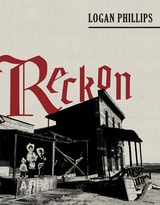
Reckon
Logan Phillips
University of Arizona Press, 2026
In Reckon, artist Logan Phillips returns to the fabled town to face the history he was raised on as a boy—gunfights, outlaws, and Hollywood cowboys—for a new, personal confrontation with the West’s foundational mythology. This hybrid memoir also explores sexuality, masculinity, parenting, and what it means to love a land rife with contradiction and “slathered in murder.”
As innovative as it is moving, this memoir is constructed of essays, photography, poetry, newspaper clippings from the Tombstone Epitaph Local Edition, and of course, movie screenplays. As he writes the characters of his past––including Youngfather and Teenme––Phillips finds the real history to be much more complex than the stories he was told. This is Tombstone in the 1980s and 90s, a century after the West’s most famous gunfight––a fifteen-second event still performed every day in historical reenactments––where Phillips’s father works as a historical exhibit designer at the Courthouse Museum and his uncle as a stuntman at Old Tucson Studios.
With an original, searing voice, Reckon is an essential answer to the tough questions of past and future, inheritance and reinvention, all from the perspective of a boy stuck in the middle.
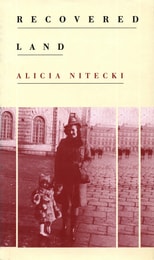
Recovered Land
Alicia Nitecki
University of Massachusetts Press, 1995
Alicia Nitecki was born in Warsaw to a Catholic family that was active in the resistance movement. Following the Nazi conquest of Poland, she and her relatives were dispersed to German prisoner-of-war, labor, and concentration camps. In this book, she revisits the places that have formed her and confronts a past that has haunted her: Warsaw during the 1944 uprising, the Black Forest village where she and the women in her family were taken as slaves in the last months of the war, and Buchenwald and Flossenbürg, the concentration camps where her grandfather was imprisoned.
Nitecki's private odyssey coincided with the collapse of communism in Poland and the reunification of Germany. These essays mark her movement from fear and rage toward fuller knowledge and reconciliation.
Red Virgin
Memoirs Of Louise MichelLouise Michel, edited and translated by Bullitt Lowry and Elizabeth Gunter
University of Alabama Press, 1981
Personal memoires of influential French feminist socialist and radicalist Louise Michel, a participant and observer in the Paris Commune.
Louise Michel was born illegitimate in 1830 and became a schoolmistress in Paris. She was involved in radical activities during the twilight of France’s Second Empire, and during the Franco-Prussian War of 1870 and the siege of Paris. She was a leading member of the revolutionary groups controlling Montmarte. Michel emerged as one of the leaders of the insurrection during the Paris Commune of March-May 1871; and French anarchists saw her as martyr and saint, "the Red Virgin." These are her memoires.
When the Versailles government crushed the Commune in May 1871, Michel was sentenced to exile in New Caledonia, until the general amnesty of 1880, when she returned to France and great popular acclaim and support from the working people of the country. Michel was arrested again during a demonstration in Paris in 1883 and sentenced to six years in prison. Pardoned after three years, she continued her speeches and writing, although she spent the greater part of her time from 1890 until her death in 1905 in England in self-imposed exile. It was during her prison term from 1883 to 1886 that she compiled her Memoires, now available in English.
These memoirs offer readers a view of the non-Marxist left and give an in-depth look into the development of the revolutionary spirit. The early chapters treat her childhood, the development of her revolutionary feelings, and her training as a schoolteacher. The next section describes her activities as a schoolteacher in the Haute-Marne and Paris and therefore contains much of interest on education in 19th-century Europe. Her chapters on the siege of Paris, the Commune, and her first trial show those events from the point of view of a major participant. Of particular interest is a chapter on women’s rights, which Michel saw as part of the search for the rights of all people, male and female, and not as a separate struggle.
The Red Virgin: Memoirs of Louise Michel will be useful to both scholars and students of 19th-century French history and women’s studies.
Red, White, Black, and Blue
A Dual Memoir of Race and Class in AppalachiaWilliam M. Drennen Jr., Kojo (William T.) Jones Jr.
Ohio University Press, 2004
Reflections
Conversations with Politicians Volume IIPeter Hennessy and Robert Shepherd
Haus Publishing, 2019
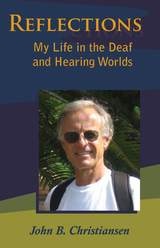
Reflections
My Life in the Deaf and Hearing WorldsJohn B. Christiansen
Gallaudet University Press, 2010
Hard of hearing since early childhood, John Christiansen spent the first 30 years of his life trying to fit in to a hearing world that did little to accommodate his communication needs. Although he excelled in academics, Christiansen found social situations stressful at every level, until he obtained a position as a professor of sociology at Gallaudet University. There he learned sign language and joined a new community. Reflections: My Life in the Deaf and Hearing Worlds grew out of his personal experiences inhabiting these two worlds.
As a sociologist, Christiansen could identify the toll that trying to communicate with hearing people took on his psyche, the classic looking-glass self in action: I am what I think you think I am. He saw that people with hearing loss frequently blame themselves for social awkwardness and gaffs, even though the responsibility for clear communication should be shared. Still, after living in the hearing world for most of his life, he opted to undergo a cochlear implantation to try to improve interaction with his hearing friends, wife, and children.
His description of adjusting to his cochlear implant brings fresh reality to the implant process. As he puts it, he was not a superstar. After ten years, though, he feels positive enough about his experience to endorse it. As a denouement to his affecting memoir, he describes the disruptive 2006 protest at Gallaudet over the choice of a new president from his vantage point as a member of the search committee. Reflections stands as a remarkable account of one person’s navigation through the intricacies of two different and occasionally opposing worlds.
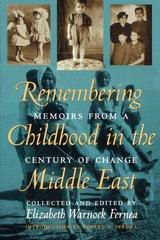
Remembering Childhood in the Middle East
Memoirs from a Century of ChangeCollected and edited by Elizabeth Warnock Fernea
University of Texas Press, 2002
Growing up is a universal experience, but the particularities of homeland, culture, ethnicity, religion, family, and so on make every childhood unique. To give Western readers insight into what growing up in the Middle East was like in the twentieth century, this book gathers thirty-six original memoirs written by Middle Eastern men and women about their own childhoods.
Elizabeth Warnock Fernea, a well-known writer of books and documentary films about women and the family in the Middle East, has collected stories of childhoods spent in Egypt, Iran, Iraq, Israel, Jordan, Kuwait, Lebanon, Morocco, Palestine, Saudi Arabia, Sudan, Syria, Tunisia, and Turkey. The accounts span the entire twentieth century, a full range of ethnicities and religions, and the social spectrum from aristocracy to peasantry. They are grouped by eras, for which Fernea provides a concise historical sketch, and include a brief biography of each contributor. The introduction by anthropologist Robert A. Fernea sets the memoirs in the larger context of Middle Eastern life and culture.
As a collection, the memoirs offer an unprecedented opportunity to look at the same period in history in the same region of the world from a variety of very different remembered experiences. At times dramatic, humorous, or tragic, and always deeply felt, the memoirs document the diversity and richness of people's lives in the modern Middle East.

Remembering Tanizaki Jun’ichiro and Matsuko
Diary Entries, Interview Notes, and Letters, 1954-1989Anthony H. Chambers
University of Michigan Press, 2017
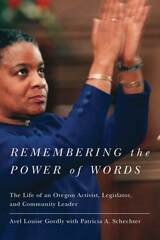
Remembering the Power of Words
The Life of an Oregon Activist, Legislator, and Community LeaderAvel Louise Gordly
Oregon State University Press, 2011
Remembering the Power of Words recounts the personal and professional journey of Avel Gordly, the first African-American woman elected to the Oregon State Senate.
The book is a brave and honest telling of Gordly’s life. She shares the challenges and struggles she faced growing up black in Portland in the 1950s and 1960s, as well as her determination to attend college, the dedication to activism that took her from Portland to Africa, and her eventual decision to run for a seat in the state legislature.
That words have power is a constant undercurrent in Gordly’s account and a truth she learned early in life. “Growing up, finding my own voice,” she writes, “was tied up with denying my voice or having it forcefully rejected and in all of that the memory of my father is very strong. To this day—and I am today a very experienced public speaker—preparation to speak takes a great deal of energy.” That this memoir has its origins as an oral history is fitting since Gordly has used her voice, out loud, to teach and inspire others for so many years.
Important as a biographical account of one significant Oregonian’s story, the book also contributes “broader narratives touching on Black history (and Oregon’s place within it), and most particularly the politics associated with being an African American woman,” according to series editor Melody Rose.
Remote
Finding Home in the BitterrootsDJ Lee
Oregon State University Press, 2020
When DJ Lee’s dear friend vanishes in the vast Selway-Bitterroot Wilderness of Idaho and Montana, she travels there to seek answers. The journey unexpectedly brings to an end her fifteen-year quest to uncover the buried history of her family in this remote place. Although Lee doesn’t find all the answers, she comes away with a penetrating memoir that weaves her present-day story with past excursions into the region, wilderness history, and family secrets.
As she grapples with wild animal stand-offs, bush plane flights in dense fog, raging forest fires, and strange characters who have come to the wilderness to seek or hide, Lee learns how she can survive emotionally and how the wilderness survives as an ecosystem. Her growing knowledge of the life cycles of salmon and wolverine, the regenerative role of fire, and Nimíipuu land practices helps her find intimacy in this remote landscape.
Skillfully intertwining history, outdoor adventure, and mystery, Lee’s memoir is an engaging contribution to the growing body of literature on women and wilderness and a lyrical tribute to the spiritual connection between people and the natural world.
Requiem for the Living
A MemoirMetcalf
University of Utah Press, 2014
Recipient of the Mayor's Award in Literary Arts at the Utah Arts Festival in 2015.
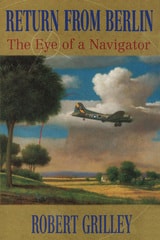
Return from Berlin
The Eye of a NavigatorRobert Grilley
University of Wisconsin Press, 2003
Wakened with flashlights on their faces in the predawn hours, he and his crew repeatedly face the Luftwaffe in battles five miles high, flying through flak "so thick you could get out and walk on it." Stretching their stamina to the limits, they succeed time after time in their missions to bomb munitions works, railyards, the Leüna synthetic oil plant at Merseburg in eastern Germany, the V2 rocket research center at Peenemünde on the distant Baltic Coast, and even to strike Hitler’s capital city, Berlin.
But Grilley finds interludes of unexpected grace and restoration on his days off, making serious drawings from nature at the neighboring Yokehill Farm. There he slowly cultivates a friendship with a curious eight-year-old, the lively child Elizabeth, who becomes for the combat flyer a symbol of survival.
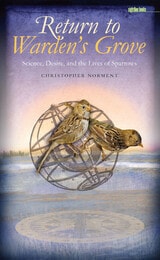
Return to Warden's Grove
Science, Desire, and the Lives of SparrowsChristopher Norment
University of Iowa Press, 2008
Based on three seasons of field research in the Canadian Arctic, Christopher Norment's exquisitely crafted meditation on science and nature, wildness and civilization, is marked by bottomless prose, reflection on timeless questions, and keen observations of the world and our place in it. In an era increasingly marked by cutting-edge research at the cellular and molecular level, what is the role for scientists of sympathetic observation? What can patient waiting tell us about ourselves and our place in the world?
His family at home in the American Midwest, Norment spends months on end living in isolation in the Northwest Territories, studying the ecology of the Harris's Sparrow. Although the fourteenth-century German mystic Meister Eckhardt wrote, "God is at home, we are in the far country," Norment argues that an intellectual, emotional, and spiritual "far country" can be found in the lives of animals and arctic wilderness. For Norment, "doing science" can lead to an enriched aesthetic and emotional connection to something beyond the self and a way to develop a sacred sense of place in a world that feels increasingly less welcoming, certain, and familiar.
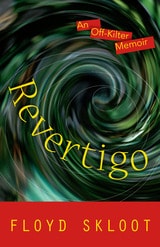
Revertigo
An Off-Kilter MemoirFloyd Skloot
University of Wisconsin Press, 2014
This intimate memoir—tenuous, shifting, sometimes humorous—demonstrates Skloot’s considerable literary skill honed as an award-winning essayist, memoirist, novelist, and poet. His recollections of a strange, spinning world prompt further musings on the forces of uncertainty, change, and displacement that have shaped him from childhood to late middle age, repeatedly knocking him awry, realigning his hopes and plans, even his perceptions. From the volatile forces of his mercurial, shape-shifting early years to his obsession with reading, acting, and writing, from the attack of vertigo to a trio of postvertigo (but nevertheless dizzying) journeys to Spain and England, and even to a place known only in his mother’s unhinged fantasies, Skloot makes sense of a life’s phantasmagoric unpredictability.
Finalist, Sarah Winnemucca Award for Creative Nonfiction, Oregon Book Awards
Revolution By Love
Emerging Arab Youth VoicesDala Ghandour
Temple University Press, 0
Beginning in Tunisia and spreading across the Middle East and North Africa, everyday citizens stepped into the streets, staking their claim to a democratic future. The image of these protests captured the imagination of the world. Revolution by Love takes you inside these protests, onto those streets, and shares with you the stories of the individuals who made this historic moment possible. The book's contributors bear witness to the bravery of Libyans who faced down troops as they secured satellite technology to share with the world what was happening in Tripoli; the courage of doctors, facing gunfire, as they treated patients in Bahrain; and the everyday struggles of families in Gaza. At each moment, within every story shared, there is also a continual return to the love shared with friends and within families--a love that served as the foundation for the protests that changed the world.
Contributors include: Ahmed Abdelhakim Hachelaf, Raghda Abushahla, Muna Abbas Ali AlBuloushi, Shatha Al-Harazi, Samah Elmeri, Dala Ghandour, Mirelle Karam Halim, Shadin Hamaideh, Mohammed Masbah, Amal Matar, Salma Nazzal, Ibrahim Yousif Shebani, and Emna Ben Yedder.
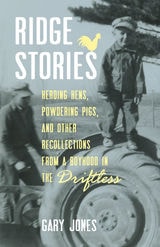
Ridge Stories
Herding Hens, Powdering Pigs, and Other Recollections from a Boyhood in the DriftlessGary Jones
Wisconsin Historical Society Press, 2019
Raised on a small dairy farm in the Driftless Area in the mid-twentieth century, Gary Jones gets real about his rural roots. In this collection of interrelated stories, Jones writes with plainspoken warmth and irreverence about farm, family, and folks on the ridge. Readers will meet Gramp Jones, whose oversized overalls saved him from losing a chunk of flesh to an irate sow; the young one-room-school teacher who helped the kids make sled jumps at recess; Charlotte, the lawn-mowing sheep who once ended up in the living room; Victor the pig-cutter, who learned his trade from folk tradition rather than vet school; and other colorful characters of the ridge. Often humorous and occasionally touching, Jones’s essays paint a vivid picture that will entertain city and country folk alike.
Riding
Pardis Mahdavi
Duke University Press, 2025
Right to the Juke Joint
A Personal History of American MusicPatrick B Mullen
University of Illinois Press, 2018
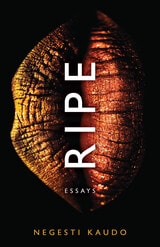
Ripe
EssaysNegesti Kaudo
The Ohio State University Press, 2022
A LitHub Most Anticipated Book of 2022
“Emotional range without consequence,” Negesti Kaudo writes in her debut collection, Ripe, is a privilege of whiteness. In these essays, she fights back, exhorting readers to follow her through fury, grief, love, and hope as she confronts what it means to own her Blackness and her body in contemporary America. A scathing and nuanced cultural critic, she disentangles intersections of race, class, pop culture, size, sexuality, and more in spaces where she always seems to be either too Black or not Black enough. From attending private school as a poor Black student to the evolution of her hair routine to being fat and sexual when society says she should be neither, Kaudo overlooks nothing as she names the ways that white America simultaneously denigrates and steals Black culture. Most of all, she writes against the idea that a Black woman’s anger makes her an “angry Black woman,” claiming full emotional range as her birthright and as a tool against injustice on her quest to find herself no matter how uncomfortable the journey.
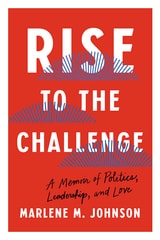
Rise to the Challenge
A Memoir of Politics, Leadership, and LoveJohnson
University of Minnesota Press, 2024
The inspiring life story of Minnesota’s first woman lieutenant governor: breaking political ground, navigating patriarchal tradition, and persevering through great personal loss
Marking a milestone for women in state government, Marlene M. Johnson became Minnesota’s first woman lieutenant governor under Rudy Perpich’s gubernatorial administration in January 1983. That same year, she met her husband, Peter, and their deeply loving relationship profoundly sustained her for twenty-seven years. Rise to the Challenge weaves these personal and professional stories together in a courageous portrait of dedication and leadership.
Growing up in rural Minnesota, Johnson began organizing and advocating for change early, beginning with a campaign to introduce foreign languages into her high school curriculum. Pursuing a deeply felt commitment to improving the lives of others, she continued to sharpen her leadership skills throughout her life, participating in activist work in college, cofounding organizations to support women entrepreneurs and politicians, and eventually running an international education nonprofit.
A stalwart supporter, her husband gave Marlene strength and encouragement to face the challenges of the political landscape and its gender biases. Then, in 2010, he suffered a traumatic brain injury that would change both of their lives. Learning how to be a medical advocate and, eventually, facing the sorrow of Peter’s death, Marlene relied on the hard-fought resilience and belief in herself that Peter had helped her to develop.
A story of learning and leadership in politics, business, and public service, Rise to the Challenge is a moving portrayal of spirit, perseverance, and grace in the face of daunting personal challenges, supported by unwavering faith in the public good.
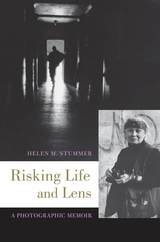
Risking Life and Lens
A Photographic MemoirHelen M. Stummer
Temple University Press, 2017
For more than forty years, Helen M. Stummer has captured images depicting the dignity, humanity, and suffering of people living in conditions of poverty. Her efforts taught her to understand firsthand the resilience of people living in insufferable conditions. In her inspiring memoir, Risking Life and Lens, Stummer recounts her experiences as a socially-concerned documentary photographer whose passion for her work overcame her fears.
Stummer’s images, from the mean streets of Manhattan and Newark, New Jersey, to the back woods of Maine and the mountains of Guatemala, expose the myths of poverty and serve as a metaphor for her challenges in her own life. The 159 photographs reproduced here recount Stummer’s journey as an artist and her personal quest for truth.
Risking Life and Lens shares Stummer’s work and educational efforts and it provides valuable insights about race, class, and social justice—issues that continue to divide the country and the world. Her work has created change in both her own life and the lives of those who view it.
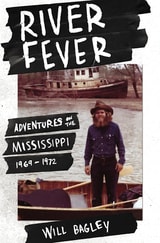
River Fever
Adventures on the Mississippi, 1969-1972Will Bagley
Signature Books, 2019
Beginning in the spring of 1969, Huckleberry Finn inspired a question: Could you build a raft, float down the Mississippi River to New Orleans, and on the way learn something about America and its peoples? Will Bagley, a vagrant longhair and future prize-winning western historian, and his friends could, and did. Now, a half century after the adventure, Bagley tells his story.
River Fever
Adventures on the Mississippi, 1969-1972Will Bagley
Signature Books, 2019
Beginning in the spring of 1969, Huckleberry Finn inspired a question: Could you build a raft, float down the Mississippi River to New Orleans, and on the way learn something about America and its peoples? Will Bagley, a vagrant longhair and future prize-winning western historian, and his friends could, and did. Now, a half century after the adventure, Bagley tells his story.
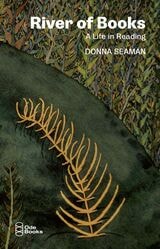
River of Books
Donna Seaman
Prickly Paradigm Press, 2024
With the infectious curiosity of an inveterate bibliophile and the prose of a fine stylist, Donna Seaman charts the course of her early reading years in a book-by-book chronicle of the significance books have held in her life. River of Books recounts Seaman’s journey in becoming an editor for Booklist, a reviewer, an author, and a literary citizen, and lays bare how she nourished both body and soul in working with books. Seaman makes palpable the power and self-recognition that she discovered in a life dedicated to reading.
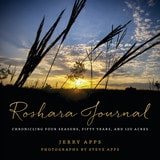
Roshara Journal
Chronicling Four Seasons, Fifty Years, and 120 AcresJerry Apps
Wisconsin Historical Society Press, 2016
A photographic diary of a small Midwestern farm and the family who’ve made it their home
In Roshara Journal, father-and-son team Jerry and Steve Apps share the monthly happenings at their family’s farm in central Wisconsin. Featuring Steve’s stunning photos and fifty years of Jerry’s journal entries, Roshara Journal captures the changes—both from month to month and over the decades—on the landscape and farmstead.
The Apps family has owned Roshara since 1966. There they nurture a prairie restoration and pine plantation, maintain a large garden that feeds three generations, observe wildlife species by the dozens, and support a population of endangered butterflies. In documenting life on this piece of land, Jerry and Steve remind us how, despite the pace and challenges of modern life, the seasons continue to influence our lives in ways large and small. Jerry explains that his journal entries become much more than mere observations: "It seems that when I write about something—a bur oak tree, for example—that old tree becomes a part of me. . . . Writing takes me to a place that goes beyond observation and understanding, a place filled with feeling and meaning."
In the tradition of Bernd Heinrich in Maine, Barry Lopez in the Canadian Arctic, and Aldo Leopold just an hour down the road in Baraboo, Jerry and Steve Apps combine observation, experience, and reflection to tell a profound story about one place in the world.
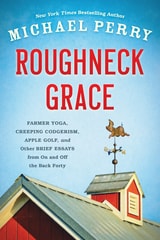
Roughneck Grace
Farmer Yoga, Creeping Codgerism, Apple Golf, and Other Brief Essays from on and off the Back FortyMichael Perry
Wisconsin Historical Society Press, 2016
New York Times bestselling author, humorist, and newspaper columnist Michael Perry returns with a new collection of bite-sized essays from his Sunday Wisconsin State Journal column, “Roughneck Grace.” Perry’s perspectives on everything from cleaning the chicken coop to sharing a New York City elevator with supermodels will have you snorting with laughter on one page, blinking back tears on the next, and--no matter your zip code--nodding in recognition throughout.
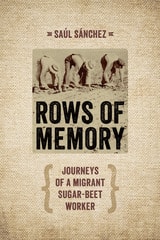
Rows of Memory
Journeys of a Migrant Sugar-Beet WorkerSaul Sanchez
University of Iowa Press, 2014
Rows of Memory tells his story and the story of his family and other migrant farm laborers like them, people who endured dangerous, dirty conditions and low pay, surviving because they took care of each other. Facing racism both on the road and at home, they lived a largely segregated life only occasionally breached by friendly employers.
Despite starting school late and leaving early every year and having to learn English on the fly, young Saúl succeeded academically. At the same time that Mexican Americans in South Texas upended the Anglo-dominated social order by voting their own leaders into local government, he upended his family’s order by deciding to go to college. Like many migrant children, he knew that his decision to pursue an education meant he would no longer be able to help feed and clothe the rest of his family. Nevertheless, with his parents’ support, he went to college, graduating in 1967 and, after a final display of his skill with a short hoe for his new friends, abandoned migrant labor for teaching.
In looking back at his youth, Sánchez invites us to appreciate the largely unrecognized and poorly rewarded strength and skill of the laborers who harvest the fruits and vegetables we eat. A first-person portrait of life on the bottom rung of the food system, this coming-of-age tale illuminates both the history of Latinos in the United States and the human consequences of industrial agriculture.
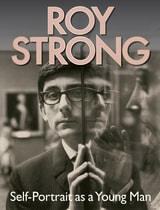
Roy Strong
Self-Portrait as a Young ManRoy Strong
Bodleian Library Publishing, 2013
In this book, Strong recounts his early years and the stirrings of what would become a lifelong passion for art. During a childhood spent in suburban North London, Strong recalls himself as a shy and solitary boy who spent his time painting Elizabethan miniatures and Shakespearean set designs. The book follows his progression through grammar school, which he attended alongside Alan Bennett and David Hockney, and university, where he developed a love of learning and enjoyed visits to the theater, opera, and ballet. With remarkable honesty, he explores the important relationships in his life—family, friends, and a schoolteacher with whom he maintained a long correspondence—as well as his debt to figures like Cecil Beaton, Frances Yates, C. V. Wedgwood, and A. L. Rowse.
Richly illustrated throughout with photographs, drawings, and letters, this book offers a compelling look at a young man poised for success.
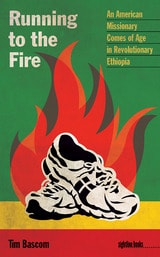
Running to the Fire
An American Missionary Comes of Age in Revolutionary EthiopiaTim Bascom
University of Iowa Press, 2015
Running to the Fire focuses on the turbulent year the Bascom family experienced upon traveling into revolutionary Ethiopia. The teenage Bascom finds a paradoxical exhilaration in living so close to constant danger. At boarding school in Addis Ababa, where dorm parents demand morning devotions and forbid dancing, Bascom bonds with other youth due to a shared sense of threat. He falls in love for the first time, but the young couple is soon separated by the politics that affect all their lives. Across the country, missionaries are being held under house arrest while communist cadres seize their hospitals and schools. A friend’s father is imprisoned as a suspected CIA agent; another is killed by raiding Somalis.
Throughout, the teenaged Bascom struggles with his faith and his role within the conflict as a white American Christian missionary’s child. Reflecting back as an adult, he explores the historical, cultural, and religious contexts that led to this conflict, even though in doing so he is forced to ask himself questions that are easier left alone. Why, he wonders, did he find such strange fulfillment in being young and idealistic in the middle of what was essentially a kind of holy war?
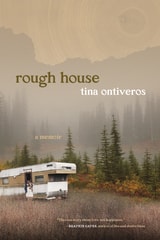
rough house
a memoirTina Ontiveros
Oregon State University Press, 2020
Tina Ontiveros was born into timber on both sides of the family. Her mother spent summers driving logging trucks for her family’s operation, and her father was the son of an itinerant logger, raised in a variety of lumber towns, as Tina herself would be.
A story of growing up in turmoil, rough house recounts a childhood divided between a charming, mercurial, abusive father in the forests of the Pacific Northwest and a mother struggling with small-town poverty. It is also a story of generational trauma, especially for the women—a story of violent men and societal restrictions, of children not always chosen and frequently raised alone.
Ontiveros’s father, Loyd, looms large. Reflecting on his death and long absence from her life, she writes, “I had this ridiculous hope that I would get to enjoy a functional relationship with my father, on my own terms, now that I was an adult.” In searingly honest, straightforward prose, rough house is her attempt to carve out this relationship, to understand her father and her family from an adult perspective.
While some elements of Ontiveros’s story are universal, others are indelibly grounded in the logging camps of the Pacific Northwest at the end of the twentieth century, as the lumber industry shifted and contracted. Tracing her childhood through the working-class towns and forests of Washington and Oregon, Ontiveros explores themes of love and loss, parents and children, and her own journey to a different kind of adulthood.