Results by title
683 books match the query 'Middle East' and 32 start with r
Racial Blackness and Indian Ocean Slavery
Iran's Cinematic ArchiveParisa Vaziri
University of Minnesota Press, 2023
Rethinking the history of African enslavement in the western Indian Ocean through the lens of Iranian cinema
From the East African and Red Sea coasts to the Persian Gulf ports of Bushihr, Kish, and Hurmuz, sailing and caravan networks supplied Iran and the surrounding regions with African slave labor from antiquity to the nineteenth century. This book reveals how Iranian cinema preserves the legacy of this vast and yet long-overlooked history that has come to be known as Indian Ocean slavery.
How does a focus on blackness complicate traditional understandings of history and culture? Parisa Vaziri addresses this question by looking at residues of the Indian Ocean slave trade in Iranian films from the second half of the twentieth century. Revealing the politicized clash between commercial cinema (fīlmfārsī) and alternative filmmaking (the Iranian New Wave), she pays particular attention to the healing ritual zār, which is both an African slave descendent practice and a constitutive element of Iranian culture, as well as to cinematic sīyāh bāzī (Persian black play). Moving beyond other studies on Indian Ocean and trans-Saharan slavery, Vaziri highlights the crystallization of a singular mode of historicity within these cinematic examples—one of “absence” that reflects the relative dearth of archival information on the facts surrounding Indian Ocean slavery.
Bringing together cinema studies, Middle East studies, Black studies, and postcolonial theory, Racial Blackness and Indian Ocean Slavery explores African enslavement in the Indian Ocean through the revelatory and little-known history of Iranian cinema. It shows that Iranian film reveals a resistance to facticity representative of the history of African enslavement in the Indian Ocean and preserves the legacy of African slavery’s longue durée in ways that resist its overpowering erasure in the popular and historical imagination.
Retail e-book files for this title are screen-reader friendly with images accompanied by short alt text and/or extended descriptions.
Reading Clocks, Alla Turca
Time and Society in the Late Ottoman EmpireAvner Wishnitzer
University of Chicago Press, 2015
Drawing on a wealth of archival and literary sources, Wishnitzer’s original and highly important work presents the shifting culture of time as an arena in which Ottoman social groups competed for legitimacy and a medium through which the very concept of modernity was defined. Reading Clocks, Alla Turca breaks new ground in the study of the Middle East and presents us with a new understanding of the relationship between time and modernity.
Reading Darwin in Arabic, 1860-1950
Marwa Elshakry
University of Chicago Press, 2013
Reading Palestine
Printing and Literacy, 1900-1948By Ami Ayalon
University of Texas Press, 2004
Prior to the twentieth century, Arab society in Palestine was predominantly illiterate, with most social and political activities conducted through oral communication. There were no printing presses, no book or periodical production, and no written signs in public places. But a groundswell of change rapidly raised the region's literacy rates, a fascinating transformation explored for the first time in Reading Palestine.
Addressing an exciting aspect of Middle Eastern history as well as the power of the printed word itself, Reading Palestine describes how this hurried process intensified the role of literacy in every sphere of community life. Ami Ayalon examines Palestine's development of a modern educational system in conjunction with the emergence of a print industry, libraries and reading clubs, and the impact of print media on urban and rural populations. Drawn from extensive archival sources, official reports, autobiographies, and a rich trove of early Palestinian journalism, Reading Palestine provides crucial insight into the dynamic rise of literacy that revolutionized the way Palestinians navigated turbulent political waters.
Reclaiming Iraq
The 1920 Revolution and the Founding of the Modern StateBy Abbas Kadhim
University of Texas Press, 2012
While some scholars would argue that there was no “Iraq” before King Faysal’s coronation in 1921, Iraqi history spans fourteen centuries of tribal communities that endured continual occupation in their historic homeland, including Mongol invasions in the thirteenth century and subsequent Ottoman and British invasions. An Iraqi identity was established long before the League of Nations defined the nation-state of Iraq in 1932. Drawing on neglected primary sources and other crucial accounts, including memoirs and correspondence, Reclaiming Iraq puts the 1920 revolt against British occupation in a new light—one that emphasizes the role of rural fighters between June and November of that year.
While most accounts of the revolution have been shaped by the British administration and successive Iraqi governments, Abbas Kadhim sets out to explore the reality that the intelligentsia of Baghdad and other cities in the region played an ideological role but did not join in the fighting. His history depicts a situation we see even today in conflicts in the Middle East, where most military engagement is undertaken by rural tribes that have no central base of power. In the study of the modern Iraqi state, Kadhim argues, Faysal’s coronation has detracted from the more significant, earlier achievements of local attempts at self-rule. With clarity and insight, this work offers an alternative perspective on the dawn of modern Iraq.
Reclaiming a Plundered Past
Archaeology and Nation Building in Modern IraqBy Magnus T. Bernhardsson
University of Texas Press, 2006
The looting of the Iraqi National Museum in April of 2003 provoked a world outcry at the loss of artifacts regarded as part of humanity's shared cultural patrimony. But though the losses were unprecedented in scale, the museum looting was hardly the first time that Iraqi heirlooms had been plundered or put to political uses. From the beginning of archaeology as a modern science in the nineteenth century, Europeans excavated and appropriated Iraqi antiquities as relics of the birth of Western civilization. Since Iraq was created in 1921, the modern state has used archaeology to forge a connection to the ancient civilizations of Mesopotamia and/or Islamic empires and so build a sense of nationhood among Iraqis of differing religious traditions and ethnicities.
This book delves into the ways that archaeology and politics intertwined in Iraq during the British Mandate and the first years of nationhood before World War II. Magnus Bernhardsson begins with the work of British archaeologists who conducted extensive excavations in Iraq and sent their finds to the museums of Europe. He then traces how Iraqis' growing sense of nationhood led them to confront the British over antiquities law and the division of archaeological finds between Iraq and foreign excavators. He shows how Iraq's control over its archaeological patrimony was directly tied to the balance of political power and how it increased as power shifted to the Iraqi government. Finally he examines how Iraqi leaders, including Saddam Hussein, have used archaeology and history to legitimize the state and its political actions.
Reconstructing Beirut
Memory and Space in a Postwar Arab CityBy Aseel Sawalha
University of Texas Press, 2010
Once the cosmopolitan center of the Middle East, Beirut was devastated by the civil war that ran from 1975 to 1991, which dislocated many residents, disrupted normal municipal functions, and destroyed the vibrant downtown district. The aftermath of the war was an unstable situation Sawalha considers "a postwar state of emergency," even as the state strove to restore normalcy. This ethnography centers on various groups' responses to Beirut's large, privatized urban-renewal project that unfolded during this turbulent moment.
At the core of the study is the theme of remembering space. The official process of rebuilding the city as a node in the global economy collided with local day-to-day concerns, and all arguments invariably inspired narratives of what happened before and during the war. Sawalha explains how Beirutis invoked their past experiences of specific sites to vie for the power to shape those sites in the future. Rather than focus on a single site, the ethnography crosses multiple urban sites and social groups, to survey varied groups with interests in particular spaces. The book contextualizes these spatial conflicts within the discourses of the city's historical accounts and the much-debated concept of heritage, voiced in academic writing, politics, and journalism. In the afterword, Sawalha links these conflicts to the social and political crises of early twenty-first-century Beirut.
Recovered Roots
Collective Memory and the Making of Israeli National TraditionYael Zerubavel
University of Chicago Press, 1995
In the years leading to the birth of Israel, Zerubavel shows, Zionist settlers in Palestine consciously sought to rewrite Jewish history by reshaping Jewish memory. Zerubavel focuses on the nationalist reinterpretation of the defense of Masada against the Romans in 73 C.E. and the Bar Kokhba revolt of 133-135; and on the transformation of the 1920 defense of a new Jewish settlement in Tel Hai into a national myth. Zerubavel demonstrates how, in each case, Israeli memory transforms events that ended in death and defeat into heroic myths and symbols of national revival.
Drawing on a broad range of official and popular sources and original interviews, Zerubavel shows that the construction of a new national tradition is not necessarily the product of government policy but a creative collaboration between politicans, writers, and educators. Her discussion of the politics of commemoration demonstrates how rival groups can turn the past into an arena of conflict as they posit competing interpretations of history and opposing moral claims on the use of the past. Zerubavel analyzes the emergence of counter-memories within the reality of Israel's frequent wars, the ensuing debates about the future of the occupied territories, and the embattled relations with Palestinians.
A fascinating examination of the interplay between history and memory, this book will appeal to historians, sociologists, anthropologists, political scientists, and folklorists, as well as to scholars of cultural studies, literature, and communication.
Reform, Recovery, and Growth
Latin America and the Middle EastEdited by Rudiger Dornbusch and Sebastian Edwards
University of Chicago Press, 1994
Among the questions addressed are: What are the requirements for a stabilization policy that reduces inflation in a reasonable amount of time at an acceptable cost? What are the effects of structural reforms, especially trade liberalization, deregulation, and privatization, on growth in the short and long runs? How do macroeconomic instability and adjustment policies affect income distribution and poverty? How does the specific design of structural adjustment efforts affect results?
In this companion to Macroeconomics of Populism in Latin America, the authors confirm that macroeconomic stability has a positive effect on income distribution. The volume presents case studies that describe in detail the stabilization experiences in Brazil, Israel, Argentina, and Bolivia, and also includes discussion of Chile, Mexico, Peru, and Turkey.
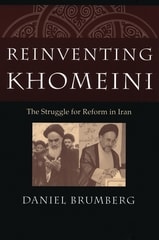
Reinventing Khomeini
The Struggle for Reform in IranDaniel Brumberg
University of Chicago Press, 2001
A complex figure, Khomeini was a fervent champion of Islam, but while he sought a Shi'ite vision of clerical rule under one Supreme Leader, he also strove to mesh that vision with an implicitly Western view of mass participatory politics. The intense magnetism and charisma of the ayatollah obscured this paradox. But reformers in Iran today, while rejecting his autocratic vision, are reviving the constitutional notions of government that he considered, and even casting themselves as the bearers of his legacy. In Reinventing Khomeini, Brumberg proves that the ayatollah is as much the author of modern Iran as he is the symbol of its fundamentalist past.
Religion, Empire, and Torture
The Case of Achaemenian Persia, with a Postscript on Abu GhraibBruce Lincoln
University of Chicago Press, 2007
Lincoln identifies three core components of an imperial theology that have transhistorical and contemporary relevance: dualistic ethics, a theory of divine election, and a sense of salvific mission. Beyond this, he asks, how did the Achaemenians understand their place in the cosmos and their moral status in relation to others? Why did they feel called to intervene in the struggle between good and evil? What was their sense of historic purpose, especially their desire to restore paradise lost? And how did this lead them to deal with enemies and critics as imperial power ran its course? Lincoln shows how these religious ideas shaped Achaemenian practice and brought the Persians unprecedented wealth, power, and territory, but also produced unmanageable contradictions, as in a gruesome case of torture discussed in the book’s final chapter. Close study of that episode leads Lincoln back to the present with a postscript that provides a searing and utterly novel perspective on the photographs from Abu Ghraib.
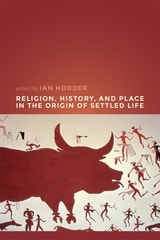
Religion, History, and Place in the Origin of Settled Life
Ian Hodder
University Press of Colorado, 2018
Contributors argue that the long-term social relationships characteristic of delayed-return agricultural systems must be based on historical ties to place and to ancestors. They define different forms of history-making, including nondiscursive routinized practices as well as commemorative memorialization. They consider the timing in the Neolithic of an emerging concern with history-making in place in relation to the adoption of farming and settled life in regional sequences. They explore whether such correlations indicate the causal processes in which history-making, ritual practices, agricultural intensification, population increase, and social competition all played a role.
Religion, History, and Place in the Origin of Settled Life takes a major step forward in understanding the adoption of farming and a settled way of life in the Middle East by foregrounding the roles of history-making and religious ritual. This work is relevant to students and scholars of Near Eastern archaeology, as well as those interested in the origins of agriculture and social complexity or the social role of religion in the past.
Contributors: Kurt W. Alt, Mark R. Anspach, Marion Benz, Lee Clare, Anna Belfer-Cohen, Morris Cohen, Oliver Dietrich, Güneş Duru, Yilmaz S. Erdal, Nigel Goring-Morris, Ian Hodder, Rosemary A. Joyce, Nicola Lercari, Wendy Matthews, Jens Notroff, Vecihi Özkaya, Feridun S. Şahin, F. Leron Shults, Devrim Sönmez, Christina Tsoraki, Wesley Wildman
Remembering Childhood in the Middle East
Memoirs from a Century of ChangeCollected and edited by Elizabeth Warnock Fernea
University of Texas Press, 2002
Growing up is a universal experience, but the particularities of homeland, culture, ethnicity, religion, family, and so on make every childhood unique. To give Western readers insight into what growing up in the Middle East was like in the twentieth century, this book gathers thirty-six original memoirs written by Middle Eastern men and women about their own childhoods.
Elizabeth Warnock Fernea, a well-known writer of books and documentary films about women and the family in the Middle East, has collected stories of childhoods spent in Egypt, Iran, Iraq, Israel, Jordan, Kuwait, Lebanon, Morocco, Palestine, Saudi Arabia, Sudan, Syria, Tunisia, and Turkey. The accounts span the entire twentieth century, a full range of ethnicities and religions, and the social spectrum from aristocracy to peasantry. They are grouped by eras, for which Fernea provides a concise historical sketch, and include a brief biography of each contributor. The introduction by anthropologist Robert A. Fernea sets the memoirs in the larger context of Middle Eastern life and culture.
As a collection, the memoirs offer an unprecedented opportunity to look at the same period in history in the same region of the world from a variety of very different remembered experiences. At times dramatic, humorous, or tragic, and always deeply felt, the memoirs document the diversity and richness of people's lives in the modern Middle East.
Remembering the Dead in the Ancient Near East
Recent Contributions from Bioarchaeology and Mortuary ArchaeologyBenjamin W. Porter
University Press of Colorado, 2016
Remembering the Dead in the Ancient Near East is among the first comprehensive treatments to present the diverse ways in which ancient Near Eastern civilizations memorialized and honored their dead, using mortuary rituals, human skeletal remains, and embodied identities as a window into the memory work of past societies.
In six case studies teams of researchers with different skillsets—osteological analysis, faunal analysis, culture history and the analysis of written texts, and artifact analysis—integrate mortuary analysis with bioarchaeological techniques. Drawing upon different kinds of data, including human remains, ceramics, jewelry, spatial analysis, and faunal remains found in burial sites from across the region’s societies, the authors paint a robust and complex picture of death in the ancient Near East.
Demonstrating the still underexplored potential of bioarchaeological analysis in ancient societies, Remembering the Dead in the Ancient Near East serves as a model for using multiple lines of evidence to reconstruct commemoration practices. It will be of great interest to students and scholars of ancient Near Eastern and Egyptian societies, the archaeology of death and burial, bioarchaeology, and human skeletal biology.
Resisting Europe
Practices of Contestation in the Mediterranean Middle EastEdited by Raffaella A. Del Sarto and Simone Tholens
University of Michigan Press, 2020
Rethinking Global Sisterhood
Western Feminism and IranNima Naghibi
University of Minnesota Press, 2007
Western women’s involvement in Persia dates from the mid-nineteenth century, when female adventurers and missionaries first encountered their veiled Muslim “sisters.” Twentieth-century Western and state-sponsored Iranian feminists continued to use the image of the veiled woman as the embodiment of backwardness. Yet, following the 1979 revolution, indigenous Iranian feminists became more vocal in their resistance to this characterization.
In Rethinking Global Sisterhood, Nima Naghibi makes powerful connections among feminism, imperialism, and the discourses of global sisterhood. Naghibi investigates topics including the state-sponsored Women’s Organization of Iran and the involvement of feminists such as Betty Friedan and Gloria Steinem in the Iranian feminism movement before and during the 1979 revolution. With a potent analysis of cinema, she examines the veiled woman in the films of Tahmineh Milani, Ziba Mir-Hosseini and Kim Longinotto, and Mahnaz Afzali.
At a time when Western relations with the Muslim world are in crisis, Rethinking Global Sisterhood provides much-needed insights and explores the limitations and possibilities of cross-cultural feminist social and political interventions.
Nima Naghibi is assistant professor of English at Ryerson University in Toronto.
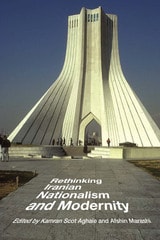
Rethinking Iranian Nationalism and Modernity
Edited by Kamran Scot Aghaie and Afshin Marashi
University of Texas Press, 2014
While recent books have explored Arab and Turkish nationalism, the nuances of Iran have received scant book-length study—until now. Capturing the significant changes in approach that have shaped this specialization, Rethinking Iranian Nationalism and Modernity shares innovative research and charts new areas of analysis from an array of scholars in the field.
Delving into a wide range of theoretical and conceptual perspectives, the essays—all previously unpublished—encompass social history, literary theory, postcolonial studies, and comparative analysis to address such topics as:
- Ethnicity in the Islamic Republic of Iran
- Political Islam and religious nationalism
- The evolution of U.S.-Iranian relations before and after the Cold War
- Comparing Islamic and secular nationalism(s) in Egypt and Iran
- The German counterrevolution and its influence on Iranian political alliances
- The effects of Israel’s image as a Euro-American space
- Sufism
- Geocultural concepts in Azar’s Atashkadeh
Interdisciplinary in essence, the essays also draw from sociology, gender studies, and art and architecture. Posing compelling questions while challenging the conventional historiographical traditions, the authors (many of whom represent a new generation of Iranian studies scholars) give voice to a research approach that embraces the modern era’s complexity while emphasizing Iranian nationalism’s contested, multifaceted, and continuously transformative possibilities.
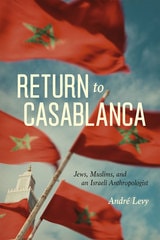
Return to Casablanca
Jews, Muslims, and an Israeli AnthropologistAndré Levy
University of Chicago Press, 2015
Levy visits a host of sites and historical figures to assemble a compelling history of social change, while seamlessly interweaving his study with personal accounts of his returns to his homeland. Central to this story is the massive migration of Jews out of Morocco. Levy traces the institutional and social changes such migrations cause for those who choose to stay, introducing the concept of “contraction” to depict the way Jews deal with the ramifications of their demographic dwindling. Turning his attention outward from Morocco, he goes on to explore the greater complexities of the Jewish diaspora and the essential paradox at the heart of his adventure—leaving Israel to return home.
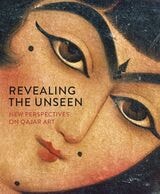
Revealing the Unseen
New Perspectives on Qajar ArtEdited by Melanie Gibson and Gwenaëlle Fellinger
Gingko, 2022
The thirteen articles in this volume were originally given as presentations at the symposium of the same name organized in June 2018 by the Musée du Louvre and the Musée du Louvre-Lens in conjunction with the exhibition The Empire of Roses: Masterpieces of 19th Century Persian Art. The exhibition explored the art of Iran in the nineteenth and early twentieth centuries, while the nation was under the rule of the Qajar dynasty. The symposium set out to present research on previously unknown and unpublished objects from this rich period of art history.
This volume, published with the Louvre Museum in France, is divided into four sections. The first, “Transitions and Transmissions,” is dedicated to the arts of painting, illumination, and lithography. The focus of the second section, entitled “The Image Revealed,” also considers works on paper, looking at new themes and techniques. “The Material World” examines the use of materials such as textiles, carpets, and armor. The articles in the final section discuss the history of two groups of artifacts acquired by their respective museums.
Revival and Awakening
American Evangelical Missionaries in Iran and the Origins of Assyrian NationalismAdam H. Becker
University of Chicago Press, 2015
American evangelicals arrived in Iran in the 1830s. Becker examines how these missionaries, working with the “Nestorian” Church of the East—an Aramaic-speaking Christian community in the borderlands between Qajar Iran and the Ottoman Empire—catalyzed, over the span of sixty years, a new national identity. Instructed at missionary schools in both Protestant piety and Western science, this indigenous group eventually used its newfound scriptural and archaeological knowledge to link itself to the history of the ancient Assyrians, which in time led to demands for national autonomy. Exploring the unintended results of this American attempt to reform the Orient, Becker paints a larger picture of religion, nationalism, and ethnic identity in the modern era.
Revolution Squared
Tahrir, Political Possibilities, and Counterrevolution in EgyptAtef Shahat Said
Duke University Press, 2024
Revolution and Disenchantment
Arab Marxism and the Binds of EmancipationFadi A. Bardawil
Duke University Press, 2020
Revolution and Genocide
On the Origins of the Armenian Genocide and the HolocaustRobert Melson
University of Chicago Press, 1992
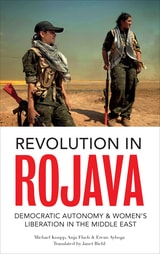
Revolution in Rojava
Democratic Autonomy and Women's Liberation in the Syrian KurdistanMichael Knapp, Ercan Ayboga, and Anja Flach
Pluto Press, 2016
Revolution in Rojava tells the story of Rojava's groundbreaking experiment in what they call democratic confederalism, a communally organized democracy that is fiercely anti-capitalist and committed to female equality, while rejecting reactionary nationalist ideologies.
Rooted in the ideas of imprisoned Kurdish leader Abdullah Ocalan, the system is built on effective gender quotas, bottom-up democratic structures, far-sighted ecological policies, and a powerful militancy that has allowed the region to keep ISIS at bay.
Given the widespread violence and suffering in Syria, it's not unreasonable that outsiders look at the situation as unrelentingly awful. And while the reality of the devastation is undeniable, there is reason for hope in at least one small pocket of the nation: the cantons of Rojava in Syrian Kurdistan, where in the wake of war people are quietly building one of the most progressive societies in the world today. Chapters here include:
*Rojava's Diverse Cultures
*Democratic Confederalism
*The Liberation
*A Women's Revolution
*Democratic Autonomy in Rojava
*Civil Society Associations
*The Theory of the Rose: Defense
*The New Justice System
*Democratization of Education
*Health Care
*The Social Economy
*Ecological Challenges
This first full-length study of democratic developments in Rojava tells an extraordinary and powerfully hopeful story of a little-known battle for true freedom in dark times. With excellent first-hand background information about this important, but little understood struggle, Revolution in Rojava will educate and inspire the reader to learn more about Rojava, Syria, and the fight for change in one of the world’s most dangerous regions.
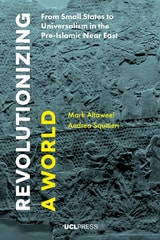
Revolutionizing a World
From Small States to Universalism in the Pre-Islamic Near EastMark Altaweel and Andrea Squitieri
University College London, 2018
The authors argue that the persistence of large states and empires starting in the eighth/seventh centuries BCE, which continued for many centuries, led to new sociopolitical structures and institutions emerging in the Near East. The primary processes that enabled this emergence were large-scale and long-distance movements, or population migrations. These patterns of social developments are analyzed under different aspects: settlement patterns, urban structure, material culture, trade, governance, language spread, and religion, all pointing at movement as the main catalyst for social change. This book’s argument is framed within a larger theoretical framework termed as "universalism," a theory that explains many of the social transformations that happened to societies in the Near East, starting from the Neo-Assyrian period and continuing for centuries. Among other influences, the effects of these transformations are today manifested in modern languages, concepts of government, universal religions and monetized and globalized economies.
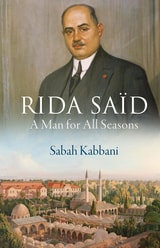
Rida Said
A Man for All SeasonsSabah Kabbani
Haus Publishing, 2018
Now available for the first time in English, Rida Saïd: A Man for All Seasons tells the story of this remarkable life at the heart of a nation in deep conflict. Indeed, Saïd’s story resonates profoundly today as the Syrian people struggle for a future of opportunity and respect.
Right Across the World
The Global Networking of the Far-Right and the Left ResponseJohn Feffer
Pluto Press, 2021
'John Feffer is our 21st-century Jack London' - Mike Davis
In a post-Trump world, the right is still very much in power. Significantly more than half the world’s population currently lives under some form of right-wing populist or authoritarian rule. Today’s autocrats are, at first glance, a diverse band of brothers. But religious, economic, social and environmental differences aside, there is one thing that unites them - their hatred of the liberal, globalized world. This unity is their strength, and through control of government, civil society and the digital world they are working together across borders to stamp out the left.
In comparison, the liberal left commands only a few disconnected islands - Iceland, Mexico, New Zealand, South Korea, Spain and Uruguay. So far they have been on the defensive, campaigning on local issues in their own countries. This narrow focus underestimates the resilience and global connectivity of the right. In this book, John Feffer speaks to the world’s leading activists to show how international leftist campaigns must come together if they are to combat the rising tide of the right.
A global Green New Deal, progressive trans-European movements, grassroots campaigning on international issues with new and improved language and storytelling are all needed if we are to pull the planet back from the edge of catastrophe. This book is both a warning and an inspiration to activists terrified by the strengthening wall of far-right power.
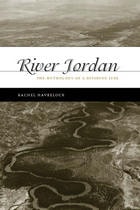
River Jordan
The Mythology of a Dividing LineRachel Havrelock
University of Chicago Press, 2011
As the site of several miracles in the Jewish and Christian traditions, the Jordan is one of the world’s holiest rivers. It is also the major political and symbolic border contested by Israelis and Palestinians. Combining biblical and folkloric studies with historical geography, Rachel Havrelock explores how the complex religious and mythological representations of the river have shaped the current conflict in the Middle East.
Rojava
Revolution, War and the Future of Syria's KurdsThomas Schmidinger
Pluto Press, 2018
Royal Apologetic in the Ancient Near East
Andrew Knapp
SBL Press, 2015
A fresh exploration of apologetic material that pushes beyond form criticism
Andrew Knapp applies modern genre theory to seven ancient Near Eastern royal apologies that served to defend the legitimacy of kings who came to power under irregular circumstances. Knapp examines texts and inscriptions related to Telipinu, Hattusili III, David, Solomon, Hazael, Esarhaddon, and Nabonidus to identify transhistorical common issues that unite each discourse.
Features:
- Compares Hittite, Israelite, Aramean, Assyrian, and Babylonian apologies
- Examination of apologetic as a mode instead of a genre
- Charts and illustrations
Royal Hittite Instructions and Related Administrative Texts
Jared L. Miller
SBL Press, 2013
Russian-Ottoman Borderlands
The Eastern Question ReconsideredEdited by Lucien J. Frary and Mara Kozelsky
University of Wisconsin Press, 2014
The contributors address ethnicity, religion, popular attitudes, violence, dislocation and mass migration, economic rivalry, and great-power diplomacy. Through a variety of fresh approaches, they examine the consequences of the Eastern Question in the lives of those peoples it most affected, the millions living in the Russian and Ottoman Empires and the borderlands in between.