Results by title
69 books match the query 'Middle class' and 5 start with r
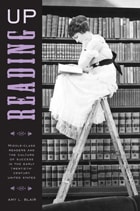
Reading Up
Middle-Class Readers and the Culture of Success in the Early Twentieth-Century United StatesAmy Blair
Temple University Press, 2011
A person who reads a book for self-improvement rather than aesthetic pleasure is “reading up.” Reading Up is Amy Blair's engaging study of popular literary critics who promoted reading generally and specific books as vehicles for acquiring cultural competence and economic mobility. Combining methodologies from the history of the book and the history of reading, to mass-cultural studies, reader-response criticism, reception studies, and formalist literary analysis, Blair shows how such critics influenced the choices of striving readers and popularized some elite writers.
Framed by an analysis of Hamilton Wright Mabie's role promoting the concept of “reading up” during his ten-year stint as the cultivator of literary taste for the highly popular Ladies' Home Journal, Reading Up reveals how readers flocked to literary works that they would be expected to dislike. Blair shows that while readers could be led to certain books by a trusted adviser, they frequently followed their own path in interpreting them in unexpected ways.

Republic of the Dispossessed
The Exceptional Old-European Consensus in AmericaRowland Berthoff
University of Missouri Press, 1997
Do Americans, in all their cultural diversity, share any fundamental consensus? Does such a consensus, or anything else, make America exceptional in the modern world?
Since 1960 most historians have answered no--except perhaps for the current nostalgia for the Eisenhower years (the "Ozzie and Harriet" years of popular recollection) of middle-class American prosperity.
In Republic of the Dispossessed social historian Rowland Berthoff maintains not only that there was--and still is--a middle-class consensus and that America is exceptional in it but that it goes back some five hundred years. The consensus stems from all those European peasants and artisans who, from 1600 to 1950, fled dispossession in the Old World. They brought with them basic social values that acted as a template for middle-class American values. To consider modern American society as exceptional--that is, as distinctive and different from any contemporary European pattern of thought--is therefore, in Berthoff's theory, not at all the "illogical absurdity" that current conventional wisdom makes it.
The Berthoff thesis, as he develops it in these ten essays from throughout the course of his career, is well worth a second look by those within and beyond the field of social history. It suggests that the ideal--both peasant and classical republican-- of maintaining a balance between personal liberty and communal equality has long inspired American reaction to the drastic modern changes of industrialization, urbanization, and immigration.
Observing that most Americans still see themselves as independent, basically equal, middle-class citizens, Berthoff explains the current apprehension among Americans that at the end of the twentieth century they are once again being dispossessed-- thus, the current emphasis on "traditional values." Because that problem is the same that worried their European ancestors as much as five hundred years ago, Berthoff argues, the time has come to face the question head-on.
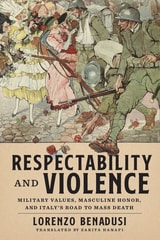
Respectability and Violence
Military Values, Masculine Honor, and Italy’s Road to Mass DeathLorenzo Benadusi
University of Wisconsin Press, 2021
In the aftermath of national unification in the 1860s, the Italian army was tasked with molding generations of men from warring regions and different social strata into obedient citizens of a centralized state. Integrating large numbers of the educated middle classes into the young kingdom’s armed forces proved decisive in establishing the army as the “main school” and backbone for mass nationalization. Lorenzo Benadusi examines the intersection of Italian military and civil society over the last century as they coalesced in the figure of the gentleman-officer—an idealized image of an altruistic, charming, and competent ruling class that could influence the choices, values, and behavior of the “new Italians.”
Respectability and Violence traces the relationship between civic virtues and military values from the post-Risorgimento period through the end of World War I, when the trauma of trench warfare made it necessary to again redefine ideas of chivalry and manliness and to accept violence as a necessary tool in defense of society and state. The language of conflict and attitudes about war forged in these decades—characterized by patriotism, heroism, and sacrifice—shaped the cultured bourgeoise into loyalists who ushered in Italy’s transition to a powerful Fascist political system. This unique study of the officer is crucial for understanding the military, social, and political history of Italy.
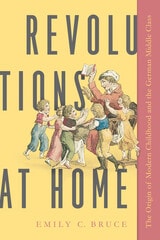
Revolutions at Home
The Origin of Modern Childhood and the German Middle ClassEmily C. Bruce
University of Massachusetts Press, 2021
Revolutions at Home analyzes a rich set of documents created for and by young Germans to show that children were central to reinventing their own education between 1770 and 1850. Through their reading and writing, they helped construct the modern child subject. The active child who emerged at this time was not simply a consequence of expanding literacy but, in fact, a key participant in defining modern life.
Routine Crisis
An Ethnography of DisillusionSarah Muir
University of Chicago Press, 2021
Anthropologist Sarah Muir offers a cogent meditation on the limits of critique at this historical moment, drawing on deep experience in Argentina but reflecting on a truly global condition. If we feel things are being upended in a manner that is ongoing, tumultuous, and harmful, what would we need to do—and what would we need to give up—to usher in a revitalized critique for today's world? Routine Crisis is an original provocation and a challenge to think beyond the limits of exhaustion and reimagine a form of criticism for the twenty-first century.