Results by title
82 books match the query 'Motherhood' and 4 start with r
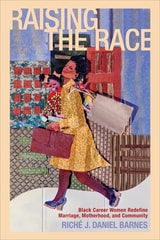
Raising the Race
Black Career Women Redefine Marriage, Motherhood, and CommunityBarnes, Riché J. Daniel
Rutgers University Press, 2015
Popular discussions of professional women often dwell on the conflicts faced by the woman who attempts to “have it all,” raising children while climbing up the corporate ladder. Yet for all the articles and books written on this subject, there has been little work that focuses on the experience of African American professional women or asks how their perspectives on work-family balance might be unique.
Raising the Race is the first scholarly book to examine how black, married career women juggle their relationships with their extended and nuclear families, the expectations of the black community, and their desires to raise healthy, independent children. Drawing from extensive interviews with twenty-three Atlanta-based professional women who left or modified careers as attorneys, physicians, executives, and administrators, anthropologist Riché J. Daniel Barnes found that their decisions were deeply rooted in an awareness of black women’s historical struggles. Departing from the possessive individualistic discourse of “having it all,” the women profiled here think beyond their own situation—considering ways their decisions might help the entire black community.
Giving a voice to women whose perspectives have been underrepresented in debates about work-family balance, Barnes’s profiles enable us to perceive these women as fully fledged individuals, each with her own concerns and priorities. Yet Barnes is also able to locate many common themes from these black women’s experiences, and uses them to propose policy initiatives that would improve the work and family lives of all Americans.
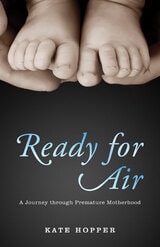
Ready for Air
A Journey through Premature MotherhoodKate Hopper
University of Minnesota Press, 2013
For Kate Hopper, pregnancy is downright unpleasant. She is tired and heavy and worried, and she wants her wine and caffeine back. But then, at a routine checkup, her doctor frowns at her chart and says, “I’m worried about a couple of things”—and unpleasant suddenly seems like paradise. What follows is a harrowing, poignant, and occasionally hysterical journey through premature motherhood, from the starting point of “leaking a little protein” to the early delivery of her tiny daughter because of severe preeclampsia and the beginning of a new chapter of frightful, lifelong love.
Half a million babies are born prematurely in the United States every year—almost one every minute—each with a unique story, and Hopper eloquently gives a voice to what their parents share: the shock, the scares, the lonely nights in the neonatal intensive care unit, the fierce attention to detail that makes for sanity and craziness, the light of faith, the warmth of family, and the terrifying attachment. Through it all runs the power of words to connect us to one another, as Hopper draws on her gifts as a writer first to help her navigate this uncertain territory and then to tell her story. With candor, grace, and a healthy dose of humor, she takes us into the final weeks of her pregnancy, the this-was-not-part-of-the-plan first weeks of little Stella’s life, and the isolated world she and her husband inhabited when they took their daughter home at the onset of a cold Minnesota winter. Finally, frankly, Hopper ventures into the complicated question of whether to have another child. Down-to-earth and honest about the hard realities of having a baby, as well as the true joys, Ready for Air is a testament to the strength of motherhood—and stories—to transform lives.
Recreating Motherhood
Rothman, Barbara Katz
Rutgers University Press, 2000
Selling “genetically gifted” human eggs on the free market for a hefty price. In vitro fertilization. Fetal rights. Prenatal diagnosis. Surrogacy. All are instances of biomedical and social “advancements” with which we have become familiar in recent years. Yet these issues are often regarded as distinct or only loosely related under the rubric of reproduction.
Barbara Katz Rothman demonstrates how they form a complex whole that demands of us in response a woman-centered, class-sensitive way of understanding motherhood. We need a social policy for dealing with mothers and motherhood that is consistent with feminist politics and feminist theory. Her book show how we as a society must first recognize that the real needs of mother, father, and children have been swept aside in an attempt to reduce the complex process of human reproduction to a clinical event that can be controlled by medical technology. Rothman suggests ways to accomplish social and legal change that would allow technological advances to affirm motherhood and the mother-child relationship without cost to women’s identity.
This new edition of Recreating Motherhood contains exciting updates. Rothman shows how this material is key in understanding the family, not just motherhood. And a new chapter, “Reflections on a Decade,” explores how new reproductive technologies combine with new marketing and new genetics to pose troubling social questions.
Rhetorics of Motherhood
Lindal Buchanan
Southern Illinois University Press, 2013
Becoming a mother profoundly alters one’s perception of the world, as Lindal Buchanan learned firsthand when she gave birth. Suddenly attentive to representations of mothers and mothering in advertisements, fiction, film, art, education, and politics, she became intrigued by the persuasive force of the concept of motherhood, an interest that unleashed a host of questions: How is the construct defined? How are maternal appeals crafted, presented, and performed? What do they communicate about gender and power? How do they affect women? Her quest for answers has produced Rhetorics of Motherhood, the first book-length consideration of the topic through a feminist rhetorical lens.
Although both male and female rhetors employ motherhood to promote themselves and their agendas, Buchanan argues it is particularly slippery terrain for women—on the one hand, affording them authority and credibility but, on the other, positioning them disadvantageously within the gendered status quo. Rhetorics of Motherhood investigates that paradox by detailing the cultural construction and performance of the Mother in American public discourse, tracing its use and impact in three case studies, and by theorizing how, when, and why maternal discourses work to women’s benefit or detriment. In the process, the reader encounters a fascinating array of issues—including birth control, civil rights, and abortion—and rhetors, ranging from Diane Nash and Margaret Sanger to Sarah Palin and Michelle Obama.
As Buchanan makes clear, motherhood is a rich site for investigating the interrelationships among gender, power, and public discourse. Her latest book contributes to the discipline of rhetoric by attending to and making a convincing case for the significance of this understudied subject. With its examination of timely controversies, contemporary and historical figures, and powerful women, Rhetorics of Motherhood will appeal to a wide array of readers in rhetoric, communications, American studies, women’s studies, and beyond.