121 books match the query 'Motion picture industry' and 10 start with r
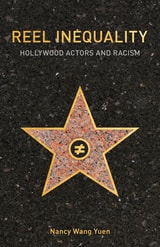
cover of Reel Inequality: Hollywood Actors and Racism

Reel Inequality

Hollywood Actors and Racism

Nancy Wang Yuen

Rutgers University Press, 2016
When the 2016 Oscar acting nominations all went to whites for the second consecutive year, #OscarsSoWhite became a trending topic. Yet these enduring racial biases afflict not only the Academy Awards, but also Hollywood as a whole. Why do actors of color, despite exhibiting talent and bankability, continue to lag behind white actors in presence and prominence? 
 
Reel Inequality examines the structural barriers minority actors face in Hollywood, while shedding light on how they survive in a racist industry. The book charts how white male gatekeepers dominate Hollywood, breeding a culture of ethnocentric storytelling and casting. Nancy Wang Yuen interviewed nearly a hundred working actors and drew on published interviews with celebrities, such as Viola Davis, Chris Rock, Gina Rodriguez, Oscar Isaac, Lucy Liu, and Ken Jeong, to explore how racial stereotypes categorize and constrain actors. Their stories reveal the day-to-day racism actors of color experience in talent agents’ offices, at auditions, and on sets. Yuen also exposes sexist hiring and programming practices, highlighting the structural inequalities that actors of color, particularly women, continue to face in Hollywood. 
 
This book not only conveys the harsh realities of racial inequality in Hollywood, but also provides vital insights from actors who have succeeded on their own terms, whether by sidestepping the system or subverting it from within. Considering how their struggles impact real-world attitudes about race and diversity, Reel Inequality follows actors of color as they suffer, strive, and thrive in Hollywood.
 
[more]
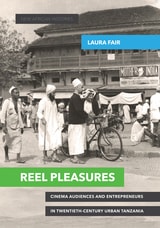
cover of Reel Pleasures: Cinema Audiences and Entrepreneurs in Twentieth-Century Urban Tanzania

Reel Pleasures

Cinema Audiences and Entrepreneurs in Twentieth-Century Urban Tanzania

Laura Fair

Ohio University Press, 2017

Reel Pleasures brings the world of African moviehouses and the publics they engendered to life, revealing how local fans creatively reworked global media—from Indian melodrama to Italian westerns, kung fu, and blaxploitation films—to speak to local dreams and desires. In it, Laura Fair zeroes in on Tanzanians’ extraordinarily dynamic media cultures to demonstrate how the public and private worlds of film reception brought communities together and contributed to the construction of genders, generations, and urban citizenship over time. Radically reframing the literatures on media exhibition, distribution, and reception, Reel Pleasures demonstrates how local entrepreneurs and fans worked together to forge the most successful cinema industry in colonial sub-Saharan Africa. The result is a major contribution to the literature on transnational commodity cultures.
[more]
cover of Reel Power: Hollywood Cinema and American Supremacy

Reel Power

Hollywood Cinema and American Supremacy

Matthew Alford

Pluto Press, 2010

Hollywood is often characterised as a stronghold of left-liberal ideals. In Reel Power, Matthew Alford shows that it is in fact deeply complicit in serving the interests of the most regressive US corporate and political forces.

Films like Transformers, Terminator: Salvation and Black Hawk Down are constructed with Defence Department assistance as explicit cheerleaders for the US military, but Matthew Alford also emphasises how so-called 'radical' films like Three Kings, Hotel Rwanda and Avatar present watered-down alternative visions of American politics that serve a similar function.

Reel Power is the first book to examine the internal workings of contemporary Hollywood as a politicised industry as well as scores of films across all genres. No matter what the progressive impulses of some celebrities and artists, Alford shows how they are part of a system that is hard-wired to encourage American global supremacy and frequently the use of state violence.
[more]
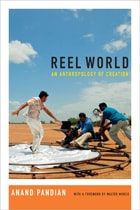
cover of Reel World: An Anthropology of Creation

Reel World

An Anthropology of Creation

Anand Pandian

Duke University Press, 2015
Reel World explores what happens to life when everything begins to look and feel like cinema. Drawing on years of fieldwork with Tamil filmmakers, artists, musicians, and craftsmen in the south Indian movie studios of "Kollywood," Anand Pandian examines how ordinary moments become elements of a cinematic world. With inventive, experimental, and sometimes comical zeal, Pandian pursues the sensory richness of cinematic experience and the adventure of a writing true to these sensations. Thinking with the visceral power of sound and image, his stories also broach deeply philosophical themes such as desire, time, wonder, and imagination. In a spirit devoted to the turbulence and uncertainty of genesis, Reel World brings into focus an ecology of creative process: the many forces, feelings, beings, and things that infuse human endeavors with transformative potential.
 
[more]
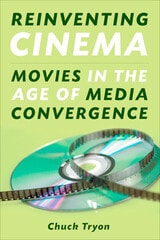
cover of Reinventing Cinema: Movies in the Age of Media Convergence

Reinventing Cinema

Movies in the Age of Media Convergence

Tryon, Chuck

Rutgers University Press, 2009

For over a century, movies have played an important role in our lives, entertaining us, often provoking conversation and debate. Now, with the rise of digital cinema, audiences often encounter movies outside the theater and even outside the home. Traditional distribution models are challenged by new media entrepreneurs and independent film makers, usergenerated video, film blogs, mashups, downloads, and other expanding networks.

Reinventing Cinema examines film culture at the turn of this century, at the precise moment when digital media are altering our historical relationship with the movies. Spanning multiple disciplines, Chuck Tryon addresses the interaction between production, distribution, and reception of films, television, and other new and emerging media.Through close readings of trade publications, DVD extras, public lectures by new media leaders, movie blogs, and YouTube videos, Tryon navigates the shift to digital cinema and examines how it is altering film and popular culture.
[more]
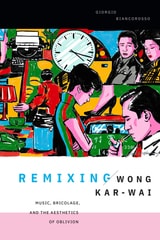
cover of Remixing Wong Kar-wai: Music, Bricolage, and the Aesthetics of Oblivion

Remixing Wong Kar-wai

Music, Bricolage, and the Aesthetics of Oblivion

Giorgio Biancorosso

Duke University Press, 2025
Like his fellow filmmakers Stanley Kubrick, Quentin Tarantino, and Sofia Coppola, Wong Kar-wai crafts the soundtracks of his films by jettisoning original scores in favor of commercial recordings. In Remixing Wong Kar-wai, Giorgio Biancorosso examines the combinatorial practice at the heart of Wong’s cinema to retheorize musical borrowing, appropriation, and repurposing. Wong’s irrepressible penchant for poaching music from other films—whether old Chinese melodramas, Hollywood blockbusters, or European art films—subsumes familiar music under his own brand of cinema. As Wong combs through musical and cinematic archives and splices disparate music together, exceedingly well-known music loses its previous associations and acquires an infinite new constellation of meanings in his films. Drawing on Claude Lévi-Strauss’s concept of bricolage, Biancorosso contends that Wong’s borrowing is akin to a practice of creative destruction in which Wong becomes a bricoleur who remixes music at hand to create new and complete, self-sustaining statements. By outlining Wong’s modus operandi of indiscriminate borrowing and remixing, Biancorosso prompts readers to reconsider the significance of transforming preexisting music into new compositions for film and beyond.
[more]
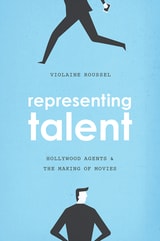
cover of Representing Talent: Hollywood Agents and the Making of Movies

Representing Talent

Hollywood Agents and the Making of Movies

Violaine Roussel

University of Chicago Press, 2017

Audiences love the glitz and glamour of Hollywood, but beyond the red carpet and behind the velvet curtain exists a legion of individuals who make showbiz work: agents. Whether literary, talent, or indie film, agents are behind the scenes brokering power, handling mediation, and doing the deal-making that keeps Hollywood spinning. In Representing Talent, Violaine Roussel explores the little-known but decisive work of agents, turning the spotlight on how they help produce popular culture.

The book takes readers behind the scenes to observe the day-to-day activities of agents, revealing their influence on artistic careers and the prospects of Hollywood’s forthcoming projects. Agents are crucial to understanding how creative and economic power are intertwined in Hollywood today. They play a key role in the process by which artistic worth and economic value are evaluated and attributed to people and projects. Roussel’s fieldwork examines what “having relationships” really means for agents, and how they perform the relationship work that’s at the heart of their professional existence and success. Representing Talent helps us to understand the players behind the definition of entertainment itself, as well as behind its current transformations.
[more]
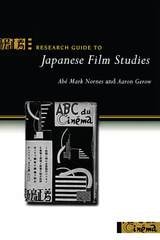
cover of Research Guide to Japanese Film Studies

Research Guide to Japanese Film Studies

Abé Mark Nornes and Aaron Gerow

University of Michigan Press, 2009
The Research Guide to Japanese Film Studies provides a snapshot of all the archival and bibliographic resources available to students and scholars of Japanese cinema. Among the nations of the world, Japan has enjoyed an impressively lively print culture related to cinema. The first film books and periodicals appeared shortly after the birth of cinema, proliferating wildly in the 1910s with only the slightest pause in the dark days of World War II. The numbers of publications match the enormous scale of film production, but with the lack of support for film studies in Japan, much of it remains as uncharted territory, with few maps to negotiate the maze of material.
This book is the first comprehensive guide ever published for approaching the complex archive for Japanese cinema. It lists all the libraries and film archives in the world with significant collections of film prints, still photographs, archival records, books, and periodicals. It provides a full annotated bibliography of the core books and magazines for the field. And it supplies hints for how to find and access materials for any research project. Above and beyond that, Nornes and Gerow’s Research Guide to Japanese Film Studies constitutes a comprehensive overview of the impressive dimensions and depth of the print culture surrounding Japanese film, and a guideline for future research in the field. This is an essential book for anyone seriously thinking about Japan and its cinema.
[more]
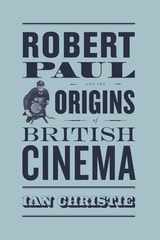
cover of Robert Paul and the Origins of British Cinema

Robert Paul and the Origins of British Cinema

Ian Christie

University of Chicago Press, 2019

The early years of film were dominated by competition between inventors in America and France, especially Thomas Edison and the Lumière brothers . But while these have generally been considered the foremost pioneers of film, they were not the only crucial figures in its inception. Telling the story of the white-hot years of filmmaking in the 1890s, Robert Paul and the Origins of British Cinema seeks to restore Robert Paul, Britain’s most important early innovator in film, to his rightful place.
           
From improving upon Edison’s Kinetoscope to cocreating the first movie camera in Britain to building England’s first film studio and launching the country’s motion-picture industry, Paul played a key part in the history of cinema worldwide. It’s not only Paul’s story, however, that historian Ian Christie tells here. Robert Paul and the Origins of British Cinema also details the race among inventors to develop lucrative technologies and the jumbled culture of patent-snatching, showmanship, and music halls that prevailed in the last decade of the nineteenth century. Both an in-depth biography and a magnificent look at early cinema and fin-de-siècle Britain, Robert Paul and the Origins of British Cinema is a first-rate cultural history of a fascinating era of global invention, and the revelation of one of its undervalued contributors.
 
[more]
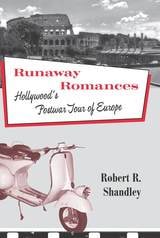
cover of Runaway Romances: Hollywood's Postwar Tour of Europe

Runaway Romances

Hollywood's Postwar Tour of Europe

Robert R. Shandley

Temple University Press, 2009

In the 1950s and early 1960s, America imagined itself young and in love in Europe. And Hollywood films of the era reflected this romantic allure. From a young and naïve Audrey Hepburn falling in love with Gregory Peck inRoman Holiday to David Lean’s Summertime, featuring Katherine Hepburn’s sexual adventure in Venice, these glossy travelogue romances were shot on location, and established an exciting new genre for Hollywood.

As Robert Shandley shows in Runaway Romances, these films were not only indicative of the ideology of the American-dominated postwar world order, but they also represented a shift in Hollywood production values. Eager to capture new audiences during a period of economic crisis, Hollywood’s European output utilized the widescreen process to enhance cinematic experience. The films—To Catch a Thief, Three Coins in the Fountain, and Funny Face among them—enticed viewers to visit faraway places for romantic escapades. In the process, these runaway romances captured American fantasies for a brief, but intense, period that ended as audiences grew tired of old World splendors, and entered into a new era of sexual awakening.

[more]