Results by title
99 books match the query 'Motion picture producers and directors' and 4 start with r
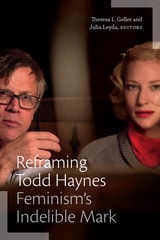
Reframing Todd Haynes
Feminism’s Indelible MarkTheresa L. Geller and Julia Leyda, editors
Duke University Press, 2022
Contributors. Danielle Bouchard, Nick Davis, Jigna Desai, Mary R. Desjardins, Patrick Flanery, Theresa L. Geller, Rebecca M. Gordon, Jess Issacharoff, Lynne Joyrich, Bridget Kies, Julia Leyda, David E. Maynard, Noah A. Tsika, Patricia White, Sharon Willis
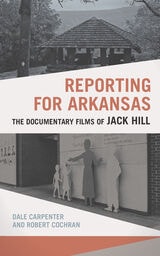
Reporting for Arkansas
The Documentary Films of Jack HillDale Carpenter
University of Arkansas Press, 2022
Jack Hill was a pioneering Arkansas documentary filmmaker dedicated to sharing his state’s history with a wider public. Following a decade as an award-winning investigative journalist and news anchor at KAIT in Jonesboro, Hill was pushed out by new management for his controversial reporting on corruption in a local sheriff’s office. What seemed like a major career setback turned out to be an opportunity: he founded the production company TeleVision for Arkansas, through which he produced dozens of original films. Although Hill brought an abiding interest in education and public health to this work from the beginning, he found his true calling in topics based in Arkansas history. Convinced that a greater acquaintance with the state’s most significant historical events would nurture a greater sense of homegrown pride, Hill tirelessly crisscrossed the state to capture the voices of hundreds of Arkansans recalling significant chapters in the state’s history, such as the oil boom in El Dorado and Smackover, the crucial contributions of the Arkansas Ordnance Plant in Jacksonville during World War II, and the role of Rosenwald Schools in expanding educational opportunities.
In Reporting for Arkansas, Dale Carpenter and Robert Cochran present a biography of Hill alongside an annotated selected filmography designed to accompany sixteen of his best films on subjects related to Arkansas history—all newly hosted online by the Center for Arkansas and Regional Studies at the University of Arkansas.
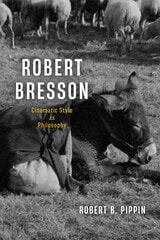
Robert Bresson
Cinematic Style as PhilosophyRobert B. Pippin
University of Chicago Press, 2026
Over a forty-year career, Robert Bresson developed one of the most distinctive cinematic styles in the history of filmmaking. Criticizing conventional movies as “filmed theater,” Bresson proposed instead a way of writing with images, which he called “cinematographs.” Robert B. Pippin argues here for a way of understanding how these stylistic innovations express a range of philosophical commitments, explorations of the possible sources of meaning in late modern life, and the implications of the absence of such sources.
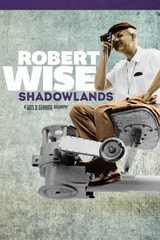
Robert Wise
ShadowlandsWes D. Gehring
Indiana Historical Society Press, 2012