Results by title
31 books match the query 'Working'

Chronicles of a Radical Criminologist
Working the Margins of Law, Power, and JusticeGregg Barak
Rutgers University Press, 2020
What holds this book together is the story of how resisting the crimes of the powerful while struggling locally for social justice is the essence of critical criminology. His seven chapters are divided into three parts—academic freedom, academic activism, and academic praxis—and these connected stories link the author's own academic career in Berkeley, California; Las Vegas, Nevada; Chicago; Alabama; Ann Arbor, Michigan; and across the United States. Barak's eventful scholarly life involved efforts to overcome laws against abortion and homosexuality; to formalize protective practices for women from domestic violence and sexual assault; to oppose racism and classism in the criminal justice system; to challenge the wars on gangs, drugs, and immigrants; and to confront the policies of mass incarceration and the treatment of juvenile offenders.
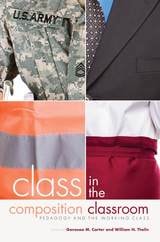
Class in the Composition Classroom
Pedagogy and the Working ClassGenesea M. Carter
Utah State University Press, 2017
Class in the Composition Classroom considers what college writing instructors should know about their working-class students—their backgrounds, experiences, identities, learning styles, and skills—in order to support them in the classroom, across campus, and beyond. In this volume, contributors explore the nuanced and complex meaning of “working class” and the particular values these college writers bring to the classroom.
The real college experiences of veterans, rural Midwesterners, and trade unionists show that what it means to be working class is not obvious or easily definable. Resisting outdated characterizations of these students as underprepared and dispensing with a one-size-fits-all pedagogical approach, contributors address how region and education impact students, explore working-class pedagogy and the ways in which it can reify social class in teaching settings, and give voice to students’ lived experiences.
As community colleges and universities seek more effective ways to serve working-class students, and as educators, parents, and politicians continue to emphasize the value of higher education for students of all financial and social backgrounds, conversations must take place among writing instructors and administrators about how best to serve and support working-class college writers. Class in the Composition Classroom will help writing instructors inside and outside the classroom prepare all their students for personal, academic, and professional communication.
Contributors: Aaron Barlow, Cori Brewster, Patrick Corbett, Harry Denny, Cassandra Dulin, Miriam Eisenstein Ebsworth, Mike Edwards, Rebecca Fraser, Brett Griffiths, Anna Knutson, Liberty Kohn, Nancy Mack, Holly Middleton, Robert Mundy, Missy Nieveen Phegley, Jacqueline Preston, James E. Romesburg, Edie-Marie Roper, Aubrey Schiavone, Christie Toth, Gail G. Verdi
Listening to Our Elders
Working and Writing for ChangeSamantha Blackmon, Cristina Kirklighter, and Steve Parks, eds.
Utah State University Press, 2011
In 2011, the National Council of Teachers of English (NCTE) turned one hundred years old. But our profession is endlessly beginning, constantly transforming itself and its purpose as new voices and identities claim their rights in our classrooms and in our country. The recognition of such claims, however, does not occur without a struggle, without collective work.
Listening to our Elders attempts to capture the history of those collective moments where teachers across grade levels and institutions of higher education organized to insure that the voices, heritages, and traditions of their students and colleagues were recognized within our professional organizations as a vital part of our classrooms and our discipline. In doing so, Listening to Our Elders demonstrates this recognition was not always easily given. Instead, whether the issue was race, sexuality, class, or disability, committed activist organizations have often had to push against the existing limits of our field and its organizations to insure a broader sense of common responsibility and humanity was recognized.
Listening to Our Elders features interviews with Malea Powell (Native American Caucus), Joyce Rain Anderson (Native American Caucus), Jeffery Paul Chan (Asian/Asian American), James Hill (Black Caucus), James Dolmage (Committee for Disability Issue in College Composition), Geneva Smitherman (Language Policy Commitee), Carlota Cárdenas de Dwyer (Latino/a Caucus), Victor Villanueva (Latino/a Caucus), Louise Dunlap (Progressive Caucus), Karen Hollis (Progressive Caucus), Louie Crew (Queer Caucus), William Thelin (Working Class Culture and Pedagogy SIG), Bill Macauley (Working Class Culture and Pedagogy SIG).
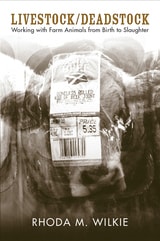
Livestock/Deadstock
Working with Farm Animals from Birth to SlaughterAuthored by Rhoda M. Wilkie
Temple University Press, 2010
The connection between people and companion animals has received considerable attention from scholars. In her original and provocative ethnography Livestock/Deadstock, sociologist Rhoda Wilkie asks, how do the men and women who work on farms, in livestock auction markets, and slaughterhouses, interact with—or disengage from—the animals they encounter in their jobs?
Wilkie provides a nuanced appreciation of how those men and women who breed, rear, show, fatten, market, medically treat, and slaughter livestock, make sense of their interactions with the animals that constitute the focus of their work lives. Using a sociologically informed perspective, Wilkie explores their attitudes and behaviors to explain how agricultural workers think, feel, and relate to food animals.
Livestock/Deadstock looks at both people and animals in the division of labor and shows how commercial and hobby productive contexts provide male and female handlers with varying opportunities to bond with and/or distance themselves from livestock. Exploring the experiences of stockpeople, hobby farmers, auction workers, vets and slaughterers, she offers timely insight into the multifaceted, gendered, and contradictory nature of human roles in food animal production.
Natural Missouri
Working with the LandNapier Shelton
University of Missouri Press, 2005

Representations of Working in Arts Education
Stories of Learning and TeachingNarelle Lemon, Susanne Garvis, and Christopher Klopper
Intellect Books, 2014
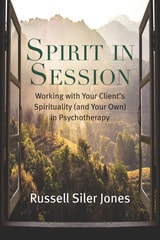
Spirit in Session
Working with Your Client’s Spirituality (and Your Own) in PsychotherapyRussell Siler Jones
Templeton Press, 2019
Spirituality is an important part of many clients’ lives. It can be a resource for stabilization, healing, and growth. It can also be the cause of struggle and even harm. More and more therapists—those who consider themselves spiritual and those who do not—recognize the value of addressing spirituality in therapy and increasing their skill for engaging it ethically and effectively.
In this immensely practical book, Russell Siler Jones helps therapists feel more competent and confident about having spiritual conversations with clients. With a refreshing, down-to-earth style, he describes how to recognize the diverse explicit and implicit ways spirituality can appear in psychotherapy, how to assess the impact spirituality is having on clients, how to make interventions to maximize its healthy impact and lessen its unhealthy impact, and how therapists can draw upon their own spirituality in ethical and skillful ways. He includes extended case studies and clinical dialogue so readers can hear how spirituality becomes part of case conceptualization and what spiritual conversation actually sounds like in psychotherapy.
Jones has been a therapist for nearly 30 years and has trained therapists in the use of spirituality for over a decade. He writes about a complex topic with an elegant simplicity and provides how-to advice in a way that encourages therapists to find their own way to apply it.
Spirit in Session is a pragmatic guide that therapists will turn to again and again as they engage their clients in one of the most meaningful and consequential dimensions of human experience.
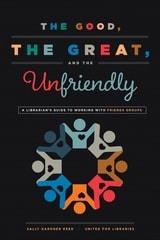
The Good, the Great, and the Unfriendly
A Librarian's Guide to Working with Friends GroupsSally Gardner Reed
American Library Association, 2017

Working In Service Society
Cameron Macdonald
Temple University Press, 1996
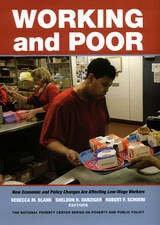
Working and Poor
How Economic and Policy Changes Are Affecting Low-Wage WorkersRebecca M. Blank
Russell Sage Foundation, 2006
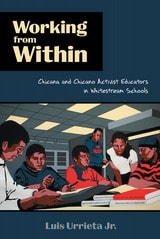
Working from Within
Chicana and Chicano Activist Educators in Whitestream SchoolsLuis Urrieta Jr.
University of Arizona Press, 2009
Working from Within is one of the first books to show how identity is linked to agency—individually and collectively—for Chicanas and Chicanos in education. Urrieta set out to answer linked questions: How do Chicanas and Chicanos negotiate identity, ideology, and activism within educational institutions that are often socially, culturally, linguistically, emotionally, and psychologically alienating? Analyzing in-depth interviews with twenty-four educators, Urrieta offers vivid narratives that show how activist identities are culturally produced through daily negotiations.
Urrieta’s work details the struggles of activist Chicana and Chicano educators to raise consciousness in a wide range of educational settings, from elementary schools to colleges. Overall, Urrieta addresses important questions about what it means to work for social justice from within institutions, and he explores the dialogic spaces between the alternatives of reproduction and resistance. In doing so, he highlights the continuity of Chicana and Chicano social movement, the relevance of gender, and the importance of autochthonous frameworks in understanding contemporary activism. Finally, he shows that it is possible for minority activist educators to thrive in a variety of institutional settings while maintaining strong ties to their communities.
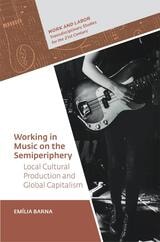
Working in Music on the Semiperiphery
Local Cultural Production and Global CapitalismEmília Barna
Central European University Press, 2025
This book embraces the widest possible range of workers in the music industry. It deals with all music genres from high-flying to commercial and observes various workers in the production chain beyond musicians. Niche segments of the sector, such as YouTube-based commercial hip hop, are given special treatment. Using a variety of empirical research methods, the study examines the trends as workers are pushed towards digital entrepreneurship and platform work, on the one hand, and live performance, on the other. The focus on domestic work and informality offers a feminist analysis of work in music. This approach sheds light on gendered divisions of labor and forms of (self-)exploitation that usually remain invisible. The book proposes a new model of cultural autonomy that takes account of the semiperipheral relationship of music industry workers and institutions to both the market and the state.
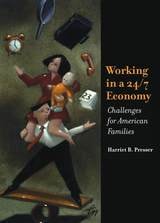
Working in a 24/7 Economy
Challenges for American FamiliesHarriet B. Presser
Russell Sage Foundation, 2003
Working in the Archives
Practical Research Methods for Rhetoric and CompositionEdited by Alexis E. Ramsey, Wendy B. Sharer, Barbara L'Eplattenier, Lisa S. Mastrangelo
Southern Illinois University Press, 2010
Archival research of any magnitude can be daunting. With this in mind, Alexis E. Ramsey, Wendy B. Sharer, Barbara L’Eplattenier, and Lisa Mastrangelo have developed an indispensable volume for the first-time researcher as well as the seasoned scholar. Working in the Archives is a guide to the world of rhetoric and composition archives, from locating an archival source and its materials to establishing one’s own collection of archival materials. This practical volume provides insightful information on a variety of helpful topics, such as basic archival theory, processes, and principles; the use of hidden or digital archives; the intricacies of searching for and using letters and photographs; strategies for addressing the dilemmas of archival organization without damaging the provenance of materials; the benefits of seeking sources outside academia; and the difficult (yet often rewarding) aspects of research on the Internet.
Working in the Archives moves beyond the basics to discuss the more personal and emotional aspects of archival work through the inclusion of interviews with experienced researchers such as Lynée Lewis Gaillet, Peter Mortensen, Kathryn Fitzgerald, Kenneth Lindblom, and David Gold. Each shares his or her personal stories of the joys and challenges that face today’s researchers.
Packed with useful recommendations, this volume draws on the knowledge and experiences of experts to present a well-rounded guidebook to the often winding paths of academic archival investigation. These in-depth yet user-friendly essays provide crucial answers to the myriad questions facing both fledgling and practiced researchers, making Working in the Archives an essential resource.
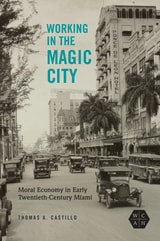
Working in the Magic City
Moral Economy in Early Twentieth-Century MiamiThomas A. Castillo
University of Illinois Press, 2022

Working in the Virtual Stacks
Laura Townsend Kane
American Library Association, 2011
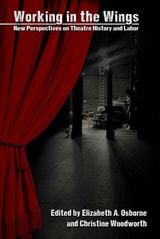
Working in the Wings
New Perspectives on Theatre History and LaborEdited by Elizabeth A. Osborne and Christine Woodworth
Southern Illinois University Press, 2015
Theatre has long been an art form of subterfuge and concealment. Working in the Wings: New Perspectives on Theatre History and Labor, edited by Elizabeth A. Osborne and Christine Woodworth, brings attention to what goes on behind the scenes, challenging, and revising our understanding of work, theatre, and history.
Essays consider a range of historic moments and geographic locations—from African Americans’ performance of the cakewalk in Florida’s resort hotels during the Gilded Age to the UAW Union Theatre and striking automobile workers in post–World War II Detroit, to the struggle in the latter part of the twentieth century to finish an adaptation of Moby Dick for the stage before the memory of creator Rinde Eckert failed. Contributors incorporate methodologies and theories from fields as diverse as theatre history, work studies, legal studies, economics, and literature and draw on traditional archival materials, including performance texts and architectural structures, as well as less tangible material traces of stagecraft.
Working in the Wings looks at the ways in which workers' identities are shaped, influenced, and dictated by what they do; the traces left behind by workers whose contributions have been overwritten; the intersections between the sometimes repetitive and sometimes destructive process of creation and the end result—the play or performance; and the ways in which theatre affects the popular imagination. This collected volume draws attention to the significance of work in the theatre, encouraging a fresh examination of this important subject in the history of the theatre and beyond.
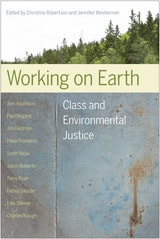
Working on Earth
Class and Environmental JusticeChristina Robertson
University of Nevada Press, 2015
The authors challenge prevailing cultural narratives that separate ecological and human health from the impacts of modern industrial capitalism. Essay themes range from how human survival is linked to nature to how the use and abuse of nature benefit the wealthy elite at the expense of working-class people and the working poor as well as how climate change will affect cultures deeply rooted in the land.
Ultimately, Working on Earth calls for a working-class ecology as an integral part of achieving just and sustainable human development.
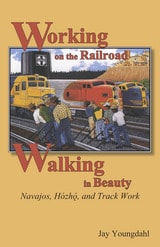
Working on the Railroad, Walking in Beauty
Navajos, Hozho, and Track WorkJay Youngdahl
Utah State University Press, 2011
For over one hundred years, Navajos have gone to work in significant numbers on Southwestern railroads. As they took on the arduous work of laying and anchoring tracks, they turned to traditional religion to anchor their lives.
Jay Youngdahl, an attorney who has represented Navajo workers in claims with their railroad employers since 1992 and who more recently earned a master's in divinity from Harvard, has used oral history and archival research to write a cultural history of Navajos' work on the railroad and the roles their religious traditions play in their lives of hard labor away from home.
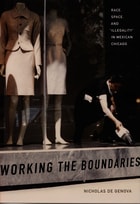
Working the Boundaries
Race, Space, and "Illegality" in Mexican ChicagoNicholas De Genova
Duke University Press, 2005
De Genova worked for two and a half years as a teacher of English in ten industrial workplaces (primarily metal-fabricating factories) throughout Chicago and its suburbs. In Working the Boundaries he draws on fieldwork conducted in these factories, in community centers, and in the homes and neighborhoods of Mexican migrants. He describes how the meaning of “Mexican” is refigured and racialized in relation to a U.S. social order dominated by a black-white binary. Delving into immigration law, he contends that immigration policies have worked over time to produce Mexicans as the U.S. nation-state’s iconic “illegal aliens.” He explains how the constant threat of deportation is used to keep Mexican workers in line. Working the Boundaries is a major contribution to theories of race and transnationalism and a scathing indictment of U.S. labor and citizenship policies.
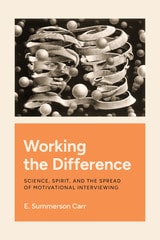
Working the Difference
Science, Spirit, and the Spread of Motivational InterviewingE. Summerson Carr
University of Chicago Press, 2023
Motivational interviewing (MI) is a professional practice, a behavioral therapy, and a self-professed conversation style that encourages clients to talk themselves into change. Originally developed to treat alcoholics, MI quickly spread into a variety of professional fields including corrections, medicine, and sanitation. In Working the Difference, E. Summerson Carr focuses on the training and dissemination of MI to explore how cultural forms—and particularly forms of expertise—emerge and spread. The result is a compelling analysis of the American preoccupations at MI’s core, from democratic autonomy and freedom of speech to Protestant ethics and American pragmatism.
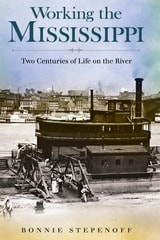
Working the Mississippi
Two Centuries of Life on the RiverBonnie Stepenoff
University of Missouri Press, 2015
The Mississippi River occupies a sacred place in American culture and mythology. Often called The Father of Rivers, it winds through American life in equal measure as a symbol and as a topographic feature. To the people who know it best, the river is life and a livelihood. River boatmen working the wide Mississippi are never far from land. Even in the dark, they can smell plants and animals and hear people on the banks and wharves.
Bonnie Stepenoff takes readers on a cruise through history, showing how workers from St. Louis to Memphis changed the river and were in turn changed by it. Each chapter of this fast-moving narrative focuses on representative workers: captains and pilots, gamblers and musicians, cooks and craftsmen. Readers will find workers who are themselves part of the country’s mythology from Mark Twain and anti-slavery crusader William Wells Brown to musicians Fate Marable and Louis Armstrong.
Working the Street
Police Discretion and the Dilemmas of ReformMichael K. Brown
Russell Sage Foundation, 1981
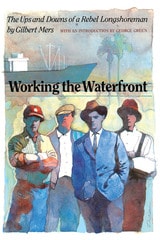
Working the Waterfront
The Ups and Downs of a Rebel LongshoremanBy Gilbert Mers
University of Texas Press, 1988
"Somebody said, 'History is written by the winners. The losers have nothing to say.' This book is by one of the losers, a bit player, not the star of the drama." So begins Gilbert Mers in these personal recollections of forty-two years on the Texas waterfront as longshoreman and radical union activist. But far from having "nothing to say," Mers reveals himself as a thoughtful philosopher of democratic ideals and eloquent agitator for union reform. He challenges the conventional wisdom that the leader is more valuable than the led. He contends that long tenure in positions of power dulls the union officer's working-class instincts. Always one to row against the current, Mers believes the union exists for the benefit of its members!
This is primary material of the best kind, vivid and evocative, and Mers, in his eighties at the time of writing the book, is an unusually vigorous and articulate spokesman for a democratic and humane unionism.
Whether he is describing the sweaty, dangerous and back-breaking work of loading cotton bales into the hold of an outbound ship or the gut-gripping tension of a face-to-face encounter with Texas Rangers bent on "law and order," Mers writes with the voice and conscience of the rank-and-file worker. He paints the waterfront world as it was, and perhaps still is—full of danger, humor, dignity in demoralizing circumstances, frustration, struggle, and sometimes hope—and tells his story with such wry humanity that even those who disagree with his destination will enjoy the ride.
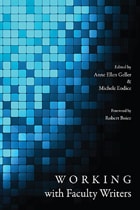
Working with Faculty Writers
Anne Ellen Geller and Michele Eodice
Utah State University Press, 2013
Contributors from a variety of institution types and perspectives consider who faculty writers are and who they may be in the future, reveal the range of locations and models of support for faculty writers, explore the ways these might be delivered and assessed, and consider the theoretical, philosophical, political, and pedagogical approaches to faculty writing support, as well as its relationship to student writing support.
With the pressure on faculty to be productive researchers and writers greater than ever, this is a must-read volume for administrators, faculty, and others involved in developing and assessing models of faculty writing support.
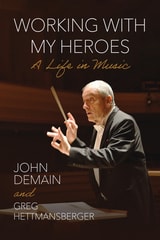
Working with My Heroes
A Life in MusicJohn L. DeMain and Greg Hettmansberger
University of Wisconsin Press, 2026
A Grammy and Tony Award–winning conductor, John DeMain has been a fixture of Madison, Wisconsin, for more than three decades, serving as music director of the Madison Symphony Orchestra and artistic director of the Madison Opera. Before and since then, he has been an internationally recognized conductor, equally at home in the worlds of classical music, opera, and Broadway.
In Working with My Heroes, written with the late Greg Hettmansberger, DeMain recounts incredible experiences—from his days studying piano in Youngstown, Ohio, to his years as an undergraduate and graduate student at Julliard, to his early jobs in summer stock productions, to numerous acclaimed productions—without ever losing sight of the wonder and awe he felt as a young musician first learning his way in the world. With warmth and humor, he provides valuable insight into the business of music making, while also sharing behind-the-scenes stories of entertaining situations he found himself in throughout the years—from playing piano at a gangster’s wedding to an unexpected dressing room encounter with a Broadway star to conducting an opera with circus elephants.
DeMain has had many career-defining moments behind the podium, conducting world premieres of Leonard Bernstein’s A Quiet Place, John Adams’s Nixon in China, and Jeanine Tesoro’s Blue, as well as the U.S. premiere of Philip Glass’s Akhnaten, among others. He guest-conducted symphonies and operas in New York, Chicago, Los Angeles, and elsewhere. DeMain cemented his reputation with the 1976 Houston Grand Opera performances of George and Ira Gershwin’s Porgy and Bess, establishing its stature as a quintessentially American opera. The singers, musicians, and composers DeMain has worked with over the past six decades are a veritable Who’s Who of American classical music. This memoir places readers by his side, allowing them to experience all the wonders and joy of a life spent making music.
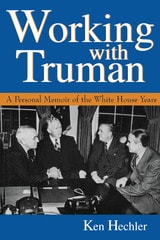
Working with Truman
A Personal Memoir of the White House YearsKen Hechler
University of Missouri Press, 1996
Available for the first time in paperback is the critically acclaimed Working with Truman, a warm and lighthearted memoir of what it was like to work behind the scenes in the White House during Truman's term as president. Focusing on the strengths and weaknesses of those who worked closely with Truman and on the Truman not seen by the public, Hechler provides insight into one of our greatest presidents.
Working with Water TG
Wisconsin WaterwaysBobbie Malone and Anika Fajardo
Wisconsin Historical Society Press, 2001
The companion to Working with Water engages students in hands-on exploration. It highlights historical processes and encourages multiple learning styles.
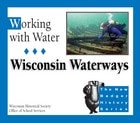
Working with Water
Wisconsin WaterwaysBobbie Malone and Jefferson J. Gray
Wisconsin Historical Society Press, 2001
"Water, water, everywhere . . ." Working with Water, the latest in the popular New Badger History series, teaches young readers about the many ways water has shaped Wisconsin’s history, from glaciers to stewardship. It touches on geography and hydrography; transportation networks of Indians and fur traders; the Erie Canal; shipwrecks, lighthouses, shipping, and shipbuilding; fishing, ricing, "pearling" (clamming), and cranberry cultivation; lumbering, milling, and papermaking; recreation, resorts, tourism, and environmentalism.
The companion Teacher’s Guide and Student Materials engages students in hands-on exploration. It highlights historical processes and encourages multiple learning styles.
Working with Your Woodland
A Landowner’s GuideMollie Beattie, Charles Thompson, and Lynn Levine
University Press of New England, 1993
Working, Shirking, and Sabotage
Bureaucratic Response to a Democratic PublicJohn Brehm and Scott Gates
University of Michigan Press, 1999