Results by title
754 books match the query 'Native American Studies' and 28 start with r
Race and Radicalism in the Union Army
Mark A. Lause
University of Illinois Press, 2013
In this compelling portrait of interracial activism, Mark A. Lause documents the efforts of radical followers of John Brown to construct a triracial portion of the Federal Army of the Frontier. Mobilized and inspired by the idea of a Union that would benefit all, black, Indian, and white soldiers fought side by side, achieving remarkable successes in the field. Against a backdrop of idealism, racism, greed, and the agonies and deprivations of combat, Lause examines links between radicalism and reform, on the one hand, and racialized interactions among blacks, Indians, and whites, on the other.
Lause examines how this multiracial vision of American society developed on the Western frontier. Focusing on the men and women who supported Brown in territorial Kansas, Lause examines the impact of abolitionist sentiment on relations with Indians and the crucial role of nonwhites in the conflict. Through this experience, Indians, blacks, and whites began to see their destinies as interdependent, and Lause discusses the radicalizing impact of this triracial Unionism upon the military course of the war in the upper Trans-Mississippi.
The aftermath of the Civil War destroyed much of the memory of the war in the West, particularly in the Indian Territory (now Oklahoma). The opportunity for an interracial society was quashed by the government's willingness to redefine the lucrative field of Indian exploitation for military and civilian officials and contractors.
Assessing the social interrelations, ramifications, and military impact of nonwhites in the Union forces, Race and Radicalism in the Union Army explores the extent of interracial thought and activity among Americans in this period and greatly expands the historical narrative on the Civil War in the West.
Rainhouse and Ocean
Speeches for the Papago YearRuth M. Underhill
University of Arizona Press, 1997
This book is a restudy of speeches and ritual information collected by anthropologist Underhill beginning in 1931 and published in her book Papago Indian Religion (1946). It describes the Native—as opposed to the Christian—side of the yearly ritual cycle of the Tohono O'odham, showing how seven rites form a system of meanings that grew from the relation between these people and their desert homeland. The rites presented focus on the summer wine feast, salt pilgrimage, hunting, war, and flood.

Ramona Memories
Tourism and the Shaping of Southern CaliforniaDydia DeLyser
University of Minnesota Press, 2005
Re-Enchanting the World
Maya Protestantism in the Guatemalan HighlandsC. Mathews Samson
University of Alabama Press, 2007
Christian evangelicals among native people in Latin America.
What does it mean to be both Maya and Protestant in Guatemala? Burgeoning religious pluralism in Mesoamerica and throughout Latin America is evident as Protestantism permeates a region that had been overwhelmingly Catholic for nearly five centuries.
In considering the interplay between contemporary Protestant practice and native cultural traditions among Maya evangelicals, Samson documents the processes whereby some Maya have converted to new forms of Christianity and the ways in which the Maya are incorporating Christianity for their own purposes. At the intersection of religion and cultural pluralism, contemporary evangelicals focus on easing the tension between Maya identity and the Protestant insistence that old ways must be left behind in the conversion process.
Against the backdrop of the 36-year civil war that ended in 1996 and the rise of the indigenous Maya Movement in the late 1980s, this work provides a unique portrait of social movements, cultural and human rights, and the role that religion plays in relation to the nation-state in post-conflict political processes. Re-enchanting the World fills a niche within the anthropological literature on evangelicals in Latin America during a time of significant social change.
Rebuilding Native Nations
Strategies for Governance and DevelopmentEdited by Miriam Jorgensen; Foreword by Oren Lyons; Afterword by Satsan (Herb George)
University of Arizona Press, 2007
Produced by the Native Nations Institute for Leadership, Management, and Policy at the University of Arizona and the Harvard Project on American Indian Economic Development, this book traces the contours of that revolution as Native nations turn the dream of self-determination into a practical reality. Part report, part analysis, part how-to manual for Native leaders, it discusses strategies for governance and community and economic development being employed by American Indian nations and First Nations in Canada as they move to assert greater control over their own affairs.
Rebuilding Native Nations provides guidelines for creating new governance structures, rewriting constitutions, building justice systems, launching nation-owned enterprises, encouraging citizen entrepreneurs, developing new relationships with non-Native governments, and confronting the crippling legacies of colonialism. For nations that wish to join that revolution or for those who simply want to understand the transformation now underway across Indigenous North America, this book is a critical resource.
CONTENTS
Foreword by Oren Lyons
Editor's Introduction
Part 1
Starting Points
1. Two Approaches to the Development of Native Nations: One Works, the Other Doesn't
Stephen Cornell and Joseph P. Kalt
2. Development, Governance, Culture: What Are They and What Do They Have to Do with Rebuilding Native Nations?
Manley A. Begay, Jr., Stephen Cornell, Miriam Jorgensen, and Joseph P. Kalt
Part 2
Rebuilding the Foundations
3. Remaking the Tools of Governance: Colonial Legacies, Indigenous Solutions
Stephen Cornell
4. The Role of Constitutions in Native Nation Building: Laying a Firm Foundation
Joseph P. Kalt
5 . Native Nation Courts: Key Players in Nation Rebuilding
Joseph Thomas Flies-Away, Carrie Garrow, and Miriam Jorgensen
6. Getting Things Done for the Nation: The Challenge of Tribal Administration
Stephen Cornell and Miriam Jorgensen
Part 3
Reconceiving Key Functions
7. Managing the Boundary between Business and Politics: Strategies for Improving the Chances for Success in Tribally Owned Enterprises
Kenneth Grant and Jonathan Taylor
8. Citizen Entrepreneurship: An Underutilized Development Resource
Stephen Cornell, Miriam Jorgensen, Ian Wilson Record, and Joan Timeche
9. Governmental Services and Programs: Meeting Citizens' Needs
Alyce S. Adams, Andrew J. Lee, and Michael Lipsky
10. Intergovernmental Relationships: Expressions of Tribal Sovereignty
Sarah L. Hicks
Part 4
Making It Happen
11. Rebuilding Native Nations: What Do Leaders Do?
Manley A. Begay, Jr., Stephen Cornell, Miriam Jorgensen, and Nathan Pryor
12. Seizing the Future: Why Some Native Nations Do and Others Don't
Stephen Cornell, Miriam Jorgensen, Joseph P. Kalt, and Katherine Spilde Contreras
Afterword by Satsan (Herb George)
References
About the Contributors
Index
Reckoning with Restorative Justice
Hawai'i Women's Prison WritingLeanne Trapedo Sims
Duke University Press, 2023
Reclaiming Indigenous Governance
Reflections and Insights from Australia, Canada, New Zealand, and the United StatesEdited by William Nikolakis, Stephen Cornell, and Harry W. Nelson; Foreword by Sophie Pierre and Gwen Phillips
University of Arizona Press, 2019
Indigenous governance is dynamic, an ongoing relationship between Indigenous peoples and settler-states. The relationship may be vigorously contested, but it is often fragile—one that ebbs and flows, where hard-won gains can be swiftly lost by the policy reversals of central governments. The legacy of colonial relationships continues to limit advances in self-government.
Yet Indigenous peoples in the CANZUS countries are no strangers to setbacks, and their growing movement provides ample evidence of resilience, resourcefulness, and determination to take back control of their own destiny. Demonstrating the struggles and achievements of Indigenous peoples, the chapter authors draw on the wisdom of Indigenous leaders and others involved in rebuilding institutions for governance, strategic issues, and managing lands and resources.
This volume brings together the experiences, reflections, and insights of practitioners confronting the challenges of governing, as well as researchers seeking to learn what Indigenous governing involves in these contexts. Three things emerge: the enormity of the Indigenous governance task, the creative agency of Indigenous peoples determined to pursue their own objectives, and the diverse paths they choose to reach their goal.
Reclaiming Indigenous Research in Higher Education
Minthorn, Robin Starr
Rutgers University Press, 2018
Recently, Native scholars have started to reclaim research through the development of their own research methodologies and paradigms that are based in tribal knowledge systems and values, and that allow inherent Indigenous knowledge and lived experiences to strengthen the research. Reclaiming Indigenous Research in Higher Education highlights the current scholarship emerging from these scholars of higher education. From understanding how Native American students make their way through school, to tracking tribal college and university transfer students, this book allows Native scholars to take center stage, and shines the light squarely on those least represented among us.
Recognition Odysseys
Indigeneity, Race, and Federal Tribal Recognition Policy in Three Louisiana Indian CommunitiesBrian Klopotek
Duke University Press, 2011
Klopotek describes the varied effects of the recognition process on the social and political structures, community cohesion, cultural revitalization projects, identity, and economic health of each tribe. He emphasizes that recognition policy is not the only racial project affecting Louisiana tribes. For the Tunica-Biloxis, the Jena Band of Choctaws, and the Clifton-Choctaws, discourses around blackness and whiteness have shaped the boundaries of Indian identity in ways that have only begun to be explored. Klopotek urges scholars and officials from the Bureau of Indian Affairs (BIA) to acknowledge the multiple discourses and viewpoints influencing tribal identities. At the same time, he puts tribal recognition in broader perspective. Indigenous struggles began long before the BIA existed, and they will continue long after it renders any particular recognition decision.
Reconsidering Mississippian Communities and Households
Edited by Elizabeth Watts Malouchos and Alleen Betzenhauser
University of Alabama Press, 2021
Advancing the study of Mississippian societies through innovative archaeological theory and method.
Published in 1995, Mississippian Communities and Households, edited by J. Daniel Rogers and Bruce D. Smith, was a foundational text that advanced southeastern archaeology in significant ways and brought household-level archaeology to the forefront of the field. Reconsidering Mississippian Communities and Households revisits and builds on what has been learned in the years since the Rogers and Smith volume, advancing the field further with the diverse perspectives of current social theory and methods and big data as applied to communities in Native America from the AD 900s to 1700s and from northeast Florida to southwest Arkansas.
Watts Malouchos and Betzenhauser bring together scholars researching diverse Mississippian Southeast and Midwest sites to investigate aspects of community and household construction, maintenance, and dissolution. Thirteen original case studies prove that community can be enacted and expressed in various ways, including in feasting, pottery styles, war and conflict, and mortuary treatments.
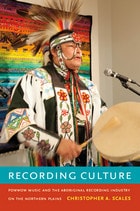
Recording Culture
Powwow Music and the Aboriginal Recording Industry on the Northern PlainsChristopher A. Scales
Duke University Press, 2012
Red Land, Red Power
Grounding Knowledge in the American Indian NovelSean Kicummah Teuton
Duke University Press, 2008
While engaging a wide spectrum of Native American writing, Teuton focuses on three of the most canonized and, he contends, most misread novels of the era—N. Scott Momaday’s House Made of Dawn (1968), James Welch’s Winter in the Blood (1974), and Leslie Marmon Silko’s Ceremony (1977). Through his readings, he demonstrates the utility of tribal realism as an interpretive framework to explain social transformations in Indian Country during the Red Power era and today. Such transformations, Teuton maintains, were forged through a process of political awakening that grew from Indians’ rethought experience with tribal lands and oral traditions, the body and imprisonment, in literature and in life.
Red Man's America
A History of Indians in the United StatesRuth Murray Underhill
University of Chicago Press, 1971
The material Professor Underhill has gathered from the fields of archaeology, ethnology, and history, together with that drawn from her own experience in the United States Indian Service, produces a fascinating narrative. Red Man's America is an important contribution to our heritage of Indian life and lore.
"A work for which both sociologist and historian will be forever grateful. The author has combined a long period of study with actual field work in the service of the Indian to produce a work that gives a brief, but well written and accurate, sketch of the origins, backgrounds, and customs of the various North American tribes. . . . There is no other modern single volume that contains as much information on the subject."—E.R. Vollmar, The Historical Bulletin
"Liveliness in style and illustration, together with perspicacity in content, makes this book a useful introduction to the civilization of the original inhabitants of the land."—Pacific Historical Review
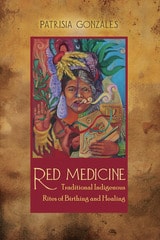
Red Medicine
Traditional Indigenous Rites of Birthing and HealingPatrisia Gonzales
University of Arizona Press, 2012
Patrisia Gonzales addresses "Red Medicine" as a system of healing that includes birthing practices, dreaming, and purification rites to re-establish personal and social equilibrium. The book explores Indigenous medicine across North America, with a special emphasis on how Indigenous knowledge has endured and persisted among peoples with a legacy to Mexico. Gonzales combines her lived experience in Red Medicine as an herbalist and traditional birth attendant with in-depth research into oral traditions, storytelling, and the meanings of symbols to uncover how Indigenous knowledge endures over time. And she shows how this knowledge is now being reclaimed by Chicanos, Mexican Americans and Mexican Indigenous peoples.
For Gonzales, a central guiding force in Red Medicine is the principal of regeneration as it is manifested in Spiderwoman. Dating to Pre-Columbian times, the Mesoamerican Weaver/Spiderwoman—the guardian of birth, medicine, and purification rites such as the Nahua sweat bath—exemplifies the interconnected process of rebalancing that transpires throughout life in mental, spiritual and physical manifestations. Gonzales also explains how dreaming is a form of diagnosing in traditional Indigenous medicine and how Indigenous concepts of the body provide insight into healing various kinds of trauma.
Gonzales links pre-Columbian thought to contemporary healing practices by examining ancient symbols and their relation to current curative knowledges among Indigenous peoples. Red Medicine suggests that Indigenous healing systems can usefully point contemporary people back to ancestral teachings and help them reconnect to the dynamics of the natural world.
Red On Red
Native American Literary SeparatismCraig S. Womack
University of Minnesota Press, 1999
An entertaining and enlightening proposal for a new way to read Native American literature.
An entertaining and enlightening proposal for a new way to read Native American literature.
How can a square peg fit into a round hole? It can’t. How can a door be unlocked with a pencil? It can’t. How can Native literature be read applying conventional postmodern literary criticism? It can’t.That is Craig Womack’s argument in Red on Red. Indian communities have their own intellectual and cultural traditions that are well equipped to analyze Native literary production. These traditions should be the eyes through which the texts are viewed. To analyze a Native text with the methods currently dominant in the academy, according to the author, is like studying the stars with a magnifying glass.In an unconventional and piercingly humorous appeal, Womack creates a dialogue between essays on Native literature and fictional letters from Creek characters who comment on the essays. Through this conceit, Womack demonstrates an alternative approach to American Indian literature, with the letters serving as a “Creek chorus” that offers answers to the questions raised in his more traditional essays. Topics range from a comparison of contemporary oral versions of Creek stories and the translations of those stories dating back to the early twentieth century, to a queer reading of Cherokee author Lynn Riggs’s play The Cherokee Night.Womack argues that the meaning of works by Native peoples inevitably changes through evaluation by the dominant culture. Red on Red is a call for self-determination on the part of Native writers and a demonstration of an important new approach to studying Native works-one that engages not only the literature, but also the community from which the work grew.ISBN 0-8166-3022-4 Cloth £33.50 $47.95xxISBN 0-8166-3023-2 Paper £13.00 $18.95x288 Pages 5 7/8 x 9 November Translation inquiries: University of Minnesota Press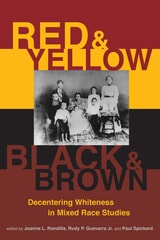
Red and Yellow, Black and Brown
Decentering Whiteness in Mixed Race StudiesRondilla, Joanne L
Rutgers University Press, 2017
Reflections in Place
Connected Lives of Navajo WomenDonna Deyhle
University of Arizona Press, 2009
As a recognized authority on the subject, qualified by multiple degrees in racial and American Indian studies, Deyhle is able to chronicle the lives and “survivance” of three Navajo women in a way that is simultaneously ethnographic and moving. Her critique of the U.S. education system’s underlying yet very real tendency toward structural discrimination takes shape in elegant prose that moves freely into and out of time and place. The combination of substantive sources and touching personal experience forms a profound and enduring narrative of critical and current importance.
While this book stands as a powerful contribution to American Indian studies, its compelling human elements will extend its appeal to anyone concerned with the ongoing plight of American Indians in the education system.

Reginald and Gladys Laubin, American Indian Dancers
Starr West Jones
University of Illinois Press, 2000
Reginald and Gladys Laubin devoted their lives to preserving vanishing Indigenous American cultures. Their authentic Indian dances, costumes, and songs helped white Americans appreciate expressions of Native culture as an art that should be preserved. Native Americans of many peoples praised the Laubins as worthy envoys of their cultures. Audiences in the US, Europe, Israel, and Africa applauded their performances. Starr West Jones provides the historical context for the Laubins’ accomplishments by following their career through their long history of live appearances and discussing their books on American Indian tipis, dances, and archery.
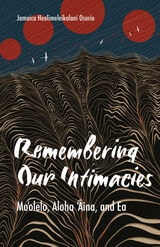
Remembering Our Intimacies
Mo'olelo, Aloha 'Aina, and EaJamaica Heolimeleikalani Osorio
University of Minnesota Press, 2021
Recovering Kānaka Maoli (Native Hawaiian) relationality and belonging in the land, memory, and body of Native Hawai’i
Hawaiian “aloha ʻāina” is often described in Western political terms—nationalism, nationhood, even patriotism. In Remembering Our Intimacies, Jamaica Heolimeleikalani Osorio centers in on the personal and embodied articulations of aloha ʻāina to detangle it from the effects of colonialism and occupation. Working at the intersections of Hawaiian knowledge, Indigenous queer theory, and Indigenous feminisms, Remembering Our Intimacies seeks to recuperate Native Hawaiian concepts and ethics around relationality, desire, and belonging firmly grounded in the land, memory, and the body of Native Hawai’i.
Remembering Our Intimacies argues for the methodology of (re)membering Indigenous forms of intimacies. It does so through the metaphor of a ‘upena—a net of intimacies that incorporates the variety of relationships that exist for Kānaka Maoli. It uses a close reading of the moʻolelo (history and literature) of Hiʻiakaikapoliopele to provide context and interpretation of Hawaiian intimacy and desire by describing its significance in Kānaka Maoli epistemology and why this matters profoundly for Hawaiian (and other Indigenous) futures.
Offering a new approach to understanding one of Native Hawaiians’ most significant values, Remembering Our Intimacies reveals the relationships between the policing of Indigenous bodies, intimacies, and desires; the disembodiment of Indigenous modes of governance; and the ongoing and ensuing displacement of Indigenous people.
Renewing the World
Plains Indian Religion and MoralityHoward L. Harrod
University of Arizona Press, 1987
"Harrod's discussion of kinship and reciprocity in Northwest Plains cosmology contains valuable insight into Native American worldview, and his emphasis on the moral dimension of ritual process is a major addition to the too-often ignored subject of Native American moral life." —Journal of Religion
"Includes the major works on Blackfoot, Crow, Cheyennes, and Arapaho religion, the works to which anyone who wishes to understand the religious life of these tribes must continue to turn." —Choice
"Plains people, Harrod suggests, refracted nature and conceived an environmental ethic through a metaphor of kinship. He is particularly skillful in characterizing the ambiguity Plains people expressed at the necessity of killing and eating their animal kin. Renewing the World also contributes to another new and uncultivated science we might call 'ecology of mind'." —Great Plains Quarterly
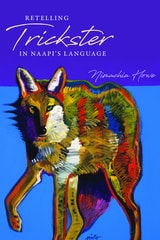
Retelling Trickster in Naapi's Language
Nimachia Howe
University Press of Colorado, 2019
Naapi is commonly and inaccurately categorized by Western scholars as a trickster figure. Research on him is rife with misnomers and repeated misinterpretations, many resulting from untranslatable terms and concepts, comparisons with the binary tenets of “good” vs. “bad,” and efforts by Niitsitapii storytellers to protect the stories. The five stories included in their entirety in this volume present Naapi’s established models of reciprocity, connection, kinship, reincarnation, and offerings, shown in descriptions of, and predictions for, the balance between life and death, the rising and setting of planets, wind directions and forces, and the cyclical nature of animals, birds, plants, glaciers, and rivers.
Retelling Trickster in Naapi’s Language will be of interest to students and scholars of Native American studies, ethnography, folklore, environmental philosophy, and Indigenous language, literature, and religion.
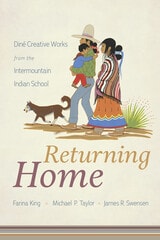
Returning Home
Diné Creative Works from the Intermountain Indian SchoolFarina King, Michael P. Taylor, and James R. Swensen With Contributions by Robert Dodson, Rena Dunn, Terence Wride, and Students of the Intermountain Indian School
University of Arizona Press, 2021
This book works to recover the lived experiences of Native American boarding school students through creative works, student interviews, and scholarly collaboration. It shows the complex agency and ability of Indigenous youth to maintain their Diné culture within the colonial spaces that were designed to alienate them from their communities and customs. Returning Home provides a view into the students’ experiences and their connections to Diné community and land. Despite the initial Intermountain Indian School agenda to send Diné students away and permanently relocate them elsewhere, Diné student artists and writers returned home through their creative works by evoking senses of Diné Bikéyah and the kinship that defined home for them.
Returning Home uses archival materials housed at Utah State University, as well as material donated by surviving Intermountain Indian School students and teachers throughout Utah, Arizona, and New Mexico. Artwork, poems, and other creative materials show a longing for cultural connection and demonstrate cultural resilience. This work was shared with surviving Intermountain Indian School students and their communities in and around the Navajo Nation in the form of a traveling museum exhibit, and now it is available in this thoughtfully crafted volume. By bringing together the archived student arts and writings with the voices of living communities, Returning Home traces, recontextualizes, reconnects, and returns the embodiment and perpetuation of Intermountain Indian School students’ everyday acts of resurgence.

Rez Road Follies
Canoes, Casinos, Computers, and Birch Bark BasketsJim Northrup
University of Minnesota Press, 1999
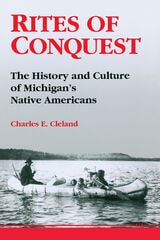
Rites of Conquest
The History and Culture of Michigan's Native AmericansCharles E. Cleland
University of Michigan Press, 1992
Beyond wars and warriors, Rites of Conquest is also about diplomacy and negotiation, mythology and magic, birth and death, and the joys and trials of daily life in the native villages of the Great Lakes region. Today, Michigan's Native American citizens struggle to solve problems that are a legacy of their past, while they attempt to maintain a distinctive place within modern society. In facing this challenge they often turn to the values and traditions that set them apart as the most enduring peoples of the Great Lakes region.
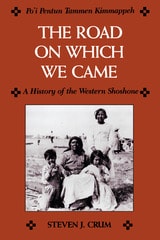
Road On Which We Came
A History of the Western ShoshoneSteven J. Crum
University of Utah Press, 1994
A hundred forty years ago, the Western Shoshone occupied a vast area of present-day Nevada—from Idaho in the north to Death Valley in the south. Today, the Newe hold a fraction of their former territory, still practicing native lifeways while accepting many aspect of American culture. Their story deserves telling.
The Road on Which We Came is the first comprehensive history of the Great Basin Shoshone. Written by historian Steven Crum, an enrolled tribal member, this book presents the Shoshone as an active force in their own history, effectively adapting to harsh physical environment, defending their territory in the nineteenth century, and working to modify or reject assimilationists policy in the present.
Noting that Native American history did not end with Wounded Knee, Crum gives substantial attention to twentieth-century events up to 1990 and emphasizes that in every period tribal actions can be characterized by a plurality of voices and opinions.
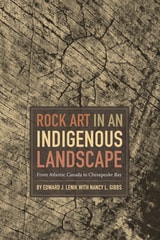
Rock Art in an Indigenous Landscape
From Atlantic Canada to Chesapeake BayEdward J. Lenik with Nancy L. Gibbs
University of Alabama Press, 2021
A landmark study of Native American rock art from Atlantic Canada to Chesapeake Bay.
Rock art, petroglyphs, and pictographs have been made by indigenous peoples for thousands of years. Images have been found on bedrock, cliff faces, ridge tops, and boulders and in rock shelters. Some rock surfaces are covered with abstract and geometric designs such as concentric circles, zigzag lines, grids, and cross-hatched and ladder-like patterns. Others depict humans, footprints and handprints, mammals, serpents, and mythic creatures. All were meticulously pecked, incised or painted. This ancient art form connects us to Native Americans’ past, traditions, world views, and sacred places.
Rock Art in an Indigenous Landscape: From Atlantic Canada to Chesapeake Bay is the culmination of the research of preeminent rock art scholar Edward J. Lenik. Here, he profiles more than 64 examples of rock art in varied locations from Nova Scotia to Maryland. Chapters are organized geographically and lead the reader through coastal sites, rivers and streams, lakes and ponds, and upland sites.
Lenik discusses the rock art examples in the context of the indigenous landscape, noting the significance of the place of discovery. Coverage includes a meticulous description of the design or motif and suggestions of time frame, artist-makers, and interpretations. Where possible, indigenous views on the artifacts enrich the narrative. Other invaluable elements are a discussion of how to identify indigenous rock art; a glossary of rock art terms and features and archaeological culture periods; an up-to-date bibliography; and an appendix of a number of reported but unconfirmed petroglyph sites in the regions.
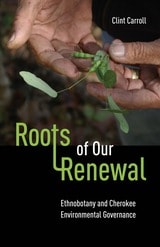
Roots of Our Renewal
Ethnobotany and Cherokee Environmental GovernanceClint Carroll
University of Minnesota Press, 2015
Honorable Mention: Labriola Center American Indian National Book Award
In Roots of Our Renewal, Clint Carroll tells how Cherokee people have developed material, spiritual, and political ties with the lands they have inhabited since removal from their homelands in the southeastern United States. Although the forced relocation of the late 1830s had devastating consequences for Cherokee society, Carroll shows that the reconstituted Cherokee Nation west of the Mississippi eventually cultivated a special connection to the new land—a connection that is reflected in its management of natural resources.
Until now, scant attention has been paid to the interplay between tribal natural resource management programs and governance models. Carroll is particularly interested in indigenous environmental governance along the continuum of resource-based and relationship-based practices and relates how the Cherokee Nation, while protecting tribal lands, is also incorporating associations with the nonhuman world. Carroll describes how the work of an elders’ advisory group has been instrumental to this goal since its formation in 2008.
An enrolled citizen of the Cherokee Nation, Carroll draws from his ethnographic observations of Cherokee government–community partnerships during the past ten years. He argues that indigenous appropriations of modern state forms can articulate alternative ways of interacting with and “governing” the environment.
Ruins, Caves, Gods, and Incense Burners
Northern Lacandon Maya Myths and RitualsDidier Boremanse
University of Utah Press, 2019
Their cult of incense burners, based on the veneration of Maya ruins and funerary caves and the deities these effigy censers represented, remained free of any Christian influence. Some ceremonies were vestiges of more complex rituals believed to date back to pre-Columbian times. In this volume, Didier Boremanse explores Lacandon beliefs and traditions he observed during the many months of fieldwork he did, spanning four decades.
Throughout the book Boremanse makes Lacandon values and worldviews accessible to readers from western cultures. Rituals are described and explained with extracts of the celebrants’ prayers that were tape-recorded, transcribed, and translated. Other elements of religious oral tradition are included, including incantations, chants, and the myths and beliefs that sustain the rites. Boremanse also discusses how larger social change influences religious change, both through economic means and outside influences. Most of the myths retold in this book have never been published in English. Photographs show rites that are no longer performed and shrines that no longer exist.