Results by title
55 books match the query 'New Perspectives' and 10 start with r

Race and Ethnicity in Arkansas
New PerspectivesJohn A. Kirk
University of Arkansas Press, 2014

Radical Visions
New Perspectives on Special Collections CuratorshipJillian Cuellar
Society of American Archivists, 2026

Ramblin' on My Mind
New Perspectives on the BluesEdited by David Evans
University of Illinois Press, 2007
This compilation of essays takes the study of the blues to a welcome new level. Distinguished scholars and well-established writers from such diverse backgrounds as musicology, anthropology, musicianship, and folklore join together to examine blues as literature, music, personal expression, and cultural product. Ramblin' on My Mind contains pieces on Ella Fitzgerald, Son House, and Robert Johnson; on the styles of vaudeville, solo guitar, and zydeco; on a comparison of blues and African music; on blues nicknames; and on lyric themes of disillusionment.
Contributors are Lynn Abbott, James Bennighof, Katharine Cartwright, Andrew M. Cohen, David Evans, Bob Groom, Elliott Hurwitt, Gerhard Kubik, John Minton, Luigi Monge, and Doug Seroff.
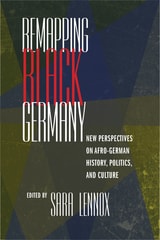
Remapping Black Germany
New Perspectives on Afro-German History, Politics, and CultureSara Lennox
University of Massachusetts Press, 2016
In 1984 at the Free University of Berlin, the African American poet Audre Lorde asked her Black, German-speaking women students about their identities. The women revealed that they had no common term to describe themselves and had until then lacked a way to identify their shared interests and concerns. Out of Lorde's seminar emerged both the term “Afro-German” (or “Black German”) and the 1986 publication of the volume that appeared in English translation as Showing Our Colors: Afro-German Women Speak Out. The book launched a movement that has since catalyzed activism and scholarship in Germany.
Remapping Black Germany collects thirteen pieces that consider the wide array of issues facing Black German groups and individuals across turbulent periods, spanning the German colonial period, National Socialism, divided Germany, and the enormous outpouring of Black German creativity after 1986.
In addition to the editor, the contributors include Robert Bernasconi, Tina Campt, Maria I. Diedrich, Maureen Maisha Eggers, Fatima El-Tayeb, Heide Fehrenbach, Dirk Göttsche, Felicitas Jaima, Katja Kinder, Tobias Nagl, Katharina Oguntoye, Peggy Piesche, Christian Rogowski, and Nicola Lauré al-Samarai.
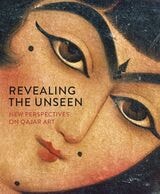
Revealing the Unseen
New Perspectives on Qajar ArtEdited by Melanie Gibson and Gwenaëlle Fellinger
Gingko, 2022
The thirteen articles in this volume were originally given as presentations at the symposium of the same name organized in June 2018 by the Musée du Louvre and the Musée du Louvre-Lens in conjunction with the exhibition The Empire of Roses: Masterpieces of 19th Century Persian Art. The exhibition explored the art of Iran in the nineteenth and early twentieth centuries, while the nation was under the rule of the Qajar dynasty. The symposium set out to present research on previously unknown and unpublished objects from this rich period of art history.
This volume, published with the Louvre Museum in France, is divided into four sections. The first, “Transitions and Transmissions,” is dedicated to the arts of painting, illumination, and lithography. The focus of the second section, entitled “The Image Revealed,” also considers works on paper, looking at new themes and techniques. “The Material World” examines the use of materials such as textiles, carpets, and armor. The articles in the final section discuss the history of two groups of artifacts acquired by their respective museums.
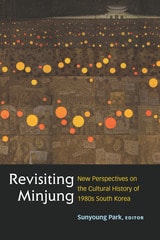
Revisiting Minjung
New Perspectives on the Cultural History of 1980s South KoreaSunyoung Park, Editor
University of Michigan Press, 2019
Revisiting Minjung brings new themes, new subjectivities, and new theoretical perspectives to the study of the rich ecosystem of 1980s Korean culture. Treated here is a wide array of topics, including the origins of minjung ideology, its critique by the right wing, minjung art and music, workers’ literary culture, women writers and the resurgence of feminism, erotic cinema, science fiction, transnational political travels, and the representations of race and queerness in 1980s popular culture. The book thus details the origins and development of some of the movements that shape cultural life in South Korea today, and it does so through analyses that engage some of the most pressing debates in current scholarship in Korea and abroad.

Richard Strauss
New Perspectives on the Composer and His WorkBryan Gilliam, ed.
Duke University Press, 1997
Contributors discuss Strauss as a young composer steeped in a conservative instrumental tradition, as a brash young modernist tone poet of the 1890s, as an important composer of twentieth-century German opera, and as a cultural icon manipulated by the national socialists during the 1930s and early 1940s. Individual essays use Strauss’s creative work as a framework for larger musicological questions such as the tension between narrative and structure in program music, the problem of extended tonality at the turn of the century, stylistic choice versus stylistic obligation, and conflicting perspectives of progressive versus conservative music.
This collection will interest Strauss scholars, musicologists, and those interested in the artistic and cultural life of Germany from 1880 through the Second World War.
Contributors. Kofi Agawu, Günter Brosche, Bryan Gilliam, Stephen Hefling, James A. Hepokoski, Timothy L. Jackson, Michael Kennedy, Lewis Lockwood, Barbara A. Peterson, Pamela Potter, Reinhold Schlötterer, R. Larry Todd

Roman Art in the Private Sphere
New Perspectives on the Architecture and Decor of the Domus, Villa, and InsulaElaine K. Gazda, Editor
University of Michigan Press, 1991
The essays treat works of art that belonged to every major Roman housing type: the single-family atrium houses and the insula apartment blocks in Italian cities, the dramatically sited villas of the Campanian coast and countryside, and the palatial mansions of late antique provincial aristocrats.
In a complementary fashion the essays consider domestic art in relation to questions of decorum, status, wealth, social privilege, and obligation. Patrons emerge as actively interested in the character of their surroundings; artists appear as responsive to the desire of their patrons. The evidence in private art of homosexual conduct in high society is also set forth.
Originality of subject matter, sophisticated appreciation of stylistic and compositional nuance, and philosophical perceptions of the relationship of humanity and nature are among the themes that the essays explore. Together they demonstrate that Roman domestic art must be viewed on its own terms.
Elaine K. Gazda is Professor of the History of Art and Curator of Hellenistic and Roman Antiquities at the Kelsey Museum of Archaeology, University of Michigan.
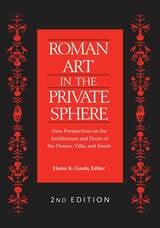
Roman Art in the Private Sphere
New Perspectives on the Architecture and Decor of the Domus, Villa, and InsulaElaine K. Gazda, Editor
University of Michigan Press, 2010
---Classical Review
---Classical World

Ruthless Criticism
New Perspectives in U.S. Communication HistoryWilliam S. Solomon and Robert W. McChesney, Editors
University of Minnesota Press, 1993
Ruthless Criticism was first published in 1993. Minnesota Archive Editions uses digital technology to make long-unavailable books once again accessible, and are published unaltered from the original University of Minnesota Press editions.
Ruthless Criticism offers perspectives and subjects largely outside traditional historiography. It broadens the concept of media history to include lesser-studied media, and offers alternative interpretations of traditional media.
This anthology of original research includes an array of scholarly and theoretical perspectives. Each addresses specific topic within a specific era. reflecting the diversity of U.S. mass media.
Solomon and McChesney begin by using critical theory and deconstruction to examine the meanings of print in the colonial era. Subsequent chapters study the media ecology of the antebellum press; the intense focus on profits of the post-Civil War mainstream press; gender images in the labor press; the diversity of political views within the working-class press; and the development of a commercial press in the black community.
The essays concerning the twentieth century focus on the rise of a culture industry and include studies on the origins of the broadcast ratings system and the commercial broadcast system and the commercial broadcast system, early television's portrayals of childhood, the televisions networks' close ties with the federal government, the government's key role in creating and developing the field of mass communication research, and teenage girls' popular culture from 1960–1968 as a formative influence on the feminist movement.