Results by title
78 books match the query 'North' and 7 start with r
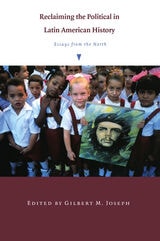
Reclaiming the Political in Latin American History
Essays from the NorthGilbert M. Joseph, ed.
Duke University Press, 2001
Taking careful stock of the state of historical writing on Latin America, the volume delineates current historiographical frontiers and suggests a series of new approaches that focus on several pivotal themes: the construction of historical narratives and memory; the articulation of class, race, gender, sexuality, and generation; and the historian’s involvement in the making of history. Although the book represents a view of the Latin American political that comes primarily from the North, the influence of Viotti da Costa powerfully marks the contributors’ engagement with Latin America’s past. Featuring a keynote essay by Viotti da Costa herself, the volume’s lively North-South encounter embodies incipient trends of hemispheric intellectual convergence.
Contributors. Jeffrey L. Gould, Greg Grandin, Daniel James, Gilbert M. Joseph, Thomas Miller Klubock, Mary Ann Mahony, Florencia E. Mallon, Diana Paton, Steve J. Stern, Heidi Tinsman, Emilia Viotti da Costa, Barbara Weinstein
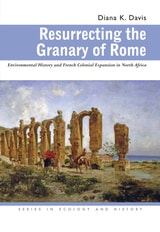
Resurrecting the Granary of Rome
Environmental History and French Colonial Expansion in North AfricaDiana K. Davis
Ohio University Press, 2007
Tales of deforestation and desertification in North Africa have been told from the Roman period to the present. Such stories of environmental decline in the Maghreb are still recounted by experts and are widely accepted without question today. International organizations such as the United Nations frequently invoke these inaccurate stories to justify environmental conservation and development projects in the arid and semiarid lands in North Africa and around the Mediterranean basin. Recent research in arid lands ecology and new paleoecological evidence, however, do not support many claims of deforestation, overgrazing, and desertification in this region.
Diana K. Davis’s pioneering analysis reveals the critical influence of French scientists and administrators who established much of the purported scientific basis of these stories during the colonial period in Algeria, Morocco, and Tunisia, illustrating the key role of environmental narratives in imperial expansion. The processes set in place by the use of this narrative not only systematically disadvantaged the majority of North Africans but also led to profound changes in the landscape, some of which produced the land degradation that continues to plague the Maghreb today.
Resurrecting the Granary of Rome exposes many of the political, economic, and ideological goals of the French colonial project in these arid lands and the resulting definition of desertification that continues to inform global environmental and development projects. The first book on the environmental history of the Maghreb, this volume reframes much conventional thinking about the North African environment. Davis’s book is essential reading for those interested in global environmental history.
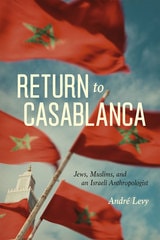
Return to Casablanca
Jews, Muslims, and an Israeli AnthropologistAndré Levy
University of Chicago Press, 2015
Levy visits a host of sites and historical figures to assemble a compelling history of social change, while seamlessly interweaving his study with personal accounts of his returns to his homeland. Central to this story is the massive migration of Jews out of Morocco. Levy traces the institutional and social changes such migrations cause for those who choose to stay, introducing the concept of “contraction” to depict the way Jews deal with the ramifications of their demographic dwindling. Turning his attention outward from Morocco, he goes on to explore the greater complexities of the Jewish diaspora and the essential paradox at the heart of his adventure—leaving Israel to return home.
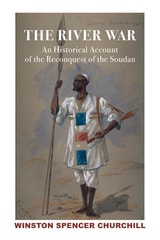
River War 2V
Historical Account of Reconquest of SoudanWinston S. Churchill
St. Augustine's Press, 2021
Churchill, an ambitious young cavalry officer serving with his regiment in India, had already published newspaper columns and a book about fighting on the Afghan frontier. He yearned to join Kitchener’s campaign. But the general, afraid of what he would write about it, refused to have him. Churchill returned to London. With help from his mother and the prime minister, he managed to get himself attached to an English cavalry regiment sent to strengthen Kitchener’s army. Hurriedly travelling to Egypt, Churchill rushed upriver to Khartoum, catching up with Kitchener’s army just in time to take part in the climactic battle. That day he charged with the 21st Lancers in the most dangerous fighting against the Dervish host.
He wrote fifteen dispatches for the Morning Post in London. As Kitchener had expected, Churchill’s dispatches and his subsequent book were highly controversial. The precocious officer, having earlier seen war on two other continents, showed a cool independence of his commanding officer. He even resigned from the army to be free to write the book as he pleased. He gave Kitchener credit for his victory but found much to criticize in his character and campaign.
Churchill’s book, far from being just a military history, told the whole story of the Egyptian conquest of the Sudan and the Dervishes’ rebellion against imperial rule. The young author was remarkably even-handed, showing sympathy for the founder of the rebellion, Muhammad Ahmed, and for his successor the Khalifa Abdullahi, whom Kitchener had defeated. He considered how the war in northeast Africa affected British politics at home, fit into the geopolitical rivalry between Britain and France, and abruptly thrust the vast Sudan, with the largest territory in Africa, into an uncertain future in Britain’s orbit.
In November 1899, The River War was published in “two massive volumes, my magnum opus (up to date), upon which I had lavished a whole year of my life,” as Churchill recalled later in his autobiography. The book had twenty-six chapters, five appendices, dozens of illustrations, and colored maps. Three years later, in 1902, it was shortened to fit into one volume. Seven whole chapters, and parts of every other chapter, disappeared in the abridgment. Many maps and most illustrations were also dropped. Since then the abridged edition has been reprinted regularly, and eventually it was even abridged further. But the full two-volume book, which is rare and expensive, was never published again—until now.
St. Augustine’s Press, in collaboration with the International Churchill Society, brings back to print in two handsome volumes The River War: An Historical Account of the Reconquest of the Soudan unabridged, for the first time since 1902. Every chapter and appendix from the first edition has been restored. All the maps are in it, in their original colors, with all the illustrations by Churchill’s brother officer Angus McNeill.
More than thirty years in the making, under the editorship of James W. Muller, this new edition of The River War will be the definitive one for all time. The whole book is printed in two colors, in black and red type, to show what Churchill originally wrote and how it was abridged or altered later. For the first time, a new appendix reproduces Churchill’s Sudan dispatches as he wrote them, before they were edited by the Morning Post. Other new appendices reprint Churchill’s subsequent writings on the Sudan. Thousands of new footnotes have been added to the book by the editor, identifying Churchill’s references to people, places, writings, and events unfamiliar to readers today. Professor Muller’s new introduction explains how the book fits into Churchill’s career as a writer and an aspiring politician. He examines the statesman’s early thoughts about war, race, religion, and imperialism, which are still our political challenges in the twenty-first century.
Half a century after The River War appeared, this book was one of a handful of his works singled out by the Swedish Academy when it awarded Churchill the Nobel Prize for Literature in 1953. Now, once again, its reader can follow Churchill back to the war he fought on the Nile, beginning with the words of his youngest daughter. Before she died, Mary Soames wrote a new foreword, published here, which concludes that “In this splendid new edition…we have, in effect, the whole history of The River War as Winston Churchill wrote it—and it makes memorable reading.”
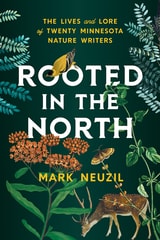
Rooted in the North
The Lives and Lore of Twenty Minnesota Nature WritersMark Neuzil
University of Minnesota Press, 2026
Discover unforgettable writers who taught Minnesota how to see its wild heart
In this engaging collection, environmental journalist Mark Neuzil revives the voices that showed generations how to appreciate Minnesota’s wild places. Comprising twenty vivid biographical essays, Rooted in the North traces the lives and lore of writers who shaped our understanding of this great state, from Minnesota’s northwoods to its tallgrass prairies to the storied landscape of the Boundary Waters Canoe Area Wilderness.
Readers will encounter towering figures of conservation such as Sigurd F. Olson, whose spiritual vision of wilderness helped define the modern environmental movement, alongside beloved chroniclers like Florence Page Jaques and Helen Hoover, whose intimate portraits of wildlife still resonate decades later. Neuzil also highlights writers Charles Eastman and Maude Kegg, who share insights into their Indigenous childhoods, and once-popular authors like Charles Hallock and George Leonard Herter, restoring them to their rightful place in the state’s literary heritage. Rooted in the North broadens our definition of “nature writer” to include novelists whose fiction grew from close observation of the land. Writers such as Martha Ostenso, Frederick Manfred, and Gary Paulsen appear here not just as storytellers but as keen interpreters of Minnesota’s natural world.
In what began as a popular series for the Minnesota Star Tribune, these essays explore the philosophy, science, adventure, faith, and everyday oddities that enlivened their subjects. The result is the only book of its kind—an illuminating portrait of the voices that helped us define and fall in love with Minnesota’s natural landscapes.
Retail e-book files for this title are screen-reader friendly with images accompanied by short alt text and/or extended descriptions.
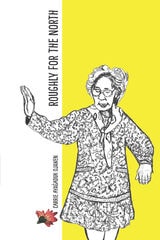
Roughly For the North
Carrie Ayagaduk Ojanen
University of Alaska Press, 2018
Roughly for the North is a tender and complex portrait of an Arctic and sub-arctic world. Full of lush language and imagery, each poem is an act of devotion and love to one’s family and land. Carrie Ayaġaduk Ojanen weaves a moving portrait of grief, of the rippling effects of historical trauma on succeeding generations, of resilience in the face of adversity, of respect for the Alaska Native traditions she grew up in. With vivid imagery, she draws the reader into Northern life, where the spiritual and industrial collide. She uses formalism and lyrical free verse to explore the natural world and to conjure a place of staggering beauty that hides death around every corner.
A member of the Ugiuvamiut tribe, Ojanen grounds her work in a web of familial relationships. Especially important is her connection with her grandparents, members of the last generation to make their home on Ugiuvak (King Island), Alaska. With heartfelt verse, her poems reflect the staggering cultural changes her grandparents faced and the way traditional art forms continue to unite her community and help them connect to the past.

Runes Of The North
Sigurd F. Olson
University of Minnesota Press, 1997