117 books match the query 'Opera' and 7 start with r
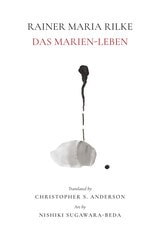
cover of Rainer Maria Rilke: Das Marien-Leben

Rainer Maria Rilke

Das Marien-Leben

Rainer Maria Rilke, translated by Christopher Anderson

Bridwell Press, 2025
Rainer Maria Rilke’s fifteen-part poetic cycle Das Marien-Leben stands as his most eloquent meditation on Mary, the mother of Jesus, whose name he shares. Rilke composed these verses in 1912, and ten years later, Paul Hindemith chose to heighten their rhetoric in an expansive song cycle for soprano and piano, the music revised in 1948. The present edition offers a fresh translation of the texts by Christopher Anderson alongside the sensitive artwork of Nishiki Sugawara-Beda, who has fashioned her concept particularly around Hindemith’s music. Supporting essays by translator and artist further situate the work in historical and contemporary contexts. Here is a poetic treasure, less known but no less significant in Rilke’s oeuvre, made accessible to English readers in a unique frame.
[more]
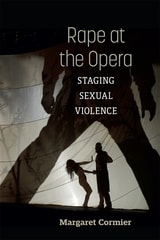
cover of Rape at the Opera: Staging Sexual Violence

Rape at the Opera

Staging Sexual Violence

Margaret Cormier

University of Michigan Press, 2024

The most-performed operas today were written at least a hundred years ago and carry some outdated and deeply problematic ideas. When performed uncritically, the misogyny, racism, and other ideologies present in many of these works clash with modern sensibilities. In Rape at the Opera, Margaret Cormier argues that production and performance are vital elements of opera, and that contemporary opera practitioners not only interpret but create operatic works when they put them onstage. Where some directors explicitly respond to contemporary dialogues about sexual violence, others utilize sexual violence as a surefire way to titillate, to shock, and to generate press for a new production.

Drawing on archival footage as well as attendance at live events, Cormier analyzes productions of canonic operas from German, Italian, and French traditions from the eighteenth to the early twentieth century, including Die Entführung aus dem Serail, Don Giovanni, La forza del destino, Un ballo in maschera, Salome, and Turandot. In doing so, Cormier highlights the dynamism of twenty-first-century opera performance practice with regard to sexual violence, establishes methods to evaluate representations of sexual violence on the opera stage, and reframes the primary responsibility of opera critics and creators as being not to opera composers and librettists but to the public.
[more]
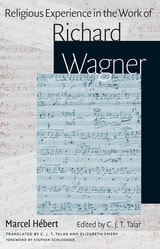
cover of Religious Experience in the Work of Richard Wagner

Religious Experience in the Work of Richard Wagner

Marcel Hebert

Catholic University of America Press, 2015
Philosopher Marcel Hébert developed his Religious Experience in the Work of Richard Wagner (1895) from this background of sustained popular interest in Wagner, an interest that had intensified with the return of his operas to the Paris stage. Newspaper debates about the impact of Wagner's ideas on French society often stressed the links between Wagner and religion. These debates inspired works like Hébert's, intended to explain the complex myth and allegory in Wagner's work and to elucidate it for a new generation of French spectators.
[more]
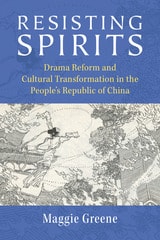
cover of Resisting Spirits: Drama Reform and Cultural Transformation in the People's Republic of China

Resisting Spirits

Drama Reform and Cultural Transformation in the People's Republic of China

Maggie Greene

University of Michigan Press, 2019
Resisting Spirits is a reconsideration of the significance and periodization of literary production in the high socialist era, roughly 1953 through 1966, specifically focused on Mao-era culture workers’ experiments with ghosts and ghost plays. Maggie Greene combines rare manuscript materials—such as theatre troupes’ annotated practice scripts—with archival documents, memoirs, newspapers, and films to track key debates over the direction of socialist aesthetics. Through arguments over the role of ghosts in literature, Greene illuminates the ways in which culture workers were able to make space for aesthetic innovation and contestation both despite and because of the constantly shifting political demands of the Mao era. Ghosts were caught up in the broader discourse of superstition, modernization, and China’s social and cultural future. Yet, as Greene demonstrates, the ramifications of those concerns as manifested in the actual craft of writing and performing plays led to further debates in the realm of literature itself: If we remove the ghost from a ghost play, does it remain a ghost play? Does it lose its artistic value, its didactic value, or both? At the heart of Greene’s intervention is “just reading”: the book regards literature first as literature, rather than searching immediately for its political subtext, and the voices of dramatists themselves finally upstage those of Mao’s inner circle. Ironically, this surface reading reveals layers of history that scholars of the Mao era have often ignored, including the ways in which social relations and artistic commitments continued to inform the world of art. Resisting Spirits thus illuminates the origins of more famous literary inquisitions, showing how the arguments surrounding ghost plays and the fates of their authors place the origins of the Cultural Revolution several years earlier, with a radical new shift in the discourse of theatre.
 
[more]
cover of Richard Wagner's Political Ecology

Richard Wagner's Political Ecology

Kirsten S. Paige

University of Chicago Press, 2026

A study of the deep history of the Wagnerian environmental imagination.
 
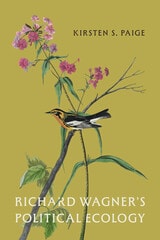
Richard Wagner’s operas are bursting with environmental imagery, from tittering birds to flowing rivers to towering trees. In Richard Wagner’s Political Ecology, Kirsten S. Paige asks where Wagner’s environmental imagination came from, how it was received by audience members and reconceived by stage directors, and how it refracts his politics. By tracing the ecological dimensions of the composer’s essays and dramas, Paige reveals how Wagner’s environmental imagination was inextricable from broader political concerns of his time.

The book begins by examining the way Wagner’s political ecology shape-shifted across its rhetorical, musical, scenographic, and technological permutations. Although Wagner’s essays and dramas invite a range of interpretations, for Paige, they point to an all-encompassing image of opera-as-climate. The book then turns to the ways Wagnerian drama—and opera more generally—at once participates in the industrial-technological lineage of climate change and helps spectators grapple with the challenges of living in a warming world. In providing the first close examination of Wagner’s artistic thought, practice, and reception in relation to nineteenth-century climate theory and the early history of environmentalism, Richard Wagner’s Political Ecology considers what it might mean to reimagine opera around ethical mandates of sustainability.
[more]
cover of Rigoletto: Critical Edition Study Score

Rigoletto

Critical Edition Study Score

Giuseppe Verdi

University of Chicago Press, 2017

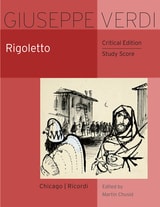
“I complain bitterly of the editions of my last operas, made with such little care, and filled with an infinite number of errors.”—Giuseppe Verdi
 
The University of Chicago Press, in collaboration with Casa Ricordi, has undertaken to publish the first critical edition of the complete works of Giuseppe Verdi. The series, based exclusively on original sources, is the only one to present authentic versions of all of the composer’s works; together with his operas, the critical edition presents his songs, his choral music and sacred pieces, and his string quartet and other instrumental works.
The Works of Giuseppe Verdi will be an invaluable standard reference work—a necessary acquisition for all music libraries and a joy to own for all lovers of opera. The new series of study scores presents an adaptation of each critical edition that provides scholars with an affordable and portable option for exploring Verdi’s oeuvre. The study scores have been designed to distinguish editors’ marks from Verdi’s own notations while remaining clear enough for use in performance. The introduction to each score discusses the work’s sources, composition, and performance history, as well as performance practices, instrumentation, and problems of notation. The newest editions of the study scores examine two of Verdi’s three-act operas: La traviata and Rigoletto.
 
[more]
cover of Rigoletto: Melodramma in Three Acts by Francesco Maria Piave

Rigoletto

Melodramma in Three Acts by Francesco Maria Piave

Giuseppe Verdi

University of Chicago Press, 1983

The University of Chicago Press, in collaboration with Casa Ricordi of Milan, has undertaken to publish the first critical edition of the complete works of Giuseppe Verdi. The Works of Giuseppe Verdi, the only edition based exclusively on original sources and the only one to present authentic versions of all the composer's works, will include each of Verdi's twenty-eight operas (all versions), his sacred music, songs, chamber music, and juvenilia. The series begins with the definitive version of Rigoletto.

[more]