Results by title
283 books match the query 'Phenomenology' and 6 start with r
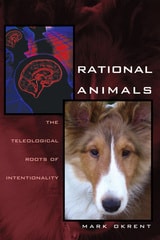
Rational Animals
The Teleological Roots of IntentionalityMark Okrent
Ohio University Press, 2007
Rational Animals: The Teleological Roots of Intentionality offers an original account of the intentionality of human mental states, such as beliefs and desires.
The account of intentionality in Rational Animals is broadly biological in its basis, emphasizing the continuity between human intentionality and the levels of intentionality that should be attributed to animal actions and states.
Establishing the goal-directed character of animal behavior, Mark Okrent argues that instrumentally rational action is a species of goal-directed behavior that is idiosyncratic to individual agents and is distinguished by its novelty and flexibility. He also argues that some nonlinguistic animals are capable of instrumental rationality and that in the first instance, the contents of beliefs and desires are individuated by the explanatory role of those states in rationxadally accounting for such instrumentally rational behavior.
The account of instrumental rationality offered in Rational Animals allows for understanding the practical rationality of linguistically competent human beings as a distinctive capacity of social animals capable of undertaking roles governed by socially sanctioned norms.
Rational Animals will be of interest to cognitive scientists, philosophers of mind, philosophers of biology, philosophers of action, ethologists, and those interested in the debates concerning animal intelligence.
Reason and Evidence in Husserl's Phenomenology
David Michael Kleinberg-Levin
Northwestern University Press, 1970
Reduction and Givenness
Investigations of Husserl, Heidegger, and PhenomenologyJean-Luc Marion
Northwestern University Press, 1997
Restructuring Architectural Theory
Edited by Marco Diani and Catherine Ingraham
Northwestern University Press, 1989
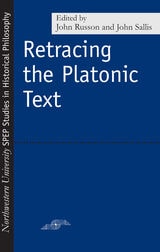
Retracing the Platonic Text
John Russon and John Sallis
Northwestern University Press, 1999
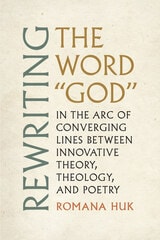
Rewriting the Word "God"
In the Arc of Converging Lines between Innovative Theory, Theology, and PoetryRomana Huk
University of Alabama Press, 2025
Innovative poetry, philosophy, theology and new sciences converge in the project of rewriting the word “God”
In Rewriting the Word “God,” Romana Huk examines the substantive connections between innovative poetry of the last century and contemporary theology and philosophy. Along the way, we encounter ten poets who have, without abandoning their inherited or chosen faith traditions, radically rethought conceptualizations of divinity, human ontology, and the real.
From the startlingly proto-phenomenological encounters with nature by Gerard Manley Hopkins to the post-deconstructive pursuit of “oracular” speech in Fanny Howe, these poets have found inspiration in a wide range of sources, from ancient religious texts to modern philosophical movements. But what unites them is their willingness to continually change, experiment and challenge the status quo, both in their religious beliefs and their poetic practice.
Huk shows how these poets have used their work to explore ultimate questions of life and death, meaning and purpose, and the relationship between humans and materiality, humans and other humans, which for these poets sheds light on humanity’s relationship with the divine. She also highlights the ways in which they have engaged with social and political issues in their poetry to speak out against injustice and oppression.
Rewriting the Word “God” is a thought-provoking and inspiring work that will challenge current perceptions of both religion and poetry from new positions at the intersection of faith, art, philosophy, science, literary theory, and culture.