Results by title
1148 books match the query 'Political Ideologies' and 62 start with r
Radical American Partisanship
Mapping Violent Hostility, Its Causes, and the Consequences for DemocracyNathan P. Kalmoe and Lilliana Mason
University of Chicago Press, 2022
Political violence is rising in the United States, with Republicans and Democrats divided along racial and ethnic lines that spurred massive bloodshed and democratic collapse earlier in the nation’s history. The January 6, 2021 insurrection and the partisan responses that ensued are a vivid illustration of how deep these currents run. How did American politics become so divided that we cannot agree on how to categorize an attack on our own Capitol?
For over four years, through a series of surveys and experiments, Nathan P. Kalmoe and Lilliana Mason have been studying radicalism among ordinary American partisans. In this groundbreaking book, they draw on new evidence—as well as insights from history, psychology, and political science—to put our present partisan fractiousness in context and to explain broad patterns of political and social change. Early chapters reveal the scope of the problem, who radical partisans are, and trends over time, while later chapters identify the conditions that partisans say justify violence and test how elections, political violence, and messages from leaders enflame or pacify radical views. Kalmoe and Mason find that ordinary partisanship is far more dangerous than pundits and scholars have recognized. However, these findings are not a forecast of inevitable doom; the current climate also brings opportunities to confront democratic threats head-on and to create a more inclusive politics. Timely and thought-provoking, Radical American Partisanship is vital reading for understanding our current political landscape.

Radical Gotham
Anarchism in New York City from Schwab's Saloon to Occupy Wall StreetEdited by Tom Goyens
University of Illinois Press, 2017
Radical Jewish Politics
A Global PerspectiveNathaniel Deutsch
Rutgers University Press, 2026
Radicalism and Reputation
The Career of Bronterre O'BrienMichael J. Turner
Michigan State University Press, 2017

Radicalization in Theory and Practice
Understanding Religious Violence in Western EuropeThierry Balzacq and Elyamine Settoul, Editors
University of Michigan Press, 2022
Radicalization is a major challenge of contemporary global security. It conjures up images of violent ideologies, “homegrown” terrorists and jihad in both the academic sphere and among security and defense experts. While the first instances of religious radicalization were initially limited to second-generation Muslim immigrants, significant changes are currently impacting this phenomenon. Technology is said to amplify the dissemination of radicalism, though there remains uncertainty as to the exact weight of technology on radical behaviors. Moreover, far from being restricted to young men of Muslim heritage suffering from a feeling of social relegation, radicalism concerns a significant number of converted Muslims, women and more heterogeneous profiles (social, academic and geographic), as well as individuals that give the appearance of being fully integrated in the host society. These new and striking dynamics require innovative conceptual lenses.
Radicalization in Theory and Practice identifies the mechanisms that explicitly link radical religious beliefs and radical actions. It describes its nature, singles out the mechanisms that enable radicalism to produce its effects, and develops a conceptual architecture to help scholars and policy-makers to address and evaluate radicalism—or what often passes as such. A variety of empirical chapters fed by first-hand data probe the relevance of theoretical perspectives that shape radicalization studies. By giving a prominent role to first-hand empirical investigations, the authors create a new framework of analysis from the ground up. This book enhances the quality of theorizing in this area, consolidates the quality of methodological enquiries, and articulates security studies insights with broader theoretical debates in different fields including sociology, social psychology, economics, and religious studies.
Re-Centring the City
Urban Mutations, Socialist Afterlives and the Global EastEdited by Jonathan Bach and Michal Murawski
University College London, 2019
By drawing our attention back to the center as an object of analytical and empirical study, this book counters a long-term trend in both planning and urban scholarship that emphasizes decentralization as the hallmark of the twenty-first-century city. It argues that such a “centrifugal” turn in urban studies is neither empirically accurate nor normatively incontestable, especially when one looks beyond the West. Rather, as the contributions to this volume show, decentering obscures the ways in which the center continues to exert a powerful influence on cities of today. The concise chapters, situated at the intersection of urban studies, social anthropology, architecture, and art theory, provide new perspectives on the role of the center in defining the city’s terrain. Together, they constitute a collection of sharp, provocative interventions into debates about the transformation of global urban forms in the twenty-first century.

Readings on Fascism and National Socialism
University of Colorado, Dept. of Philosophy
Ohio University Press, 1952
The catastrophe and holocaust brought about by the two powerful movements of fascism and national socialism will mark human life always. Now, as we feel our hatred for them, we find it difficult to understand how they could have been so powerful, how they could have appealed so strongly to millions of people of a modern age.
To understand our own times, it is necessary to understand these movements. And to understand them, we must read the basic philosophical and political documents which show the force of the ideas which moved a world to the brink of disaster.
This collection of readings has been selected to encourage students to clarify their thinking on social philosophy. They will accordingly need to determine whether the readings contain more or less coherent body of ideas which constitutes a social philosophy. They will also need to raise the more far-reaching question of whether the ideas are acceptable. To arrive at any satisfactory answer to this latter question, they will necessarily have to compare the ideas of fascism and their practical meanings with the alternatives, real and ideal, that are the substance of live philosophical issues.
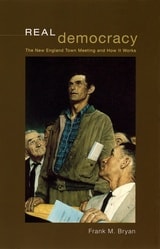
Real Democracy
The New England Town Meeting and How It WorksFrank M. Bryan
University of Chicago Press, 2003
A nationally recognized expert on this topic, Bryan has now done just that. Studying 1,500 town meetings in his home state of Vermont, he and his students recorded a staggering amount of data about them—238,603 acts of participation by 63,140 citizens in 210 different towns. Drawing on this evidence as well as on evocative "witness" accounts—from casual observers to no lesser a light than Aleksandr Solzhenitsyn—Bryan paints a vivid picture of how real democracy works. Among the many fascinating questions he explores: why attendance varies sharply with town size, how citizens resolve conflicts in open forums, and how men and women behave differently in town meetings. In the end, Bryan interprets this brand of local government to find evidence for its considerable staying power as the most authentic and meaningful form of direct democracy.
Giving us a rare glimpse into how democracy works in the real world, Bryan presents here an unorthodox and definitive book on this most cherished of American institutions.
Reason and Democracy
Thomas A. Spragens Jr.
Duke University Press, 1990
Drawing on recent work in the philosophy of science and the philosophy of language, combined with appropriate analogies in political thought and action, Spragens maintains that it is possible to discern the outlines of a philosophically cogent and morally beneficial concept of rational practice on the part of a political community. This possibility, he contends, provides a philosophical basis for liberal democratic politics that is superior to utilitarian and deontological accounts.
Reason's Muse
Sexual Difference and the Birth of DemocracyGeneviève Fraisse
University of Chicago Press, 1994
Through an analysis of literary, religious, legal, philosophical, and medical texts, Fraisse links a range of positions on women's proper role in society to specific historical and rhetorical circumstances. She shows how the Revolution marked a sharp break in the way women were represented in language, as traditional bantering about the "war of the sexes" gave way to serious discussions of the political and social meanings of sexual difference. Following this discussion on three different planes—the economical, the political, and the biological—Fraisse looks at the exclusion of women against the backdrop of democracy's inevitable lie: the affirmation of an equality so abstract it was impossible to concretely apply.
This study of the place of sexual equality in the founding moment of democracy offers insight into a persistent question: whether female emancipation is to be found through the achievement of equality with men or in the celebration of female difference.
Reassessing Communism
Concepts, Culture, and Society in Poland 1944–1989Instytutem Badan Literackich PAN Chmielewska
Central European University Press, 2021
The thirteen authors of this collective work undertook to articulate matter-of-fact critiques of the dominant narrative about communism in Poland while offering new analyses of the concept, and also examining the manifestations of anticommunism. Approaching communist ideas and practices, programs and their implementations, as an inseparable whole, they examine the issues of emancipation, upward social mobility, and changes in the cultural canon.
The authors refuse to treat communism in Poland in simplistic categories of totalitarianism, absolute evil and Soviet colonization, and similarly refuse to equate communism and fascism. Nor do they adopt the neoliberal view of communism as a project doomed to failure. While wholly exempt from nostalgia, these essays show that beyond oppression and bad governance, communism was also a regime in which people pursued a variety of goals and sincerely attempted to build a better world for themselves.
The book is interdisciplinary and applies the tools of social history, intellectual history, political philosophy, anthropology, literature, cultural studies, and gender studies to provide a nuanced view of the communist regimes in east-central Europe.
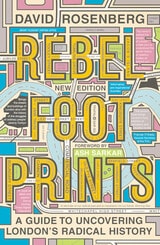
Rebel Footprints
A Guide to Uncovering London's Radical HistoryDavid Rosenberg
Pluto Press, 2019
If you visit London, and you’ve only experienced Buckingham Palace, The Tower of London, and The Millennium Wheel, you’ve missed the true essence of London, and its politically-charged, rebellious history. A truly radical response to conservative heritage tours and banal day trips, Rebel Footprints brings to life the history of social movements in England's capital by providing lively commentary, maps, and walking tours you will not find anywhere else.
David Rosenberg transports readers from well-known landmarks to history-making hidden corners, while telling the story of protest and struggle in London from the early nineteenth to the mid-twentieth century.
From the suffragettes to the socialists, from the chartists to the trade unionists: Rosenberg invites us to step into the footprints of a diverse cast of dedicated fighters for social justice. Individual chapters highlight particular struggles and their participants, from famous faces to lesser-known luminaries. Chapters include:
*Writers and Rioters in the Fleet Street Precinct
*Trailblazers for Democracy in Clerkenwell Green
*The Spark of Rebellion in Bow
*Coming in from the Cold: Immigrant Agitators and Radicals in Spitalfields
*No Gods, No Masters: Radical Bloomsbury
*Life on the Boundary: Fighting for Housing in Bethnal Green and Shoreditch
*Stirrings from the South: The Battersea Four
*peaking Truth to Power: Suffragettes and Westminster
*Not Afraid of the Prison Walls: Rebel Women and Men of Poplar
*People's Power in Bermondsey
Rebel Footprints sets London's radical campaigners against the backdrop of the city's multi-faceted development. Self-directed walks pair with narratives that seamlessly blend history, politics, and geography, while specially commissioned maps and illustrations immerse the reader in the story of the city.
Whether you're visiting London for the first time, or born and raised there, Rosenberg invites you to see London as you never have before—the radical center of the English-speaking world.
Rebels All!
Rebels All! A Short History of the Conservative Mind in Postwar AmericaMattson, Kevin
Rutgers University Press, 2008
Outstanding Academic Title of 2008
Do you ever wonder why conservative pundits drop the word “faggot” or talk about killing and then Christianizing Muslims abroad? Do you wonder why the right’s spokespeople seem so confrontational, rude, and over-the-top recently? Does it seem strange that conservative books have such apocalyptic titles? Do you marvel at why conservative writers trumpeted the “rebel” qualities of George W. Bush just a few years back?
There is no doubt that the style of the political right today is tough, brash, and by many accounts, not very conservative sounding. After all, isn’t conservatism supposed to be about maintaining standards, upholding civility, and frowning upon rebellion? Historian Kevin Mattson explains the apparent contradictions of the party in this fresh examination of the postwar conservative mind. Examining a big cast of characters that includes William F. Buckley, Whittaker Chambers, Norman Podhoretz, Irving Kristol, Kevin Phillips, David Brooks, and others, Mattson shows how right-wing intellectuals have always, but in different ways, played to the populist and rowdy tendencies in America’s political culture. He boldly compares the conservative intellectual movement to the radical utopians among the New Left of the 1960s and he explains how conservatism has ingested central features of American culture, including a distrust of sophistication and intellectualism and a love of popular culture, sensation, shock, and celebrity.
Both a work of history and political criticism, Rebels All! shows how the conservative mind made itself appealing, but also points to its endemic problems. Mattson’s conclusion outlines how a recast liberalism should respond to the conservative ascendancy that has marked our politics for the last thirty years.
Reclaiming the State
A Progressive Vision of Sovereignty for a Post-Neoliberal WorldWilliam Mitchell and Thomas Fazi
Pluto Press, 2017
Many of our assumptions—about ideology, democracy, trade, and globalization—are being thrown into doubt, deposed by populism, nationalism, and racism. In response to these challenging times, economist Bill Mitchell and political theorist Thomas Fazi propose a reconceptualization of the sovereign state as a vehicle for change. They offer a progressive view of sovereignty based not on the demonization of the other, but as a way to bring the economy back under democratic control. With nationalism gaining support across the United States with each passing week, Reclaiaming the State provides innovative ideas to mobilize and reenergize a tired, divided Left.
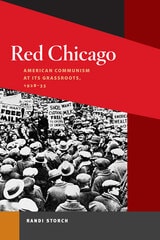
Red Chicago
American Communism at Its Grassroots, 1928-35Randi Storch
University of Illinois Press, 2007
Red Chicago is a social history of American Communism set within the context of Chicago's neighborhoods, industries, and radical traditions. Using local party records, oral histories, union records, party newspapers, and government documents, Randi Storch fills the gap between Leninist principles and the day-to-day activities of Chicago's rank-and-file Communists.
Uncovering rich new evidence from Moscow's former party archive, Storch argues that although the American Communist Party was an international organization strongly influenced by the Soviet Union, at the city level it was a more vibrant and flexible organization responsible to local needs and concerns. Thus, while working for a better welfare system, fairer unions, and racial equality, Chicago's Communists created a movement that at times departed from international party leaders' intentions. By focusing on the experience of Chicago's Communists, who included a large working-class, African American, and ethnic population, this study reexamines party members' actions as an integral part of the communities and industries in which they lived and worked.
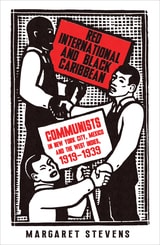
Red International and Black Caribbean
Communists in New York City, Mexico and the West Indies, 1919-1939Margaret Stevens
Pluto Press, 2017
Challenging dominant accounts, Red International and Black Caribbean debunks the “great men” narrative, emphasizes the role of women in their capacity as laborers, and paints the true struggles of black peasants and workers in Communist parties.

Red Planets
Marxism and Science FictionEdited by Mark Bould and China Mielville
Pluto Press, 2009
Covering a rich variety of examples from Weimar cinema to mainstream Hollywood films, and novelists from Jules Verne and H.G. Wells to Kim Stanley Robinson, Ken MacLeod and Charles Stross, this is an indespensible insight into how Marxism and science fiction go hand-in-hand.
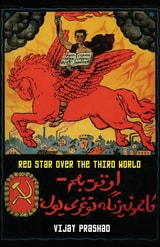
Red Star Over the Third World
Vijay Prashad
Pluto Press, 2019
From Cuba to Vietnam, China to South Africa, the October Revolution of 1917 inspired millions of people beyond the territory of Russia. It proved that the masses could not only overthrow autocratic governments, but that they could also form an opposing government in their own image.
The new idea that the working class and the peasantry could be allied, combined with the clear strength and necessity of a vanguard party, guided multiple revolutions across the globe. Here is much-needed antidote to all the glum histories written on the demise of the Soviet Union. Vijay Prashad throws a spotlight on the way the Russian Revolution was seen and received in the countries colonized by European empires. With Russia as an inspiration and providing support, suddenly workers and peasants, those left out of capitalist prosperity, organized and attempted to create for themselves real socialist revolution. Prashad’s chapters include:
*Eastern Graves
*Red October
*Follow the Path of the Russians
*The Lungs of Russia
*Soviet Asia
*Enemy of Imperialism
*Eastern Marxism
*Colonial Fascism
*Polycentric Communism
*Memories of Communism
The author writes in this Preface, “It has been a quarter-century since the demise of the USSR. And yet, the marks of the October Revolution remain—not just in the territories of the USSR but more so in what used to be known as the Third World. From Cuba to Vietnam, from China to South Africa, the October Revolution remains as an inspiration. After all, that Revolution proved that the working class and the peasantry could not only overthrow an autocratic government but it could form its own government.”
This book explains the power of the October Revolution in the Global South. From Ho Chí Minh to Fidel Castro, reflections on polycentric communism, and collective memories of communism, it shows how, for a brief moment, another world was possible.

Red War on the Family
Sex, Gender, and Americanism in the First Red ScareErica J Ryan
Temple University Press, 2016
In her probing and engaging book, Red War on the Family, Erica Ryan traces the roots of sexual modernism and the history of antiradicalism and antifeminism. She illuminates how Americans responded to foreign and domestic threats and expressed nationalism by strengthening traditional gender and family roles-especially by imposing them on immigrant groups, workers, women, and young people.
Ryan argues that the environment of political conformity in the 1920s was maintained in part through the quest for cultural and social conformity, exemplified by white, middle-class family life. Red War on the Family charts the ways Americanism both reinforced and was reinforced by these sexual and gender norms in the decades after World War I.
Reforming Intelligence
Obstacles to Democratic Control and EffectivenessEdited by Thomas C. Bruneau and Steven C. Boraz
University of Texas Press, 2007
These days, it's rare to pick up a newspaper and not see a story related to intelligence. From the investigations of the 9/11 commission, to accusations of illegal wiretapping, to debates on whether it's acceptable to torture prisoners for information, intelligence—both accurate and not—is driving domestic and foreign policy. And yet, in part because of its inherently secretive nature, intelligence has received very little scholarly study. Into this void comes Reforming Intelligence, a timely collection of case studies written by intelligence experts, and sponsored by the Center for Civil-Military Relations (CCMR) at the Naval Postgraduate School, that collectively outline the best practices for intelligence services in the United States and other democratic states.
Reforming Intelligence suggests that intelligence is best conceptualized as a subfield of civil-military relations, and is best compared through institutions. The authors examine intelligence practices in the United States, United Kingdom, and France, as well as such developing democracies as Brazil, Taiwan, Argentina, and Russia. While there is much more data related to established democracies, there are lessons to be learned from states that have created (or re-created) intelligence institutions in the contemporary political climate. In the end, reading about the successes of Brazil and Taiwan, the failures of Argentina and Russia, and the ongoing reforms in the United States yields a handful of hard truths. In the murky world of intelligence, that's an unqualified achievement.
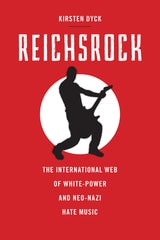
Reichsrock
The International Web of White-Power and Neo-Nazi Hate MusicDyck, Kirsten
Rutgers University Press, 2016
Reinventing Chinese Tradition
The Cultural Politics of Late SocialismKa-ming Wu
University of Illinois Press, 2015
Ka-ming Wu's ethnographic account of contemporary Yan'an documents how people have reworked the revival of three rural practices--paper-cutting, folk storytelling, and spirit cults--within (and beyond) the socialist legacy. Moving beyond dominant views of Yan'an folk culture as a tool of revolution or object of market reform, Wu reveals how cultural traditions become battlegrounds where conflicts among the state, market forces, and intellectuals in search of an authentic China play out. At the same time, she shows these emerging new dynamics in the light of the ways rural residents make sense of rapid social change.
Alive with details, Reinventing Chinese Tradition is an in-depth, eye-opening study of an evolving culture and society within contemporary China.

Religion and Nationalism in Soviet and East European Politics
Pedro Ramet, ed.
Duke University Press, 1988
Religion and Political Tolerance in America
Advances in the State of the ArtPaul Djupe
Temple University Press, 2015
The essays in Religion and Political Tolerance in America seek to understand how these elements interrelate. The editor and contributors to this important volume present new and innovative research that wrestles with the fundamental question of the place of religion in democratic society. They address topics ranging from religious contributions to social identity to the political tolerance that religious elites (clergy) hold and advocate to others, and how religion shapes responses to intolerance.
The conclusion, by Ted Jelen, emphasizes that religion’s take on political tolerance is nuanced and that they are not incompatible; religion can sometimes enhance the tolerance of ordinary citizens.
Religion in the New Europe
Krzysztof Michalski
Central European University Press, 2006
Remaking America
Democracy and Public Policy in an Age of InequalityJoe Soss
Russell Sage Foundation, 2007

Remaking Appalachia
Ecosocialism, Ecofeminism, and LawNicholas F. Stump
West Virginia University Press, 2021
Environmental law has failed spectacularly to protect Appalachia from the ravages of liberal capitalism, and from extractive industries in particular. Remaking Appalachia chronicles such failures, but also puts forth hopeful paths for truly radical change.
Remaking Appalachia begins with an account of how, over a century ago, laws governing environmental and related issues proved fruitless against the rising power of coal and other industries. Key legal regimes were, in fact, explicitly developed to support favored industrial growth. Aided by law, industry succeeded in maximizing profits not just through profound exploitation of Appalachia’s environment but also through subordination along lines of class, gender, and race. After chronicling such failures and those of liberal development strategies in the region, Stump explores true system change beyond law “reform.” Ecofeminism and ecosocialism undergird this discussion, which involves bottom-up approaches to transcending capitalism that are coordinated from local to global scales.
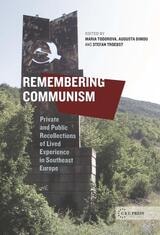
Remembering Communism
Private and Public Recollections of Lived Experience in Southeast EuropeContributors: Simina Bădica, Iskra Baeva, Tanya Boneva, Corina Cimpoieru, Liliana Deyanova, Albena Hranova, Nataliya Hristova, Petya Kabakchieva, Evgenia Kalinova, Anny Kirilova, Thomas Lindenberger, Tamás Lőnhárt, Izabella Main, Tsvetana Manova, Iliiana Marcheva, Vasil Markov, Andi Mihalache, Cătălina Mihalache, Milla Mineva, Cristina Petrescu, Dragoş Petrescu, Vania Stoyanova, Virgiliu Ţârău, Nikolai Vukov, Smaranda Vultur
Central European University Press, 2014
Remembering Communism examines the formation and transformation of the memory of communism in the post-communist period. The majority of the articles focus on memory practices in the post-Stalinist era in Bulgaria and Romania, with occasional references to the cases of Poland and the GDR. Based on an interdisciplinary approach, including history, anthropology, cultural studies and sociology, the volume examines the mechanisms and processes that influence, determine and mint the private and public memory of communism in the post-1989 era. The common denominator to all essays is the emphasis on the process of remembering in the present, and the modalities by means of which the present perspective shapes processes of remembering, including practices of commemoration and representation of the past.
The volume deals with eight major thematic blocks revisiting specific practices in communism such as popular culture and everyday life, childhood, labor, the secret police, and the perception of “the system”.
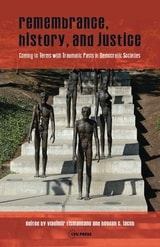
Remembrance, History, and Justice
Coming to terms with traumatic pasts in democratic societiesBogdan C. Iacob
Central European University Press, 2015
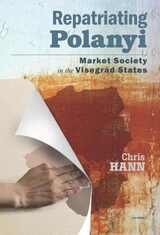
Repatriating Polanyi
Market Society in the Visegrád StatesChris Hann
Central European University Press, 2019
Karl Polanyi’s “substantivist” critique of market society has found new popularity in the era of neoliberal globalization. The author reclaims this polymath for contemporary anthropology, especially economic anthropology, in the context of Central Europe, where Polanyi (1886–1964) grew up. The Polanyian approach illuminates both the communist era, in particular the “market socialist” economy which evolved under János Kádár in Hungary, as well as the post-communist transformations of property relations, civil society and ethno-national identities throughout the region.
Hann’s analyses are based primarily on his own ethnographic investigations in Hungary and South-East Poland. They are pertinent to the rise of neo-nationalism in those countries, which is theorized as a malign countermovement to the domination of the market. At another level, Hann’s adaptation of Polanyi’s social philosophy points beyond current political turbulence to an original concept of “social Eurasia”.
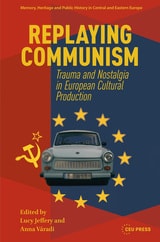
Replaying Communism
Trauma and Nostalgia in European Cultural ProductionLucy Jeffery
Central European University Press, 2026
The volume adopts an interdisciplinary approach to extend debates on the lasting impact of the communist era across Central and Eastern Europe with chapters thematically threaded through concepts including curation, immersion, interaction, humor and authenticity. A ‘trauma/nostalgia paradigm’ emerges as the tissue connecting the plurality of post-communist efforts employed to address the region’s contested pasts. Twelve original essays by contributors from both ‘inside’ and ‘outside’ the region detail how twenty-first-century cultural productions reengage the communist past. The impact of this past is seen as fundamental to understanding and shaping Central and Eastern European identities.

Representation in America
Majority Rule in a Divided Political SystemStephen Ansolabehere and Shiro Kuriwaki
University of Chicago Press, 0
A landmark appraisal of how Congress represents public opinion.
Drawing on nearly two decades of the Cooperative Congressional Election Study of American public opinion and more than one hundred key legislative proposals, Representation in America presents the most comprehensive, data-driven look at how Congress has represented the American public, spanning the presidencies of George W. Bush through Joe Biden. The result is a sweeping account of how electoral and legislative institutions channel and amplify majority preferences while tempering the most divisive proposals.
Stephen Ansolabehere and Shiro Kuriwaki trace each stage of the representation process, from constituents to their representatives to Congress’s collective decisions. Contrary to conceptions of democratic dysfunction, Ansolabehere and Kuriwaki find a strong majoritarian tendency: most proposals on the legislative agenda enjoy the support of the majority of Americans; voters tend to choose legislators whose positions they agree with; most legislators vote in line with the majority of their constituencies most of the time; and legislative districts magnify rather than mute majority opinion. When majority rule falls short, it usually takes the form of popular legislation stalling rather than Congress passing laws the public opposes.
Representative Democracy
Principles and GenealogyNadia Urbinati
University of Chicago Press, 2006
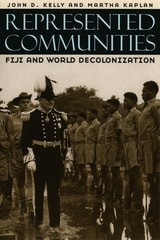
Represented Communities
Fiji and World DecolonizationJohn D. Kelly and Martha Kaplan
University of Chicago Press, 2001
Now, in Represented Communities, John D. Kelly and Martha Kaplan offer an extensive and devastating critique of Anderson's depictions of colonial history, his comparative method, and his political anthropology. The authors build a forceful argument around events in Fiji from World War II to the 2000 coups, showing how focus on "imagined communities" underestimates colonial history and obscures the struggle over legal rights and political representation in postcolonial nation-states. They show that the "self-determining" nation-state actually emerged with the postwar construction of the United Nations, fundamentally changing the politics of representation.
Sophisticated and impassioned, this book will further anthropology's contribution to the understanding of contemporary nationalisms.
Requirements for Certification of Teachers, Counselors, Librarians, Administrators for Elementary and Secondary Schools, Ninetieth Edition, 2025–2026
Edited by Alain Park
University of Chicago Press, 2025
This annual volume offers the most complete and current listings of the requirements for certification of a wide range of educational professionals at the elementary and secondary levels. Requirements for Certification is a valuable resource, making much-needed knowledge available in one straightforward volume.
Rereading Marx in the Age of Digital Capitalism
Christian Fuchs
Pluto Press, 2019
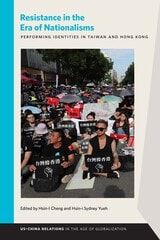
Resistance in the Era of Nationalisms
Performing Identities in Taiwan and Hong KongHsin-I Cheng
Michigan State University Press, 2023
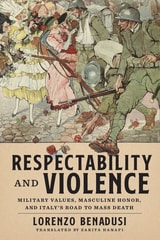
Respectability and Violence
Military Values, Masculine Honor, and Italy’s Road to Mass DeathLorenzo Benadusi
University of Wisconsin Press, 2021
In the aftermath of national unification in the 1860s, the Italian army was tasked with molding generations of men from warring regions and different social strata into obedient citizens of a centralized state. Integrating large numbers of the educated middle classes into the young kingdom’s armed forces proved decisive in establishing the army as the “main school” and backbone for mass nationalization. Lorenzo Benadusi examines the intersection of Italian military and civil society over the last century as they coalesced in the figure of the gentleman-officer—an idealized image of an altruistic, charming, and competent ruling class that could influence the choices, values, and behavior of the “new Italians.”
Respectability and Violence traces the relationship between civic virtues and military values from the post-Risorgimento period through the end of World War I, when the trauma of trench warfare made it necessary to again redefine ideas of chivalry and manliness and to accept violence as a necessary tool in defense of society and state. The language of conflict and attitudes about war forged in these decades—characterized by patriotism, heroism, and sacrifice—shaped the cultured bourgeoise into loyalists who ushered in Italy’s transition to a powerful Fascist political system. This unique study of the officer is crucial for understanding the military, social, and political history of Italy.
Responsive Democracy
Increasing State Accountability in East AsiaJeeyang Rhee Baum
University of Michigan Press, 2011
"Responsive Democracy is a pioneering contribution to the political analysis of administrative law in East Asia. Both political scientists and legal academics will greatly benefit from the author's in-depth analysis of the intersection between presidential power and administrative law in the contrasting cases of South Korea, Taiwan, and the Philippines."
---Susan Rose-Ackerman, Yale University Law School
"Baum's book is a very significant contribution because it focuses on a part of the world that has often been neglected in studies of democratization. It focuses attention on the nuts and bolts of what we mean by democratic consolidation and responsiveness. Indeed, if more political science were written with this clarity, we would all enjoy reading the literature much more!"
---Joseph Fewsmith, Boston University
Under what conditions is a newly democratic government likely to increase transparency, accountability, and responsiveness to its citizens? What incentives might there be for bureaucrats, including those appointed by a previously authoritarian government, to carry out the wishes of an emerging democratic regime? Responsive Democracy addresses an important problem in democratic transition and consolidation: the ability of the chief executive to control the state bureaucracy.
Using three well-chosen case studies---the Philippines, South Korea, and Taiwan---Jeeyang Rhee Baum explores the causes and consequences of codifying rules and procedures in a newly democratic government. In the Philippines, a president facing opposition has the option of appointing and dismissing officials at will and, therefore, has no need for administrative procedure acts. However, in South Korea and Taiwan, presidents employ such legislation to rein in recalcitrant government agencies, and, as a consequence, increase transparency, accountability, and responsiveness. Moreover, as Baum demonstrates by drawing upon surveys conducted both before and after implementation, administrative procedural reforms in South Korea and Taiwan improved public confidence in and attitudes toward democratic institutions.
Jeeyang Rhee Baum is a Research Fellow at the Ash Center for Democratic Governance and Innovation, John F. Kennedy School of Government, Harvard University.
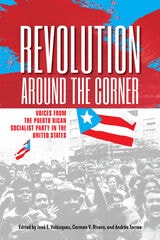
Revolution Around the Corner
Voices from the Puerto Rican Socialist Party in the U.S.Edited by José E. Velázquez, Carmen V. Rivera, and Andrés Torres
Temple University Press, 2021
Active from the late 1960s until the mid-1990s, the U.S. branch of the Puerto Rican Socialist Party (PSP) worked simultaneously to build support for Puerto Rican independence and to engage in radical social change within the United States.
Revolution Around the Corner chronicles this unique social movement, describing various mass campaigns and the inner workings of the organization. The editors and contributors—all former members, leaders, and supporters of the PSP—offer a range of views and interpretations of their experience.
Combining historical accounts, personal stories, interviews, and retrospective analysis, Revolution Around the Corner examines specific actions such as the National Day of Solidarity (El Acto Nacional), the Bicentennial without Colonies, the Save Hostos struggle, and the Vieques campaign. Testimonies recount the pros and cons of membership diversity, as well as issues of loyalty and compañerismo. In addition, essays describe the PSP’s participation in coalitions and alliances with Left and progressive movements. The book concludes with the editors’ reflections on the PSP’s achievements, mistakes, and contributions.
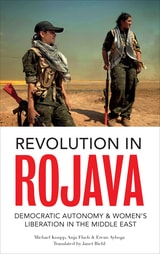
Revolution in Rojava
Democratic Autonomy and Women's Liberation in the Syrian KurdistanMichael Knapp, Ercan Ayboga, and Anja Flach
Pluto Press, 2016
Revolution in Rojava tells the story of Rojava's groundbreaking experiment in what they call democratic confederalism, a communally organized democracy that is fiercely anti-capitalist and committed to female equality, while rejecting reactionary nationalist ideologies.
Rooted in the ideas of imprisoned Kurdish leader Abdullah Ocalan, the system is built on effective gender quotas, bottom-up democratic structures, far-sighted ecological policies, and a powerful militancy that has allowed the region to keep ISIS at bay.
Given the widespread violence and suffering in Syria, it's not unreasonable that outsiders look at the situation as unrelentingly awful. And while the reality of the devastation is undeniable, there is reason for hope in at least one small pocket of the nation: the cantons of Rojava in Syrian Kurdistan, where in the wake of war people are quietly building one of the most progressive societies in the world today. Chapters here include:
*Rojava's Diverse Cultures
*Democratic Confederalism
*The Liberation
*A Women's Revolution
*Democratic Autonomy in Rojava
*Civil Society Associations
*The Theory of the Rose: Defense
*The New Justice System
*Democratization of Education
*Health Care
*The Social Economy
*Ecological Challenges
This first full-length study of democratic developments in Rojava tells an extraordinary and powerfully hopeful story of a little-known battle for true freedom in dark times. With excellent first-hand background information about this important, but little understood struggle, Revolution in Rojava will educate and inspire the reader to learn more about Rojava, Syria, and the fight for change in one of the world’s most dangerous regions.

Revolution, Democracy, Socialism
Selected Writings of V.I. LeninV. I. Lenin
Pluto Press, 2008
This is an entirely new collection of Lenin's writing. For the first time it brings together crucial shorter works, to show that Lenin held a life-long commitment to freedom and democracy. Le Blanc has written a comprehensive introduction, which gives an accessible overview of Lenin's life and work, and explains his relevance to political thought today.
Lenin has been much maligned in the mainstream, accused of viewing 'man as modeling clay' and of 'social engineering of the most radical kind.' However, in contrast to today's world leaders, who happily turn to violence to achieve their objectives, Lenin believed it impossible to reach his goals 'by any other path than that of political democracy.'
This collection will be of immense value to students encountering Lenin for the first time, and those looking for a new interpretation of one of the 20th century's most inspiring figures.
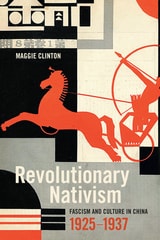
Revolutionary Nativism
Fascism and Culture in China, 1925-1937Maggie Clinton
Duke University Press, 2017
Rhetoric and Resistance
The Literary Arts of Dissent in Nineteenth-Century BritainMaeve Adams
Ohio University Press, 2025
A fresh perspective on the enduring relationship between literature, democracy, and dissent
Rhetoric and Resistance explores the transformative role of nineteenth-century literature in shaping modern concepts and practices of democratic dissent. By examining the works of Romantic and Victorian novelists, poets, and journalists, Maeve Adams identifies origins of modern theories and practices of resistance in nineteenth-century literary forms. Offering a literary history of dissent, the book recovers the intertwined development of democracy and aesthetics, revealing how narrative form became a potent tool for challenging authority.
Tracing the lineage of dissent from the radical fiction and journalism of the 1800s to contemporary movements like #MeToo, Adams offers a genealogy that highlights how literary texts experimented with political power, granting new and consequential voices to working-class individuals, women, colonized peoples, and other marginalized groups.
Adams takes an interdisciplinary approach, weaving together close readings of works by Thomas De Quincey, Walter Scott, Elizabeth Gaskell, and H. G. Wells, as well as lesser-known journalists, with insights from modern moral and political philosophy. Drawing on theories of democratic ethics and justice from scholars such as Miranda Fricker, Sharon Krause, Martha Nussbaum, and Philip Pettit, the book bridges literary history and contemporary debates about political agency and expression.
Rhythms of Resistance
African Musical Heritage in BrazilPeter Fryer
Pluto Press, 2000
Acclaimed author Peter Fryer describes how slaves, mariners and merchants brought African music from Angola and the ports of East Africa to Latin America. In particular, they brought it to Brazil – today the country with the largest black population of any outside Africa. Fryer examines how the rhythms and beats of Africa were combined with European popular music to create a unique sound and dance tradition. Fryer focuses on the political nature of this musical crossover and the role of an African heritage in the cultural identity of Brazilian blacks today.
Rhythms of Resistance is an absorbing account of a theme in global music and is rich in fascinating historical detail.

Right On?
Political Change and Continuity in George W. Bush's AmericaEdited by Iwan Morgan, Philip D. Davies
University of London Press, 2006
Contributors include John Dumbrell (University of Leicester, UK), Martin Durham (University of Wolverhampton, UK), Godfrey Hodgson (Rothermere American Institute, Oxford University, UK), Steven Hurst (Manchester Metropolitan University, UK), Klaus Larres (Royal Holloway College, University of London, UK), Bob McKeever (University of Reading, UK), John Owens (University of Westminster, UK), Rob Singh (Birkbeck College, University of London, UK), and Alex Waddan (University of Sunderland, UK).
Righteous Sisterhood
The Politics and Power of an All-Women's Motorcycle ClubSarah L. Hoiland
Temple University Press, 2025
Granted unprecedented access to the MC’s initiation rituals, annual ceremonies, and the extensive socialization process, Hoiland investigates this fascinating subculture, why women choose to join, and why, in some cases, they exit or become exiled.
Righteous Sisterhood also reveals complex and contradictory gender and political dynamics within the club and within the larger subculture. The MC provides a unique, liberatory, womanist space within the larger male-dominated MC social world, but these women remain outsiders, with political voices that are lost in the misogyny of alt-right spaces. As Hoiland emphasizes, the quest for righteous sisterhood is about finding individual excellence and camaraderie while seeking recognition and immortality within the MC.
Righting the American Dream
How the Media Mainstreamed Reagan's Evangelical VisionDiane Winston
University of Chicago Press, 2023
After two years in the White House, an aging and increasingly unpopular Ronald Reagan looked like a one-term president, but in 1983 something changed. Reagan spoke of his embattled agenda as a spiritual rather than a political project and cast his vision for limited government and market economics as the natural outworking of religious conviction. The news media broadcast this message with enthusiasm, and white evangelicals rallied to the president’s cause. With their support, Reagan won reelection and continued to dismantle the welfare state, unraveling a political consensus that stood for half a century.
In Righting the American Dream, Diane Winston reveals how support for Reagan emerged from a new religious vision of American identity circulating in the popular press. Through four key events—the “evil empire” speech, AIDS outbreak, invasion of Grenada, and rise in American poverty rates—Winston shows that many journalists uncritically adopted Reagan’s religious rhetoric and ultimately mainstreamed otherwise unpopular evangelical ideas about individual responsibility. The result is a provocative new account of how Reagan together with the press turned America to the right and initiated a social revolution that continues today.

Rising Star
The Meaning of Nikki Haley, Trump’s Unlikely AmbassadorJason A. Kirk
University of Arkansas Press, 2021
Risk Revisited
Pat Caplan
Pluto Press, 2000