Results by title
58 books match the query 'Pop Vocal' and 3 start with r
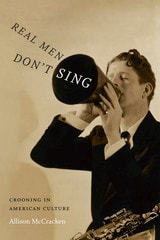
Real Men Don't Sing
Crooning in American CultureAllison McCracken
Duke University Press, 2015

Resilience & Melancholy
Pop Music, Feminism, NeoliberalismRobin James
University of Michigan Press, 2027
Following the first edition’s breakthrough study of popular feminism in 2010s popular music, this new edition of Resilience & Melancholy expands its original analysis into the 2020s. Robin James reads pop music from artists like Taylor Swift, Charli XCX, Rihanna, Beyonce, and Lady Gaga against the work of philosophers, feminists, and media theorists like Michel Foucault, Patricia Hill Collins, and Steven Shaviro. The result is an accessible dive into the last two decades of pop music and its politics.
Throughout the book, James shows how pop music and the politics of gender and race intersect in their discourse of resilience. While the book argues that resilience is a postfeminist strategy that invites female artists to lean into patriarchal, racial, capitalist privilege, it also finds that artists such as Beyonce, Rihanna, and Atari Teenage Riot offer a melancholic alternative to resilience in their work. As music has continued to evolve, this melancholic opposition has evolved and responded to the co-optation of melancholy into chill, the asset-ification of music, the de-monetization of musical labor, and the rise of a reactionary masculine resilience.
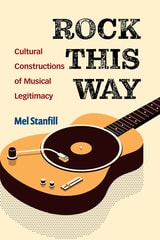
Rock This Way
Cultural Constructions of Musical LegitimacyMel Stanfill
University of Michigan Press, 2023
Any and all songs are capable of being remixed. But not all remixes are treated equally. Rock This Way examines transformative musical works—cover songs, remixes, mash-ups, parodies, and soundalike songs—to discover what contemporary American culture sees as legitimate when it comes to making music that builds upon other songs. Through examples of how popular discussion talked about such songs between 2009 and 2018, Mel Stanfill uses a combination of discourse analysis and digital humanities methods to interrogate our broader understanding of transformative works and where they converge at the legal, economic, and cultural ownership levels.
Rock This Way provides a new way of thinking about what it means to re-create and borrow music, how the racial identity of both the reusing artist and the reused artist matters, and the ways in which the law polices artists and their works. Ultimately, Stanfill demonstrates that the extent to which a work is seen as having new expression or meaning is contingent upon notions of creativity, legitimacy, and law, all of which are shaped by white supremacy.