140 books match the query 'Queer theory' and 6 start with r
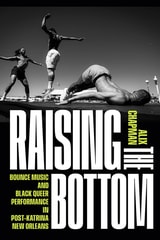
cover of Raising the Bottom: Bounce Music and Black Queer Performance in Post-Katrina New Orleans

Raising the Bottom

Bounce Music and Black Queer Performance in Post-Katrina New Orleans

Alix Chapman

Duke University Press, 2026
In the wake of Hurricane Katrina and the subsequent mass displacement of black neighborhoods in New Orleans, black queer performers redefined notions of belonging throughout the city. These unlikely figures, such as artists Big Freedia and Vockah Redu, played a significant role in calling the displaced back home and serving as beacons of hope. In Raising the Bottom, Alix Chapman engages in performance ethnography, taking to the stage while writing about the lives of these bounce artists and their extended community. He theorizes an epistemology of the bottom—a way of knowing, praxis, and aesthetic—which contests hierarchies of value that place black and queer bodies at the lowest rungs of the social ladder. By engaging in this bottom episteme, bounce performers leverage pleasure and coalition to transform collectives not meant to survive crisis and disaster. Raising the Bottom shows how black queer artists address, remix, and redirect stereotypes to amplify community power, pleasure, and solidarity.
[more]
cover of Re/Orienting Writing Studies: Queer Methods, Queer Projects

Re/Orienting Writing Studies

Queer Methods, Queer Projects

William P. Banks

Utah State University Press, 2018

Re/Orienting Writing Studies is an exploration of the intersections among queer theory, rhetoric, and research methods in writing studies. Focusing careful theoretical attention on common research practices, this collection demonstrates how queer rhetorics of writing/composing, textual analysis, history, assessment, and embodiment/identity significantly alter both methods and methodologies in writing studies. The chapters represent a diverse set of research locations and experiences from which to articulate a new set of innovative research practices.
 
While the humanities have engaged queer theory extensively, research methods have often been hermeneutic or interpretive. At the same time, social science approaches in composition research have foregrounded inquiry on human participants but have often struggled to understand where lesbian, gay, bisexual, transgender, and queer people fit into empirical research projects. Re/Orienting Writing Studies works at the intersections of humanities and social science methodologies to offer new insight into using queer methods for data collection and queer practices for framing research.

Contributors: Chanon Adsanatham, Jean Bessette, Nicole I. Caswell, Michael J. Faris, Hillery Glasby, Deborah Kuzawa, Maria Novotny, G Patterson, Stacey Waite, Stephanie West-Puckett
 
[more]
cover of Reclaiming Queer: Activist and Academic Rhetorics of Resistance

Reclaiming Queer

Activist and Academic Rhetorics of Resistance

Erin J. Rand

University of Alabama Press, 2014

An examination of the rhetorical linkage of queer theory in the academy with street-level queer activism in the 1980s and early 1990s

The late 1980s and early 1990s were a defining historical moment for both queer activism and queer theory in the United States. LGBTQ communities, confronted with the fatal indifference and homophobia of the AIDS crisis, often responded with angry, militant forms of activism designed not merely to promote acceptance or tolerance, but to forge identity and strength from victimization and assert loudly and forcefully their rights to safety and humanity. The activist reclamation of the word “queer” is one marker of this shift in ideology and practice, and it was mirrored in academic circles by the concurrent emergence of the new field of “queer theory.” That is, as queer activists were mobilizing in the streets, queer theorists were producing a similar foment in the halls and publications of academia, questioning regulatory categories of gender and sexuality, and attempting to illuminate the heteronormative foundations of Western thought. Notably, the narrative of queer theory’s development often describes it as arising from or being inspired by queer activism.

In Reclaiming Queer, Erin J. Rand examines both queer activist and academic practices during this period, taking as her primary object the rhetorical linkage of queer theory in the academy with street-level queer activism. Through this strategic conjuncture of activism and academia, Rand grapples with the specific conditions for and constraints on rhetorical agency in each context. She examines the early texts that inaugurated the field of queer theory, Queer Nation’s infamous “Queers Read This” manifesto, Larry Kramer’s polemic speeches and editorials, the Lesbian Avengers’ humorous and outrageous antics, the history of ACT UP, and the more recent appearance of Gay Shame activism. From these activist and academic discourses, Rand builds a theory of rhetorical agency that posits queerness as the very condition from which agency emerges.

Reclaiming Queer thus offers a critical look at the rhetoric of queer activism, engages the history of queer theory’s institutionalization and the politics of its proliferation, suggests a radically contextual understanding of rhetorical agency and form, and argues for the centrality of queerness to all rhetorical action.
[more]
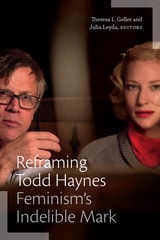
cover of Reframing Todd Haynes: Feminism’s Indelible Mark

Reframing Todd Haynes

Feminism’s Indelible Mark

Theresa L. Geller and Julia Leyda, editors

Duke University Press, 2022

For three decades, award-winning independent filmmaker Todd Haynes, who emerged in the early 1990s as a foundational figure in New Queer Cinema, has gained critical recognition for his outsider perspective. Today, Haynes is widely known for bringing women’s stories to the screen. Analyzing Haynes’s films including Safe (1995), Velvet Goldmine (1998), Far from Heaven (2002), and Carol (2015), as well as his unauthorized Karen Carpenter biopic, Superstar (1987), and the television miniseries Mildred Pierce (2011), the contributors to Reframing Todd Haynes reassess his work in light of his long-standing feminist commitments and his exceptional career as a director of women’s films. They present multiple perspectives on Haynes’s film and television work and on his role as an artist-activist who draws on academic theorizations of gender and cinema. The volume illustrates the influence of feminist theory on Haynes’s aesthetic vision, most evident in his persistent interest in the political and formal possibilities afforded by the genre of the woman’s film. The contributors contend that no consideration of Haynes’s work can afford to ignore the crucial place of feminism within it.

Contributors. Danielle Bouchard, Nick Davis, Jigna Desai, Mary R. Desjardins, Patrick Flanery, Theresa L. Geller, Rebecca M. Gordon, Jess Issacharoff, Lynne Joyrich, Bridget Kies, Julia Leyda, David E. Maynard, Noah A. Tsika, Patricia White, Sharon Willis
[more]
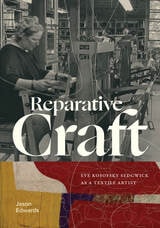
cover of Reparative Craft: Eve Kosofsky Sedgwick as a Textile Artist

Reparative Craft

Eve Kosofsky Sedgwick as a Textile Artist

Jason Edwards

Duke University Press, 2026
Eve Kosofsky Sedgwick is primarily known for her foundational work in queer and affect theory, but her artistic work with textiles remains largely unexplored. In Reparative Craft, Jason Edwards examines a range of her textile art from a ten-year period in which she was also writing Touching Feeling. Employing the reparative approach that Sedgwick pioneered and analyzing her works from a series of four exhibitions, Reparative Craft demonstrates the necessity of connecting Sedgwick’s fiber art practice to her work as a theorist. Richly illustrated and presented in full color, this volume invites readers to connect Sedgwick’s art with her theory, presenting a new model of reparative reading that exemplifies ideas of queer and trans craft so vital to Sedgwick’s body of work.
[more]
cover of Running

Running

Lindsey A. Freeman

Duke University Press, 2023

In Running, former NCAA Division I track athlete Lindsey A. Freeman presents the feminist and queer handbook of running that she always wanted but could never find. For Freeman, running is full of joy, desire, and indulgence in the pleasure and weirdness of having a body. It allows for a space of freedom—to move and be moved. Through tender storytelling of a lifetime wearing running shoes, Freeman considers injury and recovery, what it means to run as a visibly queer person, and how the release found in running comes from a desire to touch something that cannot be accessed when still. Running invites us to run through life, legging it out the best we can with heart and style.
[more]