Results by title
8 books match the query 'Clans'

City of Clans
Geoff Peck
University of Iowa Press, 2025
Set on the eve of the 2009 G20 Summit protests, City of Clans follows Jeremy Starcevic, a community college student struggling with his identity and sexuality. By day, Jeremy works for a party goods distributor in the heart of the city and attends classes. By night, he drinks to excess and self-sabotages at the urging of friends. As the son of a professional baseball player, Jeremy grew up playing sports and molding himself into a certain type of guy—a type embodied in Jeremy’s best friend and roommate, the hypermasculine Scott Melloy. But when Scott commits an unthinkable act, Jeremy is forced to acknowledge that the friend he idolized is a sexual predator, and his carefully constructed sense of self crumbles.
Jeremy begins a journey of healing and self-reflection that carries him back to his family and his one true friend, Katrina Kovacs, a photography major who opens his eyes to societal issues he’s always ignored. A story of redemption, City of Clans captures the resiliency of the human spirit and explores hidden truths of masculinity, sexuality, and self.
Jeremy begins a journey of healing and self-reflection that carries him back to his family and his one true friend, Katrina Kovacs, a photography major who opens his eyes to societal issues he’s always ignored. A story of redemption, City of Clans captures the resiliency of the human spirit and explores hidden truths of masculinity, sexuality, and self.
[more]
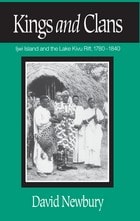
Kings And Clans
Ijwi Island And The Lake Kivu Rift, 1780-1840David Newbury
University of Wisconsin Press, 1992
By reconstructing the history of kings and clans in the Kivu Rift Valley (on the border of today's Rwanda and Zaire) at a time of critical social change, David Newbury enlarges our understanding of social process and the growth of state power in Africa. In the early nineteenth century, many factors contributed to the creation of new social relations in the Lake Kivu region—ecological change, population movement, the expansion of the Rwandan state from the east, the rise of new political units to the west, and the movement of many population groups and their ritual forms through the area. Newbury looks in particular at the role of clans in the establishment of a new kingdom on Ijwi Island in Lake Kivu.
Drawing on detailed ethnographic observations of the social and ritual organizations of Ijwi society, an extensive body of oral data, and evidence from written sources, Newbury shows that the clans of Ijwi were not static formations, nor did the establishment of a royal family on the island emerge from military conquest and internal social breakdown. Instead, clan identities changed over time, and these changes actually facilitated the creation of kingship on Ijwi. Through a detailed examination of succession struggles, of local factors influencing the outcome of such struggles, and of specific clan participation in public rituals that legitimize royalty, Newbury’s study illustrates the importance of clan identities in both the creation of state power and its reproduction over time.
Drawing on detailed ethnographic observations of the social and ritual organizations of Ijwi society, an extensive body of oral data, and evidence from written sources, Newbury shows that the clans of Ijwi were not static formations, nor did the establishment of a royal family on the island emerge from military conquest and internal social breakdown. Instead, clan identities changed over time, and these changes actually facilitated the creation of kingship on Ijwi. Through a detailed examination of succession struggles, of local factors influencing the outcome of such struggles, and of specific clan participation in public rituals that legitimize royalty, Newbury’s study illustrates the importance of clan identities in both the creation of state power and its reproduction over time.
[more]
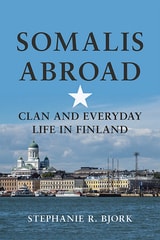
Somalis Abroad
Clan and Everyday Life in FinlandStephanie R. Bjork
University of Illinois Press, 2017
Drawing on a wealth of ethnographic detail, Stephanie Bjork offers the first study on the messy role of clan or tribe in the Somali diaspora, and the only study on the subject to include women's perspectives. Somalis Abroad illuminates the ways clan is contested alongside ideas of autonomy and gender equality, challenged by affinities towards others with similar migration experiences, transformed because of geographical separation from family members, and leveraged by individuals for cultural capital. Challenging prevailing views in the field, Bjork argues that clan-informed practices influence everything from asylum decisions to managing money. The practices also become a pattern that structures important relationships via constant--and unwitting--effort.
[more]
The Names of the Python
Belonging in East Africa, 900 to 1930David L. Schoenbrun
University of Wisconsin Press, 2023
Systems of belonging, including ethnicity, are not static, automatic, or free of contest. Historical contexts shape the ways which we are included in or excluded from specific classifications. Building on an amazing array of sources, David L. Schoenbrun examines groupwork—the imaginative labor that people do to constitute themselves as communities—in an iconic and influential region in East Africa. His study traces the roots of nationhood in the Ganda state over the course of a millennia, demonstrating that the earliest clans were based not on political identity or language but on shared investments, knowledges, and practices.
Grounded in Schoenbrun’s skillful mastery of historical linguistics and vernacular texts, The Names of the Python supplements and redirects current debates about ethnicity in ex-colonial Africa and beyond. This timely volume carefully distinguishes past from present and shows the many possibilities that still exist for the creative cultural imagination.
Grounded in Schoenbrun’s skillful mastery of historical linguistics and vernacular texts, The Names of the Python supplements and redirects current debates about ethnicity in ex-colonial Africa and beyond. This timely volume carefully distinguishes past from present and shows the many possibilities that still exist for the creative cultural imagination.
[more]

The Phratries of Attica
S. D. Lambert
University of Michigan Press, 1998
The Phratries of Attica provides the first comprehensive account in English of a key institution in ancient Athens: the Attic phratries. These hereditary groups of citizens, linked to one locale or more in Attica, played a crucial role in regulating access to Athenian citizenship. The author concentrates upon the evidence — largely empirical— for the period 450-250 B.C., but he also considers the role of the phratry in the reforms of Cleisthenes and examines the institution’s probable demise in the second century B.C.S. D. Lambert adopts an innovative view in his argument that phratries reflected the democratic norm of the era, rather than being dominated by aristocrats. In presenting this view heincludes a complete account of the festival Apatouria, of the procedures for admission to citizenship, of the role of women in phratries, and of known phratry property and financial transactions.The Phratries of Attica will be indispensableto students of Greek and Athenian history and anthropology. An Appendix contains all inscriptions connected to Attic phratries, with translation and selective commentary.
[more]
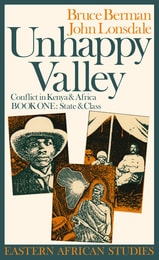
Unhappy Valley, Book One
Conflict in Kenya & AfricaBruce Berman
Ohio University Press, 1992
This long-awaited book is a considerable revision in the understanding of the history of colonial Kenya and, more widely, colonialism in Africa. There is a substantial amount of new work and this is interlocked with shared areas of concern that the authors have been exploring since 1976.
The authors investigate major themes. These include the conquest origins and subsequent development of the colonial state, the contradictory social forces that articulated African societies to European capitalism, and the creation of new political communities and changing meanings of ethnicity in Africa, in the context of social differentiation and class formation. There is substantial new work on the problems of Mau Mau and of wealth, poverty and civic virtue in Kikuyu political thought.
The authors make a fresh contribution to a deeper historical understanding of the development of contemporary Kenyan society and, in particular, of the British and Kukuyu origins of Mau Mau and the emergency of the 1950s.
They also highlight some of the shortcomings of ideas about development, explore the limitations of narrowly structuralist Marxist theory of the state, and reflect on the role of history in the future of Africa.
Book One on State and Class will be used by students of African history as well as of colonial Kenya; it is also concerned with the theory of history and of political science.
[more]

Unhappy Valley, Book Two
Conflict in Kenya & AfricaBruce Berman
Ohio University Press, 1992
This long-awaited book is a considerable revision in the understanding of the history of colonial Kenya and, more widely, colonialism in Africa. There is a substantial amount of new work and this is interlocked with shared areas of concern that the authors have been exploring since 1976.
The authors investigate major themes. These include the conquest origins and subsequent development of the colonial state, the contradictory social forces that articulated African societies to European capitalism, and the creation of new political communities and changing meanings of ethnicity in Africa, in the context of social differentiation and class formation. There is substantial new work on the problems of Mau Mau and of wealth, poverty and civic virtue in Kikuyu political thought.
The authors make a fresh contribution to a deeper historical understanding of the development of contemporary Kenyan society and, in particular, of the British and Kukuyu origins of Mau Mau and the emergency of the 1950s.
They also highlight some of the shortcomings of ideas about development, explore the limitations of narrowly structuralist Marxist theory of the state, and reflect on the role of history in the future of Africa.
Book Two on Violence and Ethnicity gives new insights into popular consciousness, into revolutionary change and into the subtle realities of ethnicity; it will be of particular value to readers of Ngugi.
[more]

Unhappy Valley
Clan, Class & State In Colonial KenyaBruce Berman
Ohio University Press, 1991
[more]