Results by title
237 books match the query 'Race & Ethnic Relations' and 33 start with r
RSF
The Russell Sage Foundation Journal of the Social SciencesJennifer Lee
Russell Sage Foundation, 2026
Stereotyped as “model minorities” who excel in the classroom, Asian Americans are more highly educated than all other U.S. groups. Once in the labor market, they outearn White Americans. Some believe this is evidence that White privilege, racial bias, and gender discrimination are fictitious narratives of a liberal “woke” agenda. Others use it as proof that confirms their stereotypes that Asian Americans are inherently smarter and harder working than other groups. While much attention has focused on Asian Americans’ academic achievement, far less research considers whether their later careers mirror their early success. In this issue of RSF, sociologists Jennifer Lee, Kimberly Goyette, Xi Song, and Yu Xie, management scholar Jackson G. Lu, and an interdisciplinary group of contributors examine how Asian Americans fare in the workplace.
The ten articles in this issue examine the ways in which Asian Americans, due to geographic clustering, are advantaged at a national level but disadvantaged at the regional level, how gender, family, and marriage impact Asian Americans in the workplace, and the different ways Asian Americans strategically adapt to the labor market. Robert Manduca and Jane Furey reveal that while, on average, Asian Americans outearn White Americans at a national level, when compared to Whites living in the same metropolitan area, Asians earn only 88 percent as much. Sharon Sassler and Gabrielle Sorresso find that among computer science professionals, Indian women have a larger gender wage gap than White and Chinese women and experience larger marriage and parenthood penalties in earnings. Sojung Lim and Wonjeong Jeong show that Asian women are more likely to live with extended family than White women, leading to higher rates of employment among Asian women with children. Angelina Grigoryeva finds that while Asian Americans are more likely to receive stock-based compensation than White Americans, this is because they are more likely to work in jobs where stock options are provided. Asians and Whites working in the same types of jobs are equally likely to receive stock-based compensation and in similar amounts. Shih-Chun Chien and colleagues find that despite being the fastest-growing racial minority group entering the legal profession, Asian Americans are underrepresented in leadership positions. They find this pattern is attributed, in part, to employers’ pervasive stereotypes that Asian Americans lack traits typically associated with leadership, such as creativity and assertiveness.
This issue of RSF reveals that the perception of the Asian American advantage in the workplace is illusory and sheds light on the lived experiences of the “model minority” when they go to work.
RSF
The Russell Sage Foundation Journal of the Social Sciences: Asian Americans and the Immigrant Integration AgendaJennifer Lee
Russell Sage Foundation, 2021
Rather than treating Asian Americans as a monolithic group, the contributors use the 2016 National Asian American Survey to pinpoint areas of convergence and divergence within the U.S. Asian population. Despite their diversity, Asian Americans share many attitudes, behavior, and experiences in ways that exceed expectations based on socioeconomic status alone— what Lee and Ramakrishnan refer to as the “diversity-convergence paradox.” This paradox — of convergence despite divergence in national origins and socioeconomic status — is the animating question of this issue of RSF.
Contributors Janelle Wong and Sono Shah find strong political consensus within the Asian American population, particularly with regard to a robust government role in setting public policies ranging from environmental protection to gun control to higher taxation and social service provision, and even affirmative action. Wong and Shah posit that political differences within the Asian American community are between progressives and those who are even more progressive. Analyzing where policy opinions converge and diverge, Sunmin Kim finds that while many Asian Americans support government interventions in health care, education, and racial justice, some diverge sharply with regard to Muslim immigration. Lucas G. Drouhot and Filiz Garip construct a novel typology of five subgroups of Asian immigrants spanning class, gender, region, and immigrant generation to examine varied experiences of immigrant inclusion. They show how different subgroups contend with the effects of racialized othering and inclusion simultaneously at play. Van C. Tran and Natasha Warikoo analyze both interracial and intra-Asian attitudes toward immigration and find diversity among Asians’ views by national origin: As labor migrants, Filipinos support Congress increasing the number of annual work visas; as economic migrants, Chinese and Indians support an increase in annual family visas; and as refugees, Vietnamese are least supportive of pro-immigration policies.
Placing Asian Americans at the center of their analyses, the contributors illuminate how such a broadly diverse population shares similar attitudes and experiences in often surprising ways. By turning a lens on the richly diverse U.S. Asian population, this issue of RSF unveils comprehensive, compelling narratives about Asian Americans and advances our understanding of race and immigrant integration in the 21st century.

RSF
The Russell Sage Foundation Journal of the Social Sciences: Black Reparations: Insights from the Social SciencesWilliam Darity, Jr.
Russell Sage Foundation, 2024
Slavery in the United States was a brutal, racialized system of forced labor which helped provide the startup capital for the U.S. economy’s meteoric rise. Post-slavery legal race discrimination produced segregation not only the Jim Crow South but also in northern states, where Blacks were denied many benefits of the New Deal that helped lift whites into the middle class. The 60 years since the passage of the Civil Rights Act of 1964 have witnessed mass incarceration, ongoing police killings of unarmed Blacks, continued discrimination in housing, employment, and credit markers, and a persistent devaluation of Black lives. This history of enslavement and discrimination has yielded disastrous intergenerational consequences for Black wealth and socioeconomic well-being, and calls for reparations have gained currency as a way to redress these historical wrongs. This special double issue of RSF brings together the most current social science research and policy options with regard to reparations for Black Americans.
While reparations have been issued to many peoples around the world, including in the U.S., reparations to Black Americans remain highly contested. Contributor Kathryn Anne Edwards and co-authors use case studies of previous reparations policies to offer important insights into the features that might shape reparations policy for Black Americans. Trina Shanks and colleagues argue that the structure of existing child development accounts provides a practical framework for delivering reparations payments to recipients of all ages through structured savings plans that promote asset growth and fiscal autonomy.
The political feasibility of reparations programs will largely depend on public opinion. Jesse Rhodes and colleagues draw on surveys administered between 2021 and 2023 to show that up to 28 percent of White Americans support cash reparations, up from a tiny 4 percent in 2000. Kamri Hudgins and co-authors suggest that public education on racial disparities may increase the feasibility of a reparations program. Thus, education on real-existing racial disparities in intergenerational wealth, income, health, homeownership, and education may prove to be crucial to affect a federal Black reparations program.
This important double issue of RSF employs rigorous social science research to shed new light on one of the most pressing and contentious policy proposals of our times. Engaging the debate over reparations from the past to the present and from the global to the local, this double issue of RSF provides a valuable roadmap to the issues at stake in the Black American reparations movement.
RSF
The Russell Sage Foundation Journal of the Social Sciences: Plessy v. Ferguson and the Legacy of "Separate but Equal" After 125 yearsjohn a. powell
Russell Sage Foundation, 2021
The contributors grapple with a central overarching question: How is it that a court decision from 125 years ago still has such an enduring impact on racial disparities? john a. powell provides a nuanced overview of the legal context of the case to show that segregation was not only about separating people by race but was primarily about preserving White supremacy. The wide latitude for judicial interpretation granted to judges means that who decides matters, and today, just as much as in 1896, the justices sitting on the Supreme Court matter. If the views of Justice Harlan – the lone dissenter in Plessy – had prevailed, U.S. jurisprudence would look very different today.
Thomas J. Davis discusses how control over personal identity lay at the heart of Plessy, and how its denial of basic human rights and fundamental freedoms reverberates today. From sex and marriage to adoption, gender recognition, employment, and voting, persistent discrimination turns in various degrees on state authority to define, categorize, and deny freedom of personal identity. To ensure personal autonomy in such domains requires the continual reevaluation of U.S. law to recognize the freedom of individuals to define and express their own identities.
Looking at enduring educational impact of “Separate but Equal,” which was not entirely rectified by the 1954 decision outlawing school segregation in Brown v. Board of Education, Dania V. Francis and William A. Darity, Jr., link today’s ongoing within-school segregation to the legacy of racialized tracking born from White resistance to desegregation. They demonstrate how a short-term, concerted effort to increase the number of Black high school students taking advanced courses could lead to long-term benefits in closing the educational achievement gap and eliminating institutionalized segregation within our schools.
Plessy rightfully stands as one of the continuing stains on the history of our country in its ambivalence and unwillingness to address White dominance. This issue of RSF both corrects and expands the narrative around the Plessy decision, and provides important lessons for addressing the nation’s continuing racial travails. It is ideal for use by scholars, community leaders, and policy makers alike.
RSF
The Russell Sage Foundation Journal of the Social Sciences: The Deportation System and Its AftermathCaitlin Patler
Russell Sage Foundation, 2025
The United States is home to the largest deportation system in the world: Between 2001 and 2022, U.S. Immigration and Customs Enforcement (ICE) carried out nearly 6.5 million deportations. Deportation is often framed as a singular event that happens to an individual. However, as public policy scholar Caitlin Patler and political scientist Brad Jones argue in this issue of RSF, deportation is a system that encompasses premigration, within-U.S., and post-deportation contexts and outcomes. With Congress recently approving a massive expansion of the US deportation system, understanding its consequences is more important than ever before.
In this issue, an interdisciplinary group of contributors explore the wide range of impacts of the U.S. deportation system. The introductory chapter by Patler and Jones defines the U.S. deportation system and provides a comprehensive historical context for understanding its causes and consequences. Mass deportation is enabled primarily through the merging of U.S. immigration and criminal laws. Ian Peacock explores the proliferation of 287(g) agreements, which deputize local law enforcement to enforce immigration law. He shows that counties with stronger ties to public official associations, such as the National Sheriff’s Association and the Major County Sheriffs of America, were more likely to adopt identical 287(g) agreements, devote more jail space to ICE detainees, and comply with ICE detainer requests at higher rates. The issue also presents empirical analyses of the consequences of the US deportation system. Articles by Youngjin Stephanie Hong and colleagues, Cora Bennett and colleagues, and J. Jacob Kirksey and Carolyn Sattin-Bajaj, link deportation to reduced Head Start enrollment, lower K-12 test scores, and declines in college enrollment, respectively. The remaining articles turn to the aftermath of deportation. Erin R. Hamilton and colleagues show that between 2015 and 2020, 11,000 individuals were de facto deportees—family members who leave the country because another family member has been deported—in Mexico, with a disproportionate number being women and children. Further highlighting the importance of family, Ángel A. Escamilla García and Adriana M. Cerón analyze survey data from recently deported Central Americans and find those who left minor children in the U.S. were more likely to intend to remigrate to the U.S.
This issue of RSF sheds light on various dimensions of the increasingly punitive U.S. deportation system and the many ways it harms individuals and communities. In the current era of mass expansion of immigration law enforcement, it will be a valuable educational tool for students, faculty, policymakers, and many other stakeholders.
RSF
The Russell Sage Foundation Journal of the Social Sciences: The Legal Landscape of U.S. Immigration in the Twenty-First CenturyKatharine M. Donato
Russell Sage Foundation, 2020
Donato and Amuedo-Dorantes outline American immigration policies from 1880 to the present and consider the impact of the COVID-19 pandemic on immigration. They underscore the fact that many recent immigration policies have been a result of presidential executive orders rather than legislative acts, making families and workers who enter the country without proper documentation especially vulnerable. They also examine how and why these orders are often racist and xenophobic, privileging some racial and ethnic groups and excluding others.
Contributors to the issue investigate the various ways in which immigrants secure visas, working permits, and citizenship in the United States, including through employment and family ties, as well as special statuses for military veterans, refugees, asylum seekers, and unaccompanied minors. Daniel Costa writes about how temporary migrant workers’ precarious immigration status makes them particularly likely to experience workplace abuse because they fear losing their jobs and being deported if they complain about unfair labor practices. Pia Orrenius and Madeline Zavodny consider the substantial increase in employer demand for temporary work visas, demonstrating how improved economic conditions have led to this surge, creating a viable alternative to hiring unauthorized workers. Julia Gelatt uses employment and economic data analysis to compare multiple classes of legal immigrants. Her research demonstrates that employer-sponsored immigrants are better educated, exhibit higher English proficiency, and work in more highly skilled jobs than other types of immigrants (including family-sponsored, humanitarian, and diversity visa immigrants).
Other contributors examine the experiences of immigrants with special statuses, including veterans. Cara Wong and Jonathan Bonaguro find that Americans are more likely to support a path to citizenship via military service for immigrants who entered the country with the appropriate documentation, and that many Americans believe that undocumented migrants should be barred from the military, Peace Corps, AmeriCorps and firefighting. Van C. Tran and Francisco Lara-García find little variation in early socioeconomic outcomes between refugee groups from various countries. They show that schooling and employment, along with strategic financial, community building, and other support services, are critical factors in the successful integration and improved socioeconomic outcomes of refugees. Luis Edward Tenorio finds that the patchwork of legal systems, including family, immigration, and federal courts that adjudicate the laws for children with special immigrant juvenile status, make for the uneasy and uneven integration of unaccompanied minors into key social institutions.
This issue of RSF is a timely contribution that will invigorate the field of scholarly work on the American legal immigration system.

Race Talk in a Mexican Cantina
Tatcho Mindiola
Michigan State University Press, 2021
Race and Environmental Justice in the Era of Climate Change and COVID-19
Tatiana Konrad
Michigan State University Press, 2025

Race and Gender at War
Writing American Military HistoryEdited by Lesley J. Gordon and Andrew J. Huebner
University of Alabama Press, 2024
Beyond the battlefield: How race and gender redefined war, identity, and memory in Civil War America.
Race and Gender at War is a collection of essays that illuminates ways that race and gender have persistently shaped the military history of the United States. Editors Lesley J. Gordon and Andrew J. Huebner showcase historians with varied research agendas in the field of “war and society,” a fertile area of inquiry that shares space (and often overlaps) with operational studies inside the broader field of military history. Chronicling more than 150 years of American history, the essays in this volume demonstrate that the tensions and injustices surrounding race, gender, and the military remain relevant and controversial, and continue to roil American politics, society, and culture to this day.
Spanning the two centuries from the 1830s to the present, the collection examines topics such as Choctaw Natives who served in the Confederate Army, the trailblazing but fraught experiences of Black servicemen from the Civil War through World War I, the hypersexualized images of World War II servicemen, and the varied and mutable roles of women in the armed services. Utilizing diverse methodologies, the book examines how these factors influenced everything from military policy to civilian experiences, encompassing topics like martial rhetoric, citizenship, propaganda, and patriotism.
CONTRIBUTORS
Kevin Adams / Amanda Bellows / Kari L. Boyd-Weisenberger / Michele Curran Cornell / Lesley J. Gordon / Andrew J. Huebner / Gregory Mixon / Caroline Wood Newhall / Heather Marie Stur / Patrick T. Troester / Chad L. Williams / Fay A. Yarbrough
Race and Place
School Desegregation in Prince George's County, MarylandDeirdre Mayer Dougherty
Rutgers University Press, 2025

Race and Repast
Foodscapes in Twentieth-Century Southern LiteratureUrszula Niewiadomska-Flis
University of Arkansas Press, 2022
Race at the Top
Asian Americans and Whites in Pursuit of the American Dream in Suburban SchoolsNatasha Warikoo
University of Chicago Press, 2022
The American suburb conjures an image of picturesque privilege: manicured lawns, quiet streets, and—most important to parents—high-quality schools. These elite enclaves are also historically white, allowing many white Americans to safeguard their privileges by using public schools to help their children enter top colleges. That’s changing, however, as Asian American professionals increasingly move into wealthy suburban areas to give their kids that same leg up for their college applications and future careers.
As Natasha Warikoo shows in Race at the Top, white and Asian parents alike will do anything to help their children get to the top of the achievement pile. She takes us into the affluent suburban East Coast school she calls “Woodcrest High,” with a student body about one-half white and one-third Asian American. As increasing numbers of Woodcrest’s Asian American students earn star-pupil status, many whites feel displaced from the top of the academic hierarchy, and their frustrations grow. To maintain their children’s edge, some white parents complain to the school that schoolwork has become too rigorous. They also emphasize excellence in extracurriculars like sports and theater, which maintains their children’s advantage.
Warikoo reveals how, even when they are bested, white families in Woodcrest work to change the rules in their favor so they can remain the winners of the meritocracy game. Along the way, Warikoo explores urgent issues of racial and economic inequality that play out in affluent suburban American high schools. Caught in a race for power and privilege at the very top of society, what families in towns like Woodcrest fail to see is that everyone in their race is getting a medal—the children who actually lose are those living beyond their town’s boundaries.
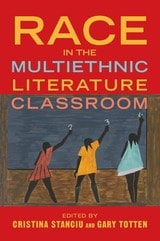
Race in the Multiethnic Literature Classroom
Edited by Cristina Stanciu and Gary Totten
University of Illinois Press, 2024
The contemporary rethinking and relearning of history and racism has sparked creative approaches for teaching the histories and representations of marginalized communities. Cristina Stanciu and Gary Totten edit a collection that illuminates these ideas for a variety of fields, areas of education, and institutional contexts.
The authors draw on their own racial and ethnic backgrounds to examine race and racism in the context of addressing necessary and often difficult classroom conversations about race, histories of exclusion, and racism. Case studies, reflections, and personal experiences provide guidance for addressing race and racism in the classroom. In-depth analysis looks at attacks on teaching Critical Race Theory and other practices for studying marginalized histories and voices. Throughout, the contributors shine a light on how a critical framework focused on race advances an understanding of contemporary and historical US multiethnic literatures for students around the world and in all fields of study.
Contributors: Kristen Brown, Nancy Carranza, Luis Cortes, Marilyn Edelstein, Naomi Edwards, Joanne Lipson Freed, Yadira Gamez, Lauren J. Gantz, Jennifer Ho, Shermaine M. Jones, Norell Martinez, Sarah Minslow, Crystal R. Pérez, Kevin Pyon, Emily Ruth Rutter, Ariel Santos, and C. Anneke Snyder
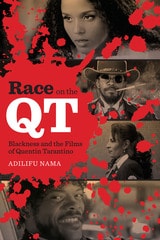
Race on the QT
Blackness and the Films of Quentin TarantinoBy Adilifu Nama
University of Texas Press, 2015
Winner, Ray & Pat Browne Award for Best Reference/Primary Source Work in Popular and American Culture, Popular Culture Association/American Culture Association, 2016
Known for their violence and prolific profanity, including free use of the n-word, the films of Quentin Tarantino, like the director himself, chronically blurt out in polite company what is extremely problematic even when deliberated in private. Consequently, there is an uncomfortable and often awkward frankness associated with virtually all of Tarantino’s films, particularly when it comes to race and blackness. Yet beyond the debate over whether Tarantino is or is not racist is the fact that his films effectively articulate racial anxieties circulating in American society as they engage longstanding racial discourses and hint at emerging trends. This radical racial politics—always present in Tarantino’s films but kept very much on the quiet—is the subject of Race on the QT.
Adilifu Nama concisely deconstructs and reassembles the racial dynamics woven into Reservoir Dogs, True Romance, Pulp Fiction, Jackie Brown, Kill Bill: Vol. 1, Kill Bill: Vol. 2, Death Proof, Inglourious Basterds, and Django Unchained, as they relate to historical and current racial issues in America. Nama’s eclectic fusion of cultural criticism and film analysis looks beyond the director’s personal racial attitudes and focuses on what Tarantino’s filmic body of work has said and is saying about race in America symbolically, metaphorically, literally, impolitely, cynically, sarcastically, crudely, controversially, and brilliantly.

Race, Nature and Culture
An Anthropological PerspectivePeter Wade
Pluto Press, 2002
Wade is critical of contemporary theoretical studies of race formulated within the contexts of colonial history, sociology and cultural studies. Instead he argues for a new direction; one which anthropology is well placed to explore. Taking the study of race beyond Western notions of the individual, Wade argues for new paradigms in social science, in particular in the development of connections between race, sex and gender. An understanding of these issues within an anthropological context, he contends, is vital for defining personhood and identity.
Race is often defined by its reference to biology, 'blood,' genes, nature or essence. Yet these concepts are often left unexamined. Integrating material from the history of science, science studies, and anthropological studies of kinship and new reproductive technologies, as well as from studies of race, Peter Wade explores the meaning of such terms and interrogates the relationship between nature and culture in ideas about race.
Race/Class Conflict and Urban Financial Threat
Jennifer L. Hochschild
Russell Sage Foundation, 2024
Hochschild investigates the root causes of disputes in the arenas of policing, development, schooling, and budgeting. She finds that race and class are central to the Stop-Question-Frisk policing policy in New York City and the development of Atlanta’s Beltline. New York’s Stop-Question-Frisk policy was intended to fight crime and keep all New Yorkers safe. In practice, however, young Black and Latino men in low-income neighborhoods were disproportionately stopped by a predominantly White police force. The goal of the Atlanta Beltline, a redevelopment project that includes public parks, new housing, commercial development, and a robust public transit system, is to expand access around the city and keep working-class residents in the city by constructing affordable housing. Instead, the construction completed thus far has encouraged gentrification and displacement of poor, disproportionately Black residents, and has increased the wealth and power of both Black and White city elites.
However, Hochschild finds that race and class inequality are not central to all urban policy disputes. When investigating the issues of charter schools in Los Angeles and Chicago’s pension system she identifies a third driver: financial threat that feels existential to the policy and political actors. In Los Angeles, there is a battle between traditional public schools and independent charter schools. Increasingly, families with sufficient resources are moving out of L.A. to areas with better school districts. Traditional public schools and charter schools must fight for the remaining students and the funding that comes with them. There are not enough students to teach and not enough money to teach them. The school district risks school closures, layoffs, and pension deficits; in this context, race/class conflict fades into the background.
Chicago’s public sector pension debt is at least three times as large as the city’s annual budget and continues to grow. Policy actors agree that the pension system needs to be stably funded. Yet city leaders, fearful of upsetting constituents and jeopardizing their political careers, fail to implement policies that would do so. Meaningful policy change to rectify the pension deficit continues to get kicked down the line for future policy actors to address. In this context also, race/class conflict fades into the background.
Race/Class Conflict and Urban Financial Threat is a compelling examination of the role that race, class, and political and fiscal threat play in shaping urban policy.
Racial Resentment in the Political Mind
Darren W. Davis and David C. Wilson
University of Chicago Press, 2022
In Racial Resentment in the Political Mind, Darren W. Davis and David C. Wilson challenge the commonly held notion that all racial negativity, disagreements, and objections to policies that seek to help racial minorities stem from racial prejudice. They argue that racial resentment arises from just-world beliefs and appraisals of deservingness that help explain the persistence of racial inequality in America in ways more consequential than racism or racial prejudice alone.
The culprits, as many White people see it, are undeserving people of color, who are perceived to benefit unfairly from, and take advantage of, resources that come at Whites’ expense—a worldview in which any attempt at modest change is seen as a challenge to the status quo and privilege. Yet, as Davis and Wilson reveal, many Whites have become racially resentful due to their perceptions that African Americans skirt the “rules of the game” and violate traditional values by taking advantage of unearned resources. Resulting attempts at racial progress lead Whites to respond in ways that retain their social advantage—opposing ameliorative policies, minority candidates, and other advancement on racial progress. Because racial resentment is rooted in beliefs about justice, fairness, and deservingness, ordinary citizens, who may not harbor racist motivations, may wind up in the same political position as racists, but for different reasons.
Racing Translingualism in Composition
Toward a Race-Conscious Translingualismedited by Tom Do and Karen Rowan
Utah State University Press, 2022
This collection extends the disciplinary conversations about translingualism by foregrounding the role race and racism play in the construction and maintenance of language differences. In doing so, the contributors examine the co-naturalization of race and language in order to theorize a race-conscious translingual praxis. The book begins by offering generative critiques of translingualism, centering on the ways in which the approach’s democratic orientation to language avoids issues of race, language, and power and appeals to colorblind racist tropes of equal opportunity. Following these critiques, contributors demonstrate the important intersections of race and translingualism by drawing upon voices typically marginalized by monolingual language ideologies and pedagogies. Finally, Racing Translingualism concludes by attending to the pedagogical implications of a race-conscious translingual praxis in writing and literacy education.
Making the case for race-conscious, rather than colorblind, theories and pedagogies, Racing Translingualism offers a unique take on how translingualism is theorized and practiced and moves the field forward through its direct consideration of the links between language, race, and racism.
Contributors: Lindsey Albracht, Steven Alvarez, Bethany Davila, Tom Do, Jaclyn Hilberg, Bruce Horner, Aja Martinez, Esther Milu, Stephanie Mosher, Yasmine Romero, Karen Rowan, Rachael Shapiro, Shawanda Stewart, Brian Stone, Victor Villanueva, Missy Watson
Racism and Cultural Studies
Critiques of Multiculturalist Ideology and the Politics of DifferenceE. San Juan Jr.
Duke University Press, 2002
Individual chapters engage the themes of ethnicity versus racism, gender inequality, sexuality, and the politics of identity configured with the discourse of postcoloniality and postmodernism. Questions of institutional racism, social justice, democratization, and international power relations between the center and the periphery are explored and analyzed. San Juan fashions a critique of dominant disciplinary approaches in the humanities and social sciences and contends that “the racism question” functions as a catalyst and point of departure for cultural critiques based on a radical democratic vision. He also asks urgent questions regarding globalization and the future of socialist transformation of “third world” peoples and others who face oppression.
As one of the most notable cultural theorists in the United States today, San Juan presents a provocative challenge to the academy and other disciplinary institutions. His intervention will surely compel the attention of all engaged in intellectual exchanges where race/ethnicity serves as an urgent focus of concern.

Racism in a Racial Democracy
The Maintenance of White Supremacy in BrazilTwine, Francine Winddance
Rutgers University Press, 1997
In Racism in a Racial Democracy, France Winddance Twine asks why Brazilians, particularly Afro-Brazilians, continue to have faith in Brazil's "racial democracy" in the face of pervasive racism in all spheres of Brazilian life. Through a detailed ethnography, Twine provides a cultural analysis of the everyday discursive and material practices that sustain and naturalize white supremacy.
This is the first ethnographic study of racism in southeastern Brazil to place the practices of upwardly mobile Afro-Brazilians at the center of analysis. Based on extensive field research and more than fifty life histories with Afro- and Euro-Brazilians, this book analyzes how Brazilians conceptualize and respond to racial disparities. Twine illuminates the obstacles Brazilian activists face when attempting to generate grassroots support for an antiracist movement among the majority of working class Brazilians. Anyone interested in racism and antiracism in Latin America will find this book compelling.
"Twine offers one of the most sophisticated analyses to date of the intransigence of Brazilian racism. Her nuanced account of the complex interplay of gender, race, and class is particularly exciting. This book will have a powerful impact not only on the field of Brazilian racial studies, but on the whole burgeoning literature on the African Diaspora." -- Howard Winant, author of Racial Conditions: Politics, Theory, Comparisons
"A revealing and sharply observed dissection of how racism works 'on the ground' in Brazil." -- George Reid Andrews, author of Blacks and Whites in Sao Paulo, Brazil, 1888-1988
Reckoning with the Past
National Geographic and the Limits of Social Justice RhetoricLeland G. Spencer
Michigan State University Press, 2026
For over a century, National Geographic has shaped American visual culture, captivating audiences with stunning photography and compelling storytelling. Yet behind its iconic yellow border lies a fraught legacy of gender bias, racial misrepresentation, and colonialist narratives.In this incisive study, Leland G. Spencer examines the brand's recent attempts to reckon with that legacy across its magazine and television platforms. From special issues spotlighting transgender lives, to a public acknowledgment of past racism, to a magazine edition created entirely by women, these efforts signal a move toward inclusivity. But as Spencer reveals through rigorous rhetorical analysis, these gestures often fall short. The texts themselves frequently echo the same systemic inequalities they seek to redress. National Geographic's progressive rebranding, he argues, remains tangled in the very histories it aims to transcend.
Reflections in a Bloodshot Lens
America, Islam and the War of IdeasLawrence Pintak
Pluto Press, 2006
There exists today a tragic rift between Americans and the world’s Muslims. Yet in the immediate aftermath of 9/11, there was widespread sympathy for the U.S. throughout the Muslim world. This book explores what happened. It examines the disconnect that leads Americans and Muslims to view the same words and images in fundamentally different ways. Partly a result of a centuries-old 'us' against 'them' dichotomy, the problem is exacerbated by an increasingly polarised media and by leaders on both sides who either don't understand or don't care what impact their words and policies have in the world at large.
Journalist-scholar Lawrence Pintak, a former CBS News Middle East correspondent, argues that the Arab media revolution and the rise of 'patriot-journalists' in the US marginalized voices of moderation, distorting perceptions on both sides of the divide with potentially disastrous results.
Built on the author's extensive journalistic experience, the book will appeal to policymakers, students of media studies, Middle East studies and Islamic studies, and general current affairs readers.

Rehabilitative Postsocialism
Disability, Sex, and Race in Eastern EuropeKaterina Kolárová
University of Michigan Press, 2025
Winner of the 2019 Tobin Siebers Prize for Disability Studies in the Humanities
Kateřina Kolářová’s Rehabilitative Postsocialism offers a timely interdisciplinary and intersectional analysis of how disability, race, class, and gender operate as ideological tools within the postsocialist Czech Republic (formerly Czechoslovakia). Kolářová presents postsocialism as an analytic that can and should be brought to bear to understand cultural politics, economic formations, and state politics through the present day.
Rehabilitative Postsocialism names disability, sexuality, and race as central yet invisible to negotiations of the postsocialist consensus. Drawing from a rich and varied archive, Rehabilitative Postsocialism maps the formation of new structures of inequalities and social imaginaries of wellness, merit, and justice in order to understand current articulations of global disenchantment with democracy, social justice, and solidarity. The book also makes clear that disability, race, and ethnicity continue to circulate in depictions of Eastern Europe as suspended in a chronic developmental “delay.” Rehabilitative Postsocialism both situates this positioning within its political and historical formation and offers the analytical tools to challenge its continued deployment.
Reimaging Britain
500 Years of Black and Asian HistoryRon Ramdin
Pluto Press, 1999
Blacks and Asians have a long history in the British Isles. Ramdin illustrates this by covering a 500-year period, from 1500 to the present day. He recounts the major historical episodes and covers all the major figures, including Ottobah Cugoano, William Cuffay, William Davidson, George Padmore, Mary Seacole, C.L.R. James, V.S. Naipaul, Sam Selvon, Walter Tull, Shirley Bassey, Bill Morris, Salman Rushdie, Hanif Kureshi and Bernie Grant.
In bringing the largely hidden histories of these immigrant communities to the fore, Ron Ramdin’s wide-ranging study challenges conventional histories of the British Isles. Reimaging Britain will lead to a reappraisal of how ‘British’ history is written in the future.
Reimagining "To Kill a Mockingbird"
Family, Community, and the Possibility of Equal Justice under LawAustin Sarat
University of Massachusetts Press, 2013
The readings in this volume peel back the film's visual representation of the many-layered social world of Maycomb, Alabama, offering sometimes counterintuitive insights through the prism of a number of provocative contemporary theoretical and interpretive questions. What, they ask, is the relationship between the subversion of social norms and the doing of justice or injustice? Through what narrative and visual devices are some social hierarchies destabilized while others remain hegemonic? How should we understand the sacrifices characters make in the name of justice, and comprehend their failures in achieving it?
Asking such questions casts light on the film's eccentricities and internal contradictions and suggests the possibility of new interpretations of a culturally iconic text. The book examines the context that gave meaning to the film's representation of race and how debates about family, community, and race are played out and reframed in law.
Contributors include Colin Dayan, Thomas L. Dumm, Susan Sage Heinzelman, Linda Ross Meyer, Naomi Mezey, Imani Perry, and Ravit Reichman.
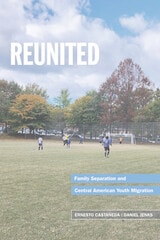
Reunited
Family Separation and Central American Youth MigrationErnesto Castañeda
Russell Sage Foundation, 2024
In interviews with Central American youth, their sponsors, and social services practitioners in and around Washington, D.C., Castañeda and Jenks find that Central American minors migrate on their own mainly for three reasons: gang violence, lack of educational and economic opportunity, and a longing for family reunification. The authors note that youth who feel comfortable leaving and have feelings of belonging upon arrival integrate quickly and easily while those who experience trauma in their home countries and on their way to the United States face more challenges.
Castañeda and Jenks recount these young migrants’ journey from Central America to the U.S. border, detailing the youths’ difficulties passing through Mexico, proving to U.S. Customs and Border Protection officials that they have a legitimate fear of returning or are victims of trafficking, and staying in shelters while their sponsorship, placement, and departure are arranged. The authors also describe the tensions the youth face when they reunite with family members they may view as strangers. Despite their biological, emotional, and financial bonds to these relatives, the youth must learn how to relate to new authority figures and decide whether or how to follow their rules.
The experience of migrating can have a lasting effect on the mental health of young migrants, Castañeda and Jenks note. Although the authors find that Central American youths’ mental health improves after migrating to the United States, the young migrants remain at risk of further problems. They are likely to have lived through traumatizing experiences that inhibit their integration. Difficulty integrating, in turn, creates new stressors that exacerbate PTSD, depression, and anxiety. Consequently, schools and social service organizations are critical, the authors argue, for enhancing youth migrants’ sense of belonging and their integration into their new communities. Bilingual programs, Spanish-speaking PTA groups, message boards, mentoring of immigrant children, and after-school programs for members of reunited families are all integral in supporting immigrant youth as they learn English, finish high school, apply to college, and find jobs.
Offering a complex exploration of youth migration and family reunification, Reunited provides a moving account of how young Central American migrants make the journey north and ultimately reintegrate with their families in the United States.
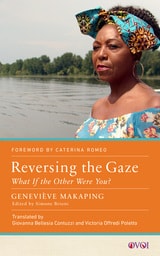
Reversing the Gaze
What If the Other Were You?Geneviève Makaping
Rutgers University Press, 2023
Rhetorical Climatology
By A Reading GroupChris Ingraham
Michigan State University Press, 2023
Rhetorical Economies of Whiteness
Exploring the Intersections of Power, Privilege, and RaceEdited by Robert Asen and Casey Ryan Kelly
The Ohio State University Press, 2024
Contributors:
Godfried Asante, Robert Asen, Charles Athanasopoulos, Paulami Banerjee, Anne Bonds, Linsay M. Cramer, Derek G. Handley, V. Jo Hsu, Kelly Jensen, Casey Ryan Kelly, Kyle R. Larson, George (Guy) F. McHendry Jr., Thomas K. Nakayama, Adedoyin Ogunfeyimi, Rico Self, Stacey K. Sowards, Corinne Mitsuye Sugino
Rice and Slaves
Ethnicity and the Slave Trade in Colonial South CarolinaDaniel C. Littlefield
University of Illinois Press, 1991
Romani Liberation
A Northern Perspective on Emancipatory Struggles and ProgressJan Selling
Central European University Press, 2022
Centered on the trajectory of the emancipation of Roma people in Scandinavia, Romani Liberation is a powerful challenge to the stereotype describing Romani as passive and incapable of responsibility and agency. The author also criticizes benevolent but paternalistic attitudes that center on Romani victimhood.
The first part of the book offers a comprehensive overview of the chronological phases of Romani emancipation in Sweden and other countries. Underscoring the significance of Roma activism in this process, Jan Selling profiles sixty Romani activists and protagonists, including numerous original photos. The narrative is followed by an analysis of the concepts of historical justice and of the process of decolonizing Romani Studies. Selling highlights the impact of the historical contexts that have enabled or impeded the success of the struggles against discrimination and for equal rights, emphasizing Romani activism as a precondition for liberation.
The particular Swedish framework is accentuated by a stimulating preface by the international activist Nicoleta Bitu, and afterwords by two prominent Romani advocates, the politician Soraya Post and the singer, author, and elder Hans Caldaras.

Rowdy Carousals
The Bowery Boy on Stage, 1848-1913J. Chris Westgate
University of Iowa Press, 2024
The book’s examination of working-class whiteness on stage, in the theatre, and in print culture invites theatre historians and critics to check the impulse to downplay or ignore questions about race and ethnicity in discussion of the Bowery Boy. J. Chris Westgate further explores links between the Bowery Boy’s rowdyism in the nineteenth century and the resurgence of white supremacy in the early twenty-first century.