Results by title
72 books match the query 'Railroads' and 7 start with r
Railroad Labor Disputes
The Beginnings of Federal Strike PolicyGerald G. Eggert
University of Michigan Press, 1967

Railroad Postcards In Age Steam
H. Roger Grant
University of Iowa Press, 1994
Out of the tradition of those long-gone days of great, heaving steam locomotives and endless rail lines comes this remarkable selection of vintage cards, a treasure trove selected from John Vander Maas' consummate collection at the University of Iowa Libraries.
This lavish volume is the first general book-length work devoted to the once-ubiquitous railroad picture postcard. It comprises an introductory essay and an album of cards. The former fully examines the nature of the postcard craze, which reached its zenith about 1910, and discusses why images of American railroads played such an important part in the card phenomenon. The album divides an engaging assortment of more than 150 representative views into five sections: “Trains and Rolling Stock,” “Depots and Railway Structures,” “The Railroad Corridor,” “People and Railroads,” and “The Lighter Side of Railroading.”
Railroad historians, train enthusiasts, postcard collectors, and all other readers will find much to interest them in this selection of images. Not only are the cards themselves visually striking, but they convey a sense of how important railroads once were to the nation's citizenry. The sight of steaming locomotives and the hustle and bustle associated with “train time” caused hearts to quicken. These feelings made views of railroad scenes popular with buyers of postcards and now with latter-day railroad fans and card collectors.
Railroads for Michigan
Graydon M. Meints
Michigan State University Press, 2013
Railroads in the Heartland
Steam and Traction in the Golden Age of PostcardsH. Roger Grant
University of Iowa Press, 1997
Historians of midwestern railroading during the early part of the twentieth century have generally focused on the production of railroad company histories while ignoring the regional view. Fortunately for railway historians and buffs, coincidentally with the zenith of the Railway Age, the national fad for producing and mailing postcards was at its height. Millions of cards, including "real-photo" images, were produced between 1905 and 1915. Roger Grant has selected more than a hundred representative picture postcards to visualize the principal themes and characteristics that gave this dynamic industry its distinctive regional features.
By the turn of the century, the railroad map of the Midwest was unequaled. Anyone who examined it carefully sensed that this was the vital center of America's massive network of steel rails. Depots erected in the western prairie environment were spartan, with only minor decoration, but those in the Midwest usually mirrored more ornate New England styles. These features are often reflected in the images in this heavily illustrated book, which depicts the spare but strong pioneering spirit of the enterprise.
Railroads of Nevada and Eastern California
Volume 3: More on the Northern RoadsDavid F. Myrick
University of Nevada Press, 2007
The final volume in the complete history of Nevada and Eastern California railroads David Myrick's monumental railroad histories have become essential reference works for railroaders, historians, and hobbyists. Volume III contains additional information about the northern roads, including some not covered in previous volumes, and about developments since the publication of the first two volumes in the railroads of the region. It provides new facts gleaned from the correspondence of Collis P. Huntington, one of the builders of the Central Pacific and Southern Pacific railroads. It also covers roads connected with the lumber industry and the construction of electric power plants, and Southern Pacific branch lines, including some that never advanced beyond surveys.
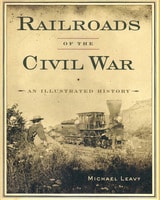
Railroads of the Civil War
An Illustrated HistoryMichael Leavy
Westholme Publishing, 2010
The Photographic Record of the First Wide-Scale Mechanization of War
Over the course of the first half of the nineteenth century, America would find itself following two increasingly divergent tracks: an industrialized North and an agricultural South. By 1860 railroads were firmly entrenched in our culture, reshaping our cities and steering us through the industrial age towards worldwide prominence. From sleepy post towns to the largest east coast cities, the distant hooting of the locomotive whistle drew ever closer and louder, filling listeners with fascination while brightening the eyes of profit-driven industrialists. But this admirable invention, lavishly adorned in brass and iron trimmings, was about to take on a new and deadly role. America’s regional differences would result in a spectacular collision over slavery, and between 1861–1865, the nation fought a savage war. The “iron horse” became a major weapon in the first war fully dependent on railroads. Moreover railroads would escalate and prolong the war, leading to its terrible carnage. Trains were used to move troops rapidly and over great distances, completely changing military strategy. Trains were also used as mobile artillery, armed with large-caliber cannons that could pound cities and fortifications. Trains were a crucial means for supplying the armies on both sides, and it was the severing of the railway lines providing food and munitions to the Army of Northern Virginia that led to Robert E. Lee’s surrender at Appomattox Court House.
In Railroads of the Civil War: An Illustrated History, Michael Leavy uses compelling period photographs and drawings and a rich narrative to reevaluate and illuminate the role of railroads in the Civil War. In addition to identifying details about the various trains and ancillary equipment and buildings in the illustrations, the author explains how trains influenced the outcome of battles and the war in general.
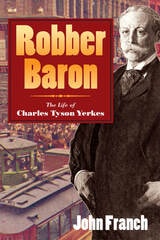
Robber Baron
The Life of Charles Tyson YerkesJohn Franch
University of Illinois Press, 2006