Results by title

14 books match the query 'Academic'

cover of 21St Century Access Services: On The Frontline Of Academic

21St Century Access Services

On The Frontline Of Academic

Michael Krasulski

Assoc of College & Research Libraries, 2013

[more]
cover of ALA-APA Salary Survey: Librarian--Public and Academic

ALA-APA Salary Survey

Librarian--Public and Academic

American Library Association, 2010

[more]
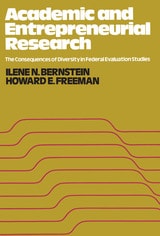
cover of Academic and Entrepreneurial Research: Consequences of Diversity in Federal Evaluation Studies

Academic and Entrepreneurial Research

Consequences of Diversity in Federal Evaluation Studies

Ilene Nagel Bernstein

Russell Sage Foundation, 1975
As social action programs in health, education, and welfare have expanded, interest has grown in evaluating their implementation and effectiveness. Policymakers and social planners--at all levels of government and in the private sector--are currently confronted with the problem of evaluating the large number of human service programs that compete for available resources. Academic and Entrepreneurial Research presents a systematic study of the expenditure of federal funds for evaluation research. It reviews federally-supported evaluations of programs, including evaluations of social change experiments and research-demonstration programs funded by the various executive departments of the federal government. Evaluation studies of these large-scale programs vary in scope, quality, and potential utility. Bernstein and Freeman examine all projects initiated during fiscal year 1970 in order to understand better the methods employed, the types of persons engaged in such research, and expectations regarding the utilization of findings. The book provides data about "high" and "low" quality evaluation research and contains recommendations for restructuring the entire evaluation research enterprise in light of the findings.
[more]
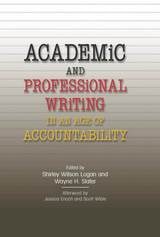
cover of Academic and Professional Writing in an Age of Accountability

Academic and Professional Writing in an Age of Accountability

Edited by Shirley Wilson Logan and Wayne H. Slater, with an Afterword by Jessica Enoch and Scott Wible

Southern Illinois University Press, 2018

What current theoretical frameworks inform academic and professional writing? What does research tell us about the effectiveness of academic and professional writing programs? What do we know about existing best practices? What are the current guidelines and procedures in evaluating a program’s effectiveness? What are the possibilities in regard to future research and changes to best practices in these programs in an age of accountability? Editors Shirley Wilson Logan and Wayne H. Slater bring together leading scholars in rhetoric and composition to consider the history, trends, and future of academic and professional writing in higher education through the lens of these five central questions.
 
The first two essays in the book provide a history of the academic and professional writing program at the University of Maryland. Subsequent essays explore successes and challenges in the establishment and development of writing programs at four other major institutions, identify the features of language that facilitate academic and professional communication, look at the ways digital practices in academic and professional writing have shaped how writers compose and respond to texts, and examine the role of assessment in curriculum and pedagogy. An afterword by distinguished rhetoric and composition scholars Jessica Enoch and Scott Wible offers perspectives on the future of academic and professional writing.
 
This collection takes stock of the historical, rhetorical, linguistic, digital, and evaluative aspects of the teaching of writing in higher education. Among the critical issues addressed are how university writing programs were first established and what early challenges they faced, where writing programs were housed and who administered them, how the language backgrounds of composition students inform the way writing is taught, the ways in which current writing technologies create new digital environments, and how student learning and programmatic outcomes should be assessed. 
 
[more]
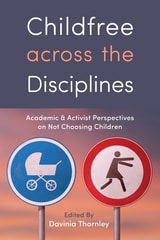
cover of Childfree across the Disciplines: Academic and Activist Perspectives on Not Choosing Children

Childfree across the Disciplines

Academic and Activist Perspectives on Not Choosing Children

Davinia Thornley

Rutgers University Press, 2022

Recently, childfree people have been foregrounded in mainstream media. More than seven percent of Western women choose to remain childfree and this figure is increasing. Being childfree challenges the ‘procreation imperative’ residing at the center of our hetero-normative understandings, occupying an uneasy position in relation to—simultaneously—traditional academic ideologies and prevalent social norms. After all, as Adi Avivi recognizes, "if a woman is not a mother, the patriarchal social order is in danger." This collection engages with these (mis)perceptions about childfree people: in media representations, demographics, historical documents, and both psychological and philosophical models. Foundational pieces from established experts on the childfree choice--Rhonny Dam, Laurie Lisle, Christopher Clausen, and Berenice Fisher--appear alongside both activist manifestos and original scholarly work, comprehensively brought together. Academics and activists in various disciplines and movements also riff on the childfree life: its implications, its challenges, its conversations, and its agency—all in relation to its inevitability in the 21st century. Childfree across the Disciplines unequivocally takes a stance supporting the subversive potential of the childfree choice, allowing readers to understand childfreedom as a sense of continuing potential in who—or what—a person can become.

[more]
cover of Creating Leaders An Examinati On Of Academic And Research Li

Creating Leaders An Examinati On Of Academic And Research Li

Irene Herold

American Library Association, 2015

[more]
cover of Creating Leaders: An Examination of Academic and Research Library Leadership Institutes

Creating Leaders

An Examination of Academic and Research Library Leadership Institutes

Irene M. H. Herold

Assoc of College & Research Libraries, 2015
[more]
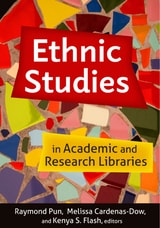
cover of Ethnic Studies in Academic and Research Libraries

Ethnic Studies in Academic and Research Libraries

Raymond Pun

Assoc of College & Research Libraries, 2021

Supporting ethnic studies is an opportunity to uplift diverse stories and perspectives and to build and affirm such communities and their voices, experiences, and histories. Ethnic studies librarianship requires engagement, a desire to listen and engage with one’s constituents, and a focused approach to re-humanizing and emphasizing the voices of those who are being studied. Race and ethnicity, despite their abstractness, have real, concrete meaning and consequences in American society. Being able to see who speaks and who is silenced matters, and ethnic studies librarianship supports the intellectual journey of students in becoming aware of the various ways we see the world and the numerous stories we tell and come across in our lifetime.
 
Ethnic Studies in Academic and Research Libraries serves as a snapshot of critical work that library workers are doing to support ethnic studies, including areas focusing on ethnic and racial experiences across the disciplines. Other curriculums or programs may emphasize race, migration, and diasporic studies, and these intersecting areas are highlighted to ensure work supporting ethnic studies is not solely defined by a discipline, but by commitment to programs that uplift underserved and underrepresented ethnic communities and communities of color. Twenty chapters are broken into three thorough sections:
  1. Instruction, Liaison Engagement, and Outreach
  2. Collections Projects and Programs
  3. Collaborations, Special Projects, and Community Partnerships
Ethnic studies programs, faculty, and students can lack visibility in librarianship, though there are many opportunities to engage with and support these interdisciplinary and multidisciplinary programs. Ethnic Studies in Academic and Research Libraries captures case studies, programs, and engagements within the field(s) of ethnic studies and how library workers are creating and documenting important support services and resources for these communities of learners, scholars, activists, and educators. We need to think critically about how we support ethnic studies and our faculty colleagues in these departments, especially during challenging times in fiscal crises and the systemic violence and oppression that occurs in higher education, in our institutions, in our communities, in our profession, and in our histories. What we collect, preserve, share, and uplift reflects who we are and our priorities.
 
[more]
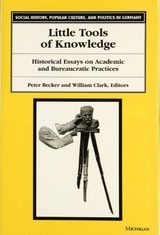
cover of Little Tools of Knowledge: Historical Essays on Academic and Bureaucratic Practices

Little Tools of Knowledge

Historical Essays on Academic and Bureaucratic Practices

Peter Becker and William Clark, Editors

University of Michigan Press, 2001

This volume brings historians of science and social historians together to consider the role of "little tools"--such as tables, reports, questionnaires, dossiers, index cards--in establishing academic and bureaucratic claims to authority and objectivity. From at least the eighteenth century onward, our science and society have been planned, surveyed, examined, and judged according to particular techniques of collecting and storing knowledge. Recently, the seemingly self-evident nature of these mundane epistemic and administrative tools, as well as the prose in which they are cast, has demanded historical examination. The essays gathered here, arranged in chronological order by subject from the late seventeenth to the late twentieth century, involve close readings of primary texts and analyses of academic and bureaucratic practices as parts of material culture. The first few essays, on the early modern period, largely point to the existence of a "juridico-theological" framework for establishing authority. Later essays demonstrate the eclipse of the role of authority per se in the modern period and the emergence of the notion of "objectivity." Most of the essays here concern the German cultural space as among the best exemplars of the academic and bureaucratic practices described above. The introduction to the volume, however, is framed at a general level; the closing essays also extend the analyses beyond Germany to broader considerations on authority and objectivity in historical practice. The volume will interest scholars of European history and German studies as well as historians of science. Peter Becker is Professor of Central European History, European University Institute. William Clark is Lecturer in History and Philosophy of Science, Cambridge University.
[more]
cover of Reflecting on the Future of Academic and Public Libraries

Reflecting on the Future of Academic and Public Libraries

Peter Hernon

American Library Association, 2013

[more]
cover of Reinventing Reference: How Public, Academic, and School Libraries Deliver Value in the Age of Google

Reinventing Reference

How Public, Academic, and School Libraries Deliver Value in the Age of Google

Vibiana Bowman Cvetkovic

American Library Association, 2014
[more]
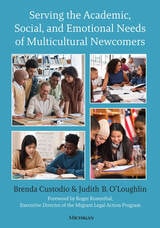
cover of Serving the Academic, Social, and Emotional Needs of Multicultural Newcomers

Serving the Academic, Social, and Emotional Needs of Multicultural Newcomers

Brenda Custodio and Judith B. O’Loughlin

University of Michigan Press, 2025

As newcomers—immigrant students who have been in the U.S. less than two years—arrive in record numbers, many school districts are looking for ways to best support these new arrivals. Serving the Academic, Social, and Emotional Needs of Multicultural Newcomers offers a research-based overview of newcomer students across the nation and provides specific strategies for helping them integrate into U.S. schools in a variety of settings (ESL, bilingual, mainstream/content classrooms). In addition to a brief overview of how newcomer programs can provide academic and social-emotional services for recently arrived English learners, the authors draw on their experience to offer five best practices for serving newcomers. Readers will learn how to:
  • Collaborate with school professionals to create a program specifically to meet the unique needs of new arrivals.
  • Provide intensive literacy, numeracy, and content area support, especially for students with interrupted schooling.
  • Develop the classroom supports necessary for students to achieve academic success.
  • Provide supports that address the physical, social, and emotional challenges of newcomers.
  • Work with families and communities to support students outside of a school environment.
With reflective questions at the end of each chapter, this book is designed to be used as a textbook with study groups or as a self-study resource for professional development.
[more]
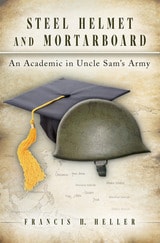
cover of Steel Helmet and Mortarboard: An Academic in Uncle Sam's Army

Steel Helmet and Mortarboard

An Academic in Uncle Sam's Army

Francis H. Heller

University of Missouri Press, 2009

As a young officer candidate in the Austrian army in 1938, Francis Heller put himself at risk by refusing to swear an oath of allegiance to Adolf Hitler. Had he stayed in Vienna, he would have been arrested by the Gestapo as a supporter of Austrian independence and an enemy of the Nazis. But he managed to escape into Czechoslovakia under cover of darkness. He subsequently made his way to America, where he finally pursued the academic career that military service had interrupted.
            Steel Helmet and Mortarboard is the story of this Austrian refugee who earned an American law degree in 1941 and set his sights on studying political science but a year later was drafted into the U.S. Army. In his second military career, Heller opted for service as an enlisted man in a combat unit. After basic training, he was assigned as a private in a regular army division. Then in a field artillery unit, he so distinguished himself in combat in the Pacific theater that he received a battlefield commission and went on to serve in the early months of the occupation of Japan—and on one assignment, escorting German nationals home from the Far East, found himself back in Europe and witnessing evidence of the horrors at Dachau that he himself had barely managed to escape.
Heller’s account of those years recalls how an upper-middle-class émigré adjusted to military life while serving in such combat zones as New Guinea and the Philippines, then how he later resumed his academic career, earned his Ph.D., and went on to teach at the University of Kansas. But Heller’s return to academic life was anything but final: recalled to active duty for the Korean War, he also served in later years with the U.S. Army Command and General Staff College at Fort Leavenworth.
After a lifetime of changing hats—mortarboard for helmet and back again—Heller, now in his nineties, has recorded his unique perceptions as an educated observer of the world. Steel Helmet and Mortarboard is an absorbing narrative of one individual’s experiences across a spectrum of personal and professional challenges, written with wry humor and insight that reflect a keen ability to master whatever circumstances life brings.
[more]
cover of The Expert Library: Staffing, Sustaining, and Advancing the Academic Library in the 21st Century

The Expert Library

Staffing, Sustaining, and Advancing the Academic Library in the 21st Century

Scott Walter

Assoc of College & Research Libraries, 2011

[more]