Results by title
160 books match the query 'Reflections' and 34 start with r
Reclaiming Indigenous Governance
Reflections and Insights from Australia, Canada, New Zealand, and the United StatesEdited by William Nikolakis, Stephen Cornell, and Harry W. Nelson; Foreword by Sophie Pierre and Gwen Phillips
University of Arizona Press, 2019
Indigenous governance is dynamic, an ongoing relationship between Indigenous peoples and settler-states. The relationship may be vigorously contested, but it is often fragile—one that ebbs and flows, where hard-won gains can be swiftly lost by the policy reversals of central governments. The legacy of colonial relationships continues to limit advances in self-government.
Yet Indigenous peoples in the CANZUS countries are no strangers to setbacks, and their growing movement provides ample evidence of resilience, resourcefulness, and determination to take back control of their own destiny. Demonstrating the struggles and achievements of Indigenous peoples, the chapter authors draw on the wisdom of Indigenous leaders and others involved in rebuilding institutions for governance, strategic issues, and managing lands and resources.
This volume brings together the experiences, reflections, and insights of practitioners confronting the challenges of governing, as well as researchers seeking to learn what Indigenous governing involves in these contexts. Three things emerge: the enormity of the Indigenous governance task, the creative agency of Indigenous peoples determined to pursue their own objectives, and the diverse paths they choose to reach their goal.
Redefining Multicultural Families in South Korea
Reflections and Future DirectionsMinjeong Kim
Rutgers University Press, 2022

Reflections On Practitioner Research
A Practical GuideLee Ann Fullington
American Library Association, 2020
Reflections in Bullough’s Pond
Economy and Ecosystem in New EnglandDiana Muir
University Press of New England, 2002
Reflections in Place
Connected Lives of Navajo WomenDonna Deyhle
University of Arizona Press, 2009
As a recognized authority on the subject, qualified by multiple degrees in racial and American Indian studies, Deyhle is able to chronicle the lives and “survivance” of three Navajo women in a way that is simultaneously ethnographic and moving. Her critique of the U.S. education system’s underlying yet very real tendency toward structural discrimination takes shape in elegant prose that moves freely into and out of time and place. The combination of substantive sources and touching personal experience forms a profound and enduring narrative of critical and current importance.
While this book stands as a powerful contribution to American Indian studies, its compelling human elements will extend its appeal to anyone concerned with the ongoing plight of American Indians in the education system.
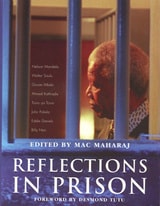
Reflections in Prison
Voices From the South African Liberation StruggleMac Maharaj
University of Massachusetts Press, 2002
Written by Mandela, Walter Sisulu, Ahmed Kathrada, Govan Mbeki, and four other leaders of the anti-apartheid movement, these essays provide a rare view of their thinking at a critical point in the liberation struggle, on the eve of the 1976 Soweto Uprising. The leaders describe their philosophies, strategies, and hopes. They debate such crucial issues as violent versus nonviolent forms of struggle, diversity and unity, the ideological challenge of the Black Consciousness movement, and how to accommodate different interpretations of African nationalism.
The book begins with a foreword by Desmond Tutu and a contextualizing introduction by Maharaj. Then come two essays by Mandela and one each by Sisulu, Kathrada, Mbeki, Billy Nair, John Pokela, Eddie Daniels and Andimba Toivo Ya Toivo. Each essay is preceded by a short biography of the author, a description of his life in prison, and a pencil sketch by a black South African artist.

Reflections in a Bloodshot Lens
America, Islam and the War of IdeasLawrence Pintak
Pluto Press, 2006
There exists today a tragic rift between Americans and the world’s Muslims. Yet in the immediate aftermath of 9/11, there was widespread sympathy for the U.S. throughout the Muslim world. This book explores what happened. It examines the disconnect that leads Americans and Muslims to view the same words and images in fundamentally different ways. Partly a result of a centuries-old 'us' against 'them' dichotomy, the problem is exacerbated by an increasingly polarised media and by leaders on both sides who either don't understand or don't care what impact their words and policies have in the world at large.
Journalist-scholar Lawrence Pintak, a former CBS News Middle East correspondent, argues that the Arab media revolution and the rise of 'patriot-journalists' in the US marginalized voices of moderation, distorting perceptions on both sides of the divide with potentially disastrous results.
Built on the author's extensive journalistic experience, the book will appeal to policymakers, students of media studies, Middle East studies and Islamic studies, and general current affairs readers.
Reflections of Romanity
Discourses of Subjectivity in Imperial RomeRichard Alston
The Ohio State University Press, 2011
Reflections of a Civil War Historian
Essays on Leadership, Society, and the Art of WarHerman Hattaway & Foreword by Frank E. Vandiver
University of Missouri Press, 2003
Reflections of a Pragmatic Economist
My Intellectual JourneyEmery N. Castle
Oregon State University Press, 2010
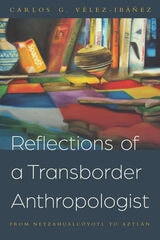
Reflections of a Transborder Anthropologist
From Netzahualcóyotl to AztlánCarlos G. Vélez-Ibáñez
University of Arizona Press, 2020
In each chapter, Vélez-Ibáñez revisits a critical piece of his written work, providing a new introduction and discussion of ideas, sources, and influences for the piece. These are followed by the work, chosen because it accentuates key aspects of his development and formation as an anthropologist. By returning to these previously published works, Vélez-Ibáñez offers insight not only into the evolution of his own thinking and conceptualization but also into changes in the fields in which he has been so influential. Throughout his career, Vélez-Ibáñez has addressed why he does the work that he does, and in this volume he continues to address the personal and intellectual drives that have brought him from Netzahualcóyotl to Aztlán.
Reflections of a Transborder Anthropologist shows how both Vélez-Ibáñez and anthropology have changed and formed over a fifty-year period. Throughout, he has worked to understand how people survive and thrive against all odds. Vélez-Ibáñez has been guided by the burning desire to understand inequality, exploitation, and legitimacy, and, most importantly, to provide platforms for the voiceless to narrate their own histories.
Reflections of a Would-Be Anarchist
Ideals and Institutions of LiberalismRichard E. Flathman
University of Minnesota Press, 1998
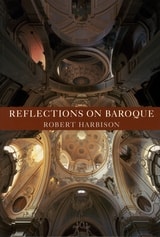
Reflections on Baroque
Robert Harbison
University of Chicago Press, 2001
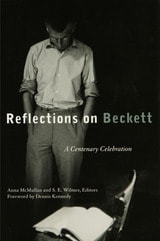
Reflections on Beckett
A Centenary CelebrationAnna McMullan and S. E. Wilmer, Editors. Foreword by Dennis Kennedy
University of Michigan Press, 2009
Reflections on Frege's Philosophy
Reinhardt Grossmann
Northwestern University Press, 1969
Reflections on History and Historians
Theodore S. Hamerow
University of Wisconsin Press, 1990
Far from being a sentimental look at the past, Hamerow’s work confronts the unpleasant reality of the present. History, he says flatly, is a discipline in retreat. The profession is in serious trouble and there are no signs that its problems will be resolved in the foreseeable future.
After identifying the current crisis, Hamerow proceeds to trace the development of the profession over the last hundred years and to examine its characteristics in modern society. In this section of the book he shares some fascinating practical observations on the ways in which the profession operates. Hamerow explains why some historians rise to prominence while others do not. He also examines causes of the dissatisfactions that afflict many historians and their students.
Hamerow also examines the way in which academic historians live their lives, as he expands on the daily realities that they face. He then explains how those realities have shaped scholarship and led to the “new history.” The broad use of social science methods, he observes, has had the effect of isolating the new historians from traditional historians, indeed from one another. Couched in the arcane prose of machine-readable languages, says Hamerow, history has become inaccessible to the intelligent lay reader who had once read historical works with interest, understanding, and appreciation.
In concluding his examination, Hamerow asks, “What is the use of history?” It has long been a favorite question asked by historians, but seldom one over which they agonized for very long. After considering various arguments for the usefulness of historical investigation, Hamerow offers his own justification.
There are times, says Hamerow, when even the most spontaneous or instructive cultural pursuits need to be examined in the light of the purposes they serve and the goals they seek. Now might be a good time for all historians to take a long look at the direction their discipline has taken in the past century, at the functions it has come to perform, and at the serious dilemma it now faces. Hamerow is a steady and helpful guide to any such examination.

Reflections on Just War
Bat-Ami Bar On
Temple University Press, 2016
Reflections on Latin American Development
By Roberto de Olivera Campos; introduction by Benjamin Higgins
University of Texas Press, 1967
Economic development has been an challenge facing the countries of Latin America. Because the United States, from the very nature of its geographic and economic relationship with its southern neighbors, must inevitably exercise a strong influence on the course which that development takes, it is important that North Americans understand conditions in Latin America and the attitudes of its peoples. Roberto de Oliveira Campos, former Brazilian Minister of Economic Planning, is in a unique position to evaluate both past accomplishments and future problems.
In this group of essays, Campos gives a comprehensive analysis of many aspects of Latin American development in the mid-twentieth century. He examines relations between the United States and Latin America from a variety of angles, and he outlines the basic problems of economic development, of governmental policy, and of public and private administration. He gives particular attention in several essays to the relationship of foreign trade and foreign aid to economic development, and he presents a long discussion of the Alliance for Progress—its history, its purposes, its accomplishments, and its failures.
Campos’s philosophy regarding the role of the state in economic development and other questions emerges clearly from these pithy essays. “The valid distinction I see on the basis of my analysis of men and things is between pragmatic or functional nationalists and romantic or temperamental nationalists,” he writes. “The latter confuse intention with results. They start with enthusiasm and end in fanaticism, this being, according to Santayana, ‘the art of redoubling efforts after losing sight of objectives.’ . . . Many [romantic nationalists], though they do not confess it, favor the dangerous purgery of revolution.
“The pragmatic nationalist seeks to operate within the frame of democratic institutions and prefers reform to revolution. As to myself, I shall continue considering myself a pragmatic nationalist. I renounce the temptation of mobilizing resentment in order to gain the authority to plan development. I would rather strengthen the national entrepreneur than merely antagonize the foreigner. I would want the state not to do what it cannot do in order to do what it should do. I prefer to love my own country rather than to hate the others’.”
Reflections on Leisure, Play, and Recreation
David L. Jewell
Southern Illinois University Press, 1997
In this rich and unique reference, David L. Jewell compiles the first anthology of reflections on leisure, play, and recreation.
As he began to collect these considered opinions, Jewell was pleased to discover that many people from quite diverse backgrounds shared his belief in the redeeming value of leisure, play, and recreation.
Jewell was less pleased, however, to note how often these judicious opinions have been ignored. Disproportionately high budget cuts in parks and recreation services demonstrate too clearly society’s view of leisure activities as frivolous and expendable. By selecting these voices of reason and making them available in a single volume, Jewell hopes to emphasize the "frailties of a capitalistic society’s demeaning perception" of anything other than work.
Reflections on Public Administration
John Merriman Gaus
University of Alabama Press, 2008
An exploration of government, society, and the ecology of public administration.
Reflections on Public Administration is a foundational work by John Merriman Gaus, one of the most influential thinkers in the development of modern public administration. First published in 1947, this enduring classic examines the relationship between government institutions and the broader social, economic, political, and technological environments in which they operate. Gaus argues that public administration cannot be understood in isolation; rather, it is shaped by an interconnected "ecology" of people, resources, ideas, geography, and public needs.
Drawing on historical examples and keen observation, Gaus explores how major societal changes during the first half of the twentieth century led citizens to increasingly rely on government to address public challenges. As demands expanded, so too did the responsibilities and influence of administrative agencies, contributing to the rise of the modern administrative state. His analysis provides valuable insight into the evolution of governance, public policy, and institutional development.
Written with clarity and foresight, Reflections on Public Administration continues to resonate with contemporary discussions about government effectiveness, public service, and democratic accountability. Widely regarded as a landmark contribution to political science and public affairs, it remains essential reading for anyone seeking to understand the theoretical foundations and practical realities of public administration.
Reflections on a Disruptive Decade
Essays from the SixtiesEugene Davidson
University of Missouri Press, 2000
As editor of Modern Age in the 1960s, Eugene Davidson introduced each quarterly issue with a thought-provoking contemplation of one or another of the decade's dizzying events. Gathered together here for the first time, the essays in Reflections on a Disruptive Decade present an intellectual conservative's perspective on an era which, because it underscores so many of the political divisions still with us today, continues to hold our fascination.
Davidson deals with the marvelous but confused realm of post-1945 international politics, in which the American people faced a new enemy, one often baffling and terrifying. The Cuban missile crisis was probably the most uncertain moment in foreign policy during this century. Although the crisis was resolved without bloodshed, there was intense danger of irrationality, for the Russians foolhardily had sent nuclear missiles to Cuba.
Other topics Davidson addresses are the Civil Rights movement, the policies and programs of Lyndon Johnson's Great Society, and the East-West battles of ideology and arms in Europe, Vietnam, and the Middle East. With remarkable shrewdness, Davidson illuminates many contradictions and excesses of the decade's liberal ascendancy, and presciently detects signs pointing to a resurgence of the nation's conservative forces.
Although more than thirty years have passed, Davidson's essays still contain great clarity, and his appraisals are still keen. Reflections on a Disruptive Decade is a truly remarkable addition to the work of this distinguished scholar.
Reflections on the Just
Paul Ricoeur
University of Chicago Press, 2007
Now in paperback, the definitive English translation of Ricoeur's second collection of essays (after The Just) about justice and law.
At the time of his death in 2005, French philosopher Paul Ricoeur was regarded as one of the great thinkers of his generation. In more than half a century of writing about the essential questions of human life, Ricoeur’s thought encompassed a vast range of wisdom and experience, and he made landmark contributions that would go on to influence later scholars in such areas as phenomenology, hermeneutics, structuralism, and theology.
Toward the end of his life, Ricoeur began to focus directly on ethical questions that he feared had been overshadowed by his other work; the result was a two-volume collection of essays on justice and the law. The University of Chicago Press published the English translation of the first volume, The Just, to great acclaim in 2000. Now this translation of the second volume, Reflections on the Just, completes the set and makes available to readers the whole of Ricoeur’s meditations on the concept.
Consisting of fifteen thematically organized essays, Reflections on the Just continues and expands on the work Ricoeur began with his “little ethics” in Oneself as Another and The Just. In the preface, he considers what revisions he would make were he to start over and how that is reflected in these essays. The opening part brings phenomenology to bear on ethics; the second group of essays comprises shorter, occasional pieces considering the concept of justice in the works of other philosophers, including Max Weber and Charles Taylor. The final part turns to the specific domains of medicine and the law, examining how concepts of right and justice operate in those realms.
Cogent, deeply considered, and fully engaged with the realities of the contemporary world, Reflections on the Just is an essential work for understanding the development of Ricoeur’s thought in his final years.

Reflections on the Neches
A Naturalist's Odyssey along the Big Thicket's Snow RiverGeraldine Ellis Watson
University of North Texas Press, 2003
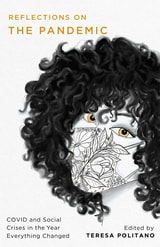
Reflections on the Pandemic
COVID and Social Crises in the Year Everything ChangedTeresa Politano
Rutgers University Press, 2024
Contributors include: Patricia Akhimie, Marc Aronson, Ulla D. Berg, Stephanie Bonne, Stephanie Boyer, Kimberly Camp, Jordan Casteel, Kelly-Jane Cotter, Mark Doty, David Dreyfus, Adrienne E. Eaton, Katherine C. Epstein, Leah Falk, Paul G. Falkowski, Rigoberto González, James Goodman, David Greenberg, Angelique Haugerud, Grace Lynne Haynes, Leslieann Hobayan, Jonathan Holloway, James W. Hughes, Naomi Jackson, Amy Jordan, Vikki Katz, Mackenzie Kean, Robert E. Kopp, Christian Lighty, Stephen Masaryk, Louis P. Masur, Revathi V. Machan, Yalidy Matos, Belinda McKeon, Susan L. Miller, Yehoshua November, Joyce Carol Oates, Mary E. O’Dowd, Katherine Ognyanova, David Orr, Gregory Pardlo, Steve Pikiell, Teresa Politano, en Purkert, Nick Romanenko, Evie Shockley, Caridad Svich, and Didier William.
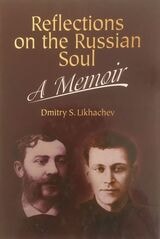
Reflections on the Russian Soul
A MemoirDmitry S. Likhachev
Central European University Press, 2000
This compelling and often traumatic book is the memoir of one of the most important figures in modern Russian history, Dmitry S. Likhachev, revered as ‘a guardian of national culture’. Reflections on the Russian Soul is an incredible account of an intellectual’s turbulent journey through twentieth century Russia. Likhachev re-counts the fortunes of people with whom he came into contact and reproduces the air of passed years in Russia.
Likhachev vividly portrays his childhood years in St. Petersburg and continues into his student life at Leningrad University that led to an agonizing period of imprisonment and near death. He describes how a harmless prank caught the attention of the Secret Police, resulting in his exile and confinement within the infamous prison island of Solovki. He describes his first-hand experience of brutality in prison during the early Stalin years and the incident that not only saved him but also haunted him for the rest of his life.
He reflects on the years after his release from prison and the events leading up to the Second World War. His powerful recollection of the blockade of Leningrad provides the reader with a horrific insight into the harsh effects of war, hunger and survival. Lichachev goes on to describe post-war Russia and how his own livelihood developed from literary editor to a return to Leningrad University as Professor of History. This compelling autobiography finishes with Likhachev’s poignant return to Solovki as a free man.
Reflections
Conversations with PoliticiansPeter Hennessy and Robert Shepherd
Haus Publishing, 2016
Reflections collects transcripts of the best interviews from the BBC Radio 4 series Reflections with Peter Hennessy, a show on which the British political elite have spoken candidly about their careers and the moments that came to define their political lives. Supplementing the interviews are short biographies and profiles of the interviewees, allowing readers a fuller picture of each speaker’s background and professional trajectory. This revealing book includes conversations with political heavyweights such as former prime minister John Major; former foreign secretaries Margaret Beckett, David Owen, and Jack Straw; Labour Party leader Neil Kinnock; Liberal Party leader David Steel; and chancellor of exchequer Nigel Lawson. In addition, Reflections presents interviews with leading women, including Shirley Williams and Clare Short, who spent years at the forefront of their parties in Westminster.
The latest volume in the popular Haus Curiosities series, Reflections offers valuable insights from some of today’s most influential political figures.
Reflections
Conversations with Politicians Volume IIPeter Hennessy and Robert Shepherd
Haus Publishing, 2019
Reflections
Conversations, Essays, and Other WritingsThomas Hauser
University of Arkansas Press, 2014
Reflections
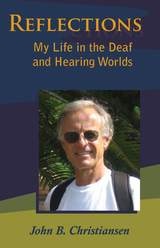
My Life in the Deaf and Hearing WorldsJohn B. Christiansen
Gallaudet University Press, 2010
Hard of hearing since early childhood, John Christiansen spent the first 30 years of his life trying to fit in to a hearing world that did little to accommodate his communication needs. Although he excelled in academics, Christiansen found social situations stressful at every level, until he obtained a position as a professor of sociology at Gallaudet University. There he learned sign language and joined a new community. Reflections: My Life in the Deaf and Hearing Worlds grew out of his personal experiences inhabiting these two worlds.
As a sociologist, Christiansen could identify the toll that trying to communicate with hearing people took on his psyche, the classic looking-glass self in action: I am what I think you think I am. He saw that people with hearing loss frequently blame themselves for social awkwardness and gaffs, even though the responsibility for clear communication should be shared. Still, after living in the hearing world for most of his life, he opted to undergo a cochlear implantation to try to improve interaction with his hearing friends, wife, and children.
His description of adjusting to his cochlear implant brings fresh reality to the implant process. As he puts it, he was not a superstar. After ten years, though, he feels positive enough about his experience to endorse it. As a denouement to his affecting memoir, he describes the disruptive 2006 protest at Gallaudet over the choice of a new president from his vantage point as a member of the search committee. Reflections stands as a remarkable account of one person’s navigation through the intricacies of two different and occasionally opposing worlds.
Reflections
The American Collection of the Columbus Museum of ArtNannette V. Maciejunes
Ohio University Press, 2019
Religion, Education and the American Experience
Reflections on Religion and the American Public LifeEdith L. Blumhofer
University of Alabama Press, 2002
This collection of provocative and timely essays addresses the ways in which religious and educational institutions have come to define one another and American culture and identity.
Education in America-public and private, from the elementary to the university level-is the subject of urgent, ongoing debates. School vouchers, home schooling, prayer in the classrooms, sex education in the schools, and evolution versus creationism are just a few of the touchstones and flashpoints that have ignited a national dialogue concerning the role of religion in U.S. educational institutions.
The ten major essays assembled here emerged from a series of conferences conducted by the Public Religion Project at the University of Chicago Divinity School, funded by a grant from The Pew Charitable Trust. Written by recognized leaders in the fields of education and religion, the essays address such issues as the role of religious studies programs in tax-supported public universities; the evolving role of the university chaplain; the impact of religious doctrine on literary scholarship and the natural sciences; the college president as a spiritual leader; the secularization of private colleges whose foundations rest in the spiritual mission of a specific church or denomination and, conversely, the obligations, if any, of colleges that have maintained distinct denominational identities toward pluralistic outreach and openness; and an examination of the home schooling movement.
A true "dialogue" designed to inspire readers to rethink, argue, act, and continually converse on the subject, Religion, Education, and the American Experience will appeal to educators, college and university administrators, and boards of trustees, as well as academic libraries and scholars of education and religious studies.
Religion, Politics and the American Experience
Reflections on Religion and American Public LifeEdith L. Blumhofer
University of Alabama Press, 2002
This challenging collection of essays offers a refreshing approach to the troubling--and timely--subject of religion and public policy in America, and the ways in which issues of church and state affect our national identity.
The result of a series of conferences on religion and politics conducted by the Public Religion project at the University of Chicago, funded by a grant from the Pew Charitable Trust, this collection brings together an extraordinarily diverse set of contributors. Represented within its pages are the ideas and opinions of scholars, politicians, and religious leaders with backgrounds in law, politics, history, and divinity, among them Senator Paul Simon of Illinois. With its wide range of critical approaches and varied perspectives, this volume makes a vibrant contribution to the national dialogue on politics and religion.
Chief among the essay topics are the evangelical roots of American political life; early conflicts between Enlightenment thinking and spiritual impulses in developing a national identity; the practical problems that today's politicians face in campaigning; the impact of constitutional and legal language regarding our definitions of religion; and the way in which the media's treatment of our spiriutal life frames our perceptions of it. These thought-provoking essays will inspire readers to rethink, argue, perhaps act, but most importantly, to converse about this timely and important issue.
This volume will have wide cross-disciplinary appeal. Students and scholars of history, religious studies, and political science will find great value within its pages, as will scholars of divinity and law, and members of this general public concerned with the intersection of faith and politics in American life.
Remote
Reflections on Life in the Shadow of CelebrityDavid Shields
University of Wisconsin Press, 2003
In this truly one-of-a-kind book, the author/narrator—a representative, in extremis, of contemporary American obsession with beauty, celebrity, transmitted image—finds himself suspended, fascinated, in the remoteness of our wall-to-wall mediascape. It is a remoteness that both perplexes and enthralls him.
Through dazzling sleight of hand in which the public becomes private and the private becomes public, the entire book—clicking from confession to family-album photograph to family chronicle to sexual fantasy to pseudo-scholarly footnote to reportage to personal essay to stand-up comedy to cultural criticism to literary criticism to film criticism to prose-poem to litany to outtake —becomes both an anatomy of American culture and a searing self-portrait.
David Shields reads his own life—reads our life—as if it were an allegory about remoteness and finds persuasive, hilarious, heartbreaking evidence wherever he goes.
Winner of the PEN / Revson Award?
Ressentiment
Reflections on Mimetic Desire and SocietyStefano Tomelleri
Michigan State University Press, 2015