Results by title
89 books match the query 'Religion & Science' and 5 start with r
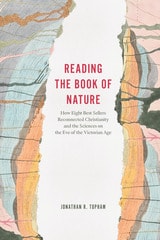
Reading the Book of Nature
How Eight Best Sellers Reconnected Christianity and the Sciences on the Eve of the Victorian AgeJonathan R. Topham
University of Chicago Press, 2022
When Charles Darwin returned to Britain from the Beagle voyage in 1836, the most talked-about scientific books of the day were the Bridgewater Treatises. This series of eight works was funded by a bequest of the last Earl of Bridgewater and written by leading men of science appointed by the president of the Royal Society to explore "the Power, Wisdom, and Goodness of God, as manifested in the Creation." Securing public attention beyond all expectations, the series offered Darwin’s generation a range of approaches to one of the great questions of the age: how to incorporate the newly emerging disciplinary sciences into Britain’s overwhelmingly Christian culture.
Drawing on a wealth of archival and published sources, including many unexplored by historians, Jonathan R. Topham examines how and to what extent the series contributed to a sense of congruence between Christianity and the sciences in the generation before the fabled Victorian conflict between science and religion. Building on the distinctive insights of book history and paying close attention to the production, circulation, and use of the books, Topham offers new perspectives on early Victorian science and the subject of science and religion as a whole.
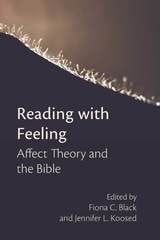
Reading with Feeling
Affect Theory and the BibleFiona C. Black
SBL Press, 2019
Essays with a methodological and metacritical focus
The psychological approach known as affect theory focuses on bodily feelings—depression, happiness, disgust, love—and can illuminate both texts and their interpretations. In this collection of essays scholars break new ground in biblical interpretation by deploying a range of affect-theoretical approaches in their interpretations of texts. Contributors direct their attention to the political, social, and cultural formation of emotion and other precognitive forces as a corrective to more traditional historical-critical methods and postmodern approaches. The inclusion of response essays results in a rich transdisciplinary dialog, with, for example, history, classics, and philosophy. Fiona C. Black, Amy C. Cottrill, Rhiannon Graybill, Jennifer L. Koosed, Joseph Marchal, Robert Seesengood, Ken Stone, and Jay Twomey engage a range of texts from biblical, to prayers, to graphic novels. Erin Runions and Stephen D. Moore’s responses push the conversation in new fruitful directions.
Features
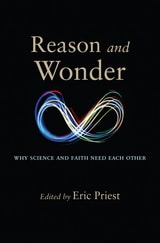
Reason and Wonder
Why Science and Faith Need Each OtherEric Priest
Templeton Press, 2016
This is exactly what Reason and Wonder does. Eric Priest has brought together twelve of the leading thinkers in science and theology to discuss everything from the origins of the universe to evolution and evil. At the heart of each essay is an understanding that the best science—and the best theology— are both undergirded by an appeal to reason as well as a deep sense of wonder.
Each of these great scientific and theological thinkers offers a chapter on their area of expertise, and the book closes with a stimulating set of questions for group discussion or personal reflection.
- Contributors and their topics include:
- Eric Priest: Towards an integration of science and religion
- Keith Ward: God, science and the New Atheism
- Eleonore Stump: Natural law, reductionism and the Creator
- David Wilkinson: The origin and end of the universe: A challenge for Christianity
- Jennifer Wiseman: Universe of wonder, universe of life
- Kenneth R. Miller: Evolution, faith and science
- Michael J. Murray and Jeff Schloss: Evolution and evil
- Pauline Rudd: Is there more to life than genes?
- David G. Myers: Psychological science meets Christian faith
- John Wyatt: Being a person: Towards an integration of neuroscientific and Christian perspectives
- John Swinton: From projection to connection: Conversations between science, spirituality and health
- Mark Harris: Do the miracles of Jesus contradict science?
- N. T. Wright: Can a scientist trust the New Testament?
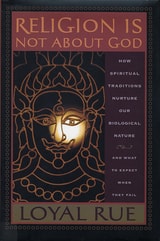
Religion is Not about God
How Spiritual Traditions Nurture our Biological Nature and What to Expect When They FailLoyal Rue
Rutgers University Press, 2006
Thousands of religious traditions have appeared over the course of human history but only a relative few have survived. Some speak of a myriad of gods, others of only one, and some recognize no gods at all. Volumes have been written attempting to prove the existence or nonexistence of supernatural being(s). So, if religion is not about God, then what is it about?
In this provocative book, Loyal Rue contends that religion, very basically, is about us. Successful religions are narrative (myth) traditions that influence human nature so that we might think, feel, and act in ways that are good for us, both individually and collectively. Through the use of images, symbols, and rituals, religion promotes reproductive fitness and survival through the facilitation of harmonious social relations. Drawing on examples from the major traditions—Judaism, Christianity, Islam, Hinduism, and Buddhism—Rue shows how each religion, in its own way, has guided human behavior to advance the twin goals of personal fulfillment and social coherence.
As all faiths are increasingly faced with a crisis of intellectual plausibility and moral relevance, this book presents a compelling and positive view of the centrality and meaning of religion.

Religion is Not about God
How Spiritual Traditions Nurture our Biological Nature and What to Expect When They FailLoyal Rue
Rutgers University Press, 2006
2006 Choice Outstanding Academic Title
Thousands of religious traditions have appeared over the course of human history but only a relative few have survived. Some speak of a myriad of gods, others of only one, and some recognize no gods at all. Volumes have been written attempting to prove the existence or nonexistence of supernatural being(s). So, if religion is not about God, then what is it about?
In this provocative book, Loyal Rue contends that religion, very basically, is about us. Successful religions are narrative (myth) traditions that influence human nature so that we might think, feel, and act in ways that are good for us, both individually and collectively. Through the use of images, symbols, and rituals, religion promotes reproductive fitness and survival through the facilitation of harmonious social relations. Drawing on examples from the major traditions—Judaism, Christianity, Islam, Hinduism, and Buddhism—Rue shows how each religion, in its own way, has guided human behavior to advance the twin goals of personal fulfillment and social coherence.
As all faiths are increasingly faced with a crisis of intellectual plausibility and moral relevance, this book presents a compelling and positive view of the centrality and meaning of religion.