Results by title
288 books match the query 'Rise' and 16 start with r

Radio Free Boston
The Rise and Fall of WBCNCarter Alan
University Press of New England, 2013
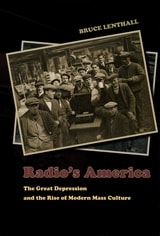
Radio's America
The Great Depression and the Rise of Modern Mass CultureBruce Lenthall
University of Chicago Press, 2007
Orson Welles’s greatest breakthrough into the popular consciousness occurred in 1938, three years before Citizen Kane, when his War of the Worlds radio broadcast succeeded so spectacularly that terrified listeners believed they were hearing a genuine report of an alien invasion—a landmark in the history of radio’s powerful relationship with its audience. In Radio’s America, Bruce Lenthall documents the enormous impact radio had on the lives of Depression-era Americans and charts the formative years of our modern mass culture.
Many Americans became alienated from their government and economy in the twentieth century, and Lenthall explains that radio’s appeal came from its capability to personalize an increasingly impersonal public arena. His depictions of such figures as proto-Fascist Charles Coughlin and medical quack John Brinkley offer penetrating insight into radio’s use as a persuasive tool, and Lenthall’s book is unique in its exploration of how ordinary Americans made radio a part of their lives. Television inherited radio’s cultural role, and as the voting tallies for American Idol attest, broadcasting continues to occupy a powerfully intimate place in American life. Radio’s America reveals how the connections between power and mass media began.
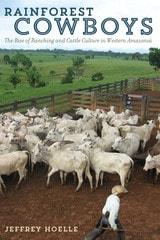
Rainforest Cowboys
The Rise of Ranching and Cattle Culture in Western AmazoniaBy Jeffrey Hoelle
University of Texas Press, 2015
This ambitious interdisciplinary study is the first to examine the interlinked economic uses and cultural practices and beliefs surrounding cattle in Western Amazonia, where cattle raising is at the center of debates about economic development and environ
Winner, Brazil Section Book Award, Latin American Studies Association, 2016
The opening of the Amazon to colonization in the 1970s brought cattle, land conflict, and widespread deforestation. In the remote state of Acre, Brazil, rubber tappers fought against migrant ranchers to preserve the forest they relied on, and in the process, these “forest guardians” showed the world that it was possible to unite forest livelihoods and environmental preservation. Nowadays, many rubber tappers and their children are turning away from the forest-based lifestyle they once sought to protect and are becoming cattle-raisers or even caubois (cowboys). Rainforest Cowboys is the first book to examine the social and cultural forces driving the expansion of Amazonian cattle raising in all of their complexity.
Drawing on eighteen months of fieldwork, Jeffrey Hoelle shows how cattle raising is about much more than beef production or deforestation in Acre, even among “carnivorous” environmentalists, vilified ranchers, and urbanites with no land or cattle. He contextualizes the rise of ranching in relation to political economic structures and broader meanings to understand the spread of “cattle culture.” This cattle-centered vision of rural life builds on local experiences and influences from across the Americas and even resembles East African cultural practices. Written in a broadly accessible and interdisciplinary style, Rainforest Cowboys is essential reading for a global audience interested in understanding the economic and cultural features of cattle raising, deforestation, and the continuing tensions between conservation and development in the Amazon.
Re-Enchanted
The Rise of Children's Fantasy Literature in the Twentieth CenturyMaria Sachiko Cecire
University of Minnesota Press, 2019
Why are so many people drawn to fantasy set in medieval, British-looking lands? This question has immediate significance for millions around the world: from fans of Lord of the Rings, Narnia, Harry Potter, and Game of Thrones to those who avoid fantasy because of the racist, sexist, and escapist tendencies they have found there. Drawing on the history and power of children’s fantasy literature, Re-Enchanted argues that magic, medievalism, and childhood hold the paradoxical ability to re-enchant modern life.
Focusing on works by authors such as J. R. R. Tolkien, C. S. Lewis, Susan Cooper, Philip Pullman, J. K. Rowling, and Nnedi Okorafor, Re-Enchanted uncovers a new genealogy for medievalist fantasy—one that reveals the genre to be as important to the history of English studies and literary modernism as it is to shaping beliefs across geographies and generations. Maria Sachiko Cecire follows children’s fantasy as it transforms over the twentieth and twenty-first centuries—including the rise of diverse counternarratives and fantasy’s move into “high-brow” literary fiction. Grounded in a combination of archival scholarship and literary and cultural analysis, Re-Enchanted argues that medievalist fantasy has become a psychologized landscape for contemporary explorations of what it means to grow up, live well, and belong. The influential “Oxford School” of children’s fantasy connects to key issues throughout this book, from the legacies of empire and racial exclusion in children’s literature to what Christmas magic tells us about the roles of childhood and enchantment in Anglo-American culture.
Re-Enchanted engages with critical debates around what constitutes high and low culture during moments of crisis in the humanities, political and affective uses of childhood and the mythological past, the anxieties of modernity, and the social impact of racially charged origin stories.
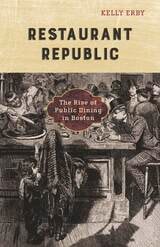
Restaurant Republic
The Rise of Public Dining in BostonKelly Erby
University of Minnesota Press, 2016
Before the 1820s, the vast majority of Americans ate only at home. As the nation began to urbanize and industrialize, home and work became increasingly divided, resulting in new forms of commercial dining.
In this fascinating book, Kelly Erby explores the evolution of such eating alternatives in Boston during the nineteenth century. Why Boston? Its more modest assortment of restaurants, its less impressive—but still significant—expansion in commerce and population, and its growing diversity made it more typical of the nation’s other urban centers than New York. Restaurants, clearly segmented along class, gender, race, ethnic, and other lines, helped Bostonians become more comfortable with deepening social stratification in their city and young republic even as the experience of eating out contributed to an emerging public consumer culture.
Restaurant Republic sheds light on how commercial dining both reflected and helped shape growing fragmentation along lines of race, class, and gender—from the elite Tremont House, which served fashionable French cuisine, to such plebeian and ethnic venues as oyster saloons and Chinese chop suey houses. The epilogue takes us to the opening, in 1929 near Boston, of the nation’s first Howard Johnson’s and that restaurant’s establishment as a franchise in the next decade. The result is a compelling story that continues to shape America.
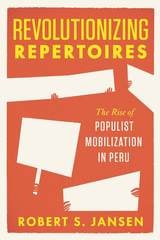
Revolutionizing Repertoires
The Rise of Populist Mobilization in PeruRobert S. Jansen
University of Chicago Press, 2017
Drawing on pragmatist theories of social action, Revolutionizing Repertoires sets out to examine what happens when the repertoire of practices available to political actors is dramatically reconfigured. Taking as his case study the development of a distinctively Latin American style of populist mobilization, Robert S. Jansen analyzes the Peruvian presidential election of 1931. He finds that, ultimately, populist mobilization emerged in the country at this time because newly empowered outsiders recognized the limitations of routine political practice and understood how to modify, transpose, invent, and recombine practices in a whole new way. Suggesting striking parallels to the recent populist turn in global politics, Revolutionizing Repertoires offers new insights not only to historians of Peru but also to scholars of historical sociology and comparative politics, and to anyone interested in the social and political origins of populism.

Rise Of Fashion
A ReaderDaniel Leonhard Purdy
University of Minnesota Press, 2004
A remarkable anthology of key writings that parallels the history of fashion with modern life
Writing more than a century before Vogue, no less a figure than G. W. F. Hegel reviewed the fashion of his day and found it wanting because, in becoming outmoded so quickly, it drew attention away from the timeless beauty of the human form. And Hegel is not unique among philosophers in his interest in fashion’s role; for more than 250 years, social thinkers have considered fashion—its transitive nature, the conformity it inspires, the vast range of its influence—as a defining feature of modern life.
In The Rise of Fashion, Daniel Leonhard Purdy brings together key writings from the Enlightenment to the twentieth century that explore fashion as the ultimate expression of modernity. Making available many previously untranslated or otherwise unfamiliar works from French, German, and English, Purdy establishes an extraordinary lineage of fashion commentary dating back to Mandeville and Voltaire, which laid the groundwork for the writings on commodity culture of Adorno, Benjamin, and the Frankfurt School. From critiques of aristocratic excess to accounts of fashion’s influence on our ideals of masculinity or femininity, from the figure of the dandy and the eroticism of clothing to the class politics of fashion, this landmark reader includes works by philosophers (Carlyle, Rousseau, Georg Simmel) and social theorists (Herbert Spencer, Veblen), as well as writers (Goethe, Baudelaire, Mallarmé, Wilde) and critics (Karl Kraus, Adolf Loos, Simone de Beauvoir).Collecting and contextualizing many of the earliest and most significant formulations of fashion theory, The Rise of Fashion provocatively examines the proposition that to be modern is to be fashionable.
Rise Of Social Theory
Johan Heilbron
University of Minnesota Press, 1995

Rise Of The Silver Queen
Liston E. Leyendecke
University Press of Colorado, 2005
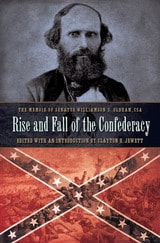
Rise and Fall of the Confederacy
The Memoir of Senator Williamson S. Oldham, CSAEdited & Intro by Clayton E. Jewett
University of Missouri Press, 2006
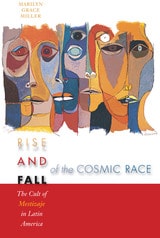
Rise and Fall of the Cosmic Race
The Cult of Mestizaje in Latin AmericaBy Marilyn Grace Miller
University of Texas Press, 2004
Latin America is characterized by a uniquely rich history of cultural and racial mixtures known collectively as mestizaje. These mixtures reflect the influences of indigenous peoples from Latin America, Europeans, and Africans, and spawn a fascinating and often volatile blend of cultural practices and products. Yet no scholarly study to date has provided an articulate context for fully appreciating and exploring the profound effects of distinct local invocations of syncretism and hybridity. Rise and Fall of the Cosmic Race fills this void by charting the history of Latin America's experience of mestizaje through the prisms of literature, the visual and performing arts, social commentary, and music.
In accessible, jargon-free prose, Marilyn Grace Miller brings to life the varied perspectives of a vast region in a tour that stretches from Mexico and the Caribbean to Brazil, Ecuador and Argentina. She explores the repercussions of mestizo identity in the United States and reveals the key moments in the story of Latin America's cult of synthesis. Rise and Fall of the Cosmic Race examines the inextricable links between aesthetics and politics, and unravels the threads of colonialism woven throughout national narratives in which mestizos serve as primary protagonists.
Illuminating the ways in which regional engagements with mestizaje represent contentious sites of nation building and racial politics, Miller uncovers a rich and multivalent self-portrait of Latin America's diverse populations.
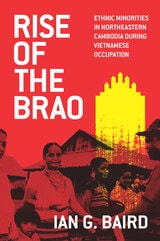
Rise of the Brao
Ethnic Minorities in Northeastern Cambodia during Vietnamese OccupationIan G. Baird
University of Wisconsin Press, 2022
Based on detailed research and interviews, Ian G. Baird documents this golden age of the Brao, including the voices of those who are too frequently omitted from official records. Rise of the Brao challenges scholars to look beyond the prevailing historical narratives to consider the nuanced perspectives of peripheral or marginal regions.

Rise of the Dragon
Readings from Nature on the Chinese Fossil RecordEdited by Henry Gee
University of Chicago Press, 2002
Perhaps the best known of these new Chinese fossils are the famous feathered dinosaurs from Liaoning Province, which may help end one of the most intense debates in paleontology—whether birds evolved from dinosaurs. But other finds have been just as spectacular, such as the minutely preserved (to the cellular level) animal embryos of the 670 million-year-old Duoshantuo phosphorites, or the world's oldest known fish, from the Chengjiang formation in southwestern Yunnan Province.
Rise of the Dragon makes descriptions and detailed discussions of these important finds available in one convenient volume for paleontologists and serious fossil fans.
Rise to the Challenge
A Memoir of Politics, Leadership, and LoveJohnson
University of Minnesota Press, 2024
The inspiring life story of Minnesota’s first woman lieutenant governor: breaking political ground, navigating patriarchal tradition, and persevering through great personal loss
Marking a milestone for women in state government, Marlene M. Johnson became Minnesota’s first woman lieutenant governor under Rudy Perpich’s gubernatorial administration in January 1983. That same year, she met her husband, Peter, and their deeply loving relationship profoundly sustained her for twenty-seven years. Rise to the Challenge weaves these personal and professional stories together in a courageous portrait of dedication and leadership.
Growing up in rural Minnesota, Johnson began organizing and advocating for change early, beginning with a campaign to introduce foreign languages into her high school curriculum. Pursuing a deeply felt commitment to improving the lives of others, she continued to sharpen her leadership skills throughout her life, participating in activist work in college, cofounding organizations to support women entrepreneurs and politicians, and eventually running an international education nonprofit.
A stalwart supporter, her husband gave Marlene strength and encouragement to face the challenges of the political landscape and its gender biases. Then, in 2010, he suffered a traumatic brain injury that would change both of their lives. Learning how to be a medical advocate and, eventually, facing the sorrow of Peter’s death, Marlene relied on the hard-fought resilience and belief in herself that Peter had helped her to develop.
A story of learning and leadership in politics, business, and public service, Rise to the Challenge is a moving portrayal of spirit, perseverance, and grace in the face of daunting personal challenges, supported by unwavering faith in the public good.
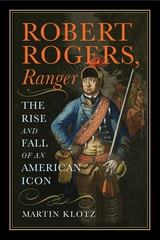
Robert Rogers, Ranger
The Rise and Fall of an American IconMartin Klotz
Westholme Publishing, 2026
Robert Rogers, Ranger: The Rise and Fall of an American Icon by Martin Klotz is a fresh look at the life of this famous, yet highly flawed man. Rogers undeniably had great personal strengths. He was brave nearly to the point of fearlessness. He was physically robust, always the one to cover the retreat, carry the wounded, or go for help when no one else could carry on. He was an intrepid explorer who wrote with eloquence about the splendors of the American frontier. He was bold and unconventional, good at thinking outside the box. He was an outstanding scout and intelligence gatherer who provided invaluable service to a British army inexperienced in woodland warfare. At the same time Rogers had enormous weaknesses that undermined his ability to lead effectively. His boldness was never tempered by judgment, and he was prone to grandiose schemes that came to nothing or, worse, to disaster. His constant self-promotion—including embellishing and lying about his battlefield successes—contributed to his popularity but damaged his reputation with peers and superiors. He succumbed to alcoholism and gambling, was profligate, especially with money—his debts were enormous—and routinely skirted the edges of the law. Rogers never found a comfortable place in America. Instead, his aristocratic patrons in London, who knew him mostly from his own self-description, gave him his most valuable opportunities, including commanding an important military and trading center on the colonial frontier and establishing the Queen’s Rangers to fight alongside Crown forces during the Revolution. But when the British cause failed in America, Rogers became an anathema on both sides of the Atlantic. A fascinating inquiry into an eighteenth-century life, Robert Rogers, Ranger presents this American legend as he lived, crossing the line between fame and misfortune.
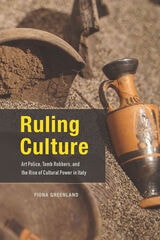
Ruling Culture
Art Police, Tomb Robbers, and the Rise of Cultural Power in ItalyFiona Greenland
University of Chicago Press, 2021
In 2006, the then-president of Italy declared his country to be “the world’s greatest cultural power.” With Ruling Culture, Fiona Greenland traces how Italy came to wield such extensive legal authority, global power, and cultural influence—from the nineteenth century unification of Italy and the passage of novel heritage laws, to current battles with the international art market. Today, Italy’s belief in its cultural superiority is evident through interactions between citizens, material culture, and the state—crystallized in the Art Squad, the highly visible military-police art protection unit. Greenland reveals the contemporary actors in this tale, taking a close look at the Art Squad and state archaeologists on one side and unauthorized excavators, thieves, and smugglers on the other. Drawing on years in Italy interviewing key figures and following leads, Greenland presents a multifaceted story of art crime, cultural diplomacy, and struggles between international powers.