Results by title
50 books match the query 'Roots' and 10 start with r

Radical Collections
Re-examining the roots of collections, practices and information professionsEdited by Jordan Landes
University of London Press, 2018

Roots and Fruits of a Powerful Peace Testimony
Bruce Birchard
QuakerPress, 2004
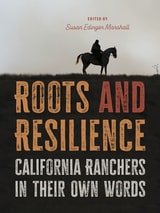
Roots and Resilience
California Ranchers in Their Own WordsSusan Edinger Marshall
University of Nevada Press, 2024
The editors have drawn together these stories, poems, and musings from ranchers across the state, calling upon real people to share their experiences, and beckoning readers to find a shared understanding concerning often divisive land-use topics. Many perspectives are considered, including those of transplanted suburbanites to seventh-generation heirs. Notably, many women’s writings are including in the book, offering unique and valuable perspectives on ranching culture.
Roots and Resilience gives voice to California’s Indigenous, Mexican American, Basque and other European American ranchers, asking the reader to find common ground in the name of land stewardship and conservation.
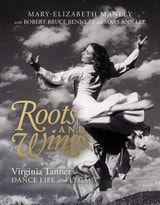
Roots and Wings
Virginia Tanner's Dance Life and LegacyMary-Elizabeth Manley with Mary Ann Lee and Robert Bruce Bennett
University of Utah Press, 2023
Roots and Wings recounts Virginia Tanner’s remarkable career as a dancer, artist, and educator. From her early experiences assisting at Evelyn Davis’s dance school in Washington, DC, to the creation of the Tanner Dance Program at the University of Utah, her influence on the field was pervasive. She channeled children’s energy, sharpened their senses, and encouraged youthful, authentic dance expression.
Manley’s extensive archival research and personal interviews depict Virginia Tanner as an innovative dance artist and ambitious leader in the field of modern dance. While exploring Tanner’s story, Roots and Wings emphasizes the value of unique instructional methodologies for teaching dance to young children and the vital role the arts play in children’s lives. Tanner’s work endures, continuing to echo with sensitivity and spirit in young dancers throughout the United States and abroad.

Roots of Disorder
Race and Criminal Justice in the American South, 1817-80Christopher Waldrep
University of Illinois Press, 1998
"Delivers what no other study has yet attempted. . . . Waldrep's book is one of the first systematically to use local trial data to explore questions of society and culture." -- Vernon Burton, author of "A Gentleman and an Officer": A Social and Military History of James B. Griffin's Civil War
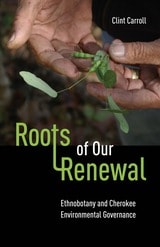
Roots of Our Renewal
Ethnobotany and Cherokee Environmental GovernanceClint Carroll
University of Minnesota Press, 2015
Honorable Mention: Labriola Center American Indian National Book Award
In Roots of Our Renewal, Clint Carroll tells how Cherokee people have developed material, spiritual, and political ties with the lands they have inhabited since removal from their homelands in the southeastern United States. Although the forced relocation of the late 1830s had devastating consequences for Cherokee society, Carroll shows that the reconstituted Cherokee Nation west of the Mississippi eventually cultivated a special connection to the new land—a connection that is reflected in its management of natural resources.
Until now, scant attention has been paid to the interplay between tribal natural resource management programs and governance models. Carroll is particularly interested in indigenous environmental governance along the continuum of resource-based and relationship-based practices and relates how the Cherokee Nation, while protecting tribal lands, is also incorporating associations with the nonhuman world. Carroll describes how the work of an elders’ advisory group has been instrumental to this goal since its formation in 2008.
An enrolled citizen of the Cherokee Nation, Carroll draws from his ethnographic observations of Cherokee government–community partnerships during the past ten years. He argues that indigenous appropriations of modern state forms can articulate alternative ways of interacting with and “governing” the environment.

Roots of Reform
Farmers, Workers, and the American State, 1877-1917Elizabeth Sanders
University of Chicago Press, 1999
Based on new evidence from legislative records and other sources, Sanders shows that this tenuous alliance of "producers versus plutocrats" shaped early regulatory legislation, remained powerful through the populist and progressive eras, and developed a characteristic method of democratic state expansion with continued relevance for subsequent reform movements.
Roots of Reform is essential reading for anyone interested in this crucial period of American political development.
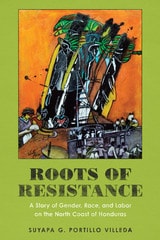
Roots of Resistance
A Story of Gender, Race, and Labor on the North Coast of HondurasSuyapa G. Portillo Villeda
University of Texas Press, 2021
Winner of the 2021 Sara A. Whaley Prize of the National Women’s Studies Association (NWSA)
A first-of-its-kind study of the working-class culture of resistance on the Honduran North Coast and the radical organizing that challenged US capital and foreign intervention at the onset of the Cold War, examining gender, race, and place.
On May 1, 1954, striking banana workers on the North Coast of Honduras brought the regional economy to a standstill, invigorating the Honduran labor movement and placing a series of demands on the US-controlled banana industry. Their actions ultimately galvanized a broader working-class struggle and reawakened long-suppressed leftist ideals. The first account of its kind in English, Roots of Resistance explores contemporary Honduran labor history through the story of the great banana strike of 1954 and centers the role of women in the narrative of the labor movement.
Drawing on extensive firsthand oral history and archival research, Suyapa G. Portillo Villeda examines the radical organizing that challenged US capital and foreign intervention in Honduras at the onset of the Cold War. She reveals the everyday acts of resistance that laid the groundwork for the 1954 strike and argues that these often-overlooked forms of resistance should inform analyses of present-day labor and community organizing. Roots of Resistance highlights the complexities of transnational company hierarchies, gender and race relations, and labor organizing that led to the banana workers' strike and how these dynamics continue to reverberate in Honduras today.
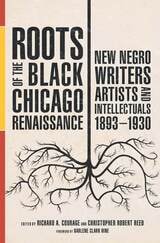
Roots of the Black Chicago Renaissance
New Negro Writers, Artists, and Intellectuals, 1893-1930Edited by Richard A. Courage and Christopher Robert Reed
University of Illinois Press, 2020
Richard A. Courage and Christopher Robert Reed have brought together essays that explore the intersections in the backgrounds, education, professional affiliations, and public lives and achievements of black writers, journalists, visual artists, dance instructors, and other creators working in the late nineteenth and early twentieth centuries. Organized chronologically, the chapters unearth transformative forces that supported the emergence of individuals and social networks dedicated to work in arts and letters. The result is an illuminating scholarly collaboration that remaps African American intellectual and cultural geography and reframes the concept of urban black renaissance.
Contributors: Richard A. Courage, Mary Jo Deegan, Brenda Ellis Fredericks, James C. Hall, Bonnie Claudia Harrison, Darlene Clark Hine, John McCluskey Jr., Amy M. Mooney, Christopher Robert Reed, Clovis E. Semmes, Margaret Rose Vendryes, and Richard Yarborough

Roots of the Revival
American and British Folk Music in the 1950sRonald D. Cohen and Rachel Clare Donaldson
University of Illinois Press, 2014
After setting the stage with the work of music collectors in the nineteenth century, the authors explore the so-called recovery of folk music practices and performers by Alan Lomax and others, including journeys to and within the British Isles that allowed artists and folk music advocates to absorb native forms and facilitate the music's transatlantic exchange. Cohen and Donaldson place the musical and cultural connections of the twin revivals within the decade's social and musical milieu and grapple with the performers' leftist political agendas and artistic challenges, including the fierce debates over "authenticity" in practice and repertoire that erupted when artists like Harry Belafonte and the Kingston Trio carried folk into the popular music mainstream.
From work songs to skiffle, from the Weavers in Greenwich Village to Burl Ives on the BBC, Roots of the Revival offers a frank and wide-ranging consideration of a time, a movement, and a transformative period in American and British pop culture.