Results by title
137 books match the query 'Science & Technology' and 5 start with r
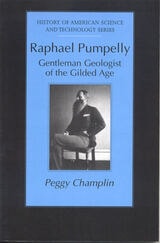
Raphael Pumpelly
Gentleman Geologist of the Gilded AgePeggy Champlin
University of Alabama Press, 1994
A definitive biography illuminating the scientific, industrial, and exploratory contributions of America’s pioneering economic geologist.
Raphael Pumpelly: Gentleman Geologist of the Gilded Age provides an excellent opportunity to look at the development of the profession of geology during the years spanned by his career, from 1860 to the early twentieth century. In this period, the practical applications of geology to resource development were of major importance, but geologists were also investigating new subjects, such as petrology, geomorphology, glaciology, and structural geology. These investigations resulted in an explosion of knowledge in these areas and in the growth of subdisciplines. Pumpelly did research in these fields but like others of his generation did not limit himself to any one of them; he remained a generalist in a time of increasing specialization, a transitional figure in a period of rapid change.

Reading Galileo's Letters
Experiments in Friendship, Knowledge, and CommunityEdited by Paula Findlen and Hannah Marcus
University of Chicago Press, 2027
Essays by many of the foremost experts on Galileo offer an interdisciplinary approach to the legendary scientist’s correspondence.
The Tuscan mathematician, physicist, and astronomer Galileo Galilei (1564–1642) is one of history’s most iconic and controversial figures. Letters form the backbone of what one early Galileo scholar called the “private Galileo,” and his correspondence is indeed a record of his family and friendships; his intellectual evolution; his professional interactions with other scientific figures; and his relations with patrons, brokers, and publishers. Last, but hardly least, his letters are a unique cultural artifact of Galileo the writer and master of vernacular prose.
Galileo’s correspondence crossed Europe in public mail pouches, through diplomatic messengers, and was written in code. Today, there are 3,272 surviving letters to or from Galileo and his many friends, family members, disciples, and rivals across Europe. This volume examines these letters as an essential aspect of Galileo’s personal and scientific career. They are what the editors call his “experiments in friendship,” which enabled, abetted, and often served as early drafts of the theories in his published works. This collaborative volume brings together different approaches, case studies, and forms of expertise—historical and literary, intellectual and material, archival and digital. It is a must-read for all Galileo enthusiasts and anyone interested in how to make the most of a rich record of correspondence.
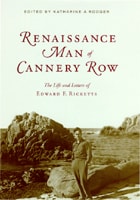
Renaissance Man of Cannery Row
The Life and Letters of Edward F. RickettsEdward F. Ricketts, edited by Katharine A. Rodger
University of Alabama Press, 2002
This portrait of one of John Steinbeck's closest friends illuminates the life and work of a figure central to the development of scientific and literary thought in the 20th century.
Marine biologist Edward F. Ricketts is perhaps best known as the inspiration for John Steinbeck's most empathic literary characters Doc in Cannery Row, Slim in Of Mice and Men, Jim Casy in The Grapes of Wrath, and Lee in East of Eden. The correspondence of this accomplished scientist, writer, and philosopher reveals the influential exchange of ideas he shared with such prominent thinkers and artists as Henry Miller, Joseph Campbell, Ellwood Graham, and James Fitzgerald, in addition to Steinbeck, all of whom were drawn to Ricketts's Monterey Bay laboratory, a haven of intellectual discourse and Bohemian culture in the 1930s and 1940s.
The 125 previously unpublished letters of this collection, housed at the Stanford University Library, document the broad range of Ricketts's interests and accomplishments during the last 12 and most productive years of his life. His handbook on Pacific marine life, Between Pacific Tides, is still in print, now in its fifth edition. The biologist's devotion to ecological conservation and his evolving philosophy of science as a cross-disciplinary, holistic pursuit led to the publication of The Sea of Cortez. Many of Ricketts's letters discuss his studies of the Pacific littoral and his theories of “phalanx” and transcendence. Epistles to family members, often tender and humorous, add dimension and depth to Steinbeck's mythologized depictions of Ricketts. Katharine A. Rodger has enriched the correspondence with an introductory biographical essay and a list of works cited.
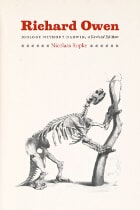
Richard Owen
Biology without DarwinNicolaas A. Rupke
University of Chicago Press, 2009
In the mid-1850s, no scientist in the British Empire was more visible than Richard Owen. Mentioned in the same breath as Isaac Newton and championed as Britain’s answer to France’s Georges Cuvier and Germany’s Alexander von Humboldt, Owen was, as the Times declared in 1856, the most “distinguished man of science in the country.” But, a century and a half later, Owen remains largely obscured by the shadow of the most famous Victorian naturalist of all, Charles Darwin. Publicly marginalized by his contemporaries for his critique of natural selection, Owen suffered personal attacks that undermined his credibility long after his name faded from history.
With this innovative biography, Nicolaas A. Rupke resuscitates Owen’s reputation. Arguing that Owen should no longer be judged by the evolution dispute that figured in only a minor part of his work, Rupke stresses context, emphasizing the importance of places and practices in the production and reception of scientific knowledge. Dovetailing with the recent resurgence of interest in Owen’s life and work, Rupke’s book brings the forgotten naturalist back into the canon of the history of science and demonstrates how much biology existed with, and without, Darwin
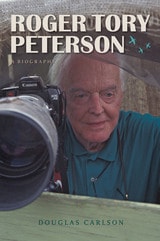
Roger Tory Peterson
A BiographyBy Douglas Carlson
University of Texas Press, 2007
Beginning with his 1934 Field Guide to the Birds, Roger Tory Peterson introduced literally millions of people to the pleasures of observing birds in the wild. His field guide, which has gone through five editions and sold more than four million copies, fostered an appreciation for the natural world that set the stage for the contemporary environmental movement. When Rachel Carson's Silent Spring sounded a warning about the threat to birds and their habitats in the 1960s, the Peterson field guides had already prepared the public and the scientific community to heed the warning and fight to save habitat and protect endangered species—a result that Peterson wholeheartedly approved.
In this authoritative, highly readable biography of Roger Tory Peterson (1908-1996), Douglas Carlson creates a fascinating portrait of the complex, often conflicted man behind the brand name. He describes how Peterson's obsession with birds began in boyhood and continued throughout a multifaceted career as a painter, writer, educator, environmentalist, and photographer. Carlson traces Peterson's long struggle to become both an accomplished bird artist and a scientific naturalist—competing goals that drove Peterson to work to the point of exhaustion and that also deprived him of many aspects of a normal personal life. Carlson also records Peterson's many lasting achievements, from the phenomenal success of the field guides, to the bird paintings that brought him renown as "the twentieth century's Audubon," to the establishment of the Roger Tory Peterson Institute to carry on his work in conservation and education.