Results by title
19 books match the query 'Page'
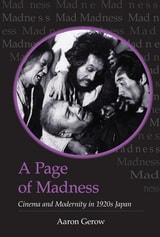
A Page of Madness
Cinema and Modernity in 1920s JapanAaron Gerow
University of Michigan Press, 2008
Beyond the Page
Poetry and Performance in Spanish AmericaJill S. Kuhnheim
University of Arizona Press, 2014
Jill S. Kuhnheim, looking at poetry and performance in Spanish America over time, has organized the book to begin with the early twentieth century and arrive at the present day. She includes noteworthy poets and artists such as José Martí, Luis Palés Matos, Eusebia Cosme, Nicomedes Santa Cruz, Pablo Neruda, César Vallejo, and Nicolás Guillén, as well as very recent artists whose performance work is not as well known. Offering fresh historical material and analysis, the author illuminates the relationship between popular and elite cultural activity in Spanish America and reshapes our awareness of the cultural work poetry has done in the past and may do in the future, particularly given the wide array of technological possibilities. The author takes a broad view of American cultural production and creates a dialogue with events and criticism from the United States as well as from Spanish American traditions.
Oral and written elements in poetry are complementary, says Kuhnheim, not in opposition, and they may reach different audiences. As poetry enjoys a revival with modern media, performance is part of the new platform it spans, widening the kind of audience and expanding potential meanings.
Beyond the Page will appeal to readers with an interest in poetry and performance, and in how poetry circulates beyond the page. With an international perspective and dynamic synthesis, the book offers an innovative methodology and theoretical model for humanists beyond the immediate field, reaching out to readers interested in the intersection between poetry and identity or the juncture of popular-elite and oral-written cultures.
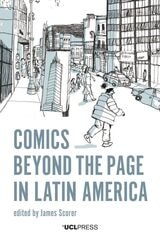
Comics Beyond the Page in Latin America
Edited by James Scorer
University College London, 2019
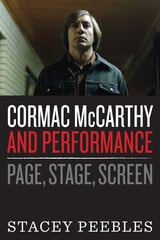
Cormac McCarthy and Performance
Page, Stage, ScreenBy Stacey Peebles
University of Texas Press, 2017
Cormac McCarthy is renowned as the author of popular and acclaimed novels such as Blood Meridian, All the Pretty Horses, and The Road. Throughout his career, however, McCarthy has also invested deeply in writing for film and theater, an engagement with other forms of storytelling that is often overlooked. He is the author of five screenplays and two plays, and he has been significantly involved with three of the seven film adaptations of his work. In this book, Stacey Peebles offers the first extensive overview of this relatively unknown aspect of McCarthy’s writing life, including the ways in which other artists have interpreted his work for the stage and screen.
Drawing on many primary sources in McCarthy’s recently opened archive, as well as interviews, Peebles covers the 1977 televised film The Gardener’s Son; McCarthy’s unpublished screenplays from the 1980s that became the foundation for his Border Trilogy novels and No Country for Old Men; various successful and unsuccessful productions of his two plays; and all seven film adaptations of his work, including John Hillcoat’s The Road (2009) and the Coen brothers’ Oscar-winning No Country for Old Men (2007). Emerging from this narrative is the central importance of tragedy—the rich and varied portrayals of violence and suffering and the human responses to them—in all of McCarthy’s work, but especially his writing for theater and film.

Dancing across the Page
Narrative and Embodied Ways of KnowingKaren Barbour
Intellect Books, 2011
An innovative exploration of understanding through dance, Dancing across the Page draws on the frameworks of phenomenology, feminism, and postmodernism to offer readers an understanding of performance studies that is grounded in personal narrative and lived experience. Through accounts of contemporary dance making, improvisation, and dance education, Karen Barbour explores a diversity of themes, including power; activism; and cultural, gendered, and personal identity. An intimate yet rigorous investigation of creativity in dance, Dancing across the Page emphasizes embodied knowledge and imagination as a basis for creative action in the world.
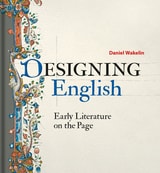
Designing English
Early Literature on the PageDaniel Wakelin
Bodleian Library Publishing, 2017
Working beyond the traditions established for Latin, scribes of English needed to be more inventive, using each book as an opportunity to redesign. Surveying eight centuries of graphic design in manuscripts and inscriptions, Designing English focuses on the craft, agency, and intentions of scribes, painters, and engravers from the Anglo-Saxon to the early Tudor periods. The book examines format, layout, and decoration, as well as bilingual manuscripts and oral recitations, weighing the balance of ingenuity and copying, imagination and practicality, behind early English book design. With over ninety illustrations, drawn especially from the holdings of the Bodleian Library, Designing English gives a comprehensive overview of English books and other material texts across the Middle Ages.
From Page to Performance
Essays in Early English DramaJohn A. Alford
Michigan State University Press, 1995
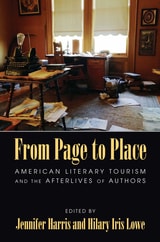
From Page to Place
American Literary Tourism and the Afterlives of AuthorsJennifer Harris
University of Massachusetts Press, 2017
Literary tourism has existed in the United States since at least the early nineteenth century, and now includes sites in almost every corner of the country. From Page to Place examines how Americans have taken up this form of tourism, offering an investigation of the places and practices of literary tourism from literary scholars, historians, tour guides, and collectors. The essays here begin to trace for the first time the histories of some of these sites, the rituals associated with literary tourism, and the ways readers and visitors consume popular literature through touristic endeavors.
In addition to the editors, contributors include Rebecca Rego Barry, Susann Bishop, Ben de Bruyn, Erin Hazard, Caroline Hellman, Michelle McClellan, Mara Scanlon, and Klara-Stephanie Szlezák.

It's a Print!
Detective Fiction from Page to ScreenUniversity of Wisconsin Press, 0
Latinx Teens
U.S. Popular Culture on the Page, Stage, and ScreenTrevor Boffone and Cristina Herrera
University of Arizona Press, 2022
In this exciting new book, Trevor Boffone and Cristina Herrera explore the diverse ways that contemporary mainstream film, television, theater, and young adult literature invokes, constructs, and interprets adolescent Latinidad. Latinx Teens shows how coming-of-age Latinx representation is performed in mainstream media, and how U.S. audiences consume Latinx characters and stories. Despite the challenges that the Latinx community face in both real and fictional settings, Latinx teens in pop culture forge spaces that institutionalize Latinidad. Teen characters make Latinx adolescence mainstream and situate teen characters as both in and outside their Latinx communities and U.S. mainstream culture, conveying the complexities of “fitting in,” and refusing to fit in all at the same time.
Fictional teens such as Spider-Man’s Miles Morales, I Am Not Your Perfect Mexican Daughter’s Julia Reyes, Party of Five’s Acosta siblings, and In the Heights’s Nina Rosario comprise a growing body of pop culture media that portray young Latinxs as three-dimensional individuals who have agency, authenticity, and serious charisma. Teenagers and young adults have always had the power to manifest social change, and this book acknowledges, celebrates, and investigates how Latinx teens in popular culture take on important current issues.
With a dynamic interdisciplinary approach, Latinx Teens explores how Latinxs on the cusp of adulthood challenge, transform, expand, and reimagine Latinx identities and their relationships to mainstream U.S. popular culture in the twenty-first century.
The book makes a critical intervention into Latinx studies, youth studies, and media cultures. Students and scholars alike will benefit from the book’s organization, complete with chapters that focus on specific mediums and conclude with suggestions for further reading and viewing. As the first book that specifically examines Latinx adolescence in popular culture, Latinx Teens insists that we must privilege the stories of Latinx teenagers in television, film, theater, and literature to get to the heart of Latinx popular culture. Exploring themes around representation, identity, gender, sexuality, and race, the works explored in this groundbreaking volume reveal that there is no single way to be Latinx, and show how Latinx youth are shaping the narrative of the Latinx experience for a more inclusive future.
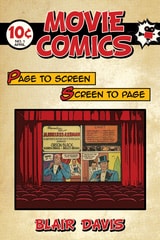
Movie Comics
Page to Screen/Screen to PageDavis, Blair
Rutgers University Press, 2017
Page to Stage
The Craft of AdaptationVincent Murphy
University of Michigan Press, 2013
At last, for those who adapt literature into scripts, a how-to book that illuminates the process of creating a stageworthy play. Page to Stage describes the essential steps for constructing adaptations for any theatrical venue, from the college classroom to a professionally produced production. Acclaimed director Vincent Murphy offers students in theater, literary studies, and creative writing a clear and easy-to-use guidebook on adaptation. Its step-by-step process will be valuable to professional theater artists as well, and for script writers in any medium. Murphy defines six essential building blocks and strategies for a successful adaptation, including theme, dialogue, character, imagery, storyline, and action. Exercises at the end of each chapter lead readers through the transformation process, from choosing their material to creating their own adaptations. The book provides case studies of successful adaptations, including The Grapes of Wrath (adaptation by Frank Galati) and the author's own adaptations of stories by Samuel Beckett and John Barth. Also included is practical information on building collaborative relationships, acquiring rights, and getting your adaptation produced.
Peculiar Portrayals
Mormons on the Page, the Stage and the ScreenMark T Decker
Utah State University Press, 2010
In a time when Mormons appear to have larger roles in everything from political conflict to television shows and when Mormon-related topics seem to show up more frequently in the news, eight scholars take a close look at Mormonism in popular media: film, television, theater, and books.
Some contributors examine specific works, including the Tony-winning play Angels in America, the hit TV series Big Love, and the bestselling books Under the Banner of Heaven: A Story of Violent Faith and The Miracle Life of Edgar Mint. Others consider the phenomena of Mormon cinema and Mormon fiction; the use of the Mormon missionary as a stock character in films; and the noticeably prominent presence of Mormons in reality television shows.
Poetry On and Off the Page
Essays for Emergent OccasionsMarjorie Perloff
Northwestern University Press, 1998
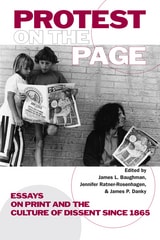
Protest on the Page
Essays on Print and the Culture of Dissent since 1865Edited by James L. Baughman, Jennifer Ratner-Rosenhagen, and James P. Danky
University of Wisconsin Press, 2015
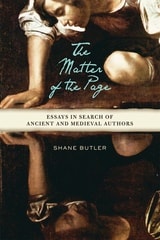
The Matter of the Page
Essays in Search of Ancient and Medieval AuthorsShane Butler
University of Wisconsin Press, 2010
Ancient and medieval literary texts often call attention to their existence as physical objects. Shane Butler helps us to understand why. Arguing that writing has always been as much a material struggle as an intellectual one, The Matter of the Page offers timely lessons for the digital age about how creativity works and why literature moves us.
Butler begins with some considerations about the materiality of the literary text, both as a process (the draft) and a product (the book), and he traces the curious history of “the page” from scroll to manuscript codex to printed book and beyond. He then offers a series of unforgettable portraits of authors at work: Thucydides struggling to describe his own diseased body; Vergil ready to burn an epic poem he could not finish; Lucretius wrestling with words even as he fights the madness that will drive him to suicide; Cicero mesmerized by the thought of erasing his entire career; Seneca plumbing the depths of the soul in the wax of his tablets; and Dhuoda, who sees the book she writes as a door, a tunnel, a womb. Butler reveals how the work of writing transformed each of these authors into his or her own first reader, and he explains what this metamorphosis teaches us about how we too should read.
All Greek and Latin quotations are translated into English and technical matters are carefully explained for general readers, with scholarly details in the notes.
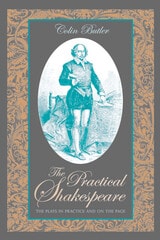
The Practical Shakespeare
The Plays in Practice and on the PageColin Butler
Ohio University Press, 2005
A comprehensive treatment of Shakespeare’s plays, The Practical Shakespeare: The Plays in Practice and on the Page illuminates for a general audience how and why the plays work so well.
Noting in detail the practical and physical limitations the Bard faced as he worked out the logistics of his plays, Colin Butler demonstrates how Shakespeare incorporated those limitations and turned them to his advantage: his management of entrances and exits; his characterization techniques; his handling of scenes off-stage; his control of audience responses; his organization of major scenes; and his use of prologues and choruses. A different aspect of the plays is covered in each chapter.
Butler draws most of his examples from mainstream plays, such as Macbeth, Othello, and Much Ado about Nothing. He brings special focus to A Midsummer Night’s Dream, which is treated as one of Shakespeare’s most important plays. Butler supports his major points with quotations, so readers can understand an issue even if they are unfamiliar with the particular play being discussed. The author also cross-references the use of dramatic devices in the plays, increasing the reader’s enjoyment and understanding of Shakespeare’s achievements.
Clear, jargon-free, easy-to-use, and comprehensive, The Practical Shakespeare looks at stagecraft and playwriting as conduits for students, teachers, and general audiences to engage with, understand, and appreciate the genius of Shakespeare.
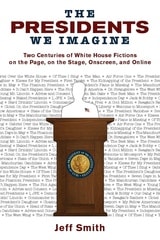
The Presidents We Imagine
Two Centuries of White House Fictions on the Page, on the Stage, Onscreen, and OnlineJeff Smith
University of Wisconsin Press, 2009
In The Presidents We Imagine, Jeff Smith examines the presidency’s ever-changing place in the American imagination. Ranging across different media and analyzing works of many kinds, some familiar and some never before studied, he explores the evolution of presidential fictions, their central themes, the impact on them of new and emerging media, and their largely unexamined role in the nation’s real politics.
Smith traces fictions of the presidency from the plays and polemics of the eighteenth century—when the new office was born in what Alexander Hamilton called “the regions of fiction”—to the digital products of the twenty-first century, with their seemingly limitless user-defined ways of imagining the world’s most important political figure. Students of American culture and politics, as well as readers interested in political fiction and film, will find here a colorful, indispensable guide to the many surprising ways Americans have been “representing” presidents even as those presidents have represented them.
“Especially timely in an era when media image-mongering increasingly shapes presidential politics.”—Paul S. Boyer, series editor
“Smith's understanding of the sociopolitical realities of US history is impressive; likewise his interpretations of works of literature and popular culture. . . .In addition to presenting thoughtful analysis, the book is also fun. Readers will enjoy encounters with, for example, The Beggar's Opera, Duck Soup, Edward Bellamy's Looking Backward, Philip Roth's Plot against America, the comedic campaigns of W. C. Fields for President and Pogo for President, and presidential fictions that continue up to the last President Bush. . . . His writing is fluid and conversational, but every page reveals deep understanding and focus. Summing Up: Highly recommended. All readers.”—CHOICE
Turning the Page
Storytelling as Activism in Queer Film and MediaCoon, David R
Rutgers University Press, 2018
Surprisingly, Hollywood is still clumsily grappling with its representation of sexual minorities, and LGBTQ filmmakers struggle to find a place in the mainstream movie industry. However, organizations outside the mainstream are making a difference, helping to produce and distribute authentic stories that are both by and for LGBTQ people.
Turning the Page introduces readers to three nonprofit organizations that, in very different ways, have each positively transformed the queer media landscape. David R. Coon takes readers inside In the Life Media, whose groundbreaking documentaries on the LGBTQ experience aired for over twenty years on public television stations nationwide. Coon reveals the successes of POWER UP, a nonprofit production company dedicated to mentoring filmmakers who can turn queer stories into fully realized features and short films. Finally, he turns to Three Dollar Bill Cinema, an organization whose film festivals help queer media find an audience and whose filmmaking camps for LGBTQ youth are nurturing the next generation of queer cinema.
Combining a close analysis of specific films and video programs with extensive interviews of industry professionals, Turning the Page demonstrates how queer storytelling in visual media has the potential to empower individuals, strengthen communities, and motivate social justice activism.