Results by title
4038 books match the query 'Social aspects' and 216 start with r

REDESIGNING WOMEN
Television after the Network EraAmanda D. Lotz
University of Illinois Press, 2010
Employing a cultural studies framework, Lotz examines whether the multiplicity of female-centric networks and narratives renders certain gender stereotypes uninhabitable, and how new dramatic portrayals of women have redefined narrative conventions. Redesigning Women also reveals how these changes led to narrowcasting, or the targeting of a niche segment of the overall audience, and the ways in which the new, sophisticated portrayals of women inspire sympathetic identification while also commodifying viewers into a marketable demographic for advertisers.
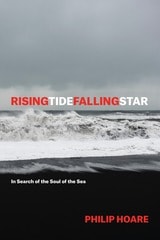
RISINGTIDEFALLINGSTAR
In Search of the Soul of the SeaPhilip Hoare
University of Chicago Press, 2018
Many of us visit the sea. Admire it. Even profess to love it. But very few of us live it. Philip Hoare does. He swims in the sea every day, either off the coast of his native Southampton or his adopted Cape Cod. He watches its daily and seasonal changes. He collects and communes with the wrack—both dead and never living—that it throws up on the shingle. He thinks with, at, through the sea.
All of which should prepare readers: RISINGTIDEFALLINGSTAR is no ordinary book. It mounts no straight-ahead argument. It hews to no single genre. Instead, like the sea itself, it moves, flows, absorbs, transforms. In its pages we find passages of beautiful nature and travel writing, lyrical memoir, seams of American and English history and much more. We find Thoreau and Melville, Bowie and Byron, John Waters and Virginia Woolf, all linked through a certain refusal to be contained, to be strictly defined—an openness to discovery and change. Running throughout is an air of elegy, a reminder that the sea is an ending, a repository of lost ships, lost people, lost ways of being. It is where we came from; for Hoare, it is where he is going.
“Every swim is a little death,” Hoare writes, “but it is also a reminder that you are alive.” Few books have ever made that knife’s edge so palpable. Read RISINGTIDEFALLINGSTAR. Let it settle into the seabed of your soul. You’ll never forget it.
Race & Archaeology Of Identity
Charles Orser Jr
University of Utah Press, 2002
Race is not a subject most people associate with archaeological research. Yet because of archaeologists’ interest in long time-spans they are perfectly positioned to investigate the “naturalness” of racial designations through time.
Race and the Archaeology of Identity brings together twelve of America’s most perceptive and talented historical archaeologists. Their focus is on the recent archaeological record—stretching geographically from Jamaica to northern Michigan; their time frame is from colonial days to the late nineteenth century; and their subjects range from frontier fur traders to Victorian city dwellers. Using textual and archaeological sources, contributors explore such topics as the connections of race to economics, the creation and maintenance of institutionalized poverty, the role of race in structuring and guiding intercultural connections, and the importance of race in creating and defining space.
Contributors explore such topics as the connections of race to economics, the role of race in structuring and guiding intercultural connections, and the importance of race in creating and defining space.
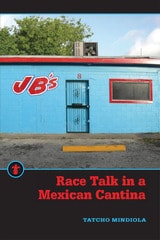
Race Talk in a Mexican Cantina
Tatcho Mindiola
Michigan State University Press, 2021
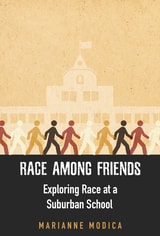
Race among Friends
Exploring Race at a Suburban SchoolModica, Marianne
Rutgers University Press, 2015
This intriguing volume focuses on a “racially friendly” suburban charter school called Excellence Academy, highlighting the ways that students and teachers think about race and act out racial identity. Modica finds that even in an environment where students of all racial backgrounds work and play together harmoniously, race affects the daily experiences of students and teachers in profound but unexamined ways. Some teachers, she notes, feared that talking about race in the classroom would open them to charges of racism, so they avoided the topic. And rather than generate honest and constructive conversations about race, student friendships opened the door for insensitive racial comments by whites, resentment and silence by blacks, and racially biased administrative practices. In the end, the school’s friendly environment did not promote—and may have hindered—serious discussion of race and racial inequity.
The desire to ignore race in favor of a “colorblind society,” Modica writes, has become an entrenched part of American culture. But as Race Among Friends shows, when race becomes a taboo subject, it has serious ramifications for students and teachers of all ethnic origins.
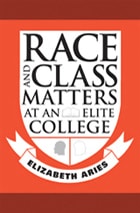
Race and Class Matters at an Elite College
Elizabeth Aries
Temple University Press, 2008
In Race and Class Matters at an Elite College, Elizabeth Aries provides a rare glimpse into the challenges faced by black and white college students from widely different class backgrounds as they come to live together as freshmen. Based on an intensive study Aries conducted with 58 students at Amherst College during the 2005-2006 academic year, this book offers a uniquely personal look at the day-to-day thoughts and feelings of students as they experience racial and economic diversity firsthand, some for the first time.
Through online questionnaires and face-to-face interviews, Aries followed four groups of students throughout their first year of college: affluent whites, affluent blacks, less financially advantaged whites from families with more limited education, and less financially advantaged blacks from the same background. Drawing heavily on the voices of these freshmen, Aries chronicles what they learned from racial and class diversity—and what colleges might do to help their students learn more.
Race and Environmental Justice in the Era of Climate Change and COVID-19
Tatiana Konrad
Michigan State University Press, 2025
Race and Performance after Repetition
Soyica Diggs Colbert, Douglas A. Jones Jr., and Shane Vogel, editors
Duke University Press, 2020
Contributors. Joshua Chambers-Letson, Soyica Diggs Colbert, Nicholas Fesette, Patricia Herrera, Jasmine Elizabeth Johnson, Douglas A. Jones Jr., Mario LaMothe, Daphne P. Lei, Jisha Menon, Tavia Nyong’o, Tina Post, Elizabeth W. Son, Shane Vogel, Catherine M. Young, Katherine Zien
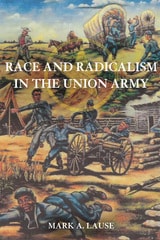
Race and Radicalism in the Union Army
Mark A. Lause
University of Illinois Press, 2013
In this compelling portrait of interracial activism, Mark A. Lause documents the efforts of radical followers of John Brown to construct a triracial portion of the Federal Army of the Frontier. Mobilized and inspired by the idea of a Union that would benefit all, black, Indian, and white soldiers fought side by side, achieving remarkable successes in the field. Against a backdrop of idealism, racism, greed, and the agonies and deprivations of combat, Lause examines links between radicalism and reform, on the one hand, and racialized interactions among blacks, Indians, and whites, on the other.
Lause examines how this multiracial vision of American society developed on the Western frontier. Focusing on the men and women who supported Brown in territorial Kansas, Lause examines the impact of abolitionist sentiment on relations with Indians and the crucial role of nonwhites in the conflict. Through this experience, Indians, blacks, and whites began to see their destinies as interdependent, and Lause discusses the radicalizing impact of this triracial Unionism upon the military course of the war in the upper Trans-Mississippi.
The aftermath of the Civil War destroyed much of the memory of the war in the West, particularly in the Indian Territory (now Oklahoma). The opportunity for an interracial society was quashed by the government's willingness to redefine the lucrative field of Indian exploitation for military and civilian officials and contractors.
Assessing the social interrelations, ramifications, and military impact of nonwhites in the Union forces, Race and Radicalism in the Union Army explores the extent of interracial thought and activity among Americans in this period and greatly expands the historical narrative on the Civil War in the West.
Race and Retail
Consumption across the Color LineBay, Mia
Rutgers University Press, 2015
Race and Role
The Mixed-Race Asian Experience in American DramaRena M. Heinrich
Rutgers University Press, 2023
Race and Role: The Mixed-Race Experience in American Drama traces the shifting identities of multiracial Asian figures in theater from the late-nineteenth century to the present day and explores the ways that mixed-race Asian identity transforms our understanding of race. Mixed-Asian playwrights harness theater’s generative power to enact performances of “double liminality” and expose the absurd tenacity with which society clings to a tenuous racial scaffolding.
Race and Science
Scientific Challenges to Racism in Modern AmericaPaul Farber
Oregon State University Press, 2009
Race at the Top
Asian Americans and Whites in Pursuit of the American Dream in Suburban SchoolsNatasha Warikoo
University of Chicago Press, 2022
The American suburb conjures an image of picturesque privilege: manicured lawns, quiet streets, and—most important to parents—high-quality schools. These elite enclaves are also historically white, allowing many white Americans to safeguard their privileges by using public schools to help their children enter top colleges. That’s changing, however, as Asian American professionals increasingly move into wealthy suburban areas to give their kids that same leg up for their college applications and future careers.
As Natasha Warikoo shows in Race at the Top, white and Asian parents alike will do anything to help their children get to the top of the achievement pile. She takes us into the affluent suburban East Coast school she calls “Woodcrest High,” with a student body about one-half white and one-third Asian American. As increasing numbers of Woodcrest’s Asian American students earn star-pupil status, many whites feel displaced from the top of the academic hierarchy, and their frustrations grow. To maintain their children’s edge, some white parents complain to the school that schoolwork has become too rigorous. They also emphasize excellence in extracurriculars like sports and theater, which maintains their children’s advantage.
Warikoo reveals how, even when they are bested, white families in Woodcrest work to change the rules in their favor so they can remain the winners of the meritocracy game. Along the way, Warikoo explores urgent issues of racial and economic inequality that play out in affluent suburban American high schools. Caught in a race for power and privilege at the very top of society, what families in towns like Woodcrest fail to see is that everyone in their race is getting a medal—the children who actually lose are those living beyond their town’s boundaries.

Race, Class, and Affirmative Action
Sigal Alon is an associate professor in the Department of Sociology and Anthropology at Tel-Aviv University.
Russell Sage Foundation, 2015
Alon finds that affirmative action at elite institutions in both countries is a key vehicle of mobility for disenfranchised students, whether they are racial and ethnic minorities or socioeconomically disadvantaged. Affirmative action improves their academic success and graduation rates and leads to better labor market outcomes. The beneficiaries of affirmative action in both countries thrive at elite colleges and in selective fields of study. As Alon demonstrates, they would not be better off attending less selective colleges instead.
Alon finds that Israel’s class-based affirmative action programs have provided much-needed entry slots at the elite universities to students from the geographic periphery, from high-poverty high schools, and from poor families. However, this approach has not generated as much ethnic diversity as a race-based policy would. By contrast, affirmative action policies in the United States have fostered racial and ethnic diversity at a level that cannot be matched with class-based policies. Yet, class-based policies would do a better job at boosting the socioeconomic diversity at these bastions of privilege. The findings from both countries suggest that neither race-based nor class-based models by themselves can generate broad diversity. According to Alon, the best route for promoting both racial and socioeconomic diversity is to embed the consideration of race within class-based affirmative action. Such a hybrid model would maximize the mobility benefits for both socioeconomically disadvantaged and minority students.
Race, Class, and Affirmative Action moves past political talking points to offer an innovative, evidence-based perspective on the merits and feasibility of different designs of affirmative action.
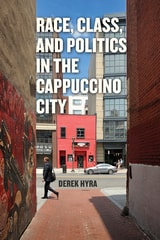
Race, Class, and Politics in the Cappuccino City
Derek S. Hyra
University of Chicago Press, 2017
Race, Class, and Politics in the Cappuccino City is an in-depth ethnography of this gilded ghetto. Derek S. Hyra captures here a quickly gentrifying space in which long-time black residents are joined, and variously displaced, by an influx of young, white, relatively wealthy, and/or gay professionals who, in part as a result of global economic forces and the recent development of central business districts, have returned to the cities earlier generations fled decades ago. As a result, America is witnessing the emergence of what Hyra calls “cappuccino cities.” A cappuccino has essentially the same ingredients as a cup of coffee with milk, but is considered upscale, and is double the price. In Hyra’s cappuccino city, the black inner-city neighborhood undergoes enormous transformations and becomes racially “lighter” and more expensive by the year.
Race, Ethnicity, and the COVID-19 Pandemic
Edited by Melvin E. Thomas, Loren M. Henderson, and Hayward Derrick Horton
University of Minnesota Press, 2022
To understand racial disparities in COVID-19 infections and deaths, we must first understand how they are linked to racial inequality. In the United States, the material advantages afforded by whiteness lead to lower rates of infections and deaths from COVID-19 when compared to the rates among Black, Latino, and Native American populations. Most experts point to differences in population density, underlying health conditions, and proportions of essential workers as the primary determinants in the levels of COVID-19 deaths.
The national response to the pandemic has laid bare the fundamentals of a racialized social structure. Assembled by a prestigious group of sociologists, this volume examines how particularly during the first year of COVID-19, the socioeconomic impact of the pandemic led to different and poorer outcomes for Black, Latino, and Native American populations. While color-blindness shaped national discussions on essential workers, charity, and differential mortality, minorities were overwhelmingly affected. The essays in this collection provide a mix of critical examination of the progress and direction of our COVID-19 response, personal accounts of the stark difference in care and outcomes for minorities throughout the United States, and offer recommendations to create a foundation for future response and research during the critical early days.
Race, Rhetoric, and Research Methods
Alexandria Lockett
University Press of Colorado, 2021
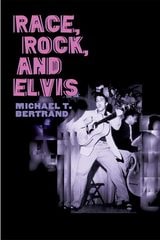
Race, Rock, and Elvis
Michael T. Bertrand
University of Illinois Press, 2000
Did Elvis Presley's brand of rock 'n' roll help revise racial attitudes in postwar America? Michael T. Bertrand delves into this question and many others to investigate popular music's revolutionary influence on black-white relations in the South.
Youthful fans of rhythm and blues, rock 'n' roll, and other black-inspired music often broke from their segregationist elders and ignored the color line. Not coincidentally, these same young white people--the southern branch of a national and commercialized youth culture--led a general relaxation of racist attitudes. Bertrand argues that African American music facilitated a new recognition of black people as fellow human beings. African American audiences welcomed Elvis with enthusiasm while racially mixed audiences flocked to music venues at a time when adults expected separate performances for black and white audiences. Bertrand also describes the critical role of radio and recordings in making African American culture available to white fans on an unprecedented scale. Over time, southern working-class youth used the new music to define and express new values and build their own identities.
Racial Blackness and the Discontinuity of Western Modernity
Edited by Justin A. Joyce, Dwight A. McBride, and John Carlos Rowe
University of Illinois Press, 2013
Racial Care
On Asian American Suffering and SurvivalJames McMaster
Duke University Press, 2025
Racial Resentment in the Political Mind
Darren W. Davis and David C. Wilson
University of Chicago Press, 2022
In Racial Resentment in the Political Mind, Darren W. Davis and David C. Wilson challenge the commonly held notion that all racial negativity, disagreements, and objections to policies that seek to help racial minorities stem from racial prejudice. They argue that racial resentment arises from just-world beliefs and appraisals of deservingness that help explain the persistence of racial inequality in America in ways more consequential than racism or racial prejudice alone.
The culprits, as many White people see it, are undeserving people of color, who are perceived to benefit unfairly from, and take advantage of, resources that come at Whites’ expense—a worldview in which any attempt at modest change is seen as a challenge to the status quo and privilege. Yet, as Davis and Wilson reveal, many Whites have become racially resentful due to their perceptions that African Americans skirt the “rules of the game” and violate traditional values by taking advantage of unearned resources. Resulting attempts at racial progress lead Whites to respond in ways that retain their social advantage—opposing ameliorative policies, minority candidates, and other advancement on racial progress. Because racial resentment is rooted in beliefs about justice, fairness, and deservingness, ordinary citizens, who may not harbor racist motivations, may wind up in the same political position as racists, but for different reasons.
Radiant Infrastructures
Media, Environment, and Cultures of UncertaintyRahul Mukherjee
Duke University Press, 2020

Radiation and Revolution
Sabu Kohso
Duke University Press, 2020
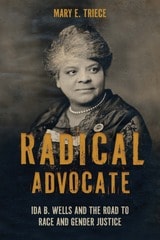
Radical Advocate
Ida B. Wells and the Road to Race and Gender JusticeMary E. Triece
University of Alabama Press, 2025
Pinpoints the persuasive strategies that typified Wells’s efforts to shape broader cultural conversations concerning the causes of racial, social, and gender inequity
Born into the brutal reality of slavery, Ida B. Wells rose to become an audacious journalist, teacher, and activist for racial and gender justice. In Radical Advocate, Mary E. Triece examines the rhetorical strategies employed by Wells to challenge deeply rooted systems of oppression, strategies that remain powerful and relevant today.
Triece introduces the concept of “radical embodied advocacy” to give an account of Wells’s unique position as a Black woman whose personal encounters with white violence were palpable, experienced physically and mentally. White men lynched Wells’s friends and threatened her own life, forcing her into exile after destroying the very press on which she wrote and edited. From this perspective, Wells understood lynching as linked to white economic and political control. Through a close analysis of Wells’s speeches, writings, and journalism, Triece reveals how Wells pioneered a form of “intersectional journalism” that centered the voices of those marginalized by race, gender, and class.
By examining Wells’s work through the lens of philosophy, rhetoric, and Black feminism, Triece underscores the epistemic challenges faced by marginalized advocates and the importance of their perspectives in shaping social change. Radical Advocate ultimately positions Wells as a prophetic figure whose insights into the systemic nature of racism remain profoundly relevant in today’s world.
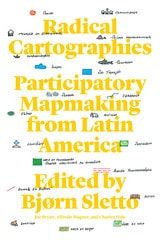
Radical Cartographies
Participatory Mapmaking from Latin AmericaEdited by Bjørn Sletto, Joe Bryan, Alfredo Wagner, and Charles Hale
University of Texas Press, 2020
Cartography has a troubled history as a technology of power. The production and distribution of maps, often understood to be ideological representations that support the interests of their developers, have served as tools of colonization, imperialism, and global development, advancing Western notions of space and place at the expense of Indigenous peoples and other marginalized communities. But over the past two decades, these marginalized populations have increasingly turned to participatory mapping practices to develop new, innovative maps that reassert local concepts of place and space, thus harnessing the power of cartography in their struggles for justice.
In twelve essays written by community leaders, activists, and scholars, Radical Cartographies critically explores the ways in which participatory mapping is being used by Indigenous, Afro-descendant, and other traditional groups in Latin America to preserve their territories and cultural identities. Through this pioneering volume, the authors fundamentally rethink the role of maps, with significant lessons for marginalized communities across the globe, and launch a unique dialogue about the radical edge of a new social cartography.
Radical Health
Unwellness, Care, and Latinx Expressive CultureJulie Avril Minich
Duke University Press, 2023
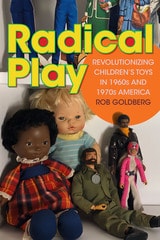
Radical Play
Revolutionizing Children’s Toys in 1960s and 1970s AmericaRob Goldberg
Duke University Press, 2023
Radical Writing Center Praxis
A Paradigm for Ethical Political EngagementLaura Greenfield
Utah State University Press, 2019
Large, intersecting systems of oppression manifest in the everyday practices of institutions, classrooms, and writing centers. Local practices in turn influence the surrounding world. Radical Writing Center Praxis therefore challenges the writing center field to resist assumptions of political neutrality and instead to redefine itself in terms of more explicit ethical commitments. In this paradigm it is clear that to engage in anti-oppression work is not merely a special interest but rather a vital interest to all.
Introducing the concepts and vocabulary of radical politics, Radical Writing Center Praxis examines the tensions between the field’s professed beliefs and everyday practices and offers a process by which the writing center discipline as a whole might rebuild itself anew. It will be invaluable to writing center directors, tutors, scholars, and students as well as to administrators and compositionists.
Radio Nation
Communication, Popular Culture, and Nationalism in Mexico, 1920-1950Joy Elizabeth Hayes
University of Arizona Press, 2000
The role of mass communication in nation building has often been underestimated, particularly in the case of Mexico. Following the Revolution, the Mexican government used the new medium of radio to promote national identity and build support for the new regime. Joy Hayes now tells how an emerging country became a radio nation.
This groundbreaking book investigates the intersection of radio broadcasting and nation building. Hayes tells how both government-controlled and private radio stations produced programs of distinctly Mexican folk and popular music as a means of drawing the country's regions together and countering the influence of U.S. broadcasts.
Hayes describes how, both during and after the period of cultural revolution, Mexican radio broadcasting was shaped by the clash and collaboration of different social forces--including U.S. interests, Mexican media entrepreneurs, state institutions, and radio audiences. She traces the evolution of Mexican radio in case studies that focus on such subjects as early government broadcasting activities, the role of Mexico City media elites, the "paternal voice" of presidential addresses, and U.S. propaganda during World War II.
More than narrative history, Hayes's study provides an analytical framework for understanding the role of radio in building Mexican nationalism at a critical time in that nation's history. Radio Nation expands our appreciation of an overlooked medium that changed the course of an entire country.
Radio Utopia
Postwar Audio Documentary in the Public InterestMatthew Ehrlich
University of Illinois Press, 2017
Radio's America
The Great Depression and the Rise of Modern Mass CultureBruce Lenthall
University of Chicago Press, 2007
Orson Welles’s greatest breakthrough into the popular consciousness occurred in 1938, three years before Citizen Kane, when his War of the Worlds radio broadcast succeeded so spectacularly that terrified listeners believed they were hearing a genuine report of an alien invasion—a landmark in the history of radio’s powerful relationship with its audience. In Radio’s America, Bruce Lenthall documents the enormous impact radio had on the lives of Depression-era Americans and charts the formative years of our modern mass culture.
Many Americans became alienated from their government and economy in the twentieth century, and Lenthall explains that radio’s appeal came from its capability to personalize an increasingly impersonal public arena. His depictions of such figures as proto-Fascist Charles Coughlin and medical quack John Brinkley offer penetrating insight into radio’s use as a persuasive tool, and Lenthall’s book is unique in its exploration of how ordinary Americans made radio a part of their lives. Television inherited radio’s cultural role, and as the voting tallies for American Idol attest, broadcasting continues to occupy a powerfully intimate place in American life. Radio’s America reveals how the connections between power and mass media began.

Radioactive Ghosts
Gabriele Schwab
University of Minnesota Press, 2020
A pioneering examination of nuclear trauma, the continuing and new nuclear peril, and the subjectivities they generate
Amid resurgent calls for widespread nuclear energy and “limited nuclear war,” the populations that must live with the consequences of these decisions are increasingly insecure. The nuclear peril combined with the looming threat of climate change means that we are seeing the formation of a new kind of subjectivity: humans who are in a position of perpetual ontological insecurity. In Radioactive Ghosts, Gabriele Schwab articulates a vision of these “nuclear subjectivities” that we all live with.
Focusing on the legacies of the Manhattan Project, Hiroshima, and nuclear energy politics, Radioactive Ghosts takes us on a tour of the little-seen sides of our nuclear world. Examining devastating uranium mining on Native lands, nuclear sacrifice zones, the catastrophic accidents at Chernobyl and Fukushima, and the formation of a new transspecies ethics, Schwab shows how individuals threatened with extinction are creating new adaptations, defenses, and communal spaces. Ranging from personal accounts of experiences with radiation to in-depth readings of literature, film, art, and scholarly works, Schwab gives us a complex, idiosyncratic, and personal analysis of one of the most overlooked issues of our time.
Raising the Dead
Readings of Death and (Black) SubjectivitySharon Patricia Holland
Duke University Press, 2000
Holland argues that the presence of blacks, Native Americans, women, queers, and other “minorities” in society is, like death, “almost unspeakable.” She gives voice to—or raises—the dead through her examination of works such as the movie Menace II Society, Toni Morrison’s novel Beloved, Leslie Marmon Silko’s Almanac of the Dead, Randall Kenan’s A Visitation of Spirits, and the work of the all-white, male, feminist hip-hop band Consolidated. In challenging established methods of literary investigation by putting often-disparate voices in dialogue with each other, Holland forges connections among African-American literature and culture, queer and feminist theory.
Raising the Dead will be of interest to students and scholars of American culture, African-American literature, literary theory, gender studies, queer theory, and cultural studies.
Rancheros in Chicagoacán
Language and Identity in a Transnational CommunityBy Marcia Farr
University of Texas Press, 2006
Rancheros hold a distinct place in the culture and social hierarchy of Mexico, falling between the indigenous (Indian) rural Mexicans and the more educated city-dwelling Mexicans. In addition to making up an estimated twenty percent of the population of Mexico, rancheros may comprise the majority of Mexican immigrants to the United States. Although often mestizo (mixed race), rancheros generally identify as non-indigenous, and many identify primarily with the Spanish side of their heritage. They are active seekers of opportunity, and hence very mobile. Rancheros emphasize progress and a self-assertive individualism that contrasts starkly with the common portrayal of rural Mexicans as communal and publicly deferential to social superiors.
Marcia Farr studied, over the course of fifteen years, a transnational community of Mexican ranchero families living both in Chicago and in their village-of-origin in Michoacán, Mexico. For this ethnolinguistic portrait, she focuses on three culturally salient styles of speaking that characterize rancheros: franqueza (candid, frank speech); respeto (respectful speech); and relajo (humorous, disruptive language that allows artful verbal critique of the social order maintained through respeto). She studies the construction of local identity through a community's daily talk, and provides the first book-length examination of language and identity in transnational Mexicans.
In addition, Farr includes information on the history of rancheros in Mexico, available for the first time in English, as well as an analysis of the racial discourse of rancheros within the context of the history of race and ethnicity in Mexico and the United States. This work provides groundbreaking insight into the lives of rancheros, particularly as seen from their own perspectives.
Rap Music and Street Consciousness
Cheryl L. Keyes
University of Illinois Press, 2002
In this first musicological history of rap music, Cheryl L. Keyes traces the genre's history from its roots in West African bardic traditions, the Jamaican dancehall tradition, and African American vernacular expressions to its permeation of the cultural mainstream as a major tenet of hip-hop lifestyle and culture.
Rap music, according to Keyes, addresses the political and economic disfranchisement of black youths and other groups, fosters ethnic pride, and displays culture values and aesthetics. Blending popular culture with folklore and ethnomusicology, Keyes offers a nuanced portrait of the artists, themes, and varying styles reflective of urban life and street consciousness. Her analysis draws on music, lives, politics, and interests of figures ranging from Afrika Bambaataa, the "godfather of hip-hop," to early artists like Grandmaster Flash, to crossover pioneers like LL Cool J, De La Soul, and Public Enemy, to megastars like Tupac Shakur and The Notorious B.I.G. At the same time, Keyes delves into the impact of the rapper-turned mogul phenomenon, the rise of Death Row Records, and the East Coast-West Coast tensions of the Nineties.
Rape at the Opera
Staging Sexual ViolenceMargaret Cormier
University of Michigan Press, 2024
Drawing on archival footage as well as attendance at live events, Cormier analyzes productions of canonic operas from German, Italian, and French traditions from the eighteenth to the early twentieth century, including Die Entführung aus dem Serail, Don Giovanni, La forza del destino, Un ballo in maschera, Salome, and Turandot. In doing so, Cormier highlights the dynamism of twenty-first-century opera performance practice with regard to sexual violence, establishes methods to evaluate representations of sexual violence on the opera stage, and reframes the primary responsibility of opera critics and creators as being not to opera composers and librettists but to the public.

Rarities
Conservation Science in a Time of Unintended ConsequencesZoe Nyssa
University of Chicago Press, 2026
A sweeping study that reveals how conservation science does more than simply protect by inadvertently making nature valuable in new ways.
Climate change and other environmental transformations are causing species to go extinct at accelerating rates. What, then, should a science of saving nature look like? In Rarities, Zoe Nyssa traces how conservation emerged as a distinct scientific endeavor in the United States over the twentieth century and how this history has shaped environmental research practices and policy today. Drawing on archival and ethnographic research with leading conservation labs and programs, Nyssa explores how conservation science appears to generate contradictory, even counterintuitive, results as scientists, policymakers, and the public all take up, respond to, and repurpose scientists’ ideas about rarity, vulnerability, and endangerment. The designation of new nature reserves can lead to increased poaching and habitat destruction. The listing of a species as endangered fuels their black-market consumption as pets, food, or luxury items. Protection of natural resources can push resource extraction into unprotected areas. Other effects are less simple to calculate; persuading the public to care about one species might siphon support for another, and paying for one kind of conservation behavior can discourage other forms of conservation activity.
The science of saving nature spans a century of work by ecologists and others to develop a scientific basis for conservation. Yet Nyssa shows how their efforts to understand the natural world in terms of endangerment and extinction unleashed new ways for nonscientists to experience and understand nature as well. The scientific values that emerge, she argues, can transform the complex interconnections between human and nonhuman life. Rarities offers a framework for understanding these surprising socio-ecological dynamics and why they matter, both for contemporary science and for the planet.
Raving
McKenzie Wark
Duke University Press, 2023
Raw Material
Producing Pathology in Victorian CultureErin O'Connor
Duke University Press, 2000
O’Connor focuses on how four particularly troubling physical conditions were represented in a variety of literature. She begins by exploring how Asiatic cholera, which reached epidemic proportions on four separate occasions between 1832 and 1865, was thought to represent the dangers of cultural contamination and dissolution. The next two chapters concentrate on the problems breast cancer and amputation posed for understanding gender. After discussing how breast cancer was believed to be caused by the female body’s intolerance to urban life, O'Connor turns to men’s bodies, examining how new prosthetic technology allowed dismembered soldiers and industrial workers to reconstruct themselves as productive members of society. The final chapter explores how freak shows displayed gross deformity as the stuff of a new and improved individuality. Complicating an understanding of the Victorian body as both a stable and stabilizing structure, she elaborates how Victorians used disease as a messy, often strategically unintelligible way of articulating the uncertainties of chaotic change. Over the course of the century, O’Connor shows, the disfiguring process of disease became a way of symbolically transfiguring the self. While cholera, cancer, limb loss, and deformity incapacitated and even killed people, their dramatic symptoms provided opportunities for imaginatively adapting to a world where it was increasingly difficult to determine not only what it meant to be human but also what it meant to be alive.
Raw Material will interest an audience of students and scholars of Victorian literature, cultural history, and the history of medicine.
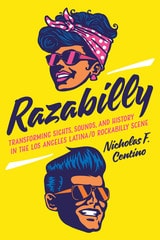
Razabilly
Transforming Sights, Sounds, and History in the Los Angeles Latina/o Rockabilly SceneBy Nicholas F. Centino
University of Texas Press, 2021
Vocals tinged with pain and desperation. The deep thuds of an upright bass. Women with short bangs and men in cuffed jeans. These elements and others are the unmistakable signatures of rockabilly, a musical genre normally associated with white male musicians of the 1950s. But in Los Angeles today, rockabilly's primary producers and consumers are Latinos and Latinas. Why are these "Razabillies" partaking in a visibly "un-Latino" subculture that's thought of as a white person's fixation everywhere else?
As a Los Angeles Rockabilly insider, Nicholas F. Centino is the right person to answer this question. Pairing a decade of participant observation with interviews and historical research, Centino explores the reasons behind a Rockabilly renaissance in 1990s Los Angeles and demonstrates how, as a form of working-class leisure, this scene provides Razabillies with spaces of respite and conviviality within the alienating landscape of the urban metropolis. A nuanced account revealing how and why Los Angeles Latinas/os have turned to and transformed the music and aesthetic style of 1950s rockabilly, Razabilly offers rare insight into this musical subculture, its place in rock and roll history, and its passionate practitioners.
Re-Understanding Media
Feminist Extensions of Marshall McLuhanSarah Sharma and Rianka Singha, editors
Duke University Press, 2022
Contributors. Nasma Ahmed, Morehshin Allahyari, Sarah Banet-Weiser, Wendy Hui Kyong Chun, Brooke Erin Duffy, Ganaele Langlois, Sara Martel, Shannon Mattern, Cait McKinney, Jeremy Packer, Craig Robertson, Sarah Sharma, Ladan Siad, Rianka Singh, Nicholas Taylor, Armond R. Towns, and Jennifer Wemigwans
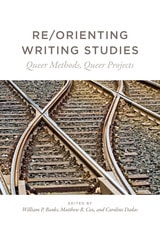
Re/Orienting Writing Studies
Queer Methods, Queer ProjectsWilliam P. Banks
Utah State University Press, 2018
While the humanities have engaged queer theory extensively, research methods have often been hermeneutic or interpretive. At the same time, social science approaches in composition research have foregrounded inquiry on human participants but have often struggled to understand where lesbian, gay, bisexual, transgender, and queer people fit into empirical research projects. Re/Orienting Writing Studies works at the intersections of humanities and social science methodologies to offer new insight into using queer methods for data collection and queer practices for framing research.
Contributors: Chanon Adsanatham, Jean Bessette, Nicole I. Caswell, Michael J. Faris, Hillery Glasby, Deborah Kuzawa, Maria Novotny, G Patterson, Stacey Waite, Stephanie West-Puckett
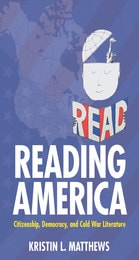
Reading America
Citizenship, Democracy, and Cold War LiteratureKristin L. Matthews
University of Massachusetts Press, 2016
During the Cold War, the editor of Time magazine declared, “A good citizen is a good reader.” As postwar euphoria faded, a wide variety of Americans turned to reading to understand their place in the changing world. Yet, what did it mean to be a good reader? And how did reading make you a good citizen?
In Reading America, Kristin L. Matthews puts into conversation a range of political, educational, popular, and touchstone literary texts to demonstrate how Americans from across the political spectrum—including “great works” proponents, New Critics, civil rights leaders, postmodern theorists, neoconservatives, and multiculturalists—celebrated particular texts and advocated particular interpretive methods as they worked to make their vision of "America" a reality. She situates the fiction of J. D. Salinger, Ralph Ellison, Thomas Pynchon, John Barth, and Maxine Hong Kingston within these debates, illustrating how Cold War literature was not just an object of but also a vested participant in postwar efforts to define good reading and citizenship.
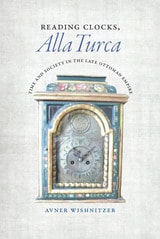
Reading Clocks, Alla Turca
Time and Society in the Late Ottoman EmpireAvner Wishnitzer
University of Chicago Press, 2015
Drawing on a wealth of archival and literary sources, Wishnitzer’s original and highly important work presents the shifting culture of time as an arena in which Ottoman social groups competed for legitimacy and a medium through which the very concept of modernity was defined. Reading Clocks, Alla Turca breaks new ground in the study of the Middle East and presents us with a new understanding of the relationship between time and modernity.

Reading Jean-Jacques Rousseau through the Prism of Chess
Florian Vauléon
University of Michigan Press, 2019
Over a period of forty years, Rousseau combined his devotion to writing with his enthusiasm for chess, and these two passions necessarily intertwined. Rousseau was able to transfer his power of concentration and the strict dialectics of his literary writings to his chess strategy. If Rousseau’s analytical skills influenced his attitude toward the game, then the game of chess inspired his logic and affected his discourse. Interpreted as a form of rationality, as a conceptual paradigm, the rules and strategies of chess accurately describe Rousseau’s ideas for social management, political power, and organization. Reading Jean-Jacques Rousseau through the Prism of Chess shows that Rousseau’s political theory, though allegedly inspired by Nature, found a perfect model in a game created by mankind; chess thus became a reference for his philosophical discourse and practice as well as a method to systematize Nature and organize society.
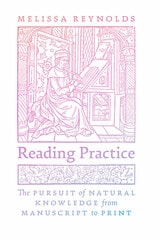
Reading Practice
The Pursuit of Natural Knowledge from Manuscript to PrintMelissa Reynolds
University of Chicago Press, 2024
Reading Practice tells the story of how ordinary people grew comfortable learning from commonplace manuscripts and printed books, such as almanacs, medical recipe collections, and herbals. From the turn of the fifteenth century to the close of the sixteenth century, these were the books English people read when they wanted to attend to their health or understand their place in the universe. Before then, these works had largely been the purview of those who could read Latin. Around 1400, however, medical and scientific texts became available in Middle English while manuscripts became less expensive. These vernacular manuscripts invited their readers into a very old and learned conversation: Hippocrates and Galen weren’t distant authorities whose word was law, they were trusted guides, whose advice could be excerpted, rearranged, recombined, and even altered to suit a manuscript compiler’s needs. This conversation continued even after the printing press arrived in England in 1476. Printers mined manuscripts for medical and scientific texts that they would publish throughout the sixteenth century, though the pressures of a commercial printing market encouraged printers to package these old texts in new ways. Without the weight of authority conditioning their reactions and responses to very old knowledge, and with so many editions of practical books to choose from, English readers grew into confident critics and purveyors of natural knowledge in their own right.
Melissa Reynolds reconstructs shifting attitudes toward medicine and science over two centuries of seismic change within English culture, attending especially to the effects of the Reformation on attitudes toward nature and the human body. Her study shows how readers learned to be discerning and selective consumers of knowledge gradually, through everyday interactions with utilitarian books.

Reading Relations
How Authors Enter Our LivesDixon, Dan
University of Iowa Press, 2026
Drawing on the ordinary language philosophy of Toril Moi and Stanley Cavell, Dan Dixon argues that the act of reading shares emotional ground with our social lives. It prompts us to attend to the kinds of affective attachments that frequently resist description, as well as the attachments that encourage debate among scholars of literature.
Dixon posits that the interpretation of a text is significantly shaped by our impression of the writer. Through the lens of persona, this book examines the work of influential and iconic post-1945 American essayists, such as Joan Didion, Maggie Nelson, James Baldwin, Janet Malcolm, Teju Cole, David Foster Wallace, and Ben Lerner. The attachments we form might facilitate insight, consolation, distrust, or vanity. But whatever their effects, they can’t be ignored.
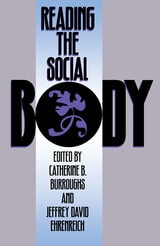
Reading The Social Body
Catherine B. Burroughs
University of Iowa Press, 1993
The overarching argument of Reading the Social Body is that the body is cultural rather than “natural.” Some of the essays treat the social construction of bodies that have actually existed in human history; others discuss the representation of bodies in artistic contexts; all recognize that everything visible to the human body—from posture and costume to the width of an eyebrow or a smile—is determined by and shaped in response to a particular culture.
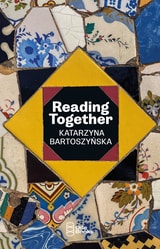
Reading Together
Katarzyna Bartoszynska
Prickly Paradigm Press, 2025
In this engaging and vivacious memoir, college professor Katarzyna Bartoszyńska thinks back on various book clubs she has been a part of. Through brief discussions of a variety of novels, memoirs, and nonfiction works such as Ottessa Moshfegh’s My Year of Rest and Relaxation, Marjane Satrapi’s Chicken with Plums, and Alma Guillermoprieto’s Dancing in Cuba, she considers how the things she has learned in book club discussions differ from what she tries to teach students in her literature classes. As she muses on the various benefits that we imagine reading offers, she describes the unique knowledge that book clubs can provide.
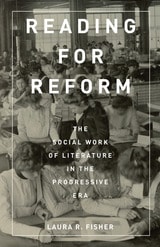
Reading for Reform
The Social Work of Literature in the Progressive EraLaura R. Fisher
University of Minnesota Press, 2019
An unprecedented examination of class-bridging reform and U.S. literary history at the turn of the twentieth century
Reading for Reform rewrites the literary history of late nineteenth and early twentieth century America by putting social reform institutions at the center of literary and cultural analysis. Examining the vibrant, often fractious literary cultures that developed as part of the Progressive mandate to uplift the socially disadvantaged, it shows that in these years reformers saw literature as a way to combat the myriad social problems that plagued modern U.S. society. As they developed distinctly literary methods for Americanizing immigrants, uplifting and refining wage-earning women, and educating black students, their institutions gave rise to a new social purpose for literature.
Class-bridging reform institutions—the urban settlement house, working girls’ club, and African American college—are rarely addressed in literary history. Yet, Laura R. Fisher argues, they engendered important experiments in the form and social utility of American literature, from minor texts of Yiddish drama and little-known periodical and reform writers to the fiction of Edith Wharton and Nella Larsen. Fisher delves into reform’s vast and largely unexplored institutional archives to show how dynamic sites of modern literary culture developed at the margins of social power.
Fisher reveals how reformist approaches to race, class, religion, and gender formation shaped American literature between the 1880s and the 1920s. In doing so, she tells a new story about the fate of literary practice, and the idea of literature’s practical value, during the very years that modernist authors were proclaiming art’s autonomy from concepts of social utility.