121 books match the query 'Social classes' and 8 start with r

cover of RETHINKING LABOR HISTORY: ESSAYS ON DISCOURSE AND CLASS ANALYSIS

RETHINKING LABOR HISTORY

ESSAYS ON DISCOURSE AND CLASS ANALYSIS

Edited by Lenard R. Berlanstein

University of Illinois Press, 1993

The fundamentals guiding labor historians are under scrutiny today as never before. The field has attempted to uncover the socioeconomic conditions that produced labor militancy and class consciousness, with scholars focusing on proletarianization---the loss of control over the production process---as the key to class conflict. Currently, this entire approach is being questioned.
In Rethinking Labor History, nine well-known French labor historians join the debate. Advocates of both revisionist Marxism and discourse analysis are represented, and examples of empirical research emerging from the theoretical disputes are included.
 
[more]
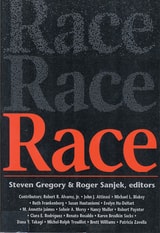
cover of Race

Race

Gregory, Steven

Rutgers University Press, 1994

 “What unites these essays is a common focus on the ‘social construction’ of racial categories and a desire to expose the exercise of racism and its intersection with other forms of social domination such as class, gender, and ethnicity . . . Fascinating.”––Multicultural Review

“The coming together of theoretical, multiethnic, and ‘on-the-ground’ perspectives makes this book a particularly valuable contribution to the discourse on race.”––Paula Giddings

“Timely and thoughtful. . . contributes to our understanding of how race operates as a social process and in the contextualization of power and status.”––Contemporary Sociology

“A treasure chest full of gems. Virtually every article is fascinating and important, and as a collection, its impact is tremendous. Neo-conservative myths and fantasies fall like nine-pins before its well-researched and tightly argued papers.”––Martin Bernal, author of Black Athena

“A timely antidote to that reaction tome, The Bell Curve.”––Daily News (New York)

“Let’s be clear from the start what this book is about,” writes Roger Sanjek.  “Race is the framework of ranked categories, segmenting the human population, that was developed by Western Europeans following their global expansion.”To contemporary social scientists, this ranking is baseless, though it has had all-too-real effects.

Drawing on anthropology, history, sociology, ethnic studies, and women's studies, this volume explores the role of race in a variety of cultural and historical contexts. The contributors show how racial ideologies intersect with gender, class, nation and sexuality in the formation of complex social identities and hierarchies. The essays address such topics as race and Egyptian nationalism, the construction of “whiteness” in the United States, and the transformation of racial categories in post-colonial Haiti. They demonstrate how social elites and members of subordinated groups construct and rework racial meanings and identities within the context of global political, economic, and cultural change. Race provides a comprehensive and empirically grounded survey of contemporary theoretical approaches to studying the complex interplay of race, power, and identity.
[more]
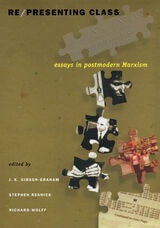
cover of Re/presenting Class: Essays in Postmodern Marxism

Re/presenting Class

Essays in Postmodern Marxism

J . K. Gibson-Graham, Stephen Resnick, and Richard Wolff, eds.

Duke University Press, 2001

Re/presenting Class is a collection of essays that develops a poststructuralist Marxian conception of class in order to theorize the complex contemporary economic terrain. Both building upon and reconsidering a tradition that Stephen Resnick and Richard Wolff—two of this volume’s editors—began in the late 1980s with their groundbreaking work Knowledge and Class, contributors aim to correct previous research that has largely failed to place class as a central theme in economic analysis. Suggesting the possibility of a new politics of the economy, the collection as a whole focuses on the diversity and contingency of economic relations and processes.
Investigating a wide range of cases, the essays illuminate, for instance, the organizational and cultural means by which unmeasured surpluses—labor that occurs outside the formal workplace‚ such as domestic work—are distributed and put to use. Editors Resnick and Wolff, along with J. K. Gibson-Graham, bring theoretical essays together with those that apply their vision to topics ranging from the Iranian Revolution to sharecropping in the Mississippi Delta to the struggle over the ownership of teaching materials at a liberal arts college. Rather than understanding class as an element of an overarching capitalist social structure, the contributors—from radical and cultural economists to social scientists—define class in terms of diverse and ongoing processes of producing, appropriating, and distributing surplus labor and view class identities as multiple, changing, and interacting with other aspects of identity in contingent and unpredictable ways.
Re/presenting Class will appeal primarily to scholars of Marxism and political economy.

Contributors. Carole Biewener, Anjan Chakrabarti, Stephen Cullenberg, Fred Curtis, Satyananda Gabriel, J. K. Gibson-Graham, Serap Kayatekin, Bruce Norton, Phillip O’Neill, Stephen Resnick, David Ruccio, Dean Saitta, Andriana Vlachou, Richard Wolff

[more]
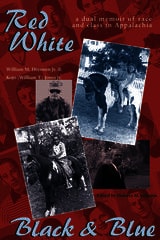
cover of Red, White, Black, and Blue: A Dual Memoir of Race and Class in Appalachia

Red, White, Black, and Blue

A Dual Memoir of Race and Class in Appalachia

William M. Drennen Jr., Kojo (William T.) Jones Jr.

Ohio University Press, 2004

Red, White, Black, and Blue began as a collaborative memoir by William M. “Bill” Drennen, a European American, and Kojo (William T.) Jones, an African American. These Appalachian men grew up in the South Hills section of Charleston, West Virginia. As boys they played on the same Little League baseball team and experienced just one year together as schoolmates after the all-white Thomas Jefferson Junior High School was desegregated in 1955. After that, class, race, and choice separated their life experiences for forty-five years. In 1992 both had returned to Charleston from lives mostly lived elsewhere. They decided to work together on a memoir of growing up through the trauma of desegregation. Their aim was to foster understanding between their distinct cultures for themselves and for their own and future generations. Dolores Johnson, in editing the two texts, observed two very different modes of expression: Bill Drennen’s narrative is threaded with references that connote wealth, status, and personal privilege; Kojo Jones’s memoir is interwoven with African American signification, protest, and moral outrage. The stories of their Appalachian upbringing in homes less than a mile apart are anecdotal in nature, but their diverse uses of the English language as they endeavor to communicate shared memories and common meanings reveal significant cultural connotations that transform standard American English into two different languages, rendering interracial communication problematic. Dr. Johnson’s analysis is to the point. Red, White, Black, and Blue is a groundbreaking approach to studying not only cultural linguistics but also the cultural heritage of a historic time and place in America. It gives witness to the issues of race and class inherent in the way we write, speak, and think.
[more]
cover of Redefining Sustainable Development

Redefining Sustainable Development

Neil Middleton and Phil O'Keefe

Pluto Press, 2001
[more]
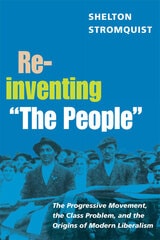
cover of Reinventing "The People": The Progressive Movement, the Class Problem, and the Origins of Modern Liberalism

Reinventing "The People"

The Progressive Movement, the Class Problem, and the Origins of Modern Liberalism

Shelton Stromquist

University of Illinois Press, 2006

A comprehensive study of the Progressive movement, Reinventing "The People"contends that the persistence of class conflict in America challenged the very defining feature of Progressivism: its promise of social harmony through democratic renewal. 

Shelton Stromquist profiles the movement's work in diverse arenas of social reform, politics, labor regulation and so-called race improvement. While these reformers emphasized different programs, they crafted a common language of social reconciliation in which an imagined civic community--"the People"--would transcend parochial class and political loyalties. But efforts to invent a society without enduring class lines marginalized new immigrants and African Americans by declaring them unprepared for civic responsibilities. In so doing, Progressives laid the foundation for twentieth-century liberals' inability to see their world in class terms and to conceive of social remedies that might alter the structures of class power.

[more]
cover of Romancing the Wild: Cultural Dimensions of Ecotourism

Romancing the Wild

Cultural Dimensions of Ecotourism

Robert Fletcher

Duke University Press, 2014
The worldwide development of ecotourism—including adventures such as mountain climbing and whitewater rafting, as well as more pedestrian pursuits such as birdwatching—has been extensively studied, but until now little attention has been paid to why vacationers choose to take part in what are often physically and emotionally strenuous endeavors. Drawing on ethnographic research and his own experiences working as an ecotour guide throughout the United States and Latin America, Robert Fletcher argues that participation in rigorous outdoor activities resonates with the particular cultural values of the white, upper-middle-class Westerners who are the majority of ecotourists. Navigating 13,000-foot mountain peaks or treacherous river rapids demands deferral of gratification, perseverance through suffering, and a willingness to assume risks in pursuit of continuous progress. In this way, characteristics originally cultivated for professional success have been transferred to the leisure realm at a moment when traditional avenues for achievement in the public sphere seem largely exhausted. At the same time, ecotourism provides a temporary escape from the ostensible ills of modern society by offering a transcendent "wilderness" experience that contrasts with the indoor, sedentary, mental labor characteristically performed by white-collar workers.
[more]
cover of Rule Of Racialization: Class, Identity, Governance

Rule Of Racialization

Class, Identity, Governance

Steve Martinot

Temple University Press, 2002

An important history of the way class formed in the US, The Rule of Racialization offers a rich new look at the invention of whiteness and how the inextricable links between race and class were formed in the seventeenth century and consolidated by custom, social relations, and eventually naturalized by the structures that organize our lives and our work.Arguing that, unlike in Europe, where class formed around the nation-state, race deeply informed how class is defined in this country and, conversely, our unique relationship to class in this country helped in some ways to invent race as a distinction in social relations. Martinot begins tracing this development in the slave plantations in 1600s colonial life. He examines how the social structures encoded there lead to a concrete development of racialization. He then takes us up to the present day, where forms of those structures still inhabit our public and economic institutions. Throughout, he engages historical and contemporary thinkers on the nature of race in the US, creating a book that at once synthesizes significant critiques of race while at the same time offers a completely original conception of how race and class have operated in American life throughout the centuries.A uniquely compelling book, The Rule of Racialization offers a rich contribution to the study of class, labor, and American social relations.
[more]