Results by title
150 books match the query 'Social psychology' and 4 start with r
RSF
The Russell Sage Foundation Journal of the Social Sciences: Status: What Is It and Why It Matters for InequalityCecilia L. Ridgeway
Russell Sage Foundation, 2022
Note the copy pertains to two issues of RSF:
Status – a form of inequality based on esteem, respect, and honor – affects how people are treated in all aspects of their lives, including in schools, workplaces, politics, and even the family. It shapes people’s access to valued outcomes in life, such as income, education, and health. However, status is poorly understood and its significance in the construction of inequality is often underestimated. In this special double issue of RSF, sociologist Cecilia L. Ridgeway, social psychologist Hazel Rose Markus, and an interdisciplinary group of contributors examine how status functions in society and its role in inequality.
Issue 1 demonstrates that status is fundamental to inequality and shows that it is different from other forms of inequality. Tali Mendelberg presents a theory of how status functions in politics and differentiates the potent symbolic value of achieving greater esteem from status-seeking as a means to obtain resources, such as income, assets, or property. Biko Koeing finds that Trump voters were motivated not only by a perceived loss of status, but by the belief that this loss was unjust. Fabien Accominotti and colleagues assess the characteristics of status hierarchies and find that those with greater clarity, rigidity, and order have greater inequality between high and low status members.
Issue 2 examines how status is created and reinforced through cultural norms and in our relationships with one another. Hilary Holbrow finds that the gender pay gap is nearly three times greater in companies where low-status support roles are held primarily by females. Natasha Quadlin finds that college graduates who are perceived to be wealthy are also perceived to be more intelligent than they would be if they were perceived to be members of a lower socioeconomic group. Annette Lareau finds that married women often behave in ways – such as disengagement from financial matters or downplaying their own financial knowledge – that sustain their husband’s status as economic expert of the family. Bianca Manago and colleagues find that prior contact and group interaction between Whites, Blacks, and Mexican Americans decreases Whites’ anxiety about working with Blacks and Mexican Americans, but does not increase Whites’ perceptions of Blacks’ and Mexican Americans’ competence. Status interventions during interaction, however, do increase Whites’ perceptions of Mexican Americans’ competence and their influence in the group. Lehn Benjamin finds that staff at nonprofit organizations who share control and establish common ground with their clients reduce status hierarchies between staff and clients.
This volume of RSF sheds light on status as a powerful social force which pervades our lives, and demonstrates its role in creating and preserving inequality.
RSF
The Russell Sage Foundation Journal of the Social Sciences: Status: What It Is and Why It Matters for InequalityCecilia L. Ridgeway
Russell Sage Foundation, 2002
Note the copy pertains to two issues of RSF:
Status – a form of inequality based on esteem, respect, and honor – affects how people are treated in all aspects of their lives, including in schools, workplaces, politics, and even the family. It shapes people’s access to valued outcomes in life, such as income, education, and health. However, status is poorly understood and its significance in the construction of inequality is often underestimated. In this special double issue of RSF, sociologist Cecilia L. Ridgeway, social psychologist Hazel Rose Markus, and an interdisciplinary group of contributors examine how status functions in society and its role in inequality.
Issue 1 demonstrates that status is fundamental to inequality and shows that it is different from other forms of inequality. Tali Mendelberg presents a theory of how status functions in politics and differentiates the potent symbolic value of achieving greater esteem from status-seeking as a means to obtain resources, such as income, assets, or property. Biko Koeing finds that Trump voters were motivated not only by a perceived loss of status, but by the belief that this loss was unjust. Fabien Accominotti and colleagues assess the characteristics of status hierarchies and find that those with greater clarity, rigidity, and order have greater inequality between high and low status members.
Issue 2 examines how status is created and reinforced through cultural norms and in our relationships with one another. Hilary Holbrow finds that the gender pay gap is nearly three times greater in companies where low-status support roles are held primarily by females. Natasha Quadlin finds that college graduates who are perceived to be wealthy are also perceived to be more intelligent than they would be if they were perceived to be members of a lower socioeconomic group. Annette Lareau finds that married women often behave in ways – such as disengagement from financial matters or downplaying their own financial knowledge – that sustain their husband’s status as economic expert of the family. Bianca Manago and colleagues find that prior contact and group interaction between Whites, Blacks, and Mexican Americans decreases Whites’ anxiety about working with Blacks and Mexican Americans, but does not increase Whites’ perceptions of Blacks’ and Mexican Americans’ competence. Status interventions during interaction, however, do increase Whites’ perceptions of Mexican Americans’ competence and their influence in the group. Lehn Benjamin finds that staff at nonprofit organizations who share control and establish common ground with their clients reduce status hierarchies between staff and clients.
This volume of RSF sheds light on status as a powerful social force which pervades our lives, and demonstrates its role in creating and preserving inequality.
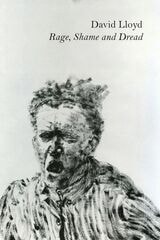
Rage, Shame and Dread
David Lloyd
Seagull Books, 2026
A radical rethinking of dark emotion as critical responses to capitalism, colonial violence, and authoritarian power.
Rage, Shame and Dread is a bold and unsettling exploration of three emotions that resist consolation, correction, or easy political use. In this triptych of essays, David Lloyd dwells with rage, shame, and dread not as states to be managed or redeemed, but as objectless, intransitive forces that interrupt social life and expose its underlying wrongness.
Reading rage as “sheer manifestation,” shame as a catastrophic rupture of self-relation, and dread as anticipation without an object, Lloyd traces how these unpromising emotions emerge from—and register—the violences of capitalism, colonialism, racialization, and authoritarian power. Drawing on Walter Benjamin, Sigmund Freud, Jacques Derrida, Frantz Fanon, Aimé Césaire, Joseph Conrad, Oscar Wilde, and Søren Kierkegaard, the book moves between philosophy, literature, and political theory to challenge therapeutic and liberal accounts that treat these feelings as errors to be corrected or tools for socialization.
Rather than pathologizing these states, Lloyd reads them as signals of damaged social relations and as thresholds to alternative forms of life-in-common. At once philosophically rigorous and politically urgent, Rage, Shame and Dread offers a radical rethinking of feeling as a site of critique, resistance, and collective possibility.

Running Amok
An Historical InquiryJohn C. Spores
Ohio University Press, 1988
Spores presents a basic etiological distinction between reactive-motivated and a spontaneous, unmotivated amok; the one an intentional act capable of establishing or restoring dignity and self-respect; the other a result of organic disturbance. He also explores the social-psychological dynamics of engagement in the two types of solitary amok and suggests possible behavioral chains. Further, his study demonstrates the impact of social forces and processes of the late nineteenth and early twentieth century which significantly altered factors in traditional Malay society important in generating expressions of solitary amok.
Running amok demonstrates the utility of bringing historical data to bear on the examination of specific social phenomena, particularly suggesting that the understanding of some present-day forms of mental disorder or other aberrant or deviant behavior can be facilitated and enriched through such analysis.